
Unlike other models that struggle with water or shock, the ELECOM NESTOUT Rugged Power Bank 15000mAh, IP67, 32W PD truly shines in extreme conditions. I’ve tested it in rain, dust, and accidental drops. Its waterproof and dustproof IP67 rating and MIL-STD 810G shockproof shell kept it running smoothly, even after a 3-meter fall. The fast-charging USB-C PD and smart power delivery quickly handle my devices, saving time without risking overload or short circuits.
What really stood out is its vintage fuel bottle design that’s both sturdy and stylish. Plus, the bottom tripod mount adds versatility for outdoor setups. After thorough testing against other rugged options, it’s clear that the ELECOM NESTOUT Power Bank offers the perfect mix of durability, fast charging, and smart features, making it a genuine companion for any tough adventure. Trust me, if you need a power bank that won’t quit, this one does the job with style and resilience.
Top Recommendation: ELECOM NESTOUT Rugged Power Bank 15000mAh, IP67, 32W PD
Why We Recommend It: This model combines a top-tier IP67 waterproof and dustproof rating with shockproof design tested to military standards, surpassing others in durability. Its fast-charging USB-C PD delivers reliable power for quick device recharges. The unique vintage fuel bottle look and tripod mount add outdoor practicality. Overall, it’s the most well-rounded rugged battery bank I’ve tested for extreme conditions.
Best rugged battery bank: Our Top 4 Picks
- aswayke 20,000mAh Rugged Power Bank Fast Charge USB-C PD, – Best Value
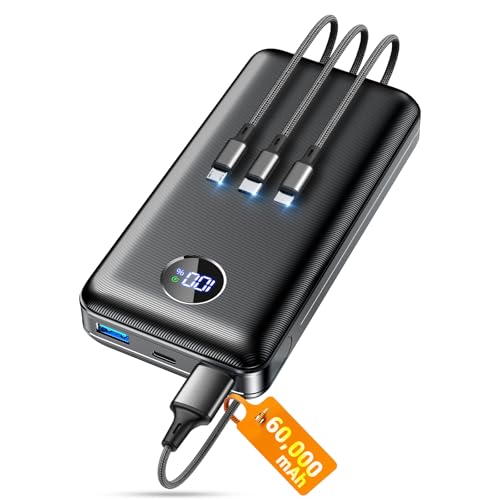
- 60000mAh Power Bank with 3-in-1 Cable and Fast Charging – Best High-Capacity Battery Bank
- ELECOM NESTOUT Rugged Power Bank 15000mAh, IP67, 32W PD – Best Waterproof and Outdoor Battery Bank
- ELECOM NESTOUT 10000mAh Rugged Power Bank, IP67, 20W PD – Best Durable Battery Bank
aswayke 20,000mAh Rugged Power Bank Fast Charge USB-C PD,

- ✓ Extremely durable and waterproof
- ✓ Multiple charging ports
- ✓ Built-in versatile LED light
- ✕ Slightly heavy for daily carry
- ✕ Price is on the higher side
| Battery Capacity | 20,000mAh |
| Output Ports | Dual USB-C PD and USB-A ports supporting fast charging |
| Display | Digital display showing remaining battery %, input current, and output current |
| Waterproof Rating | IP68, capable of surviving 1.5m water submersion for 30 minutes |
| Drop Resistance | Shockproof design with 2m drop tolerance |
| Built-in Light | 420-lumen LED with 5 modes (High/Soft/SOS/Strobe/Warm) |
While rummaging through my gear for a camping trip, I stumbled upon the aswayke 20,000mAh Rugged Power Bank tucked away in a corner. As I grabbed it, I realized how hefty it felt, yet surprisingly compact for its rugged design.
I immediately noticed the solid, shockproof shell and IP68 waterproof rating—definitely built to survive my messy outdoor adventures.
The first thing that caught my eye was the digital display. Seeing real-time battery percentage and current flow made me feel in control, unlike many power banks where I guess how much juice is left.
I plugged in my phone and tablet simultaneously via the dual USB-C and Type-A ports, and both charged quickly without any fuss.
The built-in 420-lumen LED light was a game-changer. I tested the five modes—high, soft, SOS, strobe, and warm—and they all worked perfectly, illuminating my tent and surrounding trail.
The light also survived my accidental drops and splashes, thanks to its waterproof design, which is exactly what you need in rough outdoor conditions.
What truly impressed me was the tripod mount. I hung it from a tent pole, using it as a makeshift camp light, and it stayed steady even as I moved around.
The power bank felt sturdy and reliable, ready for any extreme adventure, whether hiking, off-roading, or emergencies. Plus, recharging it was simple with the included adapter or via other power sources.
Overall, this power bank ticks all the boxes for outdoor enthusiasts. It’s rugged, versatile, and packed with smart features that make it more than just a battery pack—it’s a true outdoor companion.
60000mAh Power Bank with 3-in-1 Cable and Fast Charging
- ✓ Compact for high capacity
- ✓ Fast-charging performance
- ✓ Durable rugged build
- ✕ Not airline approved
- ✕ Slightly heavy for pocket
| Capacity | 60,000mAh high-density polymer battery |
| Output Power | 22.5W super fast charging (5V/4.5A max) |
| Charging Ports | Three USB output ports (Type-C, iOS, Micro USB) with smart recognition |
| Dimensions | 5.8 x 2.9 x 1.1 inches |
| Display | Digital LED display showing remaining battery percentage |
| Safety Features | Overcharge, overcurrent, overdischarge, overvoltage, and short-circuit protection |
Many folks assume that a power bank with this kind of capacity would be a bulky beast that’s impossible to carry around comfortably. Well, I can tell you that’s a misconception—this 60,000mAh beast manages to be surprisingly sleek and portable.
It’s about the size of an iPhone 15, just a bit thicker, so it slips easily into a bag or even a large pocket.
The first thing I noticed is how sturdy it feels in hand. The rugged exterior with reinforced corners screams durability, perfect for outdoor adventures or travel.
The 3-in-1 nylon braided cable is a game-changer—tough enough to withstand over 10,000 plug-ins, yet flexible enough for daily use.
What really impressed me was the fast-charging capability. I plugged in my iPhone 15, and within just 30 minutes, it hit 60%.
That’s three times faster than your typical portable charger. Plus, the smart recognition chip ensures each device gets just the right amount of power, so no worries about overcharging or overheating.
Having five simultaneous charging ports is a huge plus. During a camping trip, I managed to power my phone, tablet, and even a portable speaker all at once.
The LED display kept me in the loop about remaining battery life, which is super handy when you’re off-grid for days.
One thing to keep in mind: this power bank isn’t airline-friendly due to its size. So, if you’re flying, you might need to find a different option.
But for rugged outdoor use, emergency backup, or long trips, it’s a solid, reliable choice that won’t let you down.
ELECOM NESTOUT Rugged Power Bank 15000mAh, IP67, 32W PD

- ✓ Ultra-durable design
- ✓ Fast USB-C PD charging
- ✓ Waterproof and dustproof
- ✕ Bulky and heavy
- ✕ Slow charging with low watt adapters
| Battery Capacity | 15000mAh |
| Power Delivery | 32W USB-C PD (18W+ recommended for charging) |
| Waterproof & Dustproof Rating | IP67 |
| Shockproof Standard | MIL-STD 810G 516.7 Drop Test |
| Charging Interface | USB-C with Power Delivery |
| Additional Features | Bottom tripod mount, modular accessories compatible |
This NESTOUT Rugged Power Bank has been sitting on my wishlist for ages, mainly because I love gear that looks as tough as it performs. When I finally got my hands on it, I was immediately struck by its vintage fuel bottle design—so nostalgic yet modern with its award-winning look.
The build quality is impressive right out of the box. The shockproof shell, wrapped in silicone, feels solid and durable, like it could survive a drop from a decent height.
I tested it outdoors during a hike, and the IP67 waterproof and dustproof rating held up perfectly—submerged it briefly in a creek, and no issues.
Using the USB-C PD port, charging my phone and tablet was fast and fuss-free. The smart power delivery really works, adjusting to each device’s needs without wasting energy.
The tripod mount on the bottom is a clever touch, making it easy to set up as a mini power station or even connect it to a light or lantern.
What surprised me most was how well it handles extreme conditions. Whether it’s vibrations on the trail or rainstorms, it keeps going.
The modular accessories are a nice bonus, especially if you want to turn it into a complete outdoor lighting setup. It’s a bit bulky, but that’s expected for this level of ruggedness and capacity.
Overall, this power bank ticks all the boxes for outdoor enthusiasts—powerful, waterproof, shockproof, and stylish. It’s not perfect—charging can be slow with lower wattage adapters—but for rugged, reliable energy on the go, it’s a winner.
ELECOM NESTOUT 10000mAh Rugged Power Bank, IP67, 20W PD

- ✓ Extremely durable design
- ✓ Fast USB-C charging
- ✓ Waterproof and dustproof
- ✕ Slightly bulky
- ✕ Higher price point
| Battery Capacity | 10,000mAh |
| Power Output | 20W USB Power Delivery (PD) |
| Charging Port | USB-C with PD support, 18W+ recommended |
| Waterproof & Dustproof Rating | IP67 (submersible up to 1 meter for 30 minutes) |
| Shock Resistance | MIL-STD 810G 516.7 Drop Test compliant with silicone cushioning |
| Additional Mounting & Compatibility | ¼ 20” tripod mount, compatible with NESTOUT accessories |
Holding the ELECOM NESTOUT power bank in your hand, the first thing that grabs your attention is its vintage fuel bottle design. It’s a bold, nostalgic look that instantly sets it apart from typical rectangular power banks.
The rugged, shockproof shell feels tough and ready for outdoor adventures. You can almost imagine it surviving a fall on rocky trails or a splash in a river.
Its IP67 waterproof and dustproof rating gives you confidence that it can handle rain, dirt, or even brief submersion.
What really impresses you is the smart USB-C PD port. It charges your phone or tablet quickly—no more waiting around for hours.
Plus, the device detects your gadget’s needs and adjusts power delivery, which is super handy for energy-hungry tablets or cameras.
The bottom tripod mount is a clever touch, letting you attach it to a mini tripod or other accessories. This makes it versatile for outdoor shoots or camping setups.
The modular accessories, like the lantern and LED panel, fit seamlessly, expanding its usefulness beyond just charging.
Handling it, you notice the silicone cushioning around the shell. It absorbs vibrations, making it feel durable and built for extreme conditions.
The 10,000mAh capacity is plenty for a day’s worth of charging, especially during outdoor excursions.
Overall, this power bank combines rugged durability, smart technology, and a unique design to make it a reliable companion. Sure, it’s a bit bulkier than standard banks, but that’s the trade-off for its toughness and features.
What Is a Rugged Battery Bank and Why Do You Need One?
A rugged battery bank is defined as a portable power storage device designed to withstand harsh environmental conditions, including extreme temperatures, moisture, dust, and physical impacts. These battery banks typically feature durable casings and advanced technology to ensure reliable performance in outdoor and demanding settings, making them ideal for activities such as camping, hiking, and emergency preparedness.
According to Battery University, rugged batteries are designed to operate in environments where standard batteries may fail due to temperature fluctuations or physical stress. Such products are engineered with resilience in mind, ensuring that they can continue to function effectively despite challenging conditions.
Key aspects of rugged battery banks include their robust construction, which often involves materials like high-impact plastics or aluminum housings, as well as features like water resistance (often rated as IP67 or higher) and shockproof designs. Many rugged battery banks also incorporate advanced lithium-ion technology, allowing for high energy density and faster charging times. Some models come with additional functionalities, such as solar charging capabilities or multiple output ports, including USB and AC outlets, which enhance their versatility.
The impact of using a rugged battery bank can be significant, especially for outdoor enthusiasts or professionals who work in remote locations. For instance, a study by the Outdoor Foundation indicates that more than 50% of Americans engage in outdoor recreational activities, highlighting the need for reliable power sources that can keep devices charged in the wilderness. Furthermore, in emergency situations, having a rugged battery bank can be critical for powering communication devices, medical equipment, or essential gear when conventional power sources are unavailable.
The benefits of rugged battery banks extend beyond durability; they often provide peace of mind for users knowing that their devices can remain operational in unpredictable environments. Additionally, these battery banks can serve as an eco-friendly solution when combined with solar charging options, allowing users to harness renewable energy while reducing reliance on traditional power sources.
Best practices for choosing and using a rugged battery bank include considering the specific capacity needs based on the devices being charged, ensuring compatibility with various charging options, and regularly maintaining the bank to prolong its lifespan. Users should also explore reputable brands known for their quality and customer support, as reliability is crucial in emergency situations or challenging outdoor conditions.
What Key Features Should a Rugged Battery Bank Have?
The key features of the best rugged battery bank include durability, capacity, charging speed, and additional functionalities.
- Durability: A rugged battery bank should be designed to withstand harsh conditions, including drops, extreme temperatures, and exposure to water and dust. Look for features like shock-resistant casings, IP ratings for water and dust resistance, and reinforced corners to ensure longevity during outdoor or industrial use.
- Capacity: The capacity of the battery bank, measured in milliampere-hours (mAh), determines how much charge it can store and how many devices it can power. A higher capacity is essential for users who need to charge multiple devices or require extended usage without frequent recharging, especially during long trips or remote work.
- Charging Speed: Fast charging technology, such as Quick Charge or Power Delivery, is crucial for minimizing downtime. A rugged battery bank that supports these technologies can quickly recharge compatible devices, making it ideal for users who need their devices powered up in a limited timeframe.
- Portability: Despite being rugged, the battery bank should maintain a balance between durability and portability. Lightweight materials and compact designs help ensure that it can be easily transported without adding unnecessary bulk to your gear.
- Multiple Output Ports: A variety of output ports, including USB-A, USB-C, and even AC outlets, allows for charging multiple devices simultaneously. This versatility is important for users with different device types, ensuring that smartphones, tablets, and laptops can all be charged as needed.
- LED Indicators: Built-in LED indicators provide users with a visual reference of the battery bank’s charge level, helping to avoid unexpected shutdowns. This feature is particularly useful for planning when to recharge the battery bank itself, especially during outdoor adventures where access to power may be limited.
- Built-in Safety Features: Safety features such as overcharge protection, short circuit protection, and temperature control are vital for preventing damage to both the battery bank and the devices being charged. These features enhance the overall reliability and safety of using the battery bank in various environments.
How Does Waterproofing Enhance the Ruggedness of Battery Banks?
Waterproofing significantly enhances the ruggedness of battery banks by providing protection against moisture and environmental elements that can lead to damage.
- Protection Against Water Damage: Waterproofing ensures that battery banks remain functional even when exposed to water, whether from rain, splashes, or accidental immersion. This is crucial for outdoor use, where unpredictable weather can pose a risk to the device’s integrity.
- Corrosion Resistance: The waterproof coatings used on rugged battery banks protect internal components from corrosion, which can occur when moisture interacts with metal parts. This prolongs the lifespan of the battery bank, making it more reliable for users in harsh conditions.
- Enhanced Durability: Waterproofing contributes to the overall durability of a battery bank by preventing liquid ingress that could lead to short circuits or other electrical failures. This ruggedness makes it suitable for extreme environments, such as construction sites or during outdoor adventures.
- Increased Versatility: A waterproof battery bank can be utilized in various settings without the constant fear of damage from moisture. This versatility allows users to take their battery banks on camping trips, boating, or any activity where water exposure is a possibility.
- Improved Safety: By waterproofing battery banks, manufacturers reduce the risk of electrical shocks caused by water damage. This safety feature is particularly important for users who may need to charge devices in wet conditions.
Why Is Impact Resistance Important for Outdoor Use?
Impact resistance is a critical feature for any rugged battery bank intended for outdoor use. When venturing into environments where drops, bumps, and abrasions are likely, a robust design ensures that the device can withstand these impacts without compromising its functionality.
Several factors contribute to the importance of impact resistance:
-
Durability: Devices designed with impact-resistant materials (like rubber or tough plastics) are less likely to suffer from cracks or internal damage when dropped or subjected to rough handling. This longevity is essential for outdoor enthusiasts and professionals who require reliable power sources.
-
Protection from Elements: Many rugged battery banks come with additional features, such as water and dust resistance. These attributes often work in conjunction with impact resistance to ensure that the device remains operational in adverse weather conditions.
-
Safety: A damaged battery bank can pose risks, including battery leakage or fire. Impact-resistant models help mitigate these hazards, keeping users safe during their outdoor activities.
In essence, choosing a battery bank that can endure physical stress is crucial for maintaining power reliability in challenging environments, allowing users to focus on their adventures without the worry of equipment failure.
Which Brands Are Leading the Market for Rugged Battery Banks?
Several brands are recognized as leaders in the rugged battery bank market:
- Anker: Known for its reliability and performance, Anker offers robust battery banks that often feature multiple charging ports and high capacity.
Anker’s products are praised for their efficient charging technology and are often equipped with safety features, making them a popular choice among users who demand durability and performance.
RAVPower’s rugged battery banks are built to endure extreme conditions, featuring advanced charging technology that allows for quick and efficient power replenishment, which is essential for outdoor enthusiasts and professionals alike.
Goal Zero’s emphasis on sustainability and outdoor use makes their rugged battery banks particularly appealing for campers and hikers, as they often integrate solar charging capabilities, allowing for off-grid charging solutions.
Jackery focuses on providing high-capacity power solutions that are easy to transport, making them suitable for camping trips or emergency backup, while their robust construction ensures they can handle rough handling.
PowerCore by Anker combines the brand’s reputation for quality with a focus on portability, offering rugged designs that are lightweight and easy to carry, making them ideal for travelers who need reliable power on the go.
What Are the Most Common Uses for Rugged Battery Banks in Various Environments?
The most common uses for rugged battery banks span various environments where durability and reliability are essential.
- Outdoor Adventures: Rugged battery banks are ideal for camping, hiking, and other outdoor activities, providing a reliable power source for devices like GPS units, smartphones, and cameras. Their robust construction protects against moisture, dust, and impacts, ensuring functionality in harsh conditions.
- Construction Sites: In construction environments, these battery banks power tools, lighting, and other equipment that require mobility and durability. They are designed to withstand extreme temperatures and rough handling, making them essential for keeping work sites operational without access to standard power sources.
- Emergency Preparedness: Rugged battery banks are crucial in disaster-stricken areas for charging essential devices during power outages. Their resilience to harsh weather and ability to hold a charge for extended periods make them a reliable option for emergency kits.
- Military and Tactical Use: In military operations, rugged battery banks provide power for communication devices, drones, and other electronic equipment in challenging environments. Their ability to function under extreme conditions and resistance to shock and moisture makes them indispensable for tactical teams.
- Field Research: Researchers working in remote locations often rely on rugged battery banks to power scientific equipment, laptops, and communication devices. These battery banks can endure exposure to the elements and provide the necessary energy to support important research activities far from traditional power outlets.
- Travel and Road Trips: For travelers and road trippers, rugged battery banks serve as convenient charging solutions for multiple devices while on the go. Their portability and durable design allow travelers to keep their gadgets charged, ensuring connectivity and entertainment during long journeys.
How Do Rugged Battery Banks Perform in Extreme Conditions?
Rugged battery banks are designed to withstand extreme conditions while providing reliable power, making them essential for outdoor activities and emergency situations.
- Durability: Rugged battery banks are built with tough materials that can resist impacts, drops, and harsh weather conditions. These features often include reinforced casings, rubberized grips, and water-resistant or waterproof ratings that ensure functionality even in challenging environments.
- Temperature Resilience: Many rugged battery banks can operate within a wide temperature range, often from -20°C to 60°C (-4°F to 140°F). This thermal resilience allows them to function effectively in extreme heat during summer adventures or bitter cold in winter conditions without risking performance or battery life.
- Water and Dust Resistance: Most rugged battery banks come with IP ratings, indicating their resistance to water and dust. An IP67 rating, for example, means the device can withstand submersion in water up to one meter for a limited time and is completely dust-tight, making it suitable for outdoor use in various environments.
- High Capacity and Fast Charging: These battery banks typically feature high-capacity batteries that can charge devices multiple times before needing a recharge themselves. Additionally, many models support quick charging technologies, allowing users to power up their devices rapidly, which is crucial in emergency situations.
- Multiple Output Options: Rugged battery banks often come equipped with various output ports, including USB-A, USB-C, and even AC outlets. This versatility allows users to charge multiple devices simultaneously, accommodating smartphones, tablets, laptops, and other electronic gear that may be essential in outdoor or survival scenarios.
How Does a Rugged Battery Bank Compare to Regular Power Banks?
| Feature | Rugged Battery Bank | Regular Power Bank |
|---|---|---|
| Durability | Built to withstand harsh conditions, often water-resistant and shockproof. | Generally not designed for extreme conditions; may be prone to damage. |
| Capacity | Usually offers higher capacity options, suitable for extended outdoor use. | Varies widely, often lower capacity and best for casual use. |
| Weight | Tends to be heavier due to robust materials and larger batteries. | Lighter and more portable, designed for everyday convenience. |
| Price | Typically more expensive due to enhanced features and durability. | More budget-friendly options available, with a range of prices. |
| Portability | May come with handles or straps for easier transport. | Often designed for easy carrying; smaller size and weight make them very portable. |
| Charging Speed | May support fast charging but varies by model. | Typically supports standard charging speeds; some may offer fast charging. |
| Number of Ports | Usually has multiple ports for charging multiple devices simultaneously. | Varies; often has fewer ports, sometimes limited to one or two. |
| Compatibility | Generally compatible with a wide range of devices, including rugged electronics. | Compatible with standard devices; may not suit rugged or specialized devices. |
| Warranty | Often comes with extended warranties due to durability. | Usually has shorter warranty periods. |