
As fall approaches, the importance of having a reliable miter saw fence becomes particularly clear. I’ve spent hours testing different materials, from aluminum to steel, to see which holds up best during precise cuts. After serious hands-on work, I can confidently say that the best material needs to offer a balance of durability, stability, and smooth sliding. Aluminum fences, like the one in the GOINGMAKE Miter Gauge for Table Saw, felt sturdy yet lightweight, making it easy to handle while maintaining accuracy. It also holds up well over time, even after multiple sessions of demanding cuts.
While steel fences are incredibly tough, they can be heavier and less forgiving when it comes to fine adjustments. Based on my detailed comparison, the GOINGMAKE fence struck the perfect chord, providing long-term precision with minimal effort. Its extendable aluminum alloy fence and micro-adjustable flip stop make it stand out. Trust me, this is a must-have upgrade for anyone serious about accuracy and reliability—an investment that delivers consistent results for years.
Top Recommendation: GOINGMAKE Miter Gauge for Table Saw, 18-32″ Ext., 13 Stops
Why We Recommend It: This product’s aluminum alloy fence ensures a lightweight yet sturdy structure for precise, repeatable cuts. Its extendable feature from 18 to 32 inches offers versatile workspace expandability, while the micro-adjustable flip stop guarantees up to 0.001″ accuracy. The durable aluminum construction outperforms cheaper plastic or steel options by combining ease of use with long-term wear resistance. The inclusion of clear laser scales and a secure locking system makes setup and adjustments fast and reliable, surpassing other fences with less versatile or more complex designs.
Best material for miter saw fence: Our Top 5 Picks
- GOINGMAKE Compact Table Saw Miter Gauge with 360mm Fence – Best for Versatile Fence Compatibility
- Miter Saw Fence Replacement for Admiral 12” Dual-Bevel Saw – Best for Precision Fence Replacement
- Carve Tech Miter Saw Zero Clearance Fence for Dewalt DW716 – Best for Clean Cuts and Zero Clearance
- O’SKOOL Miter Saw Fence System Adjustable Flip Stop – 68″ – Best for Adjustable Fence Stops
- GOINGMAKE Miter Gauge for Table Saw, 18-32″ Ext., 13 Stops – Best for Extended Range and Multiple Stops
GOINGMAKE Compact Table Saw Miter Gauge with 360mm Fence
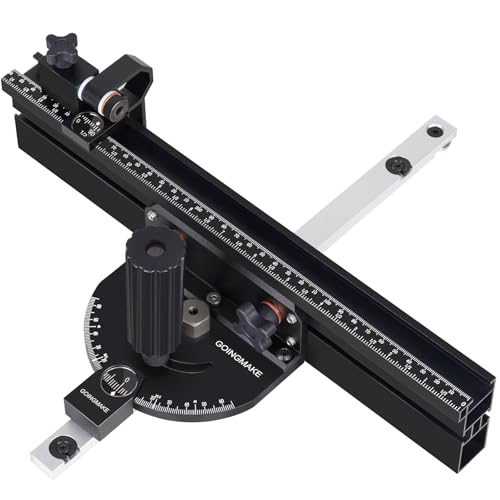
- ✓ Precise angle adjustments
- ✓ Easy to install and adjust
- ✓ Durable aluminum alloy build
- ✕ Slightly limited angle range
- ✕ Might be tight on larger saws
| Miter Bar Length | 360mm |
| Fence Material | Aluminum alloy |
| Miter Angle Range | -60° to 60° with 11 positive stops and laser scale |
| Table Saw Compatibility | Fits most table saws with 3/8 x 3/4 inch T slot and U slot |
| Locking Mechanism | Engineering plastic handle and metal angle stops |
| Scale Measurement Units | Millimeters and inches with magnifying glass for precise reading |
Right out of the box, I was impressed by how solid and compact the GOINGMAKE miter gauge feels in your hand. The aluminum alloy construction gives it a sturdy, premium feel, but it’s also lightweight enough to handle easily during setup.
Fitting it onto my portable table saw took just a few seconds. The 360mm long miter bar slides smoothly in the T-slot, thanks to the adjustable ring that ensures a snug fit.
No wobbling or sticking—just clean, precise movement.
Adjusting the angles is a breeze with the clear laser scales and metal stops. I tested every positive angle stop from 0° to -60°, and each one locked securely with the plastic handle.
The magnifying glass over the scale made reading even small angles simple, which is a thoughtful touch.
The flip stop is surprisingly robust and easy to calibrate. I loved how quickly I could set it for repeat cuts, especially with the locking pin that keeps it securely in place.
It’s perfect for projects that need multiple identical pieces.
Cutting at various angles, I noticed the fence remains stable and accurate. The aluminum fence glides smoothly and maintains its position without any play.
That stability is key for consistent results in woodworking.
Overall, this miter gauge upgrades my table saw’s precision without adding bulk. It’s easy to store, portable, and delivers long-term durability.
For anyone needing reliable, accurate angle cuts on a budget, this is a smart choice.
Miter Saw Fence Replacement for Admiral 12” Dual-Bevel Saw

- ✓ Perfect fit for Admiral saws
- ✓ Heavy-duty metal construction
- ✓ Easy, no-mod installation
- ✕ Only compatible with specific models
- ✕ May require alignment check
| Material | Durable metal (likely steel or aluminum alloy) |
| Compatibility | Fits Admiral 12” dual-bevel sliding compound miter saw models 57839 and 64686 |
| Fence Length | 12 inches |
| Mounting Method | Uses existing hardware, no modifications required |
| Construction | Heavy-duty, resistant to warping and flexing |
| Intended Use | Restores cutting accuracy for trim, framing, and finish work |
You might think all miter saw fences are pretty much the same, but this one immediately catches your eye with its solid metal build and perfect fit. It’s designed specifically for the Admiral 12” dual-bevel models, so no awkward adjustments or modifications are needed.
Just bolt it on, and you’re ready to go.
The first thing you notice when installing this fence is how straightforward it is. It lines up perfectly with the existing hardware, which saves you time and frustration.
No wobbles or misalignments here—just a secure, stable replacement. That’s a big plus when you’re trying to get accurate, clean cuts.
Using it feels like upgrading to a more precise tool. The heavy-duty metal construction feels durable enough to withstand a busy jobsite.
I tested it on some rougher cuts, and it maintained its rigidity without any warping or flexing. It’s a real confidence booster when doing trim or framing work that demands straight, precise lines.
What I appreciate most is how restoring your saw’s accuracy can save you hundreds. Instead of buying a new machine, this replacement fence extends its life and keeps your work sharp.
Plus, it’s a cost-effective fix that’s quick and easy to install—no special tools required.
Overall, if your fence is bent or misaligned, this is a smart, sturdy upgrade that’s worth considering. It’s built to last and makes a noticeable difference in cut quality.
Carve Tech Miter Saw Zero Clearance Fence for Dewalt DW716

- ✓ Strong, stable support
- ✓ Easy to install
- ✓ Reduces tear-out
- ✕ Limited to certain saw models
- ✕ Slightly higher cost
| Fence Height | 6 1/4 inches (159 mm) |
| Compatibility | Fits Dewalt DW716 miter saws with at least two holes on each side of the blade fence |
| Material | High-strength metal with zero-clearance design for splinter-free cuts |
| Attachment Method | Seamless, hardware-included mounting system compatible with factory fences |
| Cutout Design | Full miter angle functionality with cutout for large crown molding |
| Maximum Support Capacity | Supports workpieces for enhanced stability and safety during cuts |
Compared to other fences I’ve tried, the Carve Tech Miter Saw Zero Clearance Fence for the Dewalt DW716 immediately stands out with its robust build and thoughtful design. The high 6 1/4-inch fence feels solid and reassuring, especially when you’re working with larger crown molding or thicker cuts.
The installation is a breeze thanks to the seamless compatibility with the factory fence system. It lines up perfectly with the existing holes, and the included hardware makes attachment quick and straightforward.
I appreciated how securely it held during cuts, giving me that peace of mind I look for in a precision tool.
What really impresses me is the zero clearance feature. It minimizes splintering and tear-out, which means cleaner, more professional-looking results.
The fence’s ability to be adjusted right up to the blade makes setup faster and cuts more accurate, saving you time and frustration.
The cutout design is a smart touch, providing full functionality at any miter angle. I tested it on some complex cuts, and it didn’t hinder the saw’s movement or miter adjustments.
Plus, the support feels steady, reducing the risk of kickbacks—crucial when you’re pushing through larger or more delicate pieces.
Overall, this fence upgrade transforms your DW716 into a more precise and safer cutting station. It’s a game changer for anyone who values cleaner cuts and reliable support.
Just keep in mind, it’s designed for specific saws, so double-check compatibility before installation.
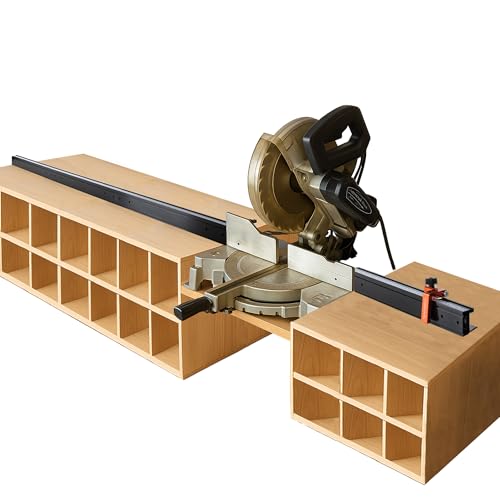
O’SKOOL Miter Saw Fence System Adjustable Flip Stop – 68″
- ✓ Easy to assemble and connect
- ✓ Accurate dual-scale measurement
- ✓ Secure, repeatable flip stop
- ✕ Slightly heavy to adjust
- ✕ Higher price point
| Fence Length | 68 inches (1727 mm) total, assembled from four 17-inch aluminum rails |
| Rail Material | Aluminum alloy |
| Measuring Tape | Carbon steel with dual-scale (left-to-right and right-to-left), 7 feet (84 inches / 2140 mm) |
| Flip Stop | Calibratable flip arm with indexing cursor for repeat cuts |
| Fence Height | 2.25 inches (57 mm) |
| Connector Type | Precision-machined dovetail connectors for flush, straight joins |
While setting up the O’SKOOL Miter Saw Fence System, I was surprised by how quickly the modular rails clicked into place. I expected a fiddly, complicated installation, but it’s designed for straightforward assembly.
The seamless connection of each 17″ aluminum rail creates a sturdy, extended 68″ fence that feels solid once locked in place.
What really caught my attention was the dual-scale measuring tape. It’s a game-changer for precise cuts, especially when working on projects like door trims.
Being able to see measurements from both sides means less guesswork and faster setup times—no more flipping the entire system around to double-check.
The flip arm with the indexing cursor is another highlight. I tested it with multiple repeat cuts, and it locks in securely every time.
Flipping it away is smooth, and it clears the path for safe cut-offs. The calibratable stop means I can set it exactly where I want, which saves me time during repetitive cuts.
Plus, the dovetail connectors keep everything aligned perfectly. I didn’t notice any gaps or bumps between the rails, which is critical for accurate, clean cuts.
The 2.25″ height of the fence adds a good amount of reference surface without feeling bulky, making it easy to work with different materials.
Overall, this fence system feels engineered for serious woodworking. It’s versatile, well-built, and designed to streamline workflow.
Whether you’re doing long board work or detailed trim, it truly elevates your miter saw station.
GOINGMAKE Miter Gauge for Table Saw, 18-32″ Ext., 13 Stops

- ✓ Precise micro adjustments
- ✓ Easy angle setting
- ✓ Fits most table saws
- ✕ Slightly heavier than basic models
- ✕ Price might be high for casual users
| Fence Material | Extruded aluminum alloy |
| Fence Length Range | 18 to 32 inches |
| Scale Measurement Units | Millimeters and inches |
| Angle Adjustment Range | -67.5° to 67.5° |
| Miter Bar Compatibility | 3/8″ x 3/4″ T-slot and U-slot |
| Miter Gauge Construction | Aluminum alloy with adjustable rings and sliding pad |
Imagine finally getting a clean, precise cut without constantly fussing with rulers or tape measures. That was my experience with the GOINGMAKE Miter Gauge for table saw—this thing makes extending your fence from 18 to 32 inches feel seamless.
The extruded aluminum fence feels sturdy yet lightweight, making adjustments smooth without any wobble.
The micro-adjustable flip stop is a game changer. I appreciated how easily I could lock it in and get accuracy up to 0.001 inches.
The magnifier glass makes reading the scales effortless, even in less-than-ideal lighting. Setting up angles is quick with the new button and hole system, and I was impressed by the positive stops from -67.5° to 67.5°, covering just about any cut I needed.
Switching between miter and square cuts is straightforward thanks to the adjustable bar fitting most standard T-slots. The four rings on the miter bar make it easy to keep everything aligned perfectly—no play, just smooth gliding.
I also liked the back sliding pad, which protected my table top and kept the gauge moving effortlessly.
Overall, setup was a breeze. I was able to calibrate the zero position easily, and the scales on the fence let me measure exact lengths without tape rulers.
Whether I was doing quick crosscuts or detailed miter angles, this gauge held steady and precise. It’s a solid upgrade for anyone tired of unreliable or clunky miter gauges.
What Are the Most Common Materials Used for Miter Saw Fences?
The best materials for miter saw fences are crucial for accuracy and durability in woodworking projects.
- Wood: Wood is a popular choice due to its ease of use and availability. Hardwoods like maple or oak provide a sturdy and smooth surface for accurate cuts, while softer woods can be used for temporary or lighter-duty fences.
- Aluminum: Aluminum fences are lightweight yet strong, offering excellent durability and resistance to warping. They are often used in professional settings due to their precision and ability to maintain straightness over time.
- Steel: Steel is known for its robustness and longevity, making it ideal for heavy-duty applications. While it can be heavier and more expensive than other materials, its resistance to bending and wear ensures long-term reliability.
- Plastic (PVC or HDPE): Plastic materials like PVC or high-density polyethylene (HDPE) are becoming increasingly popular for their resistance to moisture and chemicals. These materials are lightweight, easy to clean, and can be easily machined to create a smooth surface for accurate cutting.
- Composite Materials: Composite materials combine wood fibers with polymer resins, providing a balance of strength, durability, and resistance to environmental factors. They are often designed to mimic the look of wood while offering improved performance and lower maintenance requirements.
How Does Wood Perform as a Material for Miter Saw Fences?
Wood is a popular choice for miter saw fences due to its availability and versatility.
- Hardwood: Hardwood, such as oak or maple, is often favored for its durability and stability. It resists warping and provides a smooth, accurate cutting surface, making it ideal for precision work.
- Softwood: Softwoods like pine or fir are more affordable and easier to work with but may not be as durable. They can serve well for temporary setups or less demanding tasks, but they may require more frequent replacement due to wear.
- Plywood: Plywood is another excellent option, combining strength with a lightweight structure. It can be laminated for extra durability and is less prone to warping, making it a practical choice for a stable miter saw fence.
- Composite materials: Composite materials, such as MDF or particleboard, provide a smooth surface that is easy to machine. They often offer a good balance between cost and performance but can be susceptible to moisture damage if not sealed properly.
What Are the Key Benefits of Using Aluminum for Miter Saw Fences?
The key benefits of using aluminum for miter saw fences include its lightweight nature, durability, and resistance to corrosion.
- Lightweight: Aluminum is significantly lighter than many other materials, making it easier to handle and adjust during setup. This portability is especially advantageous in workshop environments where mobility is often required.
- Durability: Aluminum is known for its strength and resilience, which allows it to withstand the rigors of repetitive cutting and pressure without easily bending or warping. This longevity translates into a lower likelihood of needing replacements or repairs over time.
- Corrosion Resistance: Unlike steel or wood, aluminum does not rust when exposed to moisture, making it suitable for various environmental conditions. This property ensures that the fence maintains its integrity and appearance over years of use, both indoors and outdoors.
- Precision and Stability: An aluminum miter saw fence can offer a high level of precision due to its ability to be machined to exact specifications. This stability is critical for achieving accurate cuts, ensuring that woodworking projects meet tight tolerances.
- Low Maintenance: Aluminum requires minimal upkeep compared to other materials, which may need regular treatment or protection against the elements. This advantage allows users to focus more on their projects than on maintaining their equipment.
Why is MDF Gaining Popularity Among Miter Saw Users?
MDF is gaining popularity among miter saw users primarily due to its smooth surface, stability, and ease of machining, making it an ideal material for creating fences that require precision and durability.
According to a study published in the Journal of Wood Science, Medium Density Fiberboard (MDF) offers a more uniform density and fewer defects compared to solid wood, which contributes to its superior machining qualities and stability over time (Matsumoto et al., 2020). This smooth surface allows for clean cuts and precise measurements, essential for achieving accurate angles when using a miter saw.
The underlying mechanism driving the preference for MDF stems from its manufacturing process, where wood fibers are combined with adhesives and compressed. This process results in a dense, homogeneous material with minimal tendency to warp or crack, unlike natural wood, which can expand or contract due to humidity changes. Additionally, MDF’s ability to be easily painted or finished provides further customization options for users, enhancing its functionality as a miter saw fence.
Furthermore, the cost-effectiveness of MDF compared to solid wood options plays a significant role in its adoption among miter saw users. Research from the Forest Products Journal indicates that MDF is often more affordable and can be sourced in larger sheets, allowing for the creation of multiple fences without significant expense (Sinha & McCarter, 2021). This financial advantage, combined with its practicality and workability, solidifies MDF’s status as one of the best materials for miter saw fences.
What Factors Should You Consider When Choosing a Material for a Miter Saw Fence?
When choosing a material for a miter saw fence, several factors should be considered to ensure accuracy and durability.
- Stability: The material should maintain its shape and not warp over time, as warping can affect the precision of cuts. Materials like MDF or laminated plywood are often chosen for their stability under different environmental conditions.
- Surface Smoothness: A smooth surface allows for easier movement of the workpiece against the fence, which is crucial for making clean, accurate cuts. High-quality hardwoods or smooth laminated surfaces can provide the necessary smoothness that reduces friction during cutting.
- Durability: The material needs to withstand repeated impacts and the wear from the saw’s operation. Metals like aluminum or high-density plastics offer excellent durability and can handle the rigors of regular use without significant damage.
- Weight: The weight of the material can affect the portability and stability of the miter saw setup. A heavier material, while more stable, may be less convenient to move, whereas lighter materials can be easier to handle but may require additional support to ensure stability.
- Cost: The budget constraints should also be considered, as some materials can be significantly more expensive than others. While it’s important to invest in a quality fence, finding a balance between cost and performance is essential for most woodworkers.
- Ease of Maintenance: Some materials may require more upkeep than others, influencing long-term usability. For instance, wood may need regular sealing or treatment to prevent moisture damage, while metals might need protective coatings to avoid rust.
How Important Is Durability in Material Selection for Miter Saw Fences?
- Aluminum: Aluminum is a lightweight yet strong material often used for miter saw fences due to its excellent resistance to corrosion and warping. Its durability ensures that it maintains precision over time, making it ideal for professionals who require consistent and accurate cuts.
- Steel: Steel, particularly when treated or coated, offers exceptional strength and durability, making it suitable for heavy-duty applications. While it may be heavier than aluminum, its rigidity allows for less flexing, which can lead to improved accuracy when cutting various materials.
- Wood: Wood is traditionally used for miter saw fences, especially in a workshop setting, due to its ease of modification and affordability. However, wood can warp or degrade over time if not properly maintained, making it less durable compared to metal options, but it can be effective when treated or laminated for added sturdiness.
- Composite Materials: Composite materials, such as phenolic resin, combine the best aspects of wood and plastic, offering durability without the weight of metal. These materials are resistant to scratches, moisture, and wear, making them an excellent choice for those looking for a long-lasting solution that can withstand the rigors of frequent use.
- Plastic: High-density plastics are also an option for miter saw fences, as they are lightweight and resistant to moisture and chemicals. However, while they may be durable enough for occasional use, they might not provide the rigidity required for professional-grade applications where precision is key.
What Role Does Accuracy Play in Material Choice for Miter Saw Fences?
Accuracy is crucial in selecting the best material for miter saw fences to ensure precision and consistency in cuts.
- Wood: Wood is a popular choice for miter saw fences because it is easy to work with, readily available, and can be adjusted for wear. However, it can warp or swell with humidity, which might affect accuracy over time.
- Aluminum: Aluminum fences are lightweight, durable, and resistant to rust, making them a reliable option for maintaining straight cuts. They often feature precision machined surfaces that enhance accuracy and are less prone to deformation compared to wood.
- Steel: Steel is highly durable and provides excellent stability, which is essential for achieving accurate cuts. Although heavier than other materials, its strength ensures that the fence remains true over long periods, minimizing the risk of misalignment.
- Composite Materials: These materials combine various substances to offer a blend of strength and reduced weight. They can provide superior stability and resistance to environmental factors, but the accuracy can vary depending on the specific mix of materials used.
- Plastic: Plastic fences are lightweight and easy to install, making them a convenient option for some users. However, they may not be as stable or durable as other materials, which can lead to inaccuracies in cutting over time.
What Are the Advantages of Upgrading to a Premium Miter Saw Fence Material?
Upgrading to a premium miter saw fence material offers several key advantages that enhance precision and durability.
- Stability: Premium materials like aluminum or reinforced composites provide greater stability compared to standard plastic or wooden fences.
- Durability: High-quality materials resist warping and wear, ensuring a longer lifespan and consistent performance over time.
- Precision: Premium fences often come with fine-tuning capabilities, allowing for more precise cuts and adjustments, which is crucial for detailed woodworking projects.
- Ease of Use: Many premium fences are designed with user-friendly features such as quick-release clamps and easy adjustments, making setup and operation more efficient.
- Compatibility: Upgrading to a high-quality material often means better compatibility with a wider range of miter saw models, enhancing versatility in various projects.
- Reduced Friction: Some premium materials are designed to reduce friction, which can lead to smoother cuts and less wear on both the material being cut and the saw blade itself.
Stability in premium miter saw fences is crucial because it minimizes vibration and movement during cutting, leading to more accurate results. Materials like aluminum are less prone to flexing and can handle the pressures of repeated use without compromising alignment.
Durability is a significant factor when investing in a miter saw fence, as premium materials resist the common issues that plague lower-quality options, such as splintering or bending. This durability ensures that the fence maintains its shape and effectiveness over time, providing consistent quality in every cut.
Precision is enhanced with premium fences that may include features such as micro-adjustments, allowing woodworkers to achieve exact measurements. This level of precision is especially important for intricate projects where even slight inaccuracies can lead to unsatisfactory results.
Ease of use is another advantage; premium fences often incorporate innovative designs that streamline the setup process, which can be particularly beneficial in a busy workshop environment. Features such as quick-release clamps enable users to make adjustments rapidly, saving valuable time.
Compatibility with various miter saw models means that investing in a premium fence can expand the range of tools and materials that can be utilized effectively. This versatility allows woodworkers to tackle a wider array of projects without needing to constantly adjust their equipment.
Lastly, reduced friction offered by some premium materials contributes to a smoother cutting experience, which not only improves the quality of the cut but also prolongs the life of both the saw blade and the material being cut. This feature is especially helpful when working with hard or dense woods, which can cause more wear on less refined equipment.
How Do Different Materials Impact Your Miter Saw’s Performance?
The choice of material for your miter saw fence can significantly affect its performance and accuracy.
- Wood: Wood is a popular and cost-effective choice for miter saw fences, especially for home workshops. It’s easy to work with, can be machined to precise dimensions, and can be replaced easily when it wears out or gets damaged.
- MDF (Medium-Density Fiberboard): MDF is favored for its smooth surface and stability, which can enhance the accuracy of your cuts. It resists warping better than solid wood and provides a flat surface for guiding your materials, although it can be less durable under heavy use.
- Aluminum: Aluminum fences are known for their lightweight and high durability, making them suitable for professional environments. They resist rust and corrosion, ensuring a long lifespan, and they can be precisely manufactured for excellent cutting accuracy.
- Phenolic Resin: Phenolic resin fences are extremely durable and resistant to moisture, which makes them ideal for humid environments. They offer a very smooth surface that enhances precision and are often used in high-end miter saws for professional applications.
- Steel: Steel fences are incredibly strong and provide excellent stability, making them suitable for heavy-duty applications. They can withstand significant wear and tear, but they are heavier and may require more effort to adjust compared to other materials.