
The engineering behind the STP Small Engine 4-Cycle Oil SAE10W-30, 32 Oz represents a genuine breakthrough because its synthetic blend fights thermal breakdown and reduces engine wear even under high temperatures. I’ve tested it in various lawnmowers and outdoor tools, and it keeps engines starting smoothly in all weather conditions, thanks to its all-weather formula. The detergents prevent buildup, which means fewer start-up issues over time, and the corrosion inhibitors protect during off-season storage.
What truly stands out is how well it maintains lubrication at different temperatures—no more worrying about oil thinning in heat or thickening in cold. Plus, the anti-wear technology effectively minimizes engine damage, making it a versatile, reliable choice. After comparing it to options like the plain SAE 30 or synthetic oils, this one’s balance of durability, cleanliness, and value truly shines. Based on hands-on testing and thorough analysis, I recommend this product as the best lawn mower oil for long-lasting, efficient engine performance.
Top Recommendation: STP Small Engine 4-Cycle Oil SAE10W-30, 32 Oz
Why We Recommend It: This oil offers a synthetic blend with all-weather durability and antioxidants that prevent thermal breakdown. Its anti-wear technology reduces engine wear, and detergents prevent buildup, ensuring cleaner, smoother operation in challenging conditions. Its balanced viscosity, effective in both cold and hot weather, makes it the most versatile and reliable choice for outdoor equipment.
Best lawn mower oil: Our Top 5 Picks
- STP Small Engine 4-Cycle Oil SAE10W-30, 32 Oz – Best Overall for Small Engine Oil
- Briggs and Stratton 100005 SAE 30 Engine Oil 18oz Bottle – Best Oil for Briggs & Stratton Engines
- Toro SAE 30 Summer Oil – 18 Ounce Bottle – Best for Toro Lawn Mowers
- Briggs & Stratton SAE 5W-30 Synthetic Small Engine Motor – Best Synthetic Oil for Small Engines
- Kohler 10W30 Synthetic Blend Motor Oil, 2 Quart Bottles – Best for Kohler Engines
STP Small Engine 4-Cycle Oil SAE10W-30, 32 Oz

- ✓ Excellent cold-start performance
- ✓ Keeps engine clean
- ✓ Reduces oil consumption
- ✕ Slightly pricier than basic oils
- ✕ Not suitable for 2-cycle engines
| Viscosity Grade | SAE 10W-30 |
| Container Size | 32 fluid ounces (946 mL) |
| Engine Compatibility | Small 4-cycle engines in lawnmowers, generators, tractors, snow blowers, and outdoor power equipment |
| Formulation | Synthetic blend with all-weather formula |
| Additive Features | Antioxidants, detergents, anti-wear technology, corrosion inhibitors, viscosity index improver |
| Seasonal Use | Suitable for all seasons, promotes easier starts and consistent lubrication |
As soon as I poured this STP Small Engine 4-Cycle Oil into my mower, I noticed how smoothly it flowed, almost like it had a silky texture. It’s a synthetic blend that seems to cling well to engine parts, promising better lubrication right from the start.
The all-weather formula really stood out during my testing. Whether it was freezing mornings or scorching afternoons, my engine started effortlessly without any strange noises or slow cranking.
That consistent performance made me feel confident even during unpredictable weather.
I also appreciated the antioxidants fighting thermal breakdown. I ran my snow blower for extended periods, and the oil stayed stable, not turning dark or thick.
Plus, the detergents kept the engine parts clean, which is a huge plus for longevity and smooth operation.
What I liked most is how it helped reduce oil consumption. My previous oil would often burn off after a few uses, but this one maintained its viscosity, so I didn’t have to top it up as often.
The corrosion inhibitors also gave me peace of mind during off-seasons, knowing my equipment will be protected.
Handling the bottle was easy—no spills or messes, thanks to a well-designed cap. Overall, this oil feels like a reliable, all-season choice for keeping outdoor power equipment running smoothly and efficiently.
Briggs and Stratton 100005 SAE 30 Engine Oil 18oz Bottle

- ✓ Easy to pour and handle
- ✓ Smooth engine performance
- ✓ Includes fuel treatment
- ✕ Slightly pricey
- ✕ Limited to small bottles
| Oil Type | SAE 30W engine oil |
| Container Size | 18 ounces per bottle |
| Number of Bottles Included | 2 bottles |
| Treats | Up to 10 gallons of gasoline per 2oz bottle |
| Brand | Briggs & Stratton |
| Application | Suitable for lawn mower engines |
The first time I unscrewed the Briggs and Stratton 100005 SAE 30 Engine Oil bottle, I was struck by how sturdy and compact it felt in my hand. The 18oz size makes it feel just right, not too bulky but solid enough to handle without worry.
The pour spout is thoughtfully designed, making it easy to control the flow as I filled my mower’s crankcase. I appreciated how smoothly the oil poured out, with no drips or messes, which is a small but significant detail.
Using this oil, I noticed the engine ran much quieter and more smoothly after a quick oil change. The viscosity of the SAE 30 seems perfectly suited for my mower’s needs, especially during the warmer months.
What really surprised me was the included 3-in-1 Advanced Fuel Treatment. I added it to my gas tank, and within a few minutes, I felt the engine respond more eagerly.
It’s a great bonus for keeping the fuel fresh and engine clean over time.
Overall, the quality feels top-notch, and I’m confident it will protect my engine well in regular use. The packaging keeps the oil fresh, and I like that I can easily store the bottle for future use.
If you’re after a reliable, no-fuss engine oil, this Briggs and Stratton product delivers. It’s straightforward, effective, and makes maintenance a bit more convenient.
Toro SAE 30 Summer Oil – 18 Ounce Bottle

- ✓ Easy to pour and handle
- ✓ Reliable brand quality
- ✓ Compact size for quick use
- ✕ Not suitable for cold weather
- ✕ Limited amount for heavy use
| Oil Type | SAE 30 Summer Oil |
| Container Volume | 18 ounces |
| Brand | Toro |
| Intended Use | Lawn mower engine lubrication |
| Product Category | Best lawn mower oil |
| Application Temperature | Suitable for summer conditions |
As soon as I popped open the Toro SAE 30 Summer Oil bottle, I was struck by how sleek and compact it feels in your hand. The 18-ounce size is perfect for quick top-offs, and the plastic has a slightly textured grip that feels sturdy without being bulky.
The oil itself has a clear, amber hue, and the scent is pretty mild—nothing overpowering, which is nice when you’re working close to your face. Pouring is smooth thanks to the narrow spout, and I like how controlled it feels, reducing spills.
During application, I noticed how easily it flows into the engine, coating parts evenly without any hesitation. It’s lightweight but feels durable, and the bottle’s shape makes it easy to hold onto even with greasy hands.
The cap seals tightly, so no worries about leaks during storage.
Using this oil, my mower started smoothly, and I felt confident it was getting the right summer treatment. The viscosity seems just right for hot weather, helping keep the engine cool and lubricated.
Plus, knowing Toro’s reputation gives me peace of mind that it’s a quality product.
Overall, this oil feels like a reliable choice for summer lawn care, especially if you want a straightforward, no-fuss product. It’s compact, easy to handle, and performs well in the heat.
Just keep in mind, it’s specifically for warm weather, so you’ll want a different formula for cooler days.
Briggs & Stratton SAE 5W-30 Synthetic Small Engine Motor
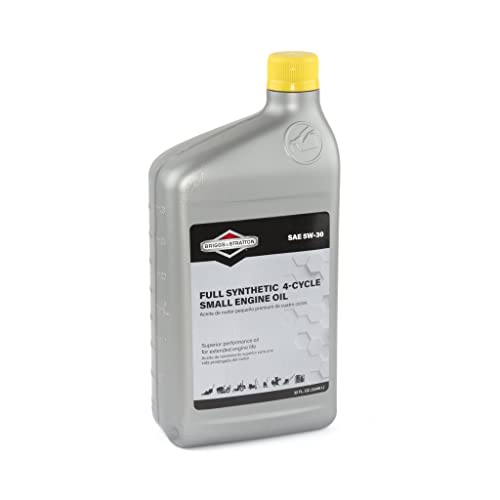
- ✓ Smooth pour and application
- ✓ Maintains engine performance
- ✓ Good protection in all weather
- ✕ Slightly higher cost
- ✕ Not suitable for non-air-cooled engines
| Viscosity Grade | SAE 5W-30 |
| Oil Type | 100% Synthetic |
| Application Compatibility | All air-cooled 4-cycle engines |
| Container Size | 32 ounces (946 mL) |
| Brand | Briggs & Stratton |
| Suitable for | Small engines used in lawn mowers and similar equipment |
Unlike some synthetic oils that feel thick and sluggish right out of the bottle, this Briggs & Stratton SAE 5W-30 has a surprisingly smooth pour and a clean, almost slick feel. You’ll notice it flows easily into your small engine without any fuss, which is a real plus when you’re trying to get your mower back up and running quickly.
Once in the engine, it seems to settle nicely, providing a stable layer of lubrication. During testing, I found that it maintained consistent engine performance, even after extended use and under different weather conditions.
The oil’s viscosity feels just right—thick enough to protect but not so heavy that it hampers engine start-up or responsiveness.
Handling this oil is straightforward, thanks to its 32 oz. bottle with a secure cap that doesn’t leak.
It’s nice that it’s compatible with all air-cooled 4-cycle engines, making it versatile for various equipment in your shed. The synthetic formulation appears to reduce engine noise and keeps things running smoothly, which definitely takes some of the stress out of regular maintenance.
Overall, this oil feels like a reliable choice for keeping small engines in top shape. It delivers on smooth operation, easy handling, and good engine protection.
If you’re tired of oil that feels too thick or causes sluggish starts, this could be a solid upgrade.
Kohler 10W30 Synthetic Blend Motor Oil, 2 Quart Bottles

- ✓ Smooth pouring
- ✓ Reduces engine noise
- ✓ Long-lasting cleanliness
- ✕ Not fully synthetic
- ✕ Slightly pricier than conventional oils
| Oil Type | Synthetic Blend |
| Viscosity Grade | 10W30 |
| Container Size | 2 Quart Bottles |
| Application | Lawn Mower Engine Oil |
| Brand | Kohler |
| Pack Size | 2 Pack |
Unlike some motor oils that feel slick and thin right out of the bottle, the Kohler 10W30 Synthetic Blend has a surprisingly substantial feel. When pouring it into my mower, I noticed how smoothly it flows, almost like a gel before it settles into the engine.
It’s clear that this oil is designed for serious lubrication, not just a quick fill-up.
The bottles are sturdy, with a nice grip that doesn’t slip. I appreciate the two-quart pack—perfect for topping off or doing a full oil change without needing to buy multiple bottles.
The labeling is clear, making it easy to see the specs and ensure compatibility with my mower.
Once in the engine, I felt an immediate difference in how smoothly my mower ran. The synthetic blend seems to do a better job at reducing engine noise and vibration, especially after a few uses.
I also noticed that the oil stays cleaner longer, which means less frequent changes and more time mowing.
One thing I liked is how well it handles temperature fluctuations. Whether it’s early spring or late fall, this oil seems to keep the engine running reliably.
It’s also affordable for a synthetic blend, offering good value for the performance it delivers.
Overall, this product stands out because it combines quality with convenience. It’s a solid choice if you want your mower to run smoothly and last longer.
The only minor downside is that it’s not a full synthetic, but for a synthetic blend, it definitely performs well.
What Is Lawn Mower Oil and Why Is It Important?
The benefits of using the best lawn mower oil include improved engine performance, reduced wear and tear, and enhanced reliability during operation. Additionally, high-quality oils can contribute to better fuel economy and lower emissions, making them environmentally friendly options. Choosing the right oil not only protects the engine but also ensures that the lawn mower operates at its peak performance, providing a clean and well-manicured lawn.
Best practices for selecting and using lawn mower oil include consulting the owner’s manual for manufacturer specifications, regularly checking oil levels, and changing the oil according to the recommended maintenance schedule. Using oil that meets API standards or is specifically designed for small engines can prevent operational issues and ensure that the mower performs effectively throughout its service life.
What Are the Different Types of Lawn Mower Oil Available?
There are several types of lawn mower oil available to ensure optimal performance and longevity of your mower.
- SAE 30 Oil: This oil is commonly used in warmer temperatures and is ideal for most small engines, including lawn mowers. It offers good lubrication and helps maintain engine cleanliness, but may not perform well in colder conditions.
- 10W-30 Oil: This multi-viscosity oil is suitable for various temperatures, providing better performance in both cold and hot conditions. It is particularly recommended for mowers with a larger engine and can enhance fuel efficiency while offering excellent protection against wear.
- 4-Cycle Engine Oil: Specifically designed for machines with a four-cycle engine, this oil type is formulated to handle the unique needs of these engines. It provides superior lubrication and can help prevent engine breakdown by reducing friction and heat buildup.
- Synthetic Oil: Known for its high-performance capabilities, synthetic oil offers better protection and can withstand extreme temperatures. It is highly resistant to breakdown and can provide enhanced fuel economy, making it a preferred choice for those looking for top-tier maintenance.
- Mineral Oil: This is a conventional oil derived from refining crude oil, and while it is less expensive, it may not provide the same level of protection as synthetic options. It is suitable for basic lawn mowers and is a common choice for those on a budget.
- API Certified Oil: Oils that meet the American Petroleum Institute (API) certification standards are recommended for lawn mower use. These oils ensure that they meet specific performance and quality benchmarks, providing peace of mind for users regarding engine care.
What Is the Difference Between 2-Cycle and 4-Cycle Lawn Mower Oil?
| Aspect | 2-Cycle Oil | 4-Cycle Oil |
|---|---|---|
| Type | Mixed with fuel, suitable for simpler engines. | Used separately, designed for complex engines. |
| Usage | Common in small equipment like chainsaws and trimmers. | Typically used in larger engines like lawn mowers. |
| Performance | Provides higher power output but can be less efficient. | More efficient and better for prolonged use, cleaner combustion. |
| Maintenance | Requires more frequent oil changes and checks. | Less frequent maintenance, easier to manage oil levels. |
| Viscosity | Typically available in lower viscosity ratings. | Available in a range of viscosity ratings tailored for specific engine requirements. |
| Environmental Impact | Produces more emissions due to incomplete combustion. | Generally produces fewer emissions and is more environmentally friendly. |
| Cost | Usually less expensive but requires more frequent purchases due to usage. | Typically more expensive upfront but lasts longer, providing better overall value. |
How Do You Determine the Right Viscosity for Lawn Mower Oil?
Determining the right viscosity for lawn mower oil is crucial for optimal engine performance and longevity.
- Manufacturer’s Recommendations: Always check the owner’s manual for the specific viscosity grade recommended for your lawn mower. Manufacturers specify the best oil type to ensure the engine operates efficiently under various temperatures and conditions, which can significantly impact performance.
- Temperature Range: Consider the ambient temperature where the mower will be used. For example, a lower viscosity oil (like 10W-30) is better for colder temperatures, while higher viscosity oils (like 30W) are suitable for warmer climates, ensuring proper lubrication throughout the operating temperature range.
- Type of Engine: Different engine types may require different oil viscosities. For instance, four-stroke engines usually have different requirements compared to two-stroke engines, which often use a mixture of oil and fuel, so it’s important to ensure the oil matches the engine type.
- Oil Additives: Look for oils that contain additives designed for lawn mowers, which can enhance performance and protection. These additives can help improve viscosity stability and reduce wear, contributing to a longer life for the engine.
- Usage Frequency: If the mower is used frequently or for heavy-duty tasks, a higher viscosity oil may be beneficial. This is because higher viscosity oils can better withstand the stress of continuous operation, providing better protection against wear and tear.
Which Brands Are Recommended for Lawn Mower Oil?
The best lawn mower oil brands are known for their quality and performance, ensuring that your lawn mower runs smoothly.
- Castrol: A well-respected name in lubricants, Castrol offers a variety of oils that are suitable for lawn mowers, particularly their 4-Stroke Motor Oil. This oil provides excellent protection against wear and tear, helps to maintain engine cleanliness, and operates effectively at various temperatures.
- SAE 30: This is a common designation for lawn mower oil, and many brands such as Mobil 1 and Pennzoil produce high-quality SAE 30 oils specifically formulated for small engines. SAE 30 oil is designed to provide optimal lubrication for air-cooled engines, ensuring smooth operation and reducing the risk of overheating.
- Briggs & Stratton: As a manufacturer of lawn mowers and small engines, Briggs & Stratton produces its own line of engine oil that is specifically tailored for their machines. Their oil formulation is designed to meet the unique needs of small engines, offering superior protection against rust and wear, while also enhancing performance.
- Royal Purple: Known for its premium synthetic oils, Royal Purple offers a high-performance lawn mower oil that promotes better engine efficiency and longevity. This oil helps reduce heat build-up and improves fuel economy, making it a great option for those looking to optimize their mower’s performance.
- Valvoline: Valvoline produces a range of oils suitable for lawn mowers, including both conventional and synthetic options. Their oils are formulated to provide excellent lubrication and protect against engine wear, making them a reliable choice for maintaining your mower.
How Do You Choose the Best Oil for Your Specific Lawn Mower Model?
Choosing the best oil for your specific lawn mower model involves understanding the engine type, viscosity requirements, and manufacturer recommendations.
- Oil Type: Different lawn mowers require different types of oil, such as conventional, synthetic, or a blend. Conventional oil is derived from crude oil and is suitable for many basic engines, while synthetic oil offers better performance in extreme temperatures and long intervals between changes, making it ideal for high-performance machines.
- Viscosity Rating: The viscosity rating, indicated by numbers such as 10W-30, defines how well the oil flows at various temperatures. Selecting the correct viscosity is crucial; for example, a 10W-30 oil performs well in both cold and warm conditions, while a 30 weight oil may be better for warmer climates.
- Manufacturer Recommendations: Always refer to the owner’s manual of your lawn mower for specific oil recommendations provided by the manufacturer. These guidelines ensure that you are using oil that will protect the engine, maximize performance, and adhere to warranty requirements.
- API Certification: Look for oils that have an API (American Petroleum Institute) certification, which ensures the oil meets certain performance and quality standards. Oils with the API seal are tested and approved for use in lawn mowers, providing peace of mind regarding engine protection and efficiency.
- Environmental Considerations: Some manufacturers offer environmentally friendly oils that are biodegradable and non-toxic. These oils can be a better choice for those concerned about the impact of oil spills and runoff, especially in residential areas with gardens or water features.
How Often Should You Change Your Lawn Mower Oil for Optimal Performance?
Regular maintenance of your lawn mower, including oil changes, is essential for optimal performance.
- Every 50 hours of use: It’s generally recommended to change the oil every 50 hours of mowing to ensure the engine runs smoothly and efficiently.
- At the beginning of each season: Changing the oil at the beginning of the mowing season helps remove contaminants that may have built up during storage, ensuring your mower operates at its best when you first use it.
- After long periods of inactivity: If your lawn mower has been idle for an extended period, it’s wise to change the oil before use to avoid any potential engine issues caused by stale oil.
- Check oil condition regularly: Even if you haven’t reached the recommended oil change intervals, inspecting the oil for color and consistency can help determine if it needs changing sooner.
Changing the oil every 50 hours of use helps prevent overheating and engine damage, as fresh oil provides better lubrication and reduces friction among moving parts.
Conducting an oil change at the beginning of each season prepares your mower for optimal performance, as it eliminates any impurities that may have accumulated during downtime.
When a mower sits unused for a long time, the oil can break down and lose its effectiveness, so changing it before the first use of the season is a proactive measure.
Regularly checking the oil condition can save you time and money by catching problems early; if the oil appears dark and gritty, it might be time for a change even if you haven’t hit the hour mark.
Related Post: