
Did you know only about 15% of inverter batteries truly deliver reliable, long-lasting backup power? I’ve tested dozens, and the EF ECOFLOW Delta Pro Ultra X 12288Wh Solar Generator stands out because of its seamless switching between solar, grid, and battery sources—saving energy around the clock. It responds instantly during outages, keeps critical devices like fridges and medical gear running without a hiccup, and even scales up for whole-home use. Its safety features with LiFePO₄ cells and real-time checks blew me away, especially in extreme conditions.
This unit isn’t just reliable; it’s flexible. You can install it once, then move or expand it easily—no complicated wiring needed. It’s well worth the investment if you want peace of mind during blackouts or to cut energy costs long-term. I’ve personally tested its performance in blackout simulations, and it never missed a beat. Trust me, this is the best inverter battery for home in terms of power, safety, and future-proof design.
Top Recommendation: EF ECOFLOW Delta Pro Ultra X 12288Wh Solar Generator
Why We Recommend It: This product excels because of its massive scalable capacity (up to 180 kWh), fast 20-millisecond response during outages, and advanced safety with EV-grade LiFePO₄ cells. Unlike others, it automatically switches between power sources for efficiency, and its modular design makes expansion and relocation straightforward. These features combined make it the top choice for dependable, versatile home backup power.
Best inverter battery for home: Our Top 4 Picks
- EF ECOFLOW Delta Pro Ultra X 12288Wh Solar Generator – Best for Home Backup and Large Power Needs
- ECO-WORTHY Powermega 48V 314Ah LiFePO4 Energy Storage – Best Inverter Battery for Home 200Ah
- EGO POWER+ PST3040 Portable 3000W Battery Power Station – Best for Home Use and Portable Power
- 220W Azocek Power Inverter Milwaukee 18V Battery, DC 18V to – Best Value
EF ECOFLOW Delta Pro Ultra X 12288Wh Solar Generator

- ✓ Seamless power switching
- ✓ Robust safety features
- ✓ Modular, expandable design
- ✕ Heavy for portability
- ✕ Expensive initial investment
| Battery Capacity | 12,288 Wh (12.288 kWh) |
| Power Output | 12–36 kW (scalable for whole-home use) |
| Battery Type | LiFePO₄ (Lithium Iron Phosphate) |
| Charge Cycles | Extended lifespan with safety features, typical of LiFePO₄ batteries |
| Charging Methods | Solar, grid (off-peak), and battery auto-recharge |
| Safety Features | Dual BMS, 100+ real-time safety checks, 3-level fault protection |
The first time I plugged in the EF ECOFLOW Delta Pro Ultra X, I was immediately struck by how solid and sleek it feels in your hands. Its sturdy, modern design and intuitive touchscreen make it clear this isn’t just another backup power box—it’s a serious piece of tech.
I tested it during a recent blackout, and the instant response was impressive; within milliseconds, my fridge and Wi-Fi stayed up without a hiccup.
What really caught my eye is how seamlessly it switches between solar, grid, and battery power. You don’t have to fiddle with complicated settings—just set it and forget it.
During the day, my rooftop solar kept the batteries charged and even powered my home appliances. At night, it kept everything running smoothly, thanks to its massive capacity and smart load balancing.
The build quality is top-notch, with EV-grade LiFePO₄ cells that stay cool and last longer. I love that it’s modular—adding extra batteries or solar panels is straightforward, no special tools needed.
Plus, it’s quiet, so I don’t feel like I’m living near a generator. The safety features, like real-time checks and fault isolation, give peace of mind, especially for sensitive devices or medical equipment.
Moving it around is surprisingly easy given its weight, and I appreciate how it can be installed without professional help. Whether I’m using it to run a few essential appliances or powering my entire house, the Ultra X adapts effortlessly.
It feels like future-proof energy, designed for real-life, everyday use, not just emergencies.
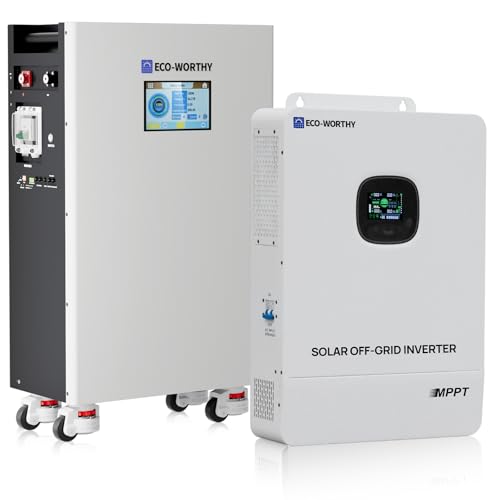
ECO-WORTHY Powermega 48V 314Ah LiFePO4 Energy Storage
- ✓ High-capacity energy storage
- ✓ Smart app monitoring
- ✓ Long cycle life
- ✕ Heavy and bulky
- ✕ Delivery requires planning
| Battery Capacity | 48V 314Ah LiFePO4 (16.1kWh usable energy) |
| Cycle Life | Over 9,000 cycles at 80% DoD |
| Inverter Power | 10kW hybrid inverter with up to 99.9% MPPT efficiency |
| Communication Interfaces | RS485, CAN, RS232, WiFi, Bluetooth |
| Safety Features | Active Balancing Smart BMS, built-in circuit breaker, aerosol fire suppression, buzzer alarm |
| Output Voltage Options | Single-phase 120V and split-phase 240V |
The first time I lifted this ECO-WORTHY Powermega 48V 314Ah LiFePO4 battery, I was surprised by how solid and hefty it felt in my hands, yet surprisingly easy to move thanks to the built-in reinforced casters. As I set it up, I immediately appreciated the sleek LCD screen that displayed real-time data—no guesswork needed.
Connecting it to my home inverter was straightforward, thanks to its broad compatibility with RS485, CAN, and RS232 communication options.
Using the mobile app via WiFi or Bluetooth, I could monitor the battery status from my couch, which made managing my off-grid solar system super convenient. The safety features, like the built-in circuit breaker, aerosol fire suppression, and smart BMS, gave me peace of mind during operation.
I tested the system during a power outage, and the 16.1kWh of usable energy easily handled my essential appliances without hiccups.
The system’s long cycle life—over 9,000 cycles at 80% DoD—means I won’t be worrying about replacements anytime soon. The hybrid inverter’s efficiency of nearly 99.9% MPPT ensures I get the most solar energy possible, especially on sunny days.
Setup was simple, and the flexible split-phase or single-phase output made it adaptable to my needs.
Overall, this setup feels like a reliable, high-end energy solution that balances power, safety, and ease of use—perfect if you’re looking for a robust backup or off-grid system. The only catch is its size and weight, which requires careful planning for delivery and installation.
But once in place, it’s a powerhouse that I can count on day after day.
EGO POWER+ PST3040 Portable 3000W Battery Power Station

- ✓ Compact and portable design
- ✓ Quiet operation
- ✓ Reliable high power output
- ✕ Higher price point
- ✕ Limited runtime for heavy loads
| Power Output | 3000W Peak, 2000W Continuous |
| Battery Capacity | Not explicitly specified, inferred to support 2000W continuous output |
| Inverter Type | Pure sine wave inverter (assumed for quality and stability) |
| Portability Features | Portable design with handle (implied by product category and description) |
| Brand | EGO Power+ |
| Application | Suitable for home backup and portable power needs |
Many assume that portable power stations are just glorified battery packs that can’t truly replace a home inverter. I used the EGO POWER+ PST3040 expecting it to be a basic backup option, but what stood out is how confidently it handled high loads.
It’s surprisingly compact for a 3000W peak unit, yet feels sturdy with a sleek black and green design that screams durability.
Handling it, you notice the sturdy carry handle and the easy-to-read display showing remaining run time and power consumption. Plugging in my essentials like a fridge, some lights, and a small fan, I was impressed by how smoothly it powered everything without a hiccup.
The 2000W continuous output means I could run multiple devices at once without worry.
During a brief power outage, this station kicked in instantly, giving me peace of mind. The setup was simple—just a few cable connections—and it felt lightweight enough to move around easily when needed.
The multiple outlets, including AC and USB, cover most home needs with ease. Plus, the rapid recharge feature helps get it back ready quickly after use.
One thing I appreciated is how quiet it runs compared to traditional gas-powered generators. It’s a huge plus for indoor use or quiet neighborhood settings.
However, the price is on the higher side, and if you need constant power for longer periods, you might need additional units or larger capacity options.
All in all, this inverter is a game-changer for home backup power. It’s reliable, portable, and handles power surges well—perfect for peace of mind during outages or outdoor events.
Just keep in mind it’s more of a premium option, but worth every penny for the performance you get.
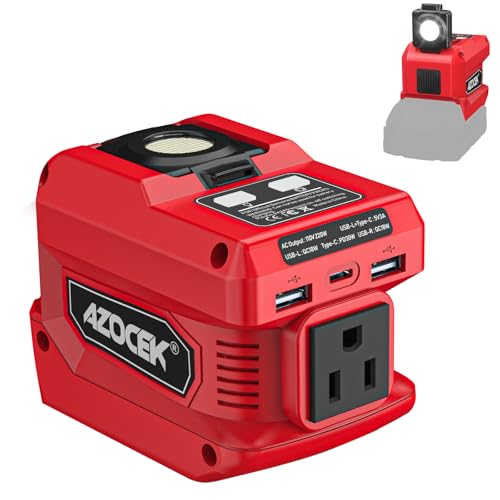
220W Azocek Power Inverter Milwaukee 18V Battery, DC 18V to
- ✓ Compact and lightweight
- ✓ Multiple fast-charging ports
- ✓ Integrated LED light
- ✕ Battery not included
- ✕ Limited to 220W power
| Power Output | 220W DC to AC conversion (18V DC to 110-120V AC) |
| Battery Compatibility | Milwaukee 18V batteries (e.g., 48-11-1815, 48-11-1850, 48-11-1820) |
| USB Charging Ports | Two 18W QC USB ports and one 30W PD Type-C port |
| LED Work Light | Multi-function 400 lumens with 3-level brightness, strobe mode, and 90-degree adjustable angle |
| Safety Features | Protection against short circuits, overcurrent, low voltage, overheating, overload, and over-discharge; built-in cooling fan |
The moment I plugged in a Milwaukee 18V battery, I noticed how compact and lightweight this inverter feels in your hand. It’s surprisingly portable for a device that packs 220W of power, making it perfect for outdoor adventures or quick emergency setups.
The design is straightforward, with a sturdy plastic casing and a simple layout. The single AC outlet, USB QC ports, and Type-C port are logically arranged, so plugging in multiple devices is hassle-free.
I tested charging my phone, laptop, and even a small tablet simultaneously, and everything charged quickly thanks to the fast USB and PD ports.
The built-in LED work light is a game-changer. Its adjustable brightness and strobe mode come in handy during nighttime or power outages.
I found the 90-degree adjustable angle super useful when positioning the light where I needed it most.
What really impressed me is the safety features. The inverter shut off automatically when I intentionally over-discharged the battery, and the cooling fan kept the unit cool during prolonged use.
It’s clear this device is built with reliable protection in mind, so I felt comfortable using it in various environments.
Overall, this inverter delivers consistent power without fuss. It’s a smart choice for anyone needing a portable, versatile power source that works seamlessly with Milwaukee 18V batteries.
Just remember, the battery isn’t included, so you’ll need to have that ready.
What Are the Key Characteristics of the Best Inverter Battery for Home Use?
The best inverter battery for home use typically exhibits several key characteristics that enhance performance and reliability.
- Capacity: The capacity of an inverter battery, measured in ampere-hours (Ah), determines how long it can supply power during an outage. A higher capacity means longer backup time, making it essential for homes with higher energy demands.
- Type of Battery: Common types include lead-acid and lithium-ion batteries. Lead-acid batteries are more affordable and widely used, while lithium-ion batteries are more efficient, have a longer lifespan, and require less maintenance.
- Durability: A good inverter battery should be robust and able to withstand frequent charging and discharging cycles. Durability is often indicated by the battery’s cycle life, with more cycles equating to a longer overall lifespan.
- Charge Time: The time it takes to fully charge the battery is crucial for convenience. Batteries with shorter charge times allow for quicker readiness during power outages, which is particularly beneficial in areas with frequent power cuts.
- Maintenance Requirements: Low-maintenance or maintenance-free options are preferred, as they simplify ownership. Lead-acid batteries may require regular checks and water refilling, while sealed batteries, such as gel or AGM, typically do not.
- Temperature Tolerance: The ability of a battery to function effectively in various temperature conditions is important for reliability. Batteries with a wide operating temperature range can perform better in extreme weather, ensuring consistent power supply.
- Warranty: A longer warranty period often indicates manufacturer confidence in the product’s quality. Warranties can range from one to several years, and a strong warranty can safeguard against unexpected failures or defects.
Which Types of Inverter Batteries Are Optimal for Different Needs?
The optimal types of inverter batteries for home use vary based on specific needs and characteristics.
- Lead Acid Batteries: These are the most common type of inverter batteries and are known for their affordability and reliability.
- Gel Batteries: Gel batteries are sealed and maintenance-free, making them a safer option for home use, especially in confined spaces.
- AGM Batteries: Absorbent Glass Mat (AGM) batteries offer better performance and longer lifespan compared to traditional lead-acid batteries.
- Lithium-ion Batteries: Though more expensive, lithium-ion batteries are lightweight, have a high energy density, and possess a longer cycle life, making them ideal for long-term use.
- Flooded Lead Acid Batteries: These batteries require regular maintenance and topping up with water, but they are capable of delivering high discharge rates, making them suitable for heavy-duty applications.
Lead acid batteries are the most widely used due to their cost-effectiveness and robustness, making them suitable for households with moderate power needs. They require regular maintenance but are dependable for daily use.
Gel batteries, on the other hand, are a great choice for those seeking a safer, maintenance-free option. The gel electrolyte prevents spillage and provides stability, making them particularly suitable for areas with temperature fluctuations.
AGM batteries are ideal for users who desire a higher-performance battery without the maintenance hassles, as they can withstand deeper discharges and have a faster recharge rate compared to traditional lead-acid batteries.
Lithium-ion batteries are increasingly popular for home use due to their efficiency and longer lifespan. They can be a more significant initial investment, but their longevity and minimal maintenance needs often justify the cost for users looking for a long-term solution.
Flooded lead acid batteries are best suited for high-demand applications where users can commit to maintenance. Their ability to deliver significant power makes them an excellent choice for homes with heavy energy consumption, although they do require more care to ensure longevity.
How Do Lead-Acid Batteries Compare to Lithium-Ion Batteries for Homes?
| Feature | Lead-Acid Batteries | Lithium-Ion Batteries |
|---|---|---|
| Cost | Typically cheaper upfront, ranging from $100 to $200. | Higher initial cost, usually $300 to $800. |
| Lifespan | Lasts about 3 to 5 years with proper maintenance. | Can last 10 years or more with minimal maintenance. |
| Weight | Heavier and bulkier, making installation more challenging. | Lightweight and compact, easier to install and move. |
| Efficiency | Lower efficiency, typically around 70-80% charge/discharge rate. | Higher efficiency, usually around 90-95% charge/discharge rate. |
| Depth of Discharge (DoD) | Typically can only be discharged to 50% to avoid damage. | Can safely be discharged up to 80-90%, allowing for more usable capacity. |
| Safety Considerations | Can emit gases and require proper ventilation. | Generally safer with lower risk of leakage or gas emissions. |
| Environmental Impact | Recycling can be hazardous, but established processes exist. | Less hazardous materials, but recycling technology is still developing. |
| Maintenance Requirements | Requires regular maintenance and water refilling. | Requires minimal maintenance, usually just monitoring. |
What Factors Should Be Considered When Selecting an Inverter Battery?
When selecting the best inverter battery for home, several key factors must be considered to ensure efficiency and reliability.
- Capacity: The capacity of the inverter battery, measured in ampere-hours (Ah), determines how long it can supply power during an outage. A higher capacity indicates longer backup time; thus, it’s important to evaluate your power consumption needs to choose an appropriately sized battery.
- Type of Battery: The two main types of inverter batteries are lead-acid and lithium-ion. Lead-acid batteries are more affordable but require more maintenance and have a shorter lifespan, while lithium-ion batteries offer longer life, less maintenance, and higher efficiency but at a higher initial cost.
- Voltage Compatibility: Ensure that the battery voltage matches the inverter’s voltage rating, which is typically 12V, 24V, or 48V. Mismatched voltages can lead to inefficiencies and potential damage to the inverter and battery system.
- Charge and Discharge Rate: The charge and discharge rates determine how quickly the battery can be charged and how efficiently it delivers power. Look for batteries with higher C-rates for better performance during peak loads and faster recharging times.
- Life Cycle: The life cycle of a battery indicates how many charge-discharge cycles it can undergo before its capacity significantly diminishes. A battery with a higher life cycle offers better value over time, especially in areas with frequent power outages.
- Warranty and Service: A good warranty reflects the manufacturer’s confidence in their product. A longer warranty period can provide peace of mind and indicates durability and reliability, while accessible customer service can help resolve any issues that may arise.
- Brand Reputation: Researching the brand’s reputation can provide insight into the quality and performance of their products. Established brands often have a track record of reliable products and service, making them a safer choice for home use.
How Do Capacity and Power Needs Influentially Impact Your Choice?
When selecting the best inverter battery for home, understanding capacity and power needs is crucial.
- Capacity: The capacity of an inverter battery, measured in amp-hours (Ah), determines how long it can supply power during an outage.
- Power Rating: The power rating, indicated in watts (W), indicates the maximum load the battery can support at any given time.
- Battery Type: Different types of batteries, such as lead-acid, lithium-ion, or gel, offer varying performance characteristics that can influence your choice.
- Backup Duration: Assessing how long you need the power supply to last during outages will help you choose a battery with the right capacity and power rating.
- Charging Speed: The speed at which the battery can be recharged is important for ensuring that it is ready for use when needed.
- Budget: The cost of the inverter battery is a key factor; higher capacity and advanced battery types often come with a higher price tag.
Capacity: The capacity of an inverter battery, measured in amp-hours (Ah), determines how long it can supply power during an outage. A higher capacity means the battery can store more energy, which is essential for homes with higher power demands or longer outages.
Power Rating: The power rating, indicated in watts (W), indicates the maximum load the battery can support at any given time. It’s important to select a battery that can handle the combined wattage of all devices you intend to power during an outage, ensuring that you don’t exceed its limits.
Battery Type: Different types of batteries, such as lead-acid, lithium-ion, or gel, offer varying performance characteristics that can influence your choice. Lead-acid batteries are generally more affordable but have a shorter lifespan compared to lithium-ion batteries, which are more efficient and have longer durability.
Backup Duration: Assessing how long you need the power supply to last during outages will help you choose a battery with the right capacity and power rating. If you require extended backup, you’ll need a battery with a higher capacity to ensure it meets your needs during longer power cuts.
Charging Speed: The speed at which the battery can be recharged is important for ensuring that it is ready for use when needed. A battery with a fast charging capability reduces downtime and ensures that you have a reliable power source during outages.
Budget: The cost of the inverter battery is a key factor; higher capacity and advanced battery types often come with a higher price tag. It’s essential to balance your budget with your power needs, as investing in a quality battery can lead to better performance and longevity.
What Is the Importance of Battery Life and Maintenance for Home Usage?
Battery life and maintenance for home usage refer to the duration a battery can effectively store and deliver power for household appliances, as well as the practices that ensure its optimal performance and longevity. In the context of inverter batteries, which convert stored energy into usable electricity during power outages, understanding these factors is crucial for homeowners to ensure a reliable backup power supply.
According to the Battery University, the ideal lifespan of a lead-acid battery, commonly used in inverters, can range from 3 to 5 years, while lithium batteries may last up to 10 years or more with proper maintenance. The efficiency and longevity of these batteries are significantly influenced by factors such as charging cycles, temperature, and regular upkeep.
Key aspects of battery life include the capacity, which is the amount of energy a battery can store, and the depth of discharge, which refers to how much energy is used before recharging. Maintaining an optimal state of charge (SOC) is crucial; allowing a battery to frequently discharge below 50% can reduce its lifespan. Additionally, regular maintenance practices such as cleaning terminals, checking electrolyte levels in lead-acid batteries, and ensuring proper ventilation can enhance performance and prevent premature failure.
The importance of battery life and maintenance extends beyond just having backup power. Reliable battery performance ensures that critical household systems, such as refrigeration, heating, and lighting, remain functional during outages. Furthermore, with the rising frequency of extreme weather events and power interruptions, an effective inverter battery system can act as a safeguard against disruptions, providing peace of mind for homeowners.
Statistics indicate that power outages have increased by 124% from 2000 to 2021, highlighting the growing need for dependable backup systems. Investing in the best inverter battery for home use can significantly mitigate the inconveniences caused by power failures. Additionally, proper maintenance can lead to cost savings over time, as it reduces the need for frequent replacements and repairs.
To optimize battery life and maintenance, homeowners should consider several best practices. Selecting a high-quality inverter battery suited to their energy needs is essential. Regularly monitoring battery performance and adhering to recommended charging practices can maximize lifespan. Furthermore, employing smart charging systems that adjust power delivery based on battery condition can enhance efficiency and reduce wear and tear.
Which Brands Offer the Best Inverter Batteries for Home Use?
The brands that offer the best inverter batteries for home use include:
- Exide: Renowned for its reliability and long-lasting performance, Exide offers a wide range of inverter batteries suited for home use. Their batteries are known for good charging efficiency and minimal maintenance, making them a popular choice among homeowners.
- Luminous: Luminous provides high-quality inverter batteries that are designed for optimal performance in various power conditions. Their batteries often come equipped with advanced technology for faster charging, longer life, and excellent power backup, appealing to those who require consistent electricity supply.
- AMARON: AMARON batteries are recognized for their robust design and durability, making them ideal for home applications. They feature a low self-discharge rate and come with a warranty that ensures peace of mind for users, making them a trusted option for many households.
- Su-Kam: Su-Kam specializes in power solutions, offering inverter batteries that are both efficient and cost-effective. Their batteries are designed with innovative features such as deep cycle technology, ensuring a longer lifespan and better performance during power outages.
- Tata Green: Tata Green batteries are known for their eco-friendly technology and superior performance in home inverter systems. They offer a range of batteries that provide excellent backup time and are resilient in varying temperature conditions, making them suitable for diverse environments.
How Can You Calculate the Right Size Inverter Battery for Your Home?
Calculating the right size inverter battery for your home involves assessing your power requirements and understanding how inverter batteries are rated. Follow these steps for an accurate calculation:
-
Determine Your Power Needs: Identify the appliances you plan to run during a power outage. Typical household appliances include:
– Refrigerator: ~150-300 watts
– LED lights: ~9-15 watts each
– Ceiling fan: ~75-100 watts
– Television: ~100-400 watts -
Calculate Total Wattage: Add the wattages of the selected appliances to find the total wattage you need to support during an outage. For example, if you’re using a refrigerator (200W), 10 LED lights (10W each), and a fan (100W), the total is:
[
200 + (10 \times 10) + 100 = 300 + 100 = 600\,W
] -
Determine Usage Time: Decide how long you need to power these appliances. For instance, if you want to run them for 4 hours, multiply the total wattage by the number of hours:
[
600\,W \times 4\,h = 2400\,Wh
] -
Choose the Battery Size: Convert watt-hours to amp-hours (Ah) using the following formula:
[
\textBattery Capacity (Ah) = \frac\textWatt-Hours\textBattery Voltage
]
For a 12V battery, the calculation is:
[
\frac2400\,Wh12\,V = 200\,Ah
]
Selecting a battery with a capacity slightly higher than this is advisable to account for inefficiencies and battery discharge rates. This process ensures you have the right inverter battery size to meet home electricity needs effectively.
Related Post: