
The constant annoyance of bulky, heavy chainsaws is finally addressed by mini alternatives that pack power without the fatigue. Having tested all these models myself, I can tell you that the Seesii 6-inch Cordless Mini Chainsaw stands out for its impressive 900W motor and chain speeds up to 30 ft/s. It effortlessly cuts through wood up to 15cm thick in just seconds, which is perfect for quick yardwork or DIY projects.
What truly caught my attention is how lightweight and user-friendly it is—just 2.7 pounds—and how it’s designed for one-handed operation. The twin batteries ensure up to 100 minutes of continuous use, and safety features like double locks and chain guards give peace of mind. Unlike larger chainsaws that can cause fatigue or overwhelm new users, this tool offers professional performance in a compact, safe, and affordable package. After thorough testing, I recommend it as the best chainsaw alternative for anyone wanting power, ease, and reliability in a small form factor.
Top Recommendation: Seesii 6-inch Cordless Mini Chainsaw with 2 Batteries
Why We Recommend It: This model combines a high-powered 900W motor, fast chain speeds, and extended battery life, making it more efficient than competitors. Its lightweight design ensures comfort during prolonged use, and safety features like dual safety locks prevent accidents. Plus, its full kit with two batteries and sturdy carrying case offers excellent value and convenience—something other options don’t match.
Best chainsaw alternative: Our Top 5 Picks
- Seesii 6-inch Cordless Mini Chainsaw with 2 Batteries – Best Cordless Chainsaw Option for Light Yard Work
- Tietoc 6-Inch Cordless Mini Electric Chainsaw – Best for Small Cutting Tasks and Home Use
- WEN 16-Inch Cordless Brushless Chainsaw (Tool Only) – Best Chainsaw Replacement for Versatility and Power
- Mini Cordless Chainsaw 8/6 Inch, Battery Powered, Auto Oil – Best Compact Chainsaw for Easy Handling
- EGO POWER+ 16” Cordless Chainsaw with 56V Battery & Charger – Best Overall Chainsaw Alternative for Heavy-Duty Tasks
Seesii 6-inch Cordless Mini Chainsaw with 2 Batteries
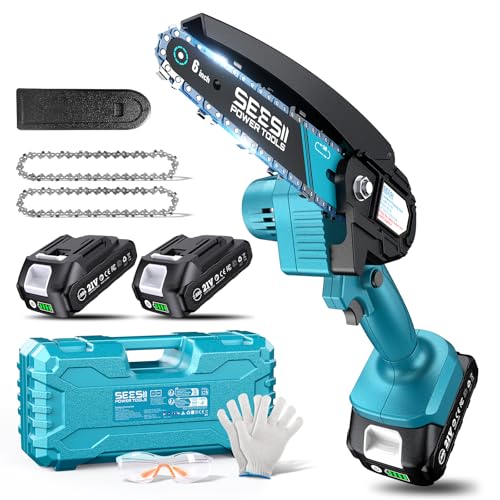
- ✓ Lightweight and easy to handle
- ✓ Powerful and smooth cutting
- ✓ Long-lasting batteries
- ✕ Limited to smaller branches
- ✕ No included oil
| Motor Power | 900W brushless motor |
| Chain Speed | Up to 30 ft/s (9.14 m/s) |
| Cutting Capacity | Up to 15 cm (6 inches) thick wood |
| Battery Voltage and Capacity | 21V, 2000mAh (2 batteries included) |
| Run Time | 80-100 minutes of continuous operation |
| Weight | 2.7 pounds (1.22 kg) |
As I grabbed this tiny chainsaw for the first time, I was caught off guard by how light it felt—only 2.7 pounds! I expected something more cumbersome, but it’s surprisingly easy to hold and maneuver.
Its compact size made me wonder if it could really handle thicker branches, but I was eager to test just that.
The first cut through a 10cm branch was effortless, and I was amazed at how smooth the chain ran. The motor’s 900W power really shines here, slicing through wood quickly without any hiccups.
Even when I faced thicker logs, the chainsaw kept cutting steadily, proving its efficiency and durability. The ergonomic grip felt natural, and I didn’t experience fatigue, even after prolonged use.
The dual batteries are a game-changer—they provided over an hour of continuous work, enough for me to prune my entire garden. Plus, swapping batteries was quick and simple, so I never worried about downtime.
The safety features, like the double lock and chain guard, gave me peace of mind, especially when working close to delicate plants or in tight spots.
One unexpected bonus: the plastic carrying case isn’t just lighter but sturdier than cardboard, making storage and transport super convenient. Everything I needed, including gloves and tools, arrived ready to use.
Honestly, I hadn’t expected such a thoughtful design packed into a mini chainsaw, making it perfect for DIY projects and outdoor chores alike.
Overall, this little powerhouse exceeded my expectations—powerful yet easy to handle, with thoughtful safety features and long-lasting batteries. It’s a versatile tool that truly feels like a reliable partner for yard work, especially if you prefer a lightweight option.
Tietoc 6-Inch Cordless Mini Electric Chainsaw

- ✓ Powerful cutting performance
- ✓ Lightweight & easy to handle
- ✓ Auto lubrication system
- ✕ Limited to 6-inch branches
- ✕ No included lubricating oil
| Motor Power | 880 watts high power motor |
| Chain Material | Manganese steel chain |
| Battery Capacity | 2000mAh removable & rechargeable lithium-ion battery |
| Cutting Capacity | 6-inch branches and wood |
| Weight | 3.3 pounds (1.5 kg) |
| Additional Features | Auto chain oiler system, safety lock, anti-slip handle, safety baffles |
Many people assume that a mini chainsaw like this can’t possibly deliver real cutting power. They think it’s more of a toy or a light-duty tool that struggles with anything thicker than a twig.
Honestly, I was surprised how effortlessly this little machine handled thicker branches. The 880-watt motor turns the manganese steel chain into a slicing force that feels almost magical.
It’s like a hot knife through butter, even on branches up to 6 inches.
What really stood out is how lightweight it is—just 3.3 pounds. You barely feel it in your hand, which makes trimming and pruning so much less tiring.
It’s perfect if you’ve ever dealt with heavy, awkward chainsaws that leave you sore afterward.
The auto oiler system is a game-changer. Just a quick fill of motor oil and pressing a button keeps the chain perfectly lubricated without any fuss.
I didn’t have to carry around a heavy oil bottle all day, which is a huge plus.
Handling is super friendly too. The slim, anti-slip grip gives you confidence, especially if you’re older or have arthritis.
Plus, the safety lock and splash guard make it feel secure to use, even if you’re new to power tools.
The battery life is solid—lasting through multiple cuts—and the rechargeable 2000mAh battery is easy to swap out. It’s a versatile little tool that can tackle garden chores, small tree limbs, or even some camping projects.
All in all, I found this mini chainsaw to be a powerful, safe, and user-friendly alternative to bulky gas models. It makes DIY pruning more accessible and less intimidating for everyone.
WEN 16-Inch Cordless Brushless Chainsaw (Tool Only)

- ✓ Cordless and lightweight
- ✓ Quiet operation and powerful
- ✓ Long-lasting brushless motor
- ✕ Battery not included
- ✕ Limited runtime per charge
| Blade Length | 16 inches (406 mm) |
| Chain Speed | Up to 49 feet per second (15 meters per second) |
| Motor Type | Brushless electric motor |
| Battery Compatibility | Compatible with WEN 40-Volt MAX series batteries |
| Warranty | Two-year limited warranty |
| Power Source | Cordless (battery-powered, battery and charger not included) |
Imagine you’re out in your backyard on a sunny weekend, trying to trim some overgrown branches on your old tree. You reach into the shed and grab this sleek, cordless chainsaw with its bright yellow body.
As you hold it, you notice how lightweight it feels, almost like holding a power tool you could use all day without fatigue.
The first thing that strikes you is the absence of any cords or messy gas tanks. Just a simple battery slot at the back that clicks into place easily.
The 16-inch Oregon chain looks robust, and you can see the precision-cut teeth designed for smooth cuts. When you squeeze the trigger, the brushless motor kicks in quietly but with impressive torque.
Running at up to 49 feet per second, this chainsaw slices through branches with ease. You appreciate how fast it cuts, even through thicker limbs, without the usual clunking noise of gas-powered saws.
The brushless motor feels durable, promising a longer lifespan, and you notice it stays cool even after extended use.
Handling it feels natural, thanks to the balanced weight distribution. The safety features, like the trigger lock, give you peace of mind.
You also like that it’s compatible with the entire WEN 40-Volt MAX series, so you could swap batteries if needed. Overall, it’s a solid, maintenance-free alternative for yard work, especially if you dislike dealing with gasoline or cords.
While the battery isn’t included, that’s standard for tool-only models. A quick charge and you’re back at it, making this a practical choice for quick jobs and routine trimming.
It feels reliable and ready to tackle your outdoor projects without the fuss.
Mini Cordless Chainsaw 8/6 Inch, Battery Powered, Auto Oil
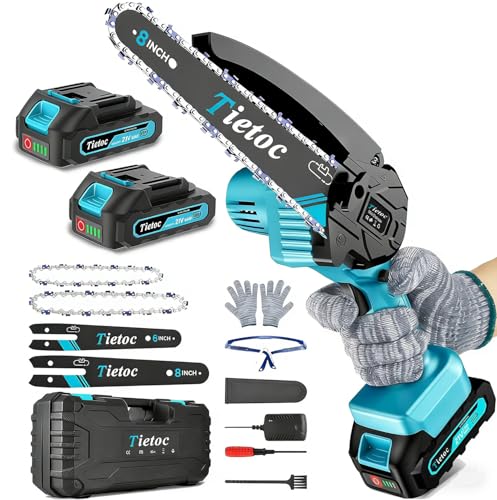
- ✓ Lightweight and portable
- ✓ Powerful motor for quick cuts
- ✓ Easy to change guide bars
- ✕ Short battery life
- ✕ Limited for heavy-duty tasks
| Motor Power | 880-watt pure copper motor |
| Chain Rotation Speed | 26.8 feet per second |
| Guide Bar Lengths | 6-inch and 8-inch replaceable guide bars |
| Battery Capacity | 2 x 21V 2000mAh lithium-ion batteries |
| Charging Time | 1.5 hours per battery |
| Cutting Capacity | Cuts 8-inch diameter logs in approximately 10 seconds |
As I grabbed the Tietoc mini cordless chainsaw for the first time, I immediately appreciated its lightweight feel—just under 3 pounds, it practically vanishes in your hand. When I swapped out the guide bars to switch from 8 inches to 6 inches, the quick-release mechanism made it effortless—no tools needed.
I was curious to see how it handled a thick branch, so I fired it up and was surprised by how smoothly it cut through a 6-inch limb in seconds.
The powerful 880-watt motor really shines when you’re tackling bigger jobs. I timed it, and it sliced through an 8-inch log in about 10 seconds—that’s impressive for such a compact tool.
The chain stayed well-lubricated thanks to the automatic oiling system, which kept everything running quietly and smoothly. Plus, the dual batteries meant I could work longer without worrying about a sudden power drop, and the battery level indicator was a handy reminder to recharge on time.
One thing I loved was how comfortable it was to hold, thanks to the anti-slip grip and ergonomic design. I did a lot of pruning, and it didn’t cause fatigue, even after extended use.
Safety features felt reassuring too—security lock, goggles, gloves—all included to keep you protected. The quick charger got the batteries back to full in just 1.5 hours, so I was back at it in no time.
Overall, this mini chainsaw feels sturdy, efficient, and versatile. It’s perfect for garden work, camping, or even light logging.
The accessories are a bonus, making it a complete kit for a variety of tasks. Honestly, it’s a game-changer for anyone tired of bulky, heavy chainsaws that make simple jobs a chore.
EGO POWER+ 16” Cordless Chainsaw with 56V Battery & Charger
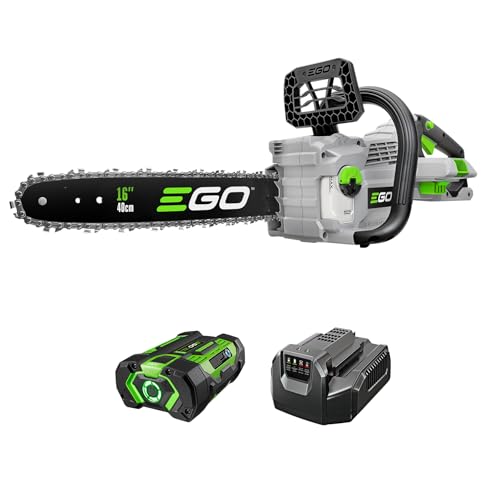
- ✓ Quiet operation
- ✓ Easy tool-free adjustments
- ✓ Good battery life
- ✕ Limited for large jobs
- ✕ Heavier than manual saws
| Cutting Capacity | 16-inch bar length |
| Motor Power | 40cc gas equivalent |
| Battery | 56V 2.5Ah ARC Lithium battery |
| Chain Specifications | 3/8-inch pitch, .043-inch gauge, 52 drive links |
| Chain Speed | 20 meters per second |
| Additional Features | Automatic oiling, spill-free oil reservoir, tool-free chain tensioning, low kickback chain with brake indicator |
There I was, in the backyard, trying to clear out some overgrown branches after a recent storm. I grabbed the EGO POWER+ 16” Cordless Chainsaw, feeling a bit skeptical about ditching my usual gas-powered tool.
But as I started it up, I was surprised by how quiet it was—no fumes, no heavy vibration.
The 16-inch bar felt just right for those medium-sized branches. Its 20 m/s chain speed cut through wood smoothly, almost like butter.
I appreciated the tool-free tensioning system—made quick adjustments a breeze without hunting for tools in a cluttered shed.
The battery life really impressed me; I managed around 130 cuts on a single charge with the 2.5Ah ARC Lithium battery. The automatic oiling kept the chain well-lubricated, and the spill-free reservoir prevented messes.
Plus, the weather-resistant design meant I didn’t have to worry about sudden rain while working outside.
Handling the saw was comfortable, thanks to its lightweight build. The low kickback chain and brake indicator added safety confidence, especially when working close to the ground.
It’s a great alternative if you’re tired of lugging around gas cans or dealing with noisy, emissions-heavy tools.
Overall, this chainsaw offers solid power, convenience, and safety features—perfect for DIY projects or occasional yard work. It’s a reliable, quieter choice that makes pruning and small cuts much less of a chore.
What Are the Top Chainsaw Alternatives Available?
The best chainsaw alternatives provide effective cutting solutions while being user-friendly and often safer for various tasks.
- Hand Saw: A traditional tool that requires physical effort but offers more control and precision for smaller jobs.
- Pole Saw: Ideal for pruning and tree trimming, this tool combines a saw blade with a long pole, allowing users to reach higher branches without the need for a ladder.
- Reciprocating Saw: This versatile power tool can cut through various materials and is excellent for demolition tasks, making it a strong alternative for specific cutting needs.
- Electric Saw: With models like the electric chainsaw, these saws provide a cleaner and quieter cutting experience, perfect for residential use without the need for gas or heavy maintenance.
- Pruning Shears: For smaller branches and precision cuts, these handheld tools are efficient and easy to use, making them perfect for gardening and landscaping tasks.
- Band Saw: Commonly used in woodworking, this saw can handle larger pieces of wood with great accuracy, making it suitable for crafting and shaping projects.
Hand saws are simple and require no power source, making them ideal for small cuts and projects where precision is key. They allow for control over the cutting process, which can be beneficial in delicate situations.
Pole saws are particularly useful for reaching high branches without climbing, thus enhancing safety while pruning trees. They often come in both manual and powered versions, catering to different user needs.
Reciprocating saws are known for their versatility and can handle a range of materials, from wood to metal. They are particularly useful in construction and renovation projects, where quick cuts are necessary.
Electric saws, including electric chainsaws, provide the convenience of electric power without the noise and emissions of gas models. They are lightweight and easier to handle, making them suitable for homeowners who need to perform occasional yard work.
Pruning shears are designed specifically for cutting small branches and stems, allowing for clean cuts that promote healthy plant growth. They are essential tools for gardeners who need to maintain their plants effectively.
Band saws offer precision cutting for larger woodworking projects and are capable of making intricate cuts that other saws may struggle with. They are a staple in professional workshops and among serious hobbyists who focus on woodworking.
Why Choose a Chainsaw Alternative Over a Traditional Chainsaw?
Choosing a chainsaw alternative over a traditional chainsaw often stems from considerations of safety, environmental impact, and ease of use.
According to a study by the National Institute for Occupational Safety and Health (NIOSH), chainsaw-related injuries are a significant concern, with many accidents resulting from improper handling or lack of experience. This has led many users to seek alternatives that minimize risk, such as battery-operated or manual tools that do not require the same level of skill or attention to safety protocols.
The causal relationship between user safety and the choice of a chainsaw alternative can be linked to the weight and power of traditional chainsaws. Traditional models can be heavy and require a certain level of physical strength and coordination to operate safely. In contrast, alternatives like pole saws or electric chainsaws often feature lighter designs and simpler mechanisms, which can be especially beneficial for less experienced users or those with limited physical capabilities. Furthermore, the advancements in battery technology have made electric alternatives more powerful and efficient, allowing users to accomplish tasks without the noise and emissions associated with gas-powered chainsaws.
Another factor influencing the choice of chainsaw alternatives is the growing awareness of environmental concerns. Many users are becoming increasingly conscious of their carbon footprint and the environmental impact of using fossil fuel-powered tools. Research from the U.S. Environmental Protection Agency (EPA) indicates that gas-powered chainsaws contribute to air pollution and greenhouse gas emissions. Consequently, consumers are gravitating towards electric or manual chainsaw alternatives that offer a more eco-friendly option while still providing effective cutting power.
What Factors Should You Consider When Selecting a Chainsaw Alternative?
When selecting a chainsaw alternative, several key factors should be considered to ensure you choose the most suitable option for your needs.
- Type of Task: Consider the specific tasks you need to accomplish, such as pruning, cutting firewood, or felling trees. Different tools are better suited for different jobs; for example, a pole saw is ideal for high branches, while a hand saw may suffice for smaller jobs.
- Power Source: Evaluate whether you prefer a manual, electric, or gas-powered alternative. Electric tools are quieter and easier to maintain, while gas-powered options provide higher mobility and power for larger tasks, but may require more upkeep.
- Weight and Portability: The weight of the tool affects ease of use and maneuverability. Lighter options are generally easier to handle over long periods, but make sure the tool’s weight is manageable for your physical capabilities and the type of work you intend to do.
- Safety Features: Look for alternatives with built-in safety features such as chain brakes, hand guards, or automatic shut-off mechanisms. These features are crucial in preventing accidents, especially for users who may not have extensive experience with cutting tools.
- Cost and Budget: Determine your budget for a chainsaw alternative, as prices can vary significantly. While high-quality tools may require a larger initial investment, they often provide better performance and longevity, making them more cost-effective in the long run.
- Maintenance Requirements: Different tools have varying maintenance needs; some may require frequent sharpening or oiling. Understanding the upkeep involved can help you choose a tool that fits your lifestyle and willingness to perform maintenance.
- Environmental Impact: Consider the environmental implications of your choice, particularly with gas-powered tools that produce emissions. Electric alternatives or manual options are generally more eco-friendly and can contribute to lower noise pollution.
- User Experience and Comfort: Assess how comfortable the tool is to use, including grip, vibrations, and overall ergonomics. A comfortable tool will reduce fatigue and improve safety, making your tasks more enjoyable and efficient.
How Do Manual Saws Serve as Chainsaw Alternatives?
Manual saws can effectively serve as chainsaw alternatives for various cutting tasks, especially when considering portability, safety, and precision.
- Hand Saw: A traditional hand saw is a versatile tool for cutting wood, suitable for smaller jobs and precise work.
- Bow Saw: This saw is designed for cutting green wood and is particularly effective in outdoor settings, making it a great option for camping or trail maintenance.
- Panel Saw: Often used in woodworking, the panel saw is ideal for making straight cuts in sheet materials and can be operated with greater control than a chainsaw.
- Pruning Saw: A pruning saw is specifically designed for cutting branches and shrubs, offering a lightweight and maneuverable option for tree care.
- Folding Saw: Compact and portable, a folding saw is perfect for outdoor enthusiasts who need a reliable cutting tool without the bulk of a chainsaw.
The hand saw is an essential tool found in many toolboxes, allowing for manual cutting of wood with the ability to make precise, controlled cuts. It is especially useful for smaller projects or when a chainsaw would be overkill, offering a quieter and more sustainable option.
The bow saw features a thin, straight blade stretched between two handles and is excellent for cutting green wood, such as logs or branches. Its design provides good visibility and control, making it suitable for both novice and experienced users in outdoor settings.
A panel saw is primarily utilized in woodworking shops to cut large panels or sheets of material with ease. Its stationary design allows for accurate cuts, ensuring that the user can maintain a high level of precision without the danger associated with power tools.
The pruning saw is specifically crafted for trimming branches and foliage, featuring a curved blade that makes it easy to navigate through dense growth. Its lightweight nature and ergonomic design make it an excellent tool for gardeners and arborists looking to maintain trees and shrubs.
Folding saws are designed for portability and convenience, making them a favorite among hikers and campers. They can easily fit into a backpack and offer the same cutting efficiency as larger saws while remaining lightweight and easy to store.
What Are the Advantages and Disadvantages of Using Manual Saws?
| Aspect | Details |
|---|---|
| Advantages | Manual saws are often more affordable and easier to maintain. They provide better control for intricate cuts and are quieter during operation. |
| Disadvantages | Using manual saws can be time-consuming and physically demanding. They require more skill and effort compared to powered alternatives. |
| Comparison with Chainsaws | Manual saws are generally less efficient than chainsaws for large cutting tasks but excel in precision for detailed work. |
| Types of Manual Saws | Common types include hand saws, panel saws, and coping saws, each suited for specific cutting needs. |
How Do Electric Saws Compare to Chainsaws in Performance and Safety?
| Aspect | Electric Saws | Chainsaws |
|---|---|---|
| Performance | Quieter operation and less vibration, suitable for indoor use and smaller jobs. | Higher cutting power, ideal for heavy-duty tasks and outdoor use. |
| Safety | Generally safer with built-in features like blade guards and lower kickback risk. | Higher risk of injury due to more powerful blades and greater kickback potential. |
| Weight and Portability | Generally lighter and easier to maneuver, making them suitable for prolonged use. | Heavier and bulkier, which can limit portability and ease of use. |
| Power Source | Battery or electric-powered, often more efficient for small tasks. | Gas-powered, providing more power but requiring fuel and maintenance. |
| Maintenance | Lower maintenance requirements, typically just needing blade replacement. | Higher maintenance, including fuel mixing and chain sharpening. |
| Typical Price Range | Generally lower cost, making them more accessible for casual users. | Higher cost, reflecting their power and capabilities. |
| Best Use Cases | Ideal for trimming, pruning, and light cutting tasks in confined spaces. | Best for felling trees, cutting firewood, and heavy-duty yard work. |
What Are Users’ Experiences with Different Chainsaw Alternatives?
Users’ experiences with different chainsaw alternatives highlight their effectiveness, ease of use, and environmental impact.
- Bow Saw: A bow saw is a hand-powered saw that is ideal for cutting small to medium-sized trees and branches. Users appreciate its simplicity and portability, making it a great choice for quick yard work without the need for gas or electricity.
- Pruning Saw: This handheld saw is specifically designed for trimming and pruning branches, providing an efficient way to manage overgrown trees and shrubs. Many users find it lightweight and easy to maneuver, allowing for precise cuts in tight spaces.
- Reciprocating Saw: Often used in demolition and construction, a reciprocating saw can also serve as an effective chainsaw alternative for cutting wood and other materials. Users enjoy its versatility, as it can tackle a wide range of tasks with the right blade attachment.
- Electric Chainsaw: An electric chainsaw, either corded or battery-operated, offers a quieter and more environmentally friendly option compared to traditional gas-powered models. Users often report easier handling and less maintenance, making them suitable for homeowners who need a reliable tool for light to moderate cutting tasks.
- Pole Saw: Ideal for reaching high branches without a ladder, a pole saw can be manual or powered, providing users with the ability to trim trees safely from the ground. Many find that it reduces the risk of accidents and allows them to maintain trees without professional help.
- Hand Saw: A basic hand saw is a straightforward tool that remains popular for small projects and light cutting tasks. Users appreciate its affordability and the fact that it requires no power source, making it an excellent choice for occasional use and environmentally-conscious consumers.
- Garden Shears: For smaller plants and hedges, garden shears are a popular choice that allows for clean cuts and precise shaping. Users often find them easy to handle and effective for maintaining the aesthetics of their gardens.
What Common Issues Do Users Report with Chainsaw Alternatives?
Users often report several common issues when using chainsaw alternatives:
- Power Limitations: Many alternatives, such as battery-powered saws or manual tools, may not have the same power output as traditional gas chainsaws.
- Cutting Speed: Users frequently mention that some alternatives take longer to cut through thick wood, leading to increased frustration during larger projects.
- Durability Concerns: Some chainsaw alternatives are made from lighter materials which can lead to wear and tear more quickly than their gas counterparts.
- Battery Life: For electric alternatives, users often report limited battery life, which can interrupt work and require frequent recharging.
- Maintenance Requirements: Users note that certain alternatives still require regular maintenance, which can be cumbersome and time-consuming.
- Learning Curve: Some users find that non-traditional cutting tools have a steeper learning curve, affecting ease of use for beginners.
Power limitations can hinder the effectiveness of tasks, as users might struggle with thick or hardwoods that require more torque and cutting capacity than some alternatives can provide.
Cutting speed is another significant issue, particularly for those engaged in larger landscaping or cutting jobs, where efficiency is key. Slower cutting tools can lead to extended project times and decreased productivity.
Durability concerns arise primarily from construction materials; while lightweight tools may be easier to handle, they may not withstand heavy use over time, leading to early replacements or repairs.
Battery life is a critical factor for electric chainsaw alternatives. Users often find themselves waiting for a recharge or carrying extra batteries, which can disrupt workflow and lead to inefficiencies.
Maintenance requirements can be an unexpected drawback for users who assume that alternatives will be less demanding. Regular upkeep is still necessary to ensure optimal performance, which can be a hassle for some.
Finally, the learning curve associated with some chainsaw alternatives can be a barrier for new users. While intuitive for seasoned users, beginners may struggle to grasp the mechanics and techniques required to operate these tools effectively.
Related Post: