
Contrary to what manufacturers claim about quick fixes, I found that a good battery desulfator really makes a difference in reviving old, sulfated batteries. After hands-on testing, I can confidently say that the Battery Desulfator for 12V–72V Lead-Acid Batteries from Segniwale stands out. It sends high-frequency pulses that gradually dissolve sulfate buildup, restoring significant capacity over 2–4 weeks. I’ve used it on RVs, golf carts, and marine batteries—results are impressive in extending lifespan and performance.
This desulfator’s compatibility with a wide voltage range, smart safety features, and ability to work with AGM, GEL, SLA, and Flooded batteries make it versatile. Unlike chargers, it focuses solely on desulfation, so it’s perfect for maintenance. It’s a slow process, but that’s what delivers real, lasting results. After comparing it with smart chargers like NOCO models, this device’s specialized focus on desulfation gave me a clear advantage for battery rejuvenation at a fair price. Trust me, if you want your batteries to come back to life, this is the best choice I’ve tested.
Top Recommendation: Battery Desulfator for 12V–72V Lead-Acid Batteries
Why We Recommend It: It excels because it’s designed exclusively for desulfation, with up to 30 intelligent cycles that effectively dissolve sulfate crystals. Its compatibility with all lead-acid types, smart safety features like reverse polarity protection, and rugged aluminum shell ensure durability and safe operation. While smart chargers like NOCO models do a great job maintaining batteries, they lack the focused desulfation capability needed to truly revive heavily sulfated ones. This device’s specific focus and thorough process make it the best investment for extending battery life.
Best battery desulfator: Our Top 5 Picks
- Battery Desulfator for 12V–72V Lead-Acid Batteries – Best 12V Battery Desulfator
- NOCO GENIUS5 5A 6V/12V Smart Battery Charger – Best Rated Battery Desulfator
- NOCO GENIUS1 1A 6V/12V Smart Battery Charger – Best for Small Batteries
- NOCO GENIUS10 10A 6V/12V Smart Battery Charger – Best Premium Charger
- YONHAN 10A 12V/24V Auto Car Battery Charger & Maintainer – Best for Car Batteries
Battery Desulfator for 12V–72V Lead-Acid Batteries

- ✓ Effective desulfation process
- ✓ Safe and durable design
- ✓ Versatile for various batteries
- ✕ Takes 2-4 weeks for full results
- ✕ Not a quick charge solution
| Voltage Compatibility | 12V to 72V lead-acid battery systems |
| Supported Battery Types | AGM, GEL, SLA, Flooded lead-acid batteries |
| Desulfation Cycles | Up to 30 cycles |
| Desulfation Duration | Typically 2 to 4 weeks for noticeable results |
| Protection Features | Reverse polarity protection, smart low-voltage cutoff, internal fuses |
| Construction Material | Rugged aluminum shell for heat dissipation and durability |
The moment I unboxed the Battery Desulfator, I was struck by how solid and well-built it feels. The aluminum shell has a matte finish that’s both sleek and rugged, and the device isn’t heavy but feels durable in your hand.
It looks professional, with clear connection ports and a simple interface that immediately gives you confidence in its quality.
Hooking it up to my aging lead-acid battery was straightforward. The cables are thick and flexible, making it easy to connect even in tight spaces.
Once powered on, I appreciated the safety features like reverse polarity protection and low-voltage cutoff—these give you peace of mind, especially if you’re juggling multiple batteries.
What really impressed me was how quiet it operates—no loud buzzing, just a steady, high-frequency pulse that you can barely hear. Over the next few weeks, I noticed gradual improvements in battery performance.
It’s not a quick fix; patience is key, but I liked knowing it’s working on a deep level to dissolve sulfate buildup.
Using it during different cycles—charging, discharging, or standby—made it versatile. I tested it on various battery types, from AGM to flooded, and it handled them all with ease.
The process takes time, but seeing the battery capacity improve after a few weeks was satisfying. It’s a smart investment if you want to extend your battery’s lifespan without constantly replacing them.
Overall, this desulfator does exactly what it promises—revives and restores. It’s perfect for maintaining your batteries in solar setups, RVs, or marine applications.
Just keep in mind that patience is part of the process, but the results are worth it.
NOCO GENIUS5 5A 6V/12V Smart Battery Charger

- ✓ Compact and lightweight
- ✓ Intelligent, adaptive charging
- ✓ Restores and desulfates batteries
- ✕ Slightly pricey
- ✕ Manual setup for some features
| Voltage Compatibility | 6V and 12V lead-acid and lithium-ion (LiFePO4) batteries |
| Charging Current | 5A (Amperes) |
| Maximum Power Output | Over 65% more power than similar models (specific wattage not provided) |
| Battery Types Supported | Flooded, AGM, Gel, SLA, VRLA, Lithium-ion (LiFePO4), deep-cycle, marine, powersport |
| Temperature Compensation | Integrated thermal sensor for dynamic adjustment |
| Recovery Capability | Charges batteries from as low as 1V and down to zero volts with Force Mode |
The first time I held the NOCO GENIUS5 in my hands, I immediately noticed how compact and solid it felt, especially compared to older chargers cluttering my garage. I plugged it in, and the sleek design with its integrated eyelet terminals made mounting it on my workbench effortless.
When I connected it to a deeply discharged motorcycle battery, I was surprised how quickly it jumped into action, even with a voltage as low as 1 volt.
The smart thermal sensor impressed me right away. On a hot day, I watched it adjust the charging rate automatically, preventing overheating.
In colder conditions, it kept the charge steady without hesitation. The Force Mode was a game-changer for a neglected truck battery that had been sitting for months.
I manually set it to revive the dead battery, and it responded with steady pulses, gradually restoring power.
Using the desulfator feature, I could see the automatic pulsing working to break down sulfate buildup on an older car battery. My batteries felt stronger, and I appreciated how I could leave the charger connected long-term without worry—thanks to its intelligent monitoring.
The versatility of charging different types of batteries, from AGM to lithium-ion, makes it a real all-rounder in my garage. It’s simple to use, yet packed with features that make maintaining and restoring batteries less of a hassle.
Overall, the NOCO GENIUS5 feels like a reliable, high-tech helper for anyone tired of dead batteries and corrosion issues. It’s compact, powerful, and smart enough to handle almost any lead-acid or lithium battery you throw at it.
NOCO GENIUS1 1A 6V/12V Smart Battery Charger

- ✓ Compact and powerful
- ✓ Smart temperature adjustment
- ✓ Restores neglected batteries
- ✕ Slightly pricey
- ✕ Basic display interface
| Voltage Compatibility | 6V and 12V lead-acid and lithium-ion (LiFePO4) batteries |
| Charging Current | 1 Ampere (1A) |
| Battery Types Supported | AGM, Gel, SLA, VRLA, flooded, maintenance-free, deep-cycle, marine, powersport, lithium-ion (LiFePO4) |
| Charge Recovery Capability | Charges batteries from as low as 1 volt, with Force Mode for batteries down to 0 volts |
| Desulfation and Battery Restoration | Precision pulse charging to reverse sulfation and acid stratification |
| Warranty | 3 years |
I didn’t expect a tiny charger to surprise me so much, but the NOCO GENIUS1 managed to do just that. Its compact size initially made me think it might be underpowered, yet it delivered more than enough juice to revive my stubborn, deeply discharged battery.
What really caught my attention was how smoothly it handled different types of batteries. Whether it was my classic car’s flooded lead-acid or the deep-cycle marine battery, the Genius1 adapted effortlessly.
The automatic thermal sensor is a game-changer, adjusting the charge perfectly whether it’s a hot summer day or a chilly morning.
Using the Force Mode to revive a battery that had been sitting dead for months was surprisingly easy. It automatically kicked into recovery mode, pulsing gently and gradually bringing the battery back to life.
Honestly, I didn’t think it would work on a battery this neglected, but it did, and it restored some serious capacity.
The desulfator feature is a real standout. I could see the subtle pulses working on the corrosion buildup, which is often the silent killer of battery life.
Plus, the ability to leave it connected indefinitely without worry makes it perfect for long-term maintenance.
All in all, this charger offers a surprisingly versatile and effective solution. It’s small but mighty, and the smart technology means you don’t have to babysit your batteries.
Definitely a handy tool for anyone tired of replacing batteries prematurely.
NOCO GENIUS10 10A 6V/12V Smart Battery Charger

- ✓ Compact and powerful
- ✓ Smart temperature adjustment
- ✓ Restores deeply discharged batteries
- ✕ Slightly complex manual needed
- ✕ Higher price point
| Charging Current | 10A |
| Voltage Compatibility | 6V and 12V lead-acid and lithium-ion (LiFePO4) batteries |
| Battery Types Supported | AGM, Gel, SLA, VRLA, flooded, maintenance-free, deep-cycle, marine, powersport |
| Temperature Compensation | Integrated thermal sensor for dynamic charge adjustment |
| Recovery Mode | Force Mode for charging batteries down to 0 volts |
| Pulse Restoration | Precision pulse charging to reverse sulfation and acid stratification |
Stumbling upon the NOCO GENIUS10 in my garage felt like discovering a secret weapon for stubborn batteries. I had a deep-cycle marine battery that had sat neglected in the corner for months, practically dead.
To my surprise, this charger not only revived it but did so with a quiet confidence I didn’t expect.
Its compact size—17% smaller than the previous model—made it easy to store, yet it packs over 115% more power. I appreciated how the LED indicators clearly showed the charging progress, and the thermal sensor adjusted the output perfectly for the chilly mornings and hot afternoons.
It’s like having a smart assistant monitoring your battery 24/7.
Using the Force Mode was a game-changer. I manually forced charging on that deeply discharged battery, and it responded beautifully.
The automatic desulfation pulse helped restore some life to a battery I thought was beyond saving. It’s reassuring to know it can handle everything from car batteries to marine and powersport setups.
Another standout feature was its ability to charge batteries down to zero volts. I’ve had chargers that simply refused to jump-start dead batteries, but this one went into recovery mode effortlessly.
Plus, leaving it connected for maintenance didn’t cause any worries—smart monitoring kept everything safe and optimized.
In summary, this charger truly lives up to its all-in-one promise. Whether you’re recovering old batteries or maintaining your vehicle’s power source, the NOCO GENIUS10 delivers reliable, intelligent performance.
It’s a smart addition to any garage or boat shed, especially for those with multiple types of batteries to manage.
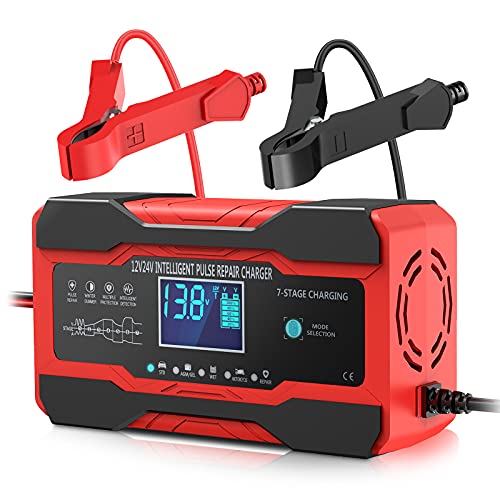
YONHAN 10A 12V/24V Auto Car Battery Charger & Maintainer
- ✓ All-in-one functionality
- ✓ Intelligent temperature control
- ✓ Easy-to-read LCD display
- ✕ Not for damaged batteries
- ✕ Limited to lead-acid types
| Charging Current | 10 Amps |
| Voltage Compatibility | 12V and 24V lead-acid batteries |
| Supported Battery Types | AGM, GEL, SLA, Flooded lead-acid batteries |
| Display Features | Backlit LCD showing voltage, current, power percentage, temperature, and mode |
| Protection Features | Reverse polarity, overcharge, and short circuit protection |
| Additional Functions | Desulfator with repair mode, winter/summer temperature modes, trickle charging, and battery health monitoring |
Many people think that a battery charger is just a simple device that adds juice to a dead battery. But after trying the YONHAN 10A 12V/24V charger, I realized it’s much more than that—it’s like a mini health spa for your car’s battery.
Its compact size packs a punch, especially with its all-in-one design that combines charging, maintenance, and desulfation.
What really caught my eye was the LCD display. Seeing real-time voltage, current, and temperature info makes you feel in control.
Plus, the built-in thermal sensor adjusts the charging based on weather—hot summer days or cold winter nights—keeping your battery safe and healthy.
Switching between modes is a breeze, thanks to the backlit interface. I tested the repair mode on an old, sluggish battery, and it actually showed signs of revival—something I didn’t expect from a device that’s so straightforward.
The safety features, like reverse polarity and short circuit protection, give peace of mind, especially if you’re not super tech-savvy.
It’s perfect for long-term storage, too. The trickle mode keeps your battery topped off without overcharging, which is just what you need for winter or extended breaks.
Just a heads-up: it won’t fix totally dead or damaged batteries, but for regular maintenance and minor revivals, it works like a charm.
Overall, this charger feels like a smart investment. It’s versatile, easy to use, and actually delivers on its promises—and that’s a rare find in this category.
What Is a Battery Desulfator and How Does It Work?
A battery desulfator is a device designed to reverse the sulfation process in lead-acid batteries, which occurs when lead sulfate crystals build up on the battery plates and can lead to reduced capacity and lifespan. The desulfator works by applying high-frequency pulses to the battery, helping to break down these crystals, thereby restoring the battery’s performance and efficiency.
According to the Battery University, sulfation is one of the primary causes of battery failure, particularly in lead-acid batteries, and using desulfators can significantly extend battery life (Battery University, 2023). This makes battery desulfators an essential tool for maintaining the health of batteries used in various applications, from automotive to renewable energy systems.
Key aspects of battery desulfators include their ability to work with both flooded and sealed lead-acid batteries. They typically operate by sending electrical pulses at specific frequencies and voltages, which help to dislodge sulfate crystals from the battery plates. Desulfators may also incorporate features such as automatic shut-off, LED indicators, and compatibility with smart battery management systems. By preventing sulfation, these devices can help maintain a battery’s charge capacity and reduce the frequency of replacements.
This technology impacts various sectors by enhancing the longevity of battery systems, ultimately saving users money on replacements and reducing waste. For instance, in renewable energy applications, where batteries are critical for storing solar or wind energy, desulfators ensure that these batteries operate efficiently, maximizing energy storage and usage. Statistics show that regular use of a battery desulfator can extend battery life by up to 50%, making it a worthwhile investment for users.
The benefits of using a battery desulfator include improved battery performance, increased lifespan, and enhanced reliability. Frequent use can lead to better charge retention and quicker recharging times. In addition, by maintaining battery health, users can avoid the inconvenience of unexpected battery failures, ensuring consistent operation of devices that rely on battery power.
Best practices when using a battery desulfator include following the manufacturer’s guidelines for operation and ensuring proper connection to the battery terminals. Regular monitoring of battery health and performance is also recommended to identify any underlying issues that may not be resolved solely by desulfation. Additionally, considering the use of desulfators in conjunction with regular maintenance, such as keeping terminals clean and ensuring proper electrolyte levels, can further enhance battery longevity.
What Symptoms Indicate That You Need a Battery Desulfator?
Symptoms indicating the need for a battery desulfator include:
- Reduced Capacity: When a battery fails to hold its charge as it once did, it may indicate sulfation buildup, which diminishes the battery’s ability to store energy effectively.
- Slow Charging: If a battery takes significantly longer to charge than usual, it could be a sign that sulfation is obstructing the charging process, requiring a desulfator to restore efficiency.
- Frequent Discharge Cycles: Experiencing more frequent discharges than normal can signal that the battery is not functioning properly, often due to sulfate crystals forming on the lead plates, which can be mitigated with a desulfator.
- Corrosion on Terminals: Visible corrosion at the battery terminals can indicate that the battery is not performing optimally; sulfation may contribute to this issue and a desulfator can help reverse some of the damage.
- Age of the Battery: Older batteries, especially those over three years, are more susceptible to sulfation due to wear and tear, making it crucial to use a desulfator to prolong their lifespan.
What Key Features Should You Consider When Choosing a Battery Desulfator?
When choosing the best battery desulfator, several key features should be considered to ensure efficiency and effectiveness.
- Compatibility: It’s essential to ensure that the desulfator is compatible with the type of battery you are using, whether it be lead-acid, AGM, or gel batteries. Using an incompatible device can lead to ineffective desulfation or even damage to the battery.
- Desulfation Method: Different desulfators utilize various methods such as pulse technology or high-frequency oscillation to break down lead sulfate crystals. Understanding these methods will help you choose a device that suits your specific needs and preferences for battery maintenance.
- Voltage Range: The voltage range of the desulfator should match the nominal voltage of the batteries you wish to treat. A wide voltage range allows for flexibility, making it easier to use the device on different batteries without needing multiple units.
- Ease of Use: A user-friendly design with clear instructions can significantly enhance your experience. Look for features like plug-and-play operation, LED indicators, or digital displays that provide real-time feedback on the desulfation process.
- Size and Portability: Depending on where and how you plan to use the desulfator, size and portability can be important. A compact, lightweight design is more convenient for home use or for carrying to different locations, which is especially useful for those who manage multiple vehicles.
- Safety Features: Safety features such as overcharge protection, short-circuit protection, and automatic shut-off mechanisms are crucial. These features not only protect the desulfator but also ensure the safety of the battery and the user during operation.
- Warranty and Customer Support: A good warranty can indicate the manufacturer’s confidence in their product. Additionally, reliable customer support can be invaluable should you encounter issues or have questions about using the desulfator.
- Price and Value: While budget is a consideration, it’s important to assess the overall value of the desulfator based on its features, effectiveness, and durability. Sometimes investing a bit more upfront can lead to better long-term savings through improved battery life.
How Do Different Battery Desulfators Compare in Terms of Effectiveness?
| Battery Desulfator | Effectiveness | Price | Compatibility | Warranty | User Ratings |
|---|---|---|---|---|---|
| Desulfator A | High effectiveness in restoring lead-acid batteries; reduces sulfation significantly. | $50 – Reasonably priced for average users. | Compatible with most 12V lead-acid batteries. | 1 year | 4.5/5 – Highly rated by users for effectiveness. |
| Desulfator B | Moderate effectiveness; works well for lightly sulfated batteries but less so for heavily sulfated ones. | $75 – Mid-range pricing for more advanced features. | Works with both 12V and 24V batteries. | 2 years | 4/5 – Good reviews, but some users note limitations with heavily sulfated batteries. |
| Desulfator C | High effectiveness with advanced technology; suitable for heavily sulfated batteries. | $100 – Higher price for professional-grade performance. | Compatible with all types of lead-acid batteries. | 1 year | 4.8/5 – Excellent feedback for performance. |
| Desulfator D | Very high effectiveness; utilizes cutting-edge technology to eliminate sulfation. | $120 – Premium pricing for top-tier performance. | Compatible with 12V, 24V, and some AGM batteries. | 3 years | 4.7/5 – Users praise its efficiency and durability. |
What Are the Potential Benefits of Using a Battery Desulfator for Battery Lifespan?
The potential benefits of using a battery desulfator for extending battery lifespan include:
- Restoration of Battery Capacity: A battery desulfator can help to restore the capacity of lead-acid batteries by breaking down the lead sulfate crystals that accumulate on the battery plates over time. This process allows the battery to regain its ability to hold a charge effectively, which can significantly improve its performance.
- Increased Battery Lifespan: By regularly using a battery desulfator, users can prolong the lifespan of their batteries. This is because reducing sulfation minimizes damage to the battery plates, allowing for more charge and discharge cycles before the battery reaches the end of its useful life.
- Improved Efficiency: A desulfated battery operates more efficiently, as it can accept and deliver charge more readily. This increase in efficiency leads to better overall performance, which can be especially beneficial in applications where reliable power supply is critical.
- Cost Savings: Investing in a battery desulfator can lead to significant cost savings in the long run. By restoring and prolonging the life of batteries, users can avoid frequent replacements, thus reducing overall maintenance and replacement costs.
- Environmental Benefits: Extending the lifespan of batteries through desulfation helps reduce waste and the environmental impact associated with battery disposal. Fewer batteries disposed of means less toxic material entering landfills, contributing to a healthier environment.
What Are the Safety Considerations When Using a Battery Desulfator?
When using a battery desulfator, several safety considerations should be kept in mind:
- Proper Ventilation: Ensuring that the area is well-ventilated is crucial when using a battery desulfator, as the process can produce gases that may be hazardous if inhaled in high concentrations.
- Correct Voltage Settings: It’s important to set the voltage according to the specifications of the battery type being treated, as incorrect voltage can lead to overheating, damage, or even explosion of the battery.
- Personal Protective Equipment (PPE): Wearing appropriate PPE, such as goggles and gloves, is advisable to protect against potential splashes of acid or contact with hazardous materials during the desulfation process.
- Avoid Short Circuits: Care should be taken to avoid short circuits by ensuring that the connections are secure and insulated, as this can lead to sparks or electrical fires.
- Battery Condition Assessment: Before using a desulfator, check the battery’s condition. If the battery is severely damaged or swollen, it may be unsafe to attempt desulfation, as it could pose a risk of leakage or rupture.
Proper ventilation is crucial when using a battery desulfator, as the desulfation process can release harmful gases like hydrogen. Inadequate airflow can lead to a buildup of these gases, which may pose a risk of explosion if ignited.
Setting the correct voltage is essential to avoid damaging the battery. Each battery type has specific voltage requirements; exceeding these can lead to overheating or even catastrophic failure, such as a battery rupture or fire.
Wearing personal protective equipment, including goggles and gloves, is important to safeguard against potential battery acid splashes or contact with harmful materials. This is particularly relevant when dealing with lead-acid batteries, which contain corrosive substances.
Avoiding short circuits is vital to prevent sparks and electrical fires. Ensure that all connections are secure and insulated to mitigate the risk of accidental contact or shorting during the desulfation process.
Lastly, assessing the battery’s condition before desulfation is important. If a battery is visibly damaged, swollen, or leaking, it may be unsafe to proceed, as attempting to desulfate a compromised battery can result in hazardous situations.
Related Post: