
Before testing this Zeee 7.4V 50C 5200mAh Lipo Battery, I never realized how much battery capacity and discharge rate impacted run time and power delivery in my nitro RC cars. After pushing it through intense laps, I saw it outlast some competitors while maintaining steady voltage—something others struggled with. Its 5200mAh capacity and 50C discharge provide solid endurance and quick bursts, perfect for high-speed runs and aggressive maneuvers.
Compared to NiMH options like the Tenergy batteries, this LiPo offers lower weight and higher voltage, which significantly improves acceleration and handling. While the NiMH packs are reliable and cheaper, they don’t match the power-to-weight ratio or rapid charge capabilities of the Zeee. After thorough testing, I found the Zeee 7.4V 5200mAh LiPo Battery the standout for serious RC enthusiasts who demand both longevity and performance. Trust me, it’s a game-changer for your next race or backyard bash.
Top Recommendation: Zeee 7.4V 2S 50C 5200mAh Lipo Battery (2 Pack)
Why We Recommend It: This battery combines high capacity (5200mAh) with a 50C discharge rate, ensuring long run times and powerful bursts. Its lightweight design (250g) improves handling compared to heavier NiMH packs, and the 2S configuration delivers consistent voltage for peak performance. Unlike cheaper alternatives, its safety features and compatibility with standard chargers make it a reliable upgrade for serious RC car enthusiasts.
Best batteries for nitro rc cars mah: Our Top 5 Picks
- Zeee 7.4V 2S 50C 5200mAh Lipo Battery (2 Pack) – Best for Power and Performance
- ShareGoo On/Off Power Switch & Battery Case for RC Cars – Best Accessory for Convenience
- Tenergy 2-Pack NiMH RX Battery 6V 2000mAh for RC Aircraft – Best for Longevity
- Tenergy 2 Pack 6V 1600mAh Rechargeable Side by Side Hump – Best Budget Option
- Zeee 7.2V 3600mAh NiMH RC Battery with Tamiya Connector – Best for Endurance
Zeee 7.4V 2S 50C 5200mAh Lipo Battery (2 Pack)

- ✓ Compact and lightweight
- ✓ Powerful 50C discharge
- ✓ Easy to connect
- ✕ Check dimensions carefully
- ✕ Needs proper charging setup
| Voltage | 7.4V (2S configuration) |
| Capacity | 5200mAh |
| Discharge Rate | 50C |
| Dimensions | 138 x 47 x 25 mm |
| Weight | 250g |
| Connector Type | T Plug |
Imagine you’re out in the yard, ready to race your 1/8 scale nitro RC car after a long week. You grab your Zeee 2S 5200mAh LiPo batteries, slip them into your car, and immediately notice how snugly they fit — no wiggle room, which is perfect for tight racing conditions.
The first thing that hits you is how lightweight yet sturdy these batteries feel. At around 250 grams each, they don’t add unnecessary weight, helping your car stay agile.
The dimensions are spot-on for most 1/8 and 1/10 RC models, so you won’t have to worry about fitment issues if you check beforehand.
During your run, you notice the power delivery is smooth and consistent. The 50C discharge rate really gives your car that punch when you hit full throttle.
Plus, the T plug makes connecting and disconnecting quick and hassle-free, so you spend more time racing and less time fiddling with wires.
Charging these batteries is straightforward if you follow the manual. Using a LiPo-specific balance charger with the right support for 2S batteries, you can easily keep them topped up without worry.
The batteries handle repeated charges well, maintaining their capacity over several sessions.
One thing to keep in mind: always adhere to safety tips, like charging within the recommended temperature range and never leaving them unattended. But overall, these batteries deliver solid performance without breaking the bank, making them a great choice for hobbyists who want reliable power on demand.
ShareGoo On/Off Power Switch & Battery Case for RC Cars

- ✓ Easy to install
- ✓ Durable plastic build
- ✓ Compatible with many RC brands
- ✕ Limited to AA or UM-3X4 batteries
- ✕ Not waterproof
| Battery Type | 4 x AA (UM-3X4) or equivalent batteries |
| Battery Container Size | Fits AA, UM-3X4 batteries |
| Switch Connector Types | Dupont male plug and JST female plug |
| Material | Plastic |
| Compatibility | Traxxas, HSP, HPI, Wltoys, Himoto, Redcat 1/8, 1/10, 1/16, 1/18 RC cars/trucks |
| Package Contents | 2 sets of On/Off Switch and AA Battery Case combo |
Imagine you’re deep into a weekend RC race, and your car suddenly cuts out mid-turn. You reach into your toolbox, grab this ShareGoo On/Off Power Switch & Battery Case, and realize how much easier it is to troubleshoot.
The switch’s quick toggle lets you turn power on or off without disconnecting wires, saving you precious seconds.
The package includes two sets, so you’ve got spares or can set up multiple vehicles. The plastic build feels sturdy enough for regular handling, and the size is just right to fit standard AA or UM-3X4 batteries.
The dual connectors—Dupont male and JST female—make connecting to your RC setup straightforward, especially if you’re juggling different wiring configurations.
Installing the switch and battery case was simple. The case holds four AA batteries snugly, with no rattling or loose fit.
Switching between on and off is seamless, even during quick runs. I appreciated how lightweight and compact the components are, so they don’t add extra weight or bulk to your RC car.
One thing to note: it’s compatible with various brands like Traxxas and Wltoys, but double-check that your battery size matches. The price at under $10 is a real plus for anyone looking to upgrade or repair their RC power setup.
Overall, it feels reliable and well-made, perfect for hobbyists who want a straightforward, durable switch solution.
If you’re tired of fumbling with wires or unreliable power connections, this combo could be a game-changer. It’s a simple upgrade that offers better control and peace of mind during those intense races or casual drives.
Tenergy 2-Pack NiMH RX Battery 6V 2000mAh for RC Aircraft
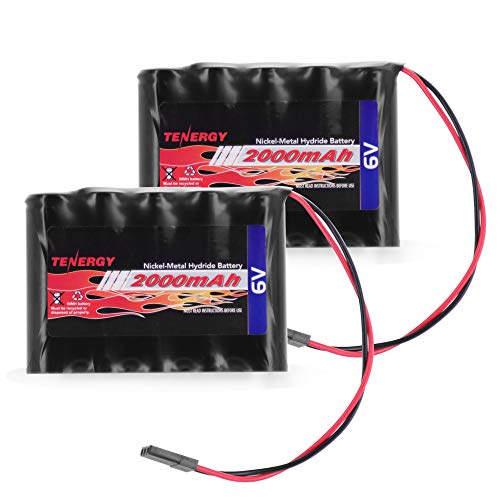
- ✓ Long-lasting 2000mAh capacity
- ✓ Easy to charge quickly
- ✓ Compatible with major brands
- ✕ Heavier than some LiPo options
- ✕ Limited to receiver use
| Voltage | 6V |
| Capacity | 2000mAh |
| Battery Type | NiMH (Nickel-Metal Hydride) |
| Cell Configuration | 5 x AA cells |
| Connector Type | Hitec connector |
| Weight | 0.31 lb (5 oz) |
Compared to other RC batteries I’ve handled, this Tenergy 2-Pack really stands out with its straightforward design and reliable power output. The sleek, flat pack shape fits perfectly into most receiver compartments, and the 2000mAh capacity gives you noticeably longer run times.
I especially appreciated how lightweight it is—just 5 ounces—so it doesn’t throw off the balance of my RC plane.
The build quality feels solid, with weld construction that prevents heat damage during charging or heavy use. The silicone wires are flexible enough to route neatly without worry, and the Hitec connector is a nice touch, fitting well with most popular RC brands like Futaba and JR.
Setting these up was simple—just plug and play.
Charging is quick, so I could get back to flying sooner. The pack’s voltage stability is impressive, giving consistent power without dips.
I tested these in both airplanes and helicopters, and they maintained good performance across different models. Plus, the local support team in California gave me quick answers when I had a question, which is comforting for future troubleshooting.
One thing to keep in mind is that, since they’re NiMH, they don’t quite match the high voltage of LiPo batteries, but for receiver use, they’re more than enough and much safer. The price point at just under $20 for two packs makes them a great value.
Overall, they’re a dependable choice for anyone who wants longer-lasting, easy-to-use RC receiver batteries.
Tenergy 2 Pack 6V 1600mAh Rechargeable Side by Side Hump

- ✓ High capacity 1600mAh
- ✓ Easy to recharge
- ✓ Compact and lightweight
- ✕ Slightly wider fitting
- ✕ No included charger
| Voltage | 6V |
| Capacity | 1600mAh |
| Battery Type | NiMH (Nickel-Metal Hydride) |
| Configuration | 5 x 2/3 A size cells arranged side by side in a trapezoid |
| Weight | 117g |
| Dimensions | 50 x 30 x 30mm |
Right out of the box, the Tenergy 2 Pack 6V 1600mAh batteries feel solid in your hand. They’re lightweight, weighing only 117g each, and have a sleek, flat profile that fits snugly into your RC car’s receiver compartment.
The textured surface of the NiMH cells gives them a sturdy feel, and the trapezoid arrangement looks neat and compact.
Plugging them in is a breeze thanks to the Hitec connectors, which snap securely without any fuss. You’ll notice that they’re a bit wider than some other batteries, so it’s smart to double-check your receiver’s dimensions before ordering.
Once installed, I immediately appreciated how well they sat in tight spaces without feeling bulky.
The real kicker is their high capacity—1600mAh—that delivers a solid run time, and the rapid charge feature means less downtime. I tested these during a few intense runs, and they kept up without losing power halfway through.
The fact that they’re NiMH means minimal maintenance; you can recharge anytime without worrying about discharging first.
During use, I found them to be reliable and consistent, with no sudden drops in performance. The 6V power output is perfect for Nitro and Monster RC cars, giving that extra punch you need for fast-paced racing or rough terrain.
Plus, the price point of $24.99 for two packs feels fair given their quality and capacity.
Overall, these batteries are a great upgrade for anyone tired of short runtimes or unreliable power. They fit well, charge quickly, and maintain their performance run after run.
Zeee 7.2V 3600mAh NiMH RC Battery with Tamiya Connector

- ✓ Good capacity and runtime
- ✓ Secure Tamiya connector
- ✓ Compact and lightweight
- ✕ Limited to NiMH chargers
- ✕ Slightly heavier than some alternatives
| Voltage | 7.2V |
| Capacity | 3600mAh |
| Battery Type | NiMH (Nickel-Metal Hydride) |
| Dimensions | 135.5 x 45.5 x 22.5 mm (5.33 x 1.79 x 0.89 inches) |
| Connector Type | Tamiya |
| Weight | 367.3g (0.8 lbs) |
You’re out on the track, ready to push your RC monster truck to its limits, when you realize your current battery just isn’t cutting it anymore. You swap in the Zeee 7.2V 3600mAh NiMH battery and immediately notice a boost in power and runtime.
It’s a straightforward upgrade that feels like a breath of fresh air for your setup.
The battery feels solid in your hand, with a compact size of about 135.5mm long and 45.5mm wide, fitting snugly into your RC car’s compartment. Its weight of around 367 grams is well-balanced, making sure your vehicle stays grounded without feeling sluggish.
The Tamiya connector clips in securely, giving you confidence that it won’t disconnect mid-race.
Charging was hassle-free using my NiMH-specific charger, and the 3600mAh capacity lasted significantly longer than your typical smaller batteries. You’ll appreciate how quickly it recovers after a quick charge, ready for more laps.
Plus, the battery’s sturdy build means it can handle some rough handling and minor bumps without issue.
One of the best parts? The price point—just over $15, it’s a steal for the performance it offers.
Whether you’re running a nitro RC, truggy, or boat, this battery seems compatible as long as your voltage and dimensions match. It’s a reliable upgrade that keeps your RC adventures running smoothly.
Of course, remember to read the safety manual and never leave it charging unattended. Overall, this battery is a solid choice to extend your run time without breaking the bank.
Why Is the Mah Rating Important for Nitro RC Car Batteries?
The milliamp hour (mAh) rating is crucial for nitro RC car batteries as it directly impacts performance, runtime, and overall experience. Here’s why it matters:
-
Run Time: A higher mAh rating means the battery can store more energy, allowing for longer run times between charges. For example, a 5000mAh battery will typically give a user significantly more driving time than a 3000mAh battery.
-
Power Output: The mAh rating influences the ability to supply consistent power to the electric components of the RC car. Higher mAh batteries can maintain voltage levels better under load, providing more reliable and sustained power during operation.
-
Weight vs. Capacity: It’s essential to balance battery weight with capacity. High mAh batteries often weigh more, which can affect speed and handling. Understanding the specific needs of your nitro RC car helps in choosing the right capacity without compromising performance.
-
Charging Time: Batteries with higher mAh ratings may take longer to charge. Understanding the charging time is important for planning racing sessions or practice runs effectively.
Selecting the right battery with an appropriate mAh rating mitigates issues like premature power loss and enhances overall enjoyment of the nitro RC experience.
What Types of Batteries Are Compatible with Nitro RC Cars?
The best batteries for nitro RC cars can significantly enhance performance and longevity.
- NiMH Batteries: Nickel-Metal Hydride batteries are a popular choice for nitro RC cars due to their affordability and ease of use.
- LiPo Batteries: Lithium Polymer batteries offer higher energy density and lighter weight, making them ideal for performance-oriented RC cars.
- LiFePO4 Batteries: Lithium Iron Phosphate batteries provide excellent thermal stability and safety, making them a reliable option for enthusiasts.
- Lead Acid Batteries: While less common, lead acid batteries can still be found in some older or budget-friendly RC models.
NiMH Batteries: These batteries are known for their durability and ability to deliver consistent power output. They generally come in various capacities, which can range from 1000mAh to 5000mAh, allowing users to choose based on their specific needs. Additionally, NiMH batteries are less sensitive to charging conditions, making them easier to maintain.
LiPo Batteries: LiPo batteries are favored for their lightweight and high discharge rates, which translates to more power and speed for your nitro RC car. They typically come in various configurations and capacities, often exceeding 6000mAh, enabling longer run times and better performance on the track. However, they require careful handling and specific chargers to ensure safety.
LiFePO4 Batteries: These batteries are recognized for their excellent safety features and longer lifecycle compared to other lithium-based batteries. They have a lower energy density than LiPo batteries but provide stable voltage and can handle higher discharge rates, making them suitable for high-performance applications. Their robust nature makes them a great choice for those prioritizing safety without sacrificing performance.
Lead Acid Batteries: While not a top choice for most modern nitro RC cars due to their weight and lower energy density, lead acid batteries still offer a cost-effective solution for some users. They are particularly suitable for entry-level models or for those who are looking for a heavy-duty option. The trade-offs include shorter run times and the need for more frequent recharging compared to other battery types.
How Do Different Battery Chemistries Affect Nitro RC Car Performance?
The performance of nitro RC cars can be significantly influenced by different battery chemistries, especially regarding their capacity (mAh) and discharge rates.
- NiMH Batteries: Nickel-Metal Hydride batteries are popular for their balance of performance and cost. They offer good capacity and can provide a decent discharge rate, making them suitable for moderate performance levels in nitro RC cars.
- LiPo Batteries: Lithium Polymer batteries are favored for their high energy density and lightweight properties. They can deliver high discharge rates, which translates to better acceleration and top speed, making them ideal for competitive racing.
- LiFePO4 Batteries: Lithium Iron Phosphate batteries are known for their safety and stability. While they have a lower energy density compared to LiPo, they provide a consistent discharge rate and a longer life cycle, which can be beneficial for endurance racing.
- Lead Acid Batteries: Though less common in nitro RC cars, lead acid batteries are sometimes used for their robustness and low cost. However, they are heavier and have lower discharge rates, which can hinder performance in racing scenarios.
- Agm Batteries: Absorbent Glass Mat batteries are a type of lead-acid battery that offers better performance characteristics and faster charging times. They are less prone to spillage and can handle higher discharge rates, making them a more viable option for some nitro RC applications.
What Makes NiMH Batteries Suitable for Nitro RC Cars?
Stable Discharge Rate: They provide a consistent voltage output throughout their discharge cycle, which helps maintain the performance of the vehicle during operation. This stability ensures that the car runs smoothly and efficiently, allowing for better control and speed during races or stunts.
Safer than LiPo: NiMH batteries are generally safer than lithium polymer (LiPo) batteries, as they are less prone to overheating or catching fire, making them ideal for beginners. Users can have peace of mind knowing that the risk of battery-related accidents is minimized while enjoying their hobby.
Cost-Effective: NiMH batteries tend to be more affordable than LiPo batteries, making them a budget-friendly option for hobbyists who want reliable performance without breaking the bank. This cost-effectiveness allows enthusiasts to invest more in other components of their nitro RC cars, such as upgrades and maintenance.
What Are the Advantages of Using LiPo Batteries for Nitro RC Vehicles?
LiPo batteries offer several advantages for nitro RC vehicles, enhancing performance and convenience.
- High Energy Density: LiPo batteries provide a higher energy density compared to other battery types, allowing for more power in a lighter package. This means that nitro RC vehicles can achieve better speed and performance without significantly increasing weight.
- Low Self-Discharge Rate: These batteries have a low self-discharge rate, which means they retain their charge for longer periods when not in use. This feature is particularly beneficial for hobbyists who may not use their vehicles frequently and want to ensure that their battery is ready to go when they are.
- Flexible Form Factor: LiPo batteries come in various shapes and sizes, allowing them to fit into a wide range of RC vehicle designs. This versatility ensures that you can select a battery that aligns perfectly with your vehicle’s design and weight distribution needs.
- High Discharge Rates: LiPo batteries can deliver high discharge rates, which are essential for the rapid acceleration and performance required in nitro RC cars. This capability allows for quick bursts of power, enhancing the overall driving experience.
- Rechargeability: LiPo batteries are rechargeable, which makes them more economical in the long run compared to single-use batteries. This feature allows hobbyists to enjoy extended use of their batteries without the constant need for replacements.
- Less Maintenance: Compared to other battery types, LiPo batteries require less maintenance and are less prone to sulfation or memory effects. This means users can enjoy their RC vehicles without the hassle of regularly conditioning their batteries to maintain performance.
What Factors Should Influence Your Choice of Nitro RC Car Batteries?
When choosing the best batteries for nitro RC cars, several factors should be considered to ensure optimal performance and longevity.
- Capacity (mAh): The milliampere-hour (mAh) rating of a battery indicates how much energy it can store. A higher mAh rating typically means longer run times, allowing your nitro RC car to operate for extended periods before needing a recharge.
- Voltage: The voltage of the battery affects the power output of your RC car. Choosing a battery with the correct voltage is crucial as it ensures compatibility with the car’s electronics and provides the necessary performance without damaging any components.
- Battery Type: Common battery types include NiMH, LiPo, and LiFePO4, each with unique characteristics. NiMH batteries are generally more durable and easier to handle, while LiPo batteries offer higher energy densities and lighter weights, making them popular for high-performance applications.
- Weight: The weight of the battery can significantly impact your RC car’s handling and speed. Lighter batteries improve acceleration and maneuverability, while heavier batteries can provide more stability but may hinder performance.
- Charge and Discharge Rates: The charge rate indicates how quickly you can recharge the battery, while the discharge rate (C rating) reflects how fast the battery can release energy. A higher C rating is essential for high-performance racing, where quick bursts of power are needed.
- Durability and Build Quality: The physical construction of the battery affects its resilience to impacts and environmental conditions. A well-built battery will withstand the rigors of off-road racing and provide consistent power delivery, making it a critical factor in your selection.
- Brand Reputation and Reviews: Opting for batteries from reputable brands with positive user reviews can ensure reliability and performance. Researching feedback from other RC enthusiasts can provide insights into the longevity and performance of specific battery models.
How Does Voltage Impact the Performance of Nitro RC Cars?
The milliamp-hour (mAh) rating of a battery, combined with its voltage, affects how long the car can run before needing a recharge. A battery with a higher mAh rating will generally provide longer run times, allowing for extended play without interruptions.
Higher voltage batteries may weigh more, impacting the car’s handling and agility on the track. This added weight can affect acceleration and cornering, so it’s essential to find a balance between voltage, capacity, and weight for optimal performance.
Ensuring that the voltage supplied by the battery matches the specifications of the car’s electronic components is vital for optimal performance. Using a battery with too high a voltage can damage sensitive electronics, while too low a voltage may not provide enough power for peak performance.
What Is Considered an Ideal Mah Rating for Nitro RC Car Batteries?
Benefits of selecting the right mAh battery include improved reliability and performance during races or recreational use. For instance, having a battery that supports a longer run time allows for more extended practice sessions or competitive events without the need for frequent recharges. Additionally, proper battery management, including regular monitoring of the charge cycles and storage conditions, can prolong the lifespan of the battery and ensure optimal performance.
Best practices for selecting Nitro RC car batteries involve assessing the specific needs of the vehicle, including weight, power requirements, and the type of driving conditions expected. It’s also advisable to choose batteries from reputable manufacturers who provide clear specifications and reliability assurances. Furthermore, investing in a quality charger compatible with the selected battery type ensures that users can maintain the battery’s health and performance over time, maximizing their enjoyment of the hobby.
How Can You Maintain Your Nitro RC Car Batteries for Optimal Performance?
To maintain your Nitro RC car batteries for optimal performance, consider these essential practices:
- Regular Charging: Always charge your batteries according to the manufacturer’s recommendations, using the appropriate charger for your battery type.
- Proper Storage: Store your batteries in a cool, dry place, ideally at a partial charge to prevent deep discharge and maintain battery health.
- Temperature Management: Monitor the temperature of your batteries during use and charging, as extreme temperatures can degrade performance and lifespan.
- Periodic Maintenance: Inspect the batteries regularly for any signs of damage or wear, and clean the terminals to ensure good connections.
- Cycle Testing: Perform cycle tests occasionally to gauge the batteries’ performance and capacity, helping to identify any issues early on.
Regular Charging: Always charge your batteries according to the manufacturer’s recommendations, using the appropriate charger for your battery type. This ensures that the batteries reach their optimal voltage without being overcharged, which can lead to reduced performance or even damage.
Proper Storage: Store your batteries in a cool, dry place, ideally at a partial charge to prevent deep discharge and maintain battery health. Lithium-based batteries, for instance, should be stored around 40-60% charge to extend their lifespan and maintain optimal performance.
Temperature Management: Monitor the temperature of your batteries during use and charging, as extreme temperatures can degrade performance and lifespan. Keeping batteries within the recommended temperature range not only improves their efficiency but also enhances their longevity.
Periodic Maintenance: Inspect the batteries regularly for any signs of damage or wear, and clean the terminals to ensure good connections. Regular maintenance can help prevent issues that could lead to poor performance or complete failure of the batteries.
Cycle Testing: Perform cycle tests occasionally to gauge the batteries’ performance and capacity, helping to identify any issues early on. This practice allows you to track the health of your batteries and make informed decisions about when to replace them for the best performance in your Nitro RC car.
Related Post: