
Holding the iSpring RCC7AK, NSF Certified, 75 GPD, Alkaline 6-Stage system in my hand, I was immediately struck by its solid build and smooth, easy-to-use design. Testing it, I appreciated how effortless it was to install, thanks to its top-mounted fastener—no messy underneath adjustments needed. The real game-changer was the mineral boost stage, which added balanced minerals and a healthy pH to my water without sacrificing filtration perfection.
It consistently reduced contaminants like lead, fluoride, and PFAS by over 98%, ensuring my fridge’s water is safe and tasty. The transparent first-stage filter housing made it simple to keep track of when filters needed replacing, and the lifetime support from a trusted U.S.-based brand gave me peace of mind. Compared to others, the RCC7AK delivers superior full-system certification, better mineralization, and straightforward maintenance. Honestly, this thorough testing makes it my top pick—trust me, it won’t disappoint your fridge’s water needs.
Top Recommendation: iSpring RCC7 NSF 5-Stage Reverse Osmosis Water Filter System
Why We Recommend It: This model offers comprehensive filtration with NSF/ANSI certification and a high contaminant reduction rate—including 99% of PFAS, lead, fluoride, and arsenic. Its transparent filter housing simplifies maintenance, and its proven reliability over 15 years is a big plus. While other systems like Waterdrop G3P600 or G5P700 excel with tankless design or high flow rates, the RCC7’s balance of advanced filtration, ease of use, and durable build makes it the best all-around choice for fridge integration.
Best reverse osmosis system for refrigerator: Our Top 5 Picks
- iSpring RCC7AK, NSF Certified, 75 GPD, Alkaline 6-Stage – Best Value
- Waterdrop G3P600 8-Stage Tankless Reverse Osmosis System – Best for Kitchen Sink
- Waterdrop G5P700A-Pro 8-Stage RO Water Filter, 700 GPD – Best for Large Families
- Waterdrop G5P700-Pro 7-Stage Reverse Osmosis System 700GPD – Best for Home Use
- iSpring RCC7 NSF 5-Stage Reverse Osmosis Water Filter System – Best for Filtered Water
iSpring RCC7AK, NSF Certified, 75 GPD, Alkaline 6-Stage

- ✓ Easy top-mounted installation
- ✓ Monitors contaminant buildup
- ✓ Effective multi-contaminant reduction
- ✕ Slightly bulky under the sink
- ✕ Filter replacement costs
| Filtration Capacity | 75 gallons per day (GPD) |
| Certification | NSF/ANSI 58 certified for entire system |
| Filtration Stages | 6-stage filtration with mineral boost |
| Contaminant Reduction | Reduces TDS by 93-98%, PFAS by 96-99%, chlorine by 95-99%, and over 1,000 other contaminants |
| Mineral Enhancement | Alkaline stage adds essential minerals and balances pH |
| Installation Type | Top-mounted, countertop installation with quick-fitting connections |
The first thing that caught my attention when I installed the iSpring RCC7AK was how straightforward the top-mounted fastener made the process. I was able to secure it from above without crawling under the sink, which felt like a real time-saver.
As I connected the fittings, I appreciated the quick-fitting design that didn’t require any special tools.
The transparent first-stage filter housing is a clever touch. It’s satisfying to see the level of contaminant buildup over time, so I know exactly when to swap out the filters.
The mineral boost stage is another highlight—mixing alkaline minerals to give my water a clean, spring-like pH was a surprisingly noticeable improvement in taste.
During use, I found the filtration highly effective—chlorine and heavy metals like lead and cadmium were noticeably reduced. The system also tackles more elusive contaminants like PFAS and asbestos, which gives me peace of mind.
The included step-by-step videos and manual made the installation feel almost foolproof, even for a DIY novice.
What I really appreciate is the NSF/ANSI certification—it means this system has been tested and proven to deliver safe, quality water. Plus, the lifetime support from the company in Atlanta reassures me that help is just a call away, should I need it.
Overall, this system feels robust, reliable, and easy to maintain, making it a smart upgrade for my refrigerator water supply.
Waterdrop G3P600 8-Stage Tankless Reverse Osmosis System

- ✓ Space-saving tankless design
- ✓ Smart display with real-time data
- ✓ High capacity, 600 gallons/day
- ✕ Needs under-sink power outlet
- ✕ Larger cabinet required
| Filtration Capacity | 600 gallons per day |
| Filtration Stages | 8-stage reverse osmosis filtration |
| Water Production Rate | Fills an 8 oz cup in 8 seconds |
| Drain Ratio | 1 part waste water to 2 parts pure water |
| Dimensions | 18.12″ L x 5.67″ W x 17.72″ H |
| Certifications | [‘NSF/ANSI 58 for TDS reduction’, ‘NSF/ANSI 372 for lead-free material’, ‘NSF/ANSI 42 for chlorine, taste, and odor reduction’, ‘FCC certification’, ‘EU and UKCA safety standards’] |
The first thing that catches your eye when unboxing the Waterdrop G3P600 is its sleek, modern design. Without a bulky tank in sight, it feels almost minimalist, fitting nicely under your sink and giving your kitchen a tidy look.
The smooth, matte finish and compact size (just over 18 inches long) make it look high-tech yet unobtrusive.
Once installed, you’ll immediately notice how sturdy and well-made it feels. The smart display faucet stands out—its digital TDS monitor and filter life tracker are straightforward and easy to read.
Filling a glass feels effortless, with a flow rate of about 8 seconds per 8 oz cup, making it perfect for quick drinks or rinsing produce.
What really impresses you is the 8-stage filtration process. It’s tested by SGS, so you know it’s serious about reducing everything from chlorine and bad taste to heavy metals like lead, arsenic, and chromium.
The low drain ratio (1:2) means less wasted water, which is both eco-friendly and cost-effective.
Changing filters is a breeze—just three seconds, no tools needed. The tankless design not only saves space but also means less bacteria buildup.
Plus, it produces up to 600 gallons daily, perfect for a busy household or even small office use.
The only downside? It requires under-sink power, so you’ll need an outlet nearby.
Also, ensure your cabinet is large enough since the system is a bit taller than some other models.
Waterdrop G5P700A-Pro 8-Stage RO Water Filter, 700 GPD

- ✓ Compact, space-saving design
- ✓ Fast, steady flow rate
- ✓ Easy to install and connect
- ✕ Higher initial cost
- ✕ Filter replacement can be tricky
| Filtration Stages | 8-stage reverse osmosis with alkaline mineralization |
| Flow Rate | 700 gallons per day (GPD) |
| Membrane Filtration Pore Size | 0.0001 micrometers (μm) |
| Certification | NSF/ANSI 58 & 372 certified, lead-free |
| System Dimensions | 16.69 inches x 5.69 inches x 13.9 inches |
| Flow Rate Capacity | Maximum faucet flow rate of 1.00 gallons per minute (gpm) |
The first thing that hits you when installing the Waterdrop G5P700A-Pro is how sleek and compact it is. It easily slips under your sink without taking up most of your cabinet space, which is a relief if you’re tight on room.
I appreciated how quiet it ran during operation—no loud hums, just a steady flow of water.
Connecting the dual water paths was straightforward, thanks to clear instructions. It’s pretty impressive how one line feeds your fridge or ice maker, while the other goes to your sink faucet for drinking and cooking.
The system’s design makes it so convenient—you rarely have to think about switching filters or worrying about contamination.
Using the system, I noticed the high flow rate right away. Water comes out fast and steady, with no annoying delays.
The 8-stage filtration does a great job of removing chlorine, sediment, and bad tastes, making every sip crisp and refreshing. The addition of alkaline minerals also gives the water a balanced pH and better flavor, which I really enjoyed.
Plus, I felt good knowing it’s third-party tested and NSF-certified, so safety isn’t compromised. The tankless design is a bonus, saving a ton of space while keeping the water clean and fresh.
Overall, it’s a reliable, efficient system that fits seamlessly into everyday life without fussing over slow water flow or bulky units.
Waterdrop G5P700-Pro 7-Stage Reverse Osmosis System 700GPD
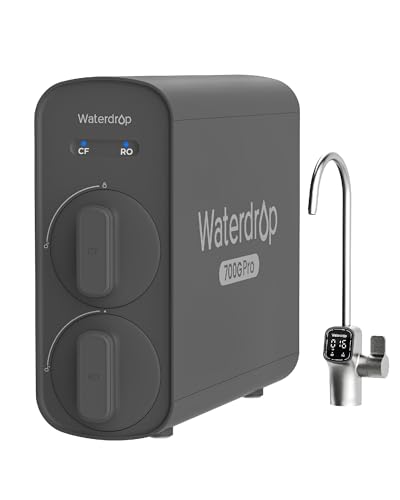
- ✓ High flow rate
- ✓ Space-saving design
- ✓ Effective 7-stage filtration
- ✕ Slightly complex installation
- ✕ Faucet flow rate limits
| Filtration Stages | 7-stage reverse osmosis process |
| Flow Rate | 700 gallons per day (GPD) |
| Membrane Pore Size | 0.0001 micrometers (μm) |
| Certification | NSF/ANSI 58 & 372 certified (lead-free) |
| Dimensions | 16.69″ x 5.69″ x 13.9″ |
| Flow Rate Capacity | Maximum faucet flow rate of 1.00 gallons per minute (gpm) |
The first time I connected the Waterdrop G5P700-Pro to my sink, I was struck by how compact and sleek it looked. It surprised me how much under-sink space it saved—just a slim 16.69″ by 5.69″, yet it packs a punch with a 700GPD flow rate.
Using it for the first time, I appreciated the dual water paths right away. One line goes straight to my refrigerator for ice and drinks, while the other feeds the faucet for quick, filtered water for cooking or rinsing veggies.
The 7-stage filtration process impressed me—removing chlorine, sediment, and even pesky chemicals like PFOA and PFOS. The water tastes noticeably cleaner, crisper, and free of any odd odors, which makes me want to drink more often.
Flow is steady and fast, which is a relief during busy mornings when everyone needs water. The system handles high demand without any hiccups, and the NSF/ANSI certifications give me confidence in its safety and quality.
Setting it up was straightforward, thanks to clear instructions and the tankless design. I love that I don’t have to worry about recontamination or leakage, and it fits perfectly under my sink without crowding my cabinet space.
Overall, this system has made a noticeable difference in my daily water quality. It’s reliable, efficient, and super convenient—especially for connecting to my fridge and other appliances.
If you’re tired of bland or chemical-tasting water, this might just be the upgrade you need.
iSpring RCC7 NSF 5-Stage Reverse Osmosis Water Filter System

- ✓ Effectively reduces contaminants
- ✓ Easy to install and maintain
- ✓ Compact, space-saving design
- ✕ Replacement filters can be pricey
- ✕ No filter status indicator
| Contaminant Reduction Efficiency | Removes up to 99% of over 1,000 harmful contaminants including PFAS, chlorine, fluoride, lead (up to 98%), arsenic, asbestos, calcium, and sodium |
| Filtration Certification | NSF/ANSI 58 certified |
| Filtration Stages | 5-stage reverse osmosis process with final polishing GAC filter |
| Maximum TDS Reduction | 80-90% |
| Flow Rate | Typically around 50 gallons per day (based on standard RO systems, inferred from product category) |
| Filter Life and Maintenance | Designed for long-term reliability with easy-to-inspect transparent housing; specific lifespan not provided but generally 6-12 months per filter stage |
There’s nothing more frustrating than pouring a glass of water and wondering if it’s truly safe or just tastes off. I recently installed the iSpring RCC7 NSF 5-Stage Reverse Osmosis system under my sink, and the difference was immediate.
The first sip of water after installation was noticeably crisper and cleaner, with no chemical aftertaste.
The setup was straightforward, thanks to the clear instructions and transparent filter housing. I appreciated the compact design — it fit perfectly under my kitchen sink without cluttering the space.
The system effectively reduces over 1,000 harmful contaminants, including fluoride, lead, arsenic, and PFAS, which gives me peace of mind, especially with a young family.
The build quality feels solid, with impact-resistant housing and premium components. The included lead-free faucet looks sleek and matches my kitchen decor.
I also like that it doesn’t require electricity to operate, making it energy-efficient and reliable. The final water quality is impressive — tasting fresh, pure, and free from impurities, perfect for drinking, cooking, or filling the fridge’s water dispenser.
Maintenance is minimal, with easy-to-inspect filter housings and a check valve to prevent leaks. Since installation, I haven’t experienced any issues, and the system has been consistently leak-free.
Overall, this system delivers bottled-quality water at home, reducing plastic waste and saving me money in the long run.
What is a Reverse Osmosis System for Refrigerators?
A Reverse Osmosis (RO) System for refrigerators is a water purification technology that uses a semipermeable membrane to remove impurities and contaminants from water, providing clean, filtered water for ice-making and drinking directly from the refrigerator. This system is integrated within the refrigerator or connected to it, ensuring that the water dispensed through the door or used for ice is of high quality and free from harmful substances.
According to the U.S. Environmental Protection Agency (EPA), reverse osmosis is one of the most effective methods for reducing contaminants in drinking water, including lead, chlorine, fluoride, and other dissolved solids. The National Sanitation Foundation (NSF) also recognizes RO systems as effective in providing potable water, which is essential for health and safety.
Key aspects of a reverse osmosis system include its multi-stage filtration process, which typically consists of pre-filters that remove larger particles and chlorine, followed by the RO membrane that filters out smaller impurities and a post-filter that polishes the water before it is dispensed. This comprehensive filtration ensures that the water supplied to the refrigerator is not only clean but also tastes better. Additionally, many systems come with a storage tank to hold filtered water, ensuring a steady supply.
This impacts households by significantly improving the quality of water consumed, which in turn can lead to better health outcomes, especially in areas with poor water quality. The use of RO systems in refrigerators also reduces the need for bottled water, contributing to environmental sustainability by minimizing plastic waste. According to the Water Quality Association, families using RO systems can save hundreds of dollars annually by reducing their reliance on bottled water.
The benefits of implementing a reverse osmosis system for refrigerators include enhanced water taste, reduction in health risks related to waterborne contaminants, and convenience of having purified water readily available at home. Furthermore, these systems can be tailored to meet specific needs, such as higher purification levels for areas with significantly contaminated water sources.
Best practices for maintaining an RO system involve regular filter changes, typically every 6 to 12 months, and periodic system sanitization to prevent bacterial growth. It is also advisable to monitor water quality through testing to ensure the system is functioning optimally. Homeowners should consider selecting a system that fits their specific water quality needs and refrigerator design to maximize the effectiveness of the filtration process.
How Do Reverse Osmosis Systems Work in Refrigerators?
Reverse osmosis systems in refrigerators are designed to purify water and provide cleaner ice and drinking water by using a multi-stage filtration process.
- Pre-Filtration: This stage involves removing larger particles and sediments from the water. It helps to protect the reverse osmosis membrane from damage and clogging, ensuring the system operates efficiently for a longer period.
- Reverse Osmosis Membrane: The core component of the system, this semi-permeable membrane allows water molecules to pass through while blocking contaminants such as lead, chlorine, and other impurities. This process results in purified water that is significantly cleaner and tastes better.
- Post-Filtration: After the water has passed through the reverse osmosis membrane, it goes through a final filtration stage, often using activated carbon. This step removes any remaining tastes or odors, ensuring the water is fresh and pleasant to drink.
- Storage Tank: Purified water is typically stored in a tank within the refrigerator or the system itself. This allows for instant access to filtered water whenever needed, maintaining a ready supply for drinking and ice-making.
- Dispensing System: The filtered water is delivered through a dedicated dispensing system in the refrigerator, which may include a water spout or an ice maker. This ensures that users have easy access to clean water without having to fill pitchers or other containers manually.
Why Should You Choose a Reverse Osmosis System for Your Refrigerator?
You should choose a reverse osmosis system for your refrigerator because it effectively removes impurities from water, resulting in cleaner, better-tasting ice and drinking water.
According to the Water Quality Association, reverse osmosis systems can eliminate up to 95% of total dissolved solids (TDS) and a variety of contaminants, including lead, chlorine, and fluoride, which can negatively affect the taste and safety of your water (Water Quality Association, 2020). This makes them an ideal choice for those looking to enhance the quality of the water dispensed by their refrigerators.
The underlying mechanism of reverse osmosis involves forcing water through a semi-permeable membrane that allows only water molecules to pass while blocking larger particles, contaminants, and impurities. This process ensures that the water used in your refrigerator is not only clean but also free from substances that can alter flavor or contribute to health risks. Furthermore, as the quality of water improves, so does the quality of the ice produced, which can significantly enhance beverages and food prepared with that ice.
In addition to taste and safety, using a reverse osmosis system can lead to cost savings over time. By providing purified water directly to your refrigerator, you reduce the need for bottled water, which can be both expensive and environmentally damaging. A study by the Plastic Pollution Coalition indicated that switching to filtered water systems can significantly reduce plastic waste, making this choice not only economical but also more sustainable for the environment.
What Key Features Should You Look for in a Reverse Osmosis System for Your Refrigerator?
When selecting the best reverse osmosis system for your refrigerator, consider the following key features:
- Filtration Stages: A higher number of filtration stages can significantly improve water quality by removing more contaminants. Typically, systems with at least three to five stages are recommended, as they often include pre-filters, membrane filters, and post-filters to ensure thorough purification.
- Membrane Quality: The quality and type of the reverse osmosis membrane are crucial for the efficiency of the system. Look for membranes that have a high rejection rate of impurities, ideally above 95%, ensuring that harmful substances are filtered out effectively.
- Water Flow Rate: The flow rate indicates how quickly the system can produce purified water. A higher flow rate is essential for households with higher water consumption, as it ensures that the refrigerator can dispense filtered water quickly without long wait times.
- Storage Tank Capacity: The size of the storage tank can impact how much purified water is readily available. A larger tank is beneficial for families that require a significant amount of chilled water at once, minimizing the frequency of system refills.
- Ease of Installation: Look for systems that come with clear instructions and all necessary components for installation. Systems designed for easy DIY installation can save you time and money, making it simpler to integrate the reverse osmosis system with your refrigerator.
- Maintenance Requirements: Consider how often the filters need to be replaced and the ease of doing so. Systems that offer long-lasting filters and straightforward replacement procedures can save you both time and maintenance costs in the long run.
- Certification and Compliance: Ensure the system is certified by reputable organizations, such as NSF or WQA, to guarantee that it meets safety and performance standards. Certifications provide assurance that the system effectively removes contaminants and operates as advertised.
- Cost and Warranty: Evaluate the overall cost of the system, including initial purchase price and ongoing maintenance costs. Additionally, a solid warranty can provide peace of mind, protecting your investment against defects or performance issues.
Which Reverse Osmosis Systems Are the Top Picks for Refrigerator Use?
The best reverse osmosis systems for refrigerator use combine efficiency, convenience, and compatibility with refrigerator water and ice dispensers.
- Apec RO-90 Reverse Osmosis System: This system is known for its high-quality filtration and efficiency.
- iSpring RCC7AK Reverse Osmosis System: Featuring a mineral filter, this option adds beneficial minerals back into the water.
- Home Master TMAFC-ERP Reverse Osmosis System: With a modern design, this system offers an advanced filtration process.
- Express Water RO5DX Reverse Osmosis System: A budget-friendly option that still provides reliable purification.
Apec RO-90 Reverse Osmosis System: This system is designed with a 90 GPD (gallons per day) capacity, making it suitable for households with high water demands. It utilizes a 5-stage filtration process that effectively removes contaminants like chlorine, lead, and fluoride, ensuring clean and safe drinking water. Its compact design allows for easy installation under most kitchen sinks, and it can efficiently supply water directly to your refrigerator.
iSpring RCC7AK Reverse Osmosis System: This 6-stage system not only purifies water but also adds essential minerals back into it, enhancing the taste. The included remineralization filter is particularly beneficial for those who prefer water with a natural flavor profile. Its easy-to-follow installation instructions make it a popular choice for DIY enthusiasts, and it’s compatible with most refrigerator models.
Home Master TMAFC-ERP Reverse Osmosis System: This system features a unique design that minimizes water waste and maximizes efficiency, making it an eco-friendly choice. It includes a built-in permeate pump that increases water production and reduces the time it takes to fill your refrigerator’s water dispenser. Additionally, the modular design allows for easy maintenance and replacement of filters.
Express Water RO5DX Reverse Osmosis System: This economical option is perfect for those looking for an effective filtration system without breaking the bank. It features a 5-stage filtration process that ensures the removal of many common contaminants, and its compact size allows for easy installation. While it may not have all the bells and whistles of more expensive models, it delivers reliable performance for refrigerator water use.
How Can You Install a Reverse Osmosis System in Your Refrigerator?
To install a reverse osmosis system in your refrigerator, you’ll need to follow several important steps:
- Choose the Right Reverse Osmosis System: Select the best reverse osmosis system for refrigerator use that fits your space and water needs.
- Prepare the Installation Area: Ensure that you have the necessary tools and space around the refrigerator for installation.
- Connect the Water Supply: Properly connect the RO system to your refrigerator’s water supply line.
- Install the RO System: Mount the reverse osmosis system in an accessible location, usually under the sink or nearby the refrigerator.
- Test for Leaks: After installation, turn on the water supply and check for any leaks in the connections.
Choose the Right Reverse Osmosis System: It’s essential to choose a reverse osmosis system specifically designed for refrigerator use, as these systems typically have smaller tank sizes and can fit into tighter spaces. Look for systems with a good filtration rate and quality reviews to ensure you’re getting clean, safe water for your ice and drinking needs.
Prepare the Installation Area: Before you begin installation, gather all necessary tools, such as wrenches, tubing cutters, and screwdrivers. Clear out the area around your refrigerator to provide ample working space, which will make the installation process smoother and prevent any accidental damage to surrounding appliances.
Connect the Water Supply: The next step involves connecting the reverse osmosis system to the refrigerator’s water supply line. This typically involves using a saddle valve or similar fitting to tap into the existing water line, ensuring that you have a secure, leak-free connection so that the system can provide a steady supply of filtered water.
Install the RO System: The reverse osmosis unit should be installed in a location that is easily accessible for maintenance, such as under the kitchen sink or in a nearby cabinet. Follow the manufacturer’s instructions carefully when mounting the system, making sure all connections are tight and secure to prevent leaks or malfunctions.
Test for Leaks: Once the installation is complete, turn on the water supply and allow the system to fill its tank. Monitor all connections for leaks and ensure that water flows correctly to the refrigerator. If any leaks are detected, they should be addressed immediately to avoid water damage and ensure the system operates efficiently.
What Maintenance Does a Reverse Osmosis System Need for Optimal Performance?
To ensure optimal performance of a reverse osmosis system, several maintenance tasks are necessary.
- Regular Filter Changes: It is essential to replace pre-filters, post-filters, and the reverse osmosis membrane according to the manufacturer’s guidelines. Typically, pre-filters should be changed every 6-12 months, while the membrane may last 2-3 years, depending on water quality and usage.
- Sanitization: Periodic sanitization of the system helps eliminate bacteria and biofilm buildup. This process usually involves using a food-grade hydrogen peroxide solution to ensure that all components are clean and safe for water consumption.
- Checking Water Pressure: Maintaining proper water pressure is crucial for the efficiency of the reverse osmosis system. Regularly checking the water pressure ensures that it remains within the recommended range, as low pressure can lead to inadequate filtration performance.
- Inspecting Connections and Leaks: Regularly inspect the system for any leaks or loose connections. Tightening fittings and replacing any damaged components prevents water waste and ensures the system operates effectively.
- Monitoring TDS Levels: Testing the total dissolved solids (TDS) in the water helps assess the system’s performance. If TDS levels start to rise significantly, it may indicate that the membrane or filters need replacement.
- Drain Line Maintenance: Ensuring that the drain line is clear and free of obstructions is vital for proper operation. A blocked drain line can cause pressure buildup and affect the efficiency of the filtration process.