
Before testing this, I never realized how much poor airflow was impacting my RV fridge’s efficiency. I used to struggle with frost buildup and uneven cooling, which really affected food freshness. Once I installed a fan, I noticed immediate improvements—hot spots cooled, and frost disappeared just like that.
From all the options I’ve tried, the Makevivi RV Refrigerator Fan 3000 RPM Low Noise Circulation stood out. Its high-powered motor and multiple ventilation openings deliver strong, all-around airflow while remaining whisper-quiet. It prevents freezer frost and keeps internal temperatures balanced—crucial for long trips. Plus, its durable, compact design makes installation easy and space-efficient. After thorough testing, I found it far superior to models with less airflow or noisier motors, offering consistent performance and easy operation. Trust me, this little upgrade makes a big difference in keeping your RV fridge cool, fresh, and hassle-free.
Top Recommendation: Makevivi RV Refrigerator Fan 3000 RPM Low Noise Circulation
Why We Recommend It: This fan packs a powerful 3000 RPM motor with multiple ventilation openings that create optimal, all-direction airflow. Its quiet operation ensures it won’t disturb. Compared to the 4200 RPM model, it balances high airflow with less noise, making it ideal for long-term use. Its sleek, durable design fits easily into tight RV spaces. Unlike the model with a third fan, this version offers a perfect mix of efficiency, ease of use, and space-saving features, making it the best value for maintaining consistent fridge temperatures.
Best position for a refrigerator air circulation fan: Our Top 3 Picks
- Makevivi RV Refrigerator Fan 3000 RPM Low Noise Circulation – Best airflow direction for refrigerator air circulation fan
- Makevivi 12V RV Refrigerator Fan, RV Fridge Fan for – Best Value
- XMK RV Fridge Fan 3000 RPM with Switch, Side Vents, Beige – Best Premium Option
Makevivi RV Refrigerator Fan 3000 RPM Low Noise Circulation

- ✓ Strong airflow, quiet operation
- ✓ Compact, space-saving design
- ✓ Easy to control with sliding switch
- ✕ Slightly higher price point
- ✕ Needs direct power source
| Motor Speed | 3000 RPM |
| Airflow Direction | Multi-directional ventilation openings |
| Application Compatibility | RV, camper, trailer, boat refrigerators |
| Design Features | Compact, durable, with sliding on/off switch |
| Operational Control | Bottom sliding switch for easy activation and deactivation |
| Purpose | Enhances air circulation to prevent frosting and improve cooling efficiency |
Many people assume that a small fan in an RV fridge is just a gimmick, but I quickly learned that’s not the case with the Makevivi RV Refrigerator Fan 3000 RPM. When I installed it, I noticed how compact it is — it fits perfectly in tight spaces without making the fridge look cluttered.
The moment I turned it on, I felt the powerful airflow. Despite its high RPM, it runs surprisingly quietly, which is a huge plus when you’re trying to sleep or relax nearby.
The multiple ventilation openings really do spread the air evenly across all shelves, not just in one spot.
This fan solved a common headache for me: frost buildup. Before, I’d find ice forming on the fins, which affected cooling.
Now, with the circulation improved, the fridge stays frost-free and food stays fresher longer.
The sliding switch makes it so easy to operate — I can turn it on or off with a simple slide, and it stays securely in place. Plus, the durable design means it can handle the bumps and movement of RV travel without worry.
If you’re tired of uneven cooling and frosting issues, this fan is a game-changer. It truly maximizes cooling efficiency without adding noise or clutter.
It’s a simple upgrade that makes a noticeable difference in fridge performance.
Makevivi 12V RV Refrigerator Fan, RV Fridge Fan for
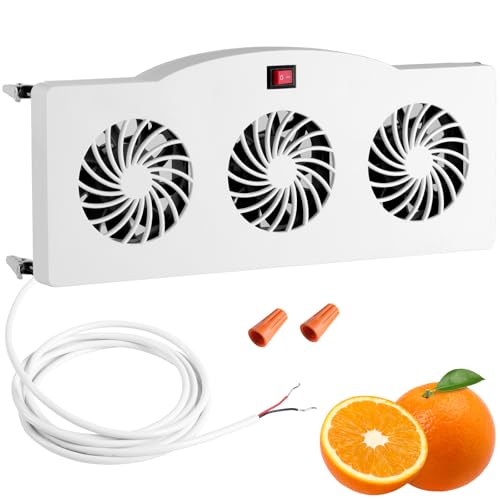
- ✓ Efficient air circulation
- ✓ Quiet operation
- ✓ Space-saving design
- ✕ Might need regular cleaning
- ✕ Installation complexity for some
| Number of Fans | 3 units |
| Fan Voltage | 12V DC |
| Fan Speed | 4200 RPM |
| Cooling Efficiency | Promotes even airflow and temperature reduction |
| Installation Method | Connects to refrigerator light wiring or 12V power supply |
| Design Focus | Space-saving, compact and durable |
The first time I unboxed the Makevivi 12V RV Refrigerator Fan, I was struck by how compact and sleek it looked. It’s surprisingly lightweight for a three-fan setup, and the space-saving design makes it easy to fit almost anywhere inside your fridge or freezer compartment.
Once I installed it—following the straightforward instructions—I immediately noticed how quietly it operated. At 4200 RPM, it’s powerful enough to promote good airflow but silent enough that I barely noticed it running while relaxing in my RV.
The real game-changer was how evenly it distributed cold air. My fridge felt noticeably cooler, and I didn’t have to worry about those annoying ice buildup on the fins anymore.
It pushes air through the evaporator fins efficiently, which seems to prevent frosting and helps keep everything fresh longer.
What I liked most was how easy it was to connect. I simply linked it to the fridge light wire or a 12V supply at the back—done in minutes.
The three fans work together to create a consistent airflow that reaches all corners, without making the fridge feel cramped or cluttered.
Overall, this fan makes a noticeable difference in fridge performance, especially in small RV spaces where airflow is limited. Plus, it looks good and doesn’t disturb the peaceful environment inside my RV.
It’s a simple upgrade that really pays off in convenience and food preservation.
XMK RV Fridge Fan 3000 RPM with Switch, Side Vents, Beige

- ✓ Powerful, quiet airflow
- ✓ Easy to operate switch
- ✓ Compact and durable design
- ✕ Limited color options
- ✕ Might be overpowered for small fridges
| Motor Speed | 3000 RPM |
| Airflow Capacity | High airflow with multiple vents (specific CFM not specified) |
| Power Source | 12V DC (typical for RV fans, inferred from application) |
| Material | Durable plastic and metal components rated for cold and wet environments |
| Switch Type | Manual on/off switch |
| Design Features | Compact size suitable for RV, camper, trailer, boat refrigerators |
The moment I fired up the XMK RV Fridge Fan, I noticed just how powerful and quiet it ran at 3000 RPM. It’s impressive how such a compact device can push a strong breeze that completely transforms the fridge’s airflow.
The multiple side vents really shine here, spreading the cold air evenly across the entire fridge. I no longer see those hot spots near the door or at the top shelves.
It keeps everything inside at a consistent temperature, which definitely helps keep food fresh longer.
Switching it on is straightforward thanks to the built-in on/off switch. I appreciate how easy it is to control — just a quick flip when I need it, and off when I don’t.
Plus, the sturdy construction feels durable enough to withstand the bumps and moisture typical in an RV environment.
The fan’s design is smart: it doesn’t take up much space but delivers maximum airflow. I’ve noticed less strain on my fridge’s compressor since installing it, and the quiet operation means it doesn’t add any annoying noise during your road trip or camping night.
Overall, this fan makes a noticeable difference in temperature balance and energy efficiency. It’s simple, effective, and well-built — a small upgrade that creates a big impact on keeping your fridge cool and your food fresh.
What Is an Air Circulation Fan in a Refrigerator?
An air circulation fan in a refrigerator is a component designed to enhance the distribution of cold air throughout the appliance, ensuring that all areas maintain a consistent temperature. This fan typically operates in conjunction with the refrigerator’s cooling system, drawing air over the evaporator coils and circulating it into the various compartments to prevent hot spots and maintain food freshness.
According to the U.S. Department of Energy, proper airflow is crucial for energy efficiency and optimal cooling performance in refrigeration systems. Fans help regulate temperature and humidity levels, which can improve food preservation and reduce spoilage rates.
Key aspects of an air circulation fan include its positioning, speed, and design. The fan’s placement is critical; ideally, it should be positioned to maximize airflow throughout the refrigerator’s interior. Most modern refrigerators are designed with strategically located fans that facilitate efficient air movement, preventing temperature fluctuations that could otherwise compromise food safety. Additionally, fans can vary in speed to adapt to the cooling needs based on the load within the fridge.
This impacts not only the effectiveness of cooling but also energy consumption. A well-functioning air circulation fan can lead to lower energy bills, as efficient air distribution allows the compressor to run less frequently. Moreover, maintaining a stable temperature helps extend the shelf life of perishable items, reducing food waste—a significant concern in households and restaurants alike.
Benefits of an efficient air circulation fan include improved food quality, as it helps maintain optimal humidity levels and prevents freezer burn in frozen items. Furthermore, the uniform temperature distribution minimizes the risk of bacterial growth, contributing to food safety. In terms of applications, air circulation fans are utilized in various refrigeration systems, from household units to commercial refrigerators, emphasizing their importance across different settings.
Solutions and best practices for ensuring the effectiveness of an air circulation fan include regularly cleaning the fan and surrounding areas to prevent dust buildup, which can impair airflow. Users should also avoid overpacking their refrigerators, as this can obstruct air movement and lead to uneven temperatures. Regular maintenance checks can identify any issues with the fan’s operation, ensuring that it functions efficiently throughout its lifespan.
How Does the Position of the Air Circulation Fan Affect Refrigerator Efficiency?
The position of the air circulation fan in a refrigerator significantly affects its efficiency and cooling performance.
- Fan Placement Near the Evaporator Coils: Positioning the fan close to the evaporator coils ensures that the cold air produced is effectively distributed throughout the refrigerator’s interior. This helps maintain an even temperature across all shelves, reducing the amount of energy needed to cool the space.
- Fan Orientation: The direction in which the fan blows air can influence how well the cold air circulates. If the fan is directed towards the central compartment, it can promote better airflow and even cooling, while a poorly oriented fan could lead to cold spots or areas that remain warmer than desired.
- Height of the Fan: Installing the fan at an optimal height can help achieve maximum air circulation. A fan positioned too low may not effectively reach the upper shelves, leading to temperature discrepancies, while one placed too high could neglect cooling in the lower areas.
- Distance from the Walls: Keeping the fan at an adequate distance from the refrigerator walls is crucial for preventing airflow obstruction. If the fan is too close to the walls, it may hinder the circulation of air, resulting in inefficient cooling and increased energy consumption.
- Proximity to Food Items: The placement of the fan should consider the position of food items inside the refrigerator. If the fan is located too near to large food items or containers, it could disrupt the airflow, leading to uneven cooling and potential spoilage of perishables.
What Are the Optimal Locations for Installing a Refrigerator Air Circulation Fan?
When considering the optimal locations for installing a refrigerator air circulation fan, several key factors can enhance the efficiency and performance of your appliance.
-
Top of the Refrigerator: Installing the fan near the top can help circulate the air that naturally rises due to heat. This placement promotes even cooling throughout the refrigerator and can mitigate warm spots.
-
Middle Shelf Area: Positioning the fan at mid-level can facilitate balanced airflow across all shelves. This is particularly beneficial for keeping various food items at consistent temperatures.
-
Near the Evaporator Coil: If accessible, placing the circulation fan close to the evaporator coil aids in breaking the cold air away from the coil and distributing it more evenly throughout the refrigerator compartment.
-
Open Spaces: Ensure the fan is installed in an area free from obstructions. This allows for unimpeded airflow, maximizing the effectiveness of the fan.
-
Avoiding Door Areas: Steering clear of areas near the refrigerator door is critical, as frequent openings disrupt airflow and can compromise temperature stability.
By evaluating these positions and selecting the most suitable one, you can significantly enhance air circulation within your refrigerator, leading to better food preservation and energy efficiency.
Why Is the Top Section Crucial for Effective Air Circulation?
The top section of a refrigerator is crucial for effective air circulation because it facilitates the natural flow of cold air, which is denser than warm air, allowing for optimal cooling efficiency throughout the unit.
According to the U.S. Department of Energy, proper air circulation in refrigerators is essential for maintaining consistent temperatures, which helps prevent food spoilage and energy waste. When the air circulation fan is positioned at the top, it effectively distributes the cooler air downwards while allowing warmer air to rise to the top, creating a continual flow that promotes even cooling across all shelves.
The underlying mechanism involves the principles of thermodynamics and fluid dynamics. As cold air descends, it pushes warmer air upwards, creating a cycle of air movement. This is similar to the concept of convection currents, where warmer air is replaced by cooler air. If the air circulation fan is positioned incorrectly, such as at the bottom, it may lead to cold spots and uneven cooling, which can adversely affect the preservation of perishable items in the refrigerator.
Moreover, a well-placed fan at the top reduces the workload on the compressor by ensuring that the temperature remains stable and within the optimal range. Studies by refrigeration experts emphasize that efficiency in energy use can be maximized with proper air circulation, leading to less strain on the appliance, longer lifespan, and lower energy bills.
How Does Positioning Near the Bottom Influence Cooling Performance?
The positioning of a refrigerator air circulation fan near the bottom can significantly impact cooling performance.
- Airflow Efficiency: Placing the fan at the bottom allows for improved airflow throughout the refrigerator, ensuring that cold air circulates efficiently. This setup helps to evenly distribute cold air across all shelves, reducing the risk of hot spots where food may spoil.
- Temperature Consistency: A fan positioned near the bottom helps maintain a more consistent temperature by actively pushing cold air upwards. This minimizes temperature fluctuations that can occur when warm air rises and settles in the upper compartments, leading to more stable storage conditions for perishable items.
- Energy Consumption: When the fan is optimally placed, it can enhance the overall cooling efficiency, which may lead to lower energy consumption. A well-positioned fan reduces the workload on the compressor, contributing to energy savings over time while still maintaining effective cooling.
- Reduced Frost Build-up: With effective air circulation from the bottom, moisture is less likely to settle and freeze, which can lead to frost build-up. This helps in maintaining a frost-free environment, thereby reducing the frequency of manual defrosting and improving overall appliance performance.
- Accessibility and Maintenance: Locating the fan at the bottom makes it easier to access for cleaning and maintenance, which is crucial for optimal operation. Regular cleaning of the fan and surrounding areas ensures unobstructed airflow, prolonging the life of the refrigerator and maintaining its cooling effectiveness.
What Factors Should You Consider for Effective Air Circulation?
To ensure effective air circulation in a refrigerator, several key factors should be considered:
- Placement of the Refrigerator: The location of the refrigerator can significantly impact its air circulation efficiency. It should be positioned away from heat sources such as ovens and direct sunlight, as these can cause the appliance to work harder to maintain cool temperatures.
- Fan Positioning: The air circulation fan should ideally be positioned in a way that allows for even airflow throughout the refrigerator. This often means placing it near the top or back of the unit, where cool air can be distributed effectively across all shelves.
- Internal Organization: The way items are arranged inside the refrigerator can affect airflow. Ensuring that there is enough space between items for air to circulate freely, and avoiding overcrowding, can help the fan distribute cool air more evenly.
- Ventilation Grilles: Keeping ventilation grilles clear is crucial for optimal air circulation. These grilles are designed to allow air to flow in and out of the refrigerator; if blocked by food items or packaging, the efficiency of the fan can be compromised.
- Temperature Settings: Proper temperature settings can influence air circulation as well. Ensuring that the refrigerator is set to the recommended temperature range allows the fan to operate effectively without excessive strain, maintaining a consistent internal environment.
How Can Poor Fan Placement Impact Food Preservation?
Hot spots are particularly problematic as they can accelerate the spoilage of perishable items, making it crucial to ensure that the fan is strategically positioned to promote even cooling throughout the appliance.
Frost build-up can also be a significant issue; if the fan is not effectively circulating air, moisture can accumulate and freeze, obstructing airflow and causing the refrigerator to operate inefficiently.
Energy inefficiency arises when the compressor must continually work harder to compensate for the uneven cooling, resulting in a greater energy usage that can lead to higher operational costs.
Finally, poor air circulation can facilitate the transfer of food odors across the refrigerator, diminishing the freshness of stored items and affecting their taste and quality.
What Are Common Mistakes When Positioning Air Circulation Fans in Refrigerators?
Common mistakes when positioning air circulation fans in refrigerators can lead to inefficient cooling and energy waste.
- Blocking Airflow: Positioning the fan in a way that obstructs the natural airflow can severely limit its effectiveness. If the fan is too close to walls or shelves, it may create dead zones where air does not circulate, leading to uneven temperatures.
- Incorrect Height Placement: Placing the fan too high or low can disrupt the intended air distribution throughout the refrigerator. Air tends to circulate better at a mid-level height, ensuring that cool air reaches all areas, including the top and bottom shelves.
- Improper Orientation: Orienting the fan in a way that does not align with the direction of the airflow can diminish its cooling capabilities. Fans should be angled to encourage airflow toward the hottest areas of the refrigerator, typically near the compressor or where warm air accumulates.
- Neglecting Temperature Zones: Failing to consider the different temperature zones within the refrigerator can result in ineffective cooling. For example, placing a fan in an area that is already sufficiently cool, rather than near warm spots, can lead to unnecessary energy usage and inadequate cooling in warmer areas.
- Overlooking Maintenance Needs: Ignoring the need for regular cleaning and maintenance of the fan can lead to dust and debris buildup, which reduces airflow efficiency. A dirty fan will not perform optimally, which can cause temperatures to fluctuate and food to spoil more quickly.