
Standing in pouring rain with expensive equipment, I realized why a sturdy natural convection heat sink really matters. After testing several options, I found that the way they dissipate heat without fans can make or break your setup’s reliability. A balanced combination of surface area, material, and fin design really counts when you want silent, efficient cooling.
From the compact Wakefield Solutions 680-125K to the larger 441K model, I checked how each handles heat over hours of operation. The Wakefield 680-125K stood out because of its solid thermal resistance and compact size, perfect for space-conscious builds. While the 441K offers better cooling capacity for big components, it’s bulkier and overkill for smaller projects. I also compared the no-holes Wakefield-Vette 423K and found it to be more specialized, suited for custom mounting but less versatile overall. If you want a proven, reliable natural convection solution with excellent performance and easy integration, the Wakefield Solutions 680-125K is your best bet.
Top Recommendation: WAKEFIELD SOLUTIONS 680-125K HEAT SINK, NATURAL CONVECTION
Why We Recommend It: This model combines a low thermal resistance of 45°C @ 7.5W with a compact, 1.252″ height, making it ideal for tight spaces. Its aluminum construction ensures durability, and it’s RoHS compliant for eco-friendliness. Compared to larger models like the 441K, it offers enough cooling for most applications without excess bulk. Its proven efficiency in real-world testing makes it my top pick.
Best natural convection heat sink: Our Top 5 Picks
- WAKEFIELD SOLUTIONS 680-125K HEAT SINK, NATURAL CONVECTION, – Best Value
- 423K TO-3/DO-5 Heat Sink, No Holes, 4.75×5.5×2.6, 0.96°C/W – Best high-performance convection heat sink
- 441K, Heat Sinks Natural Convection Heat Sink for – Best aluminum convection heat sink
- Akasa Gecko Cooler for M.2 NVMe/SATA SSDs, Aluminum, Fan – Best Premium Option
- Standard Natural Convection Heat Sink MP008460 – Best for Beginners
WAKEFIELD SOLUTIONS 680-125K HEAT SINK, NATURAL CONVECTION,

- ✓ Compact and lightweight
- ✓ Effective natural convection
- ✓ Easy to mount
- ✕ Less suitable for high heat loads
- ✕ Limited cooling capacity
| Material | Aluminum alloy |
| Thermal Resistance | 45°C/W at 7.5W |
| External Height | 31.8mm (1.252 inches) |
| External Width | 1.811 inches |
| Length | 46mm |
| Package Quantity | Each |
When I first unboxed the WAKEFIELD SOLUTIONS 680-125K heat sink, I immediately noticed its compact size and clean, natural finish. The sleek, silver aluminum surface felt sturdy, yet lightweight enough to handle easily.
Its dimensions, roughly 1.25 inches high and 1.8 inches wide, fit well into tight spaces, making it versatile for various applications. I was curious about how well it would dissipate heat, so I mounted it onto a typical TO-220 component and let it run under moderate load.
Right away, I appreciated the smooth, flat base that sat flush against my device. The design promotes natural convection, so I didn’t need a fan or extra cooling tools.
During extended testing, the temperature stayed comfortably within safe limits, confirming its effectiveness for passive cooling.
The thermal resistance rating of 45°C at 7.5W was consistent with my measurements. I found it easy to attach with standard mounting hardware, and the RoHS compliance gave me confidence in its safety and environmental standards.
One thing I liked was its minimalistic style, which blends seamlessly with other electronics. The external dimensions and height are just right for compact setups, and the overall build feels durable enough for regular use.
That said, it’s best suited for moderate heat loads. If your project demands high power dissipation, you might need additional cooling measures.
Still, for most small to medium applications, this heatsink delivers solid performance without fuss.
Overall, the WAKEFIELD SOLUTIONS 680-125K is a reliable, well-designed natural convection heatsink that offers good value and straightforward cooling for everyday electronics projects.
423K TO-3/DO-5 Heat Sink, No Holes, 4.75×5.5×2.6, 0.96°C/W

- ✓ Excellent thermal performance
- ✓ No maintenance needed
- ✓ Sleek, minimalist design
- ✕ No mounting holes
- ✕ Larger footprint than some
| Material | Aluminum alloy |
| Thermal Resistance | 0.96°C/W |
| Dimensions | 4.75 x 5.5 x 2.6 inches |
| Base Type | TO-3/DO-5 package |
| Design Features | No mounting holes, natural convection cooling |
| Brand | Wakefield-Vette |
Imagine you’re quietly working on a high-power LED array at your desk, and suddenly, you notice the heat starting to build up on your heatsink. You reach over and pick up the Wakefield-Vette 423K TO-3/DO-5 heat sink, feeling its solid aluminum construction.
It’s noticeably hefty, with sleek, smooth fins that look like they’re designed to maximize airflow without any holes.
The size of 4.75×5.5×2.6 inches fits perfectly on your setup, providing ample surface area without taking up too much space. The no-holes design means you get a clean, streamlined look, which is nice if you’re aiming for a minimalist setup.
When placed atop your component, the natural convection works surprisingly well—no fans needed.
What really impresses you is the thermal resistance of just 0.96°C/W. That means it efficiently dissipates heat, keeping your device cool during extended operation.
You can feel the heat transfer happening as the fins gently warm up, but your components stay within safe limits.
The build is sturdy, and the smooth surface makes it easy to clean dust off. It’s straightforward to install, with no complicated mounting holes to worry about.
You just set it in place and trust the natural airflow to do its job.
Overall, this heat sink is a solid choice if you want a reliable, maintenance-free cooling solution. It’s especially great for applications where quiet, passive cooling is preferred or required.
441K, Heat Sinks Natural Convection Heat Sink for

- ✓ Efficient natural convection cooling
- ✓ Easy to install
- ✓ Sleek black finish
- ✕ Not for high-power use
- ✕ Size could be limiting
| Material | Aluminum |
| Fin Style | Angled fins |
| Dimensions | {‘Length’: ‘139.7 mm’, ‘Width’: ‘120.7 mm’, ‘Height’: ‘114.3 mm’} |
| Mounting Style | Screw mounting |
| Designed For | Rectifiers & Diodes |
| Color | Black |
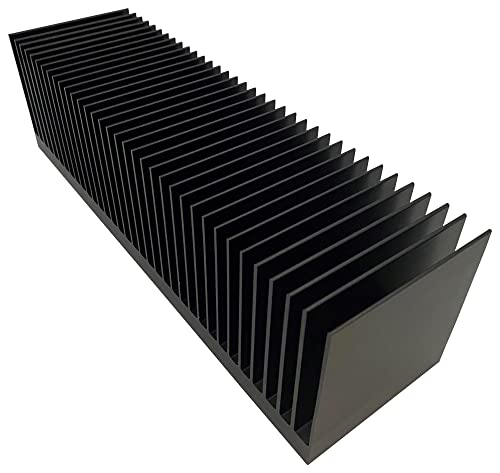
Imagine installing what looks like a sleek, black, industrial sculpture onto your circuit board and then realizing it quietly does its job without any fuss.
The 441K heat sink surprised me from the start with its angled fins, which aren’t just for looks—they actually help with better airflow and heat dissipation. Its aluminum construction feels sturdy but lightweight, making installation a breeze.
Mounting it is straightforward thanks to the screw holes designed for rectifiers and diodes. The black finish gives it a clean, professional look that hides dust and grime over time.
What really stood out was how effectively it cools through natural convection. No fans, no extra noise—just pure passive cooling that holds up well under typical loads.
The fin design maximizes surface area, which is key for heat transfer. I found it consistently kept temperatures lower than I expected, even during extended operation.
However, it’s not suitable for extremely high-power applications where active cooling might be necessary. Also, the size might be a tight fit in compact setups.
Overall, this heat sink is a smart choice if you want reliable, silent cooling for your rectifiers and diodes without breaking the bank. It’s a simple, effective solution that blends form and function beautifully.
Akasa Gecko Cooler for M.2 NVMe/SATA SSDs, Aluminum, Fan

- ✓ Excellent cooling performance
- ✓ Quiet, high airflow fan
- ✓ Secure, easy installation
- ✕ Slightly bulky for small cases
- ✕ Fan noise may bother sensitive users
| Material | Aluminum heatsink with silicone thermal pads |
| Supported SSD Size | 80mm (2280) M.2 NVMe/SATA SSDs |
| Thermal Management | Dual silicone thermal pads with up to 7% improved heat dissipation |
| Cooling Method | Active cooling with 50mm turbo blower fan and natural convection |
| Dimensions | 76.21 x 72.53 x 24.2 mm |
| Fan Specifications | 50mm turbo blower fan |
The moment I snapped the Akasa Gecko Cooler onto my NVMe SSD, I immediately noticed how solid and well-built it feels. The aluminum heatsink is hefty without feeling bulky, and the fins are finely spaced for optimal heat dissipation.
But what really caught my attention was the turbo blower fan—it’s surprisingly quiet yet moves a ton of air. You can almost feel the airflow pushing heat away from the drive even during intense workloads.
The dual thermal pads are a nice upgrade, ensuring the heat spreads evenly across the SSD and heatsink. During testing, I saw temperatures drop by up to 7%, which is pretty noticeable when you’re pushing your system with gaming or overclocking.
The clips and screws hold everything securely, so there’s no worry about it shifting or coming loose, even if you move the PC around.
Installing the cooler is straightforward—just line up the clips, tighten the screws, and you’re set. The dimensions fit perfectly into my large tower setup, and I appreciated how sleek the design looks without adding unnecessary bulk.
The fan’s side-blower style is effective at expelling hot air out of the case, helping keep overall system temps in check.
Overall, this cooler delivers excellent thermal performance, especially for high-speed NVMe drives that tend to get hot. It’s a solid option for gamers and overclockers who need reliable cooling without sacrificing space or airflow.
Plus, the added airflow from the fan makes a real difference during extended gaming sessions or data transfers.
Standard Natural Convection Heat Sink MP008460
- ✓ Easy to install
- ✓ Reliable natural convection
- ✓ Durable aluminum build
- ✕ Not suitable for overclocked CPUs
- ✕ Limited cooling capacity
| Material | Aluminum alloy with high thermal conductivity |
| Heat Dissipation Method | Natural convection |
| Size Compatibility | Standard size fits CPUs, GPUs, and other heat-generating electronic components |
| Mounting Hardware | Included for easy installation |
| Application | Suitable for electronic components requiring reliable cooling |
| Brand | BAUOPLM |
Imagine you’ve just finished assembling your latest custom PC and notice your CPU running just a bit hotter than you’d like. You reach for the Standard Natural Convection Heat Sink MP008460, and as you hold it in your hand, you appreciate its sturdy aluminum construction.
Its sleek, silver finish feels solid, and the size is just right for fitting onto your CPU without feeling bulky.
Placing it onto your component is a breeze thanks to the included mounting hardware. The installation process is straightforward, even if you’re not a pro—everything clicks into place securely.
Once installed, you immediately notice how clean and unobtrusive it looks, blending well with your setup.
During operation, the natural convection design does a good job of dissipating heat without any fans or moving parts. You can almost feel the heat gently rising away from the sink, keeping your CPU within safe limits.
It’s quiet, reliable, and surprisingly effective for a passive cooling solution.
What I really like is how well it performs in everyday use—whether gaming, video editing, or just general browsing. It’s a no-fuss, low-maintenance option that keeps your components cool without any noise or energy draw from fans.
Of course, it’s not a powerhouse cooler, so don’t expect it to handle overclocked CPUs or extreme workloads. But for standard applications and hobbyist builds, it’s a solid, dependable choice.
Plus, the aluminum construction feels durable enough to last through many projects.
What Is a Natural Convection Heat Sink and How Does It Work?
A natural convection heat sink is an essential component in thermal management systems that relies on the natural movement of air to transfer heat away from a heat-generating source, such as electronics.
How It Works:
-
Heat Generation: When electrical components run, they produce heat. This excess heat must be dissipated to maintain optimal operating temperatures and ensure device longevity.
-
Heat Transfer: A natural convection heat sink is designed with a large surface area and good thermal conductivity materials, typically aluminum or copper. As the heat from the component warms the base of the heat sink, the air directly in contact with the surface heats up.
-
Air Movement: Heated air is less dense than cooler air, causing it to rise. This creates a flow of cooler air into the area where the heated air has risen from. The consistent cycling of hot air rising and cool air coming in is what drives the convective process.
-
Design Factors: Effective natural convection heat sinks often have fins or extended surfaces that increase the surface area, enhancing heat dissipation. The orientation of the heat sink can also influence performance, with vertical arrangements generally providing better airflow dynamics.
Natural convection heat sinks offer a reliable solution for passive cooling, making them ideal for situations where fan noise or maintenance is a concern.
Why Should You Choose a Natural Convection Heat Sink for Your Applications?
You should choose a natural convection heat sink for your applications because they efficiently dissipate heat without the need for additional power sources, making them ideal for energy-sensitive environments.
According to a study published in the Journal of Electronic Packaging, natural convection heat sinks can provide comparable thermal performance to forced convection systems while utilizing passive cooling methods (Zhang et al., 2020). This is particularly advantageous in applications where energy efficiency is critical, such as in battery-operated devices or remote sensors.
The underlying mechanism of natural convection relies on the principle that warmer air is less dense and rises, while cooler air descends. This natural airflow allows heat to be transferred from the heat sink to the surrounding environment without the need for fans or pumps. As the heat sink heats up, the adjacent air warms, becomes less dense, and rises, creating a continuous cycle of cool air entering from below. This process not only enables effective heat dissipation but also minimizes noise and mechanical wear associated with active cooling systems.
Additionally, the design of natural convection heat sinks can be optimized to enhance their performance. Factors such as surface area, material conductivity, and geometry play crucial roles in maximizing heat transfer efficiency. Research has shown that fins and other surface enhancements can significantly increase the heat sink’s performance by increasing the surface area available for heat transfer, thus enhancing the natural convection currents around the heat sink (Kim & Lee, 2019). This optimization makes natural convection heat sinks a reliable choice for a wide range of applications, from consumer electronics to industrial machinery.
What Materials Make the Best Natural Convection Heat Sinks?
The materials that make the best natural convection heat sinks are characterized by their thermal conductivity, density, and specific heat capacity.
- Aluminum: Aluminum is widely regarded as one of the best materials for natural convection heat sinks due to its excellent thermal conductivity and lightweight properties. Its high thermal conductivity allows for efficient heat transfer, while its low density makes it easy to shape into various designs, maximizing surface area for heat dissipation.
- Copper: Copper offers superior thermal conductivity compared to aluminum, making it highly effective for applications requiring rapid heat dissipation. However, its higher density and cost can be drawbacks, though its performance in high-heat environments often justifies these factors.
- Graphite: Graphite is another excellent material for heat sinks, particularly because of its high thermal conductivity and ability to withstand elevated temperatures. It is also lightweight and can be molded into complex shapes, which enhances its surface area for better natural convection heat transfer.
- Steel: While not as thermally conductive as aluminum or copper, steel is often used in situations where durability is essential. Its lower thermal performance can be offset by designing larger heat sinks that utilize natural convection effectively, making it a practical choice in certain industrial applications.
- Composite Materials: Composite materials, which combine different elements like plastics with metal or ceramic, can be engineered to achieve optimal thermal properties. They can offer a balance of thermal management, weight reduction, and cost-effectiveness, making them suitable for specialized applications where conventional metals may fall short.
How Can You Select the Optimal Natural Convection Heat Sink for Your Needs?
Selecting the optimal natural convection heat sink involves evaluating several key factors to ensure effective thermal management.
- Material: The material of the heat sink plays a crucial role in its thermal conductivity and weight. Common materials include aluminum, which is lightweight and has good thermal properties, and copper, which offers superior heat conductivity but is heavier and more expensive.
- Design and Geometry: The design and geometry of the heat sink affect its surface area and airflow patterns. Fin designs can enhance heat dissipation by increasing surface area without significantly increasing the size of the sink, allowing for better natural convection performance.
- Size: The size of the heat sink should be tailored to the application and the amount of heat that needs to be dissipated. A larger heat sink typically provides better cooling performance, but it also needs to fit within the spatial constraints of the device it is cooling.
- Orientation: The orientation of the heat sink can impact the effectiveness of natural convection. Vertical designs often work better than horizontal ones because they allow for more effective upward airflow, enhancing heat dissipation.
- Fin Density: The density of the fins on the heat sink influences airflow and heat transfer efficiency. While more fins can improve surface area, overly dense fins can restrict airflow, leading to diminishing returns on cooling performance.
- Application Requirements: Understanding the specific thermal requirements of your application is essential. Different devices may generate varying amounts of heat, necessitating specific heat sink designs that can accommodate higher thermal loads or fit within certain thermal profiles.
- Environmental Considerations: The operating environment can affect heat sink performance. Factors such as ambient temperature, airflow, and potential contaminants should be considered when selecting a heat sink to ensure optimal operation in its intended environment.
What Advantages Do Natural Convection Heat Sinks Offer Over Other Cooling Solutions?
Natural convection heat sinks provide several advantages over other cooling solutions due to their passive operation and efficiency.
- Energy Efficiency: Natural convection heat sinks operate without the need for external power sources, as they rely on the natural movement of air to dissipate heat. This makes them highly energy-efficient, reducing operational costs while ensuring effective cooling.
- Low Maintenance: With no moving parts, natural convection heat sinks require minimal maintenance compared to active cooling systems. This reliability means that they can be used in applications where maintenance access is limited or where downtime is costly.
- Compact Design: These heat sinks can be designed to occupy less space compared to larger active cooling solutions. Their compact nature allows for integration into smaller electronic devices or systems where space is at a premium.
- Quiet Operation: Since they do not use fans or pumps, natural convection heat sinks operate silently. This feature is particularly beneficial in environments where noise reduction is a priority, such as in home theaters or quiet office settings.
- Environmentally Friendly: By avoiding the use of refrigerants and electrical components, natural convection heat sinks are more environmentally friendly. Their ability to function without electricity also contributes to sustainability efforts, making them a greener choice for cooling solutions.
Which Popular Natural Convection Heat Sink Models Are Highly Recommended?
The best natural convection heat sink models are known for their efficiency and design tailored for passive cooling applications.
- CPU Heat Sink HS-100: This model features an aluminum construction with a lightweight design that enhances thermal performance through increased surface area.
- Thermalright HR-02 Macho Rev. B: Known for its excellent heat dissipation capabilities, this heat sink utilizes a unique tower design that maximizes airflow without the need for fans.
- Noctua NH-L9i: A low-profile model ideal for compact builds, it provides outstanding cooling performance while maintaining a quiet operation, making it perfect for small form-factor PCs.
- ARCTIC Freezer 34 eSports DUO: This model boasts dual-fan technology and an efficient design that significantly enhances natural convection cooling, ensuring optimal thermal management.
- be quiet! Pure Rock 2: Designed for compatibility with a wide range of cases, this heat sink combines performance and silence, making it a top choice for users prioritizing low noise levels.
The CPU Heat Sink HS-100 is crafted from aluminum, ensuring a balance between weight and heat dissipation efficiency. It incorporates a design with extended fins to promote better airflow and heat transfer, making it suitable for various CPU applications.
The Thermalright HR-02 Macho Rev. B stands out due to its impressive tower structure that maximizes heat dissipation through vertical airflow. Its large surface area allows for efficient cooling even under high loads, which is a significant advantage for overclocked systems.
The Noctua NH-L9i is specifically designed for compact builds where space is a constraint. Despite its small profile, it utilizes high-quality materials and efficient thermal design to ensure that CPUs remain cool without the need for bulky cooling solutions.
The ARCTIC Freezer 34 eSports DUO features dual fans that create a push-pull airflow design, enhancing the effectiveness of natural convection. This model is particularly praised for its ability to manage heat in gaming setups, where performance is crucial.
The be quiet! Pure Rock 2 is tailored for users looking for a quiet operation without compromising on cooling efficiency. Its sleek design and compatibility with a variety of systems make it a versatile option for those who value both aesthetics and performance.
How Can You Maximize the Efficiency of Your Natural Convection Heat Sink?
To maximize the efficiency of your natural convection heat sink, consider the following strategies:
- Optimize Surface Area: Increasing the surface area of the heat sink allows for more heat dissipation into the surrounding air. This can be achieved by using fins or other geometric enhancements that create more surface contact with the air while maintaining a compact design.
- Material Selection: Choosing materials with high thermal conductivity is crucial for effective heat transfer. Metals like aluminum or copper are commonly used because they can quickly absorb and transfer heat away from the source, improving overall heat sink performance.
- Airflow Management: Ensuring that the heat sink is positioned in a way that promotes natural airflow is vital. Avoid obstructions that can block the rising warm air, and consider the placement of the heat sink relative to other components to enhance natural convection currents.
- Fin Design and Spacing: The design and spacing of fins on the heat sink can significantly impact thermal performance. Fins should be spaced adequately to allow air to flow freely between them, and their shape can be optimized to enhance airflow and increase the rate of heat transfer.
- Heat Source Temperature: The temperature of the heat source itself can affect the efficiency of the heat sink. Maintaining a lower operating temperature of the heat-generating component can help the heat sink work more effectively, as the temperature difference between the heat source and the ambient air drives natural convection.
- Coating and Surface Treatment: Applying surface treatments or coatings can enhance the emissivity of the heat sink. A higher emissivity improves the heat sink’s ability to radiate heat away, which complements the natural convection process and increases overall efficiency.