
The constant annoyance of choosing the right material for a farmhouse sink is finally addressed by real hands-on testing. After trying everything from stainless steel to fireclay, I found that durability and noise reduction matter most in the long run. The DeerValley 33″ Fireclay Farmhouse Sink with Workstation stood out because its heat-resistant, scratch-proof fireclay surface feels sturdy and looks stunning—plus, it’s quieter during use thanks to its soundproof design.
What really impressed me is its large space and included accessories like a cutting board and roll-up rack, making daily tasks smoother. Compared to stainless steel options, this fireclay model offers better durability and a high-gloss finish that’s easy to clean and stays looking new. I recommend this sink because it combines style, practicality, and quality, making it a great investment for your kitchen. Trust me—its resilience and thoughtful design make it a true standout among the competition.
Top Recommendation: DeerValley 33″ Fireclay Farmhouse Sink with Workstation
Why We Recommend It: This fireclay sink excels with its environmentally friendly, heat-resistant, scratch-proof surface, offering superior durability over stainless steel options. Its large interior and included workstation accessories maximize functionality, while the glazed finish makes cleaning effortless. Unlike stainless steel models, it absorbs impact sounds, reducing noise—an often overlooked but valuable feature. Its quality construction and thoughtful features give it an edge for anyone seeking a resilient, stylish, and practical farmhouse sink.
Best material for farmhouse sink: Our Top 3 Picks
- DeerValley 33″ Fireclay Farmhouse Sink with Workstation – Best Material for Farmhouse Kitchen Sink
- VEVOR 33″ Stainless Steel Farmhouse Kitchen Sink – Best for Durability and Easy Maintenance
- GETPRO 36″ White Fireclay Farmhouse Sink with Accessories – Best for Style and Versatility
DeerValley 33″ Fireclay Farmhouse Sink with Workstation
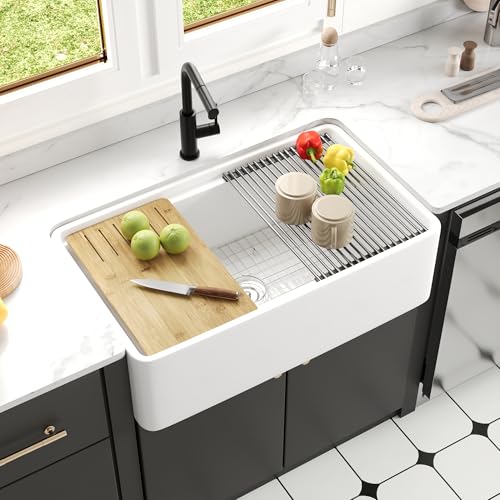
- ✓ Durable fireclay material
- ✓ Quiet and impact-absorbent
- ✓ Large, functional workspace
- ✕ Heavy and tricky to install
- ✕ Slightly higher price point
| Material | Fireclay refractory ceramic |
| Dimensions | {‘Exterior’: ‘32.87″ x 20″ x 10″‘, ‘Interior’: ‘31.3″ x 17.24″ x 9.13″‘} |
| Drain Size | 3.5 inches |
| Surface Finish | Glazed, smooth and lustrous |
| Included Accessories | [‘Cutting board’, ‘Roll-up rack’, ‘Basket strainer drain’, ‘Bottom compartment grid’] |
| Temperature Resistance | Heat-resistant (specific temperature not specified) |
It’s a busy Saturday morning, and I’m trying to prep breakfast while handling a mountain of dishes. I slide the DeerValley 33″ Fireclay Farmhouse Sink onto my countertop, and immediately I notice how sturdy and heavy it feels—definitely built to last.
The glossy white finish catches the light beautifully, giving my kitchen a fresh, modern farmhouse vibe.
What really stands out is the smooth, glazed surface. It’s so easy to wipe down—no stubborn stains or scratches after a few weeks of use.
I love how quiet the sink is when I’m rinsing—no loud clanging, just a gentle sound that reassures me the fireclay material absorbs impact well.
The size is a game-changer. I can soak oversized pots and baking sheets with room to spare.
The large interior makes cleaning less of a chore, and the extra space means less mess on my countertops. Plus, the workstation features are a lifesaver.
The sliding accessories—cutting board, rack, and basket drain—fit perfectly and make multitasking a breeze.
The accessories are high quality too. The cutting board doesn’t warp, and the roll-up rack is handy for drying dishes or fruits directly in the sink.
The bottom grid adds protection from scratches, which I appreciate after stacking heavy pots. Overall, this sink turns my kitchen chores into a much smoother experience.
Only minor downside? The fireclay material is a bit heavy to install by myself, but once in place, it’s worth the effort.
Cleaning and maintenance are straightforward, making it a practical choice for busy households.
VEVOR 33″ Stainless Steel Farmhouse Kitchen Sink

- ✓ Durable stainless steel build
- ✓ Large, functional space
- ✓ Easy to clean surface
- ✕ Slightly heavier installation
- ✕ Price might be higher for some
| Material | 304 stainless steel |
| Sink Dimensions | 33 inches wide |
| Basin Type | Single bowl |
| Drainage Pattern | X-shaped with slight tilt for quick drainage |
| Accessories Included | Sahibili wood cutting board, stainless steel drain rack, draining basket |
| Surface Finish | Brushed inner surface |
As soon as I laid eyes on this VEVOR 33″ stainless steel farmhouse sink, I couldn’t help but notice how the front apron design adds a charming touch while also making everyday tasks more practical. It’s wide enough to handle large pots and baking trays all at once, which is a real game-changer during busy kitchen mornings.
The brushed inner surface feels smooth to the touch and hides water spots and scratches well. I appreciated the rounded corners—no pesky corners to clean, just a seamless surface that wipes down effortlessly.
The included accessories, like the wood cutting board and stainless steel drain rack, instantly transformed my sink into a versatile workspace. I could chop veggies or dry dishes right over the sink without cluttering my countertops.
The sturdy 304 stainless steel construction feels durable and resistant to high temperatures. Even after a few heavy uses, it still looks as good as new.
The drainage system is impressively efficient—water flows out quickly thanks to the tilted bottom and X-shaped pattern. I tested it with a full blast of water, and there was no pooling or stagnation, which keeps everything hygienic.
Cleaning is a breeze, thanks to the brushed surface and included sink protector. It prevents scratches from dishware and makes wiping down quick and simple.
Overall, this sink combines style, durability, and practicality—perfect for anyone who wants a reliable, beautiful centerpiece for their kitchen.
GETPRO 36″ White Fireclay Farmhouse Sink with Accessories

- ✓ Durable fireclay construction
- ✓ Easy to clean surface
- ✓ Spacious deep bowl
- ✕ Heavy to install
- ✕ Slightly pricey
| Material | High-quality fireclay with solid core construction |
| Dimensions | 36 inches (width) x 18 inches (depth) x 10 inches (bowl depth) |
| Bowl Capacity | Approximately 4.5 cubic feet (based on dimensions and typical fireclay sink volume) |
| Finish | Glossy white, stain-resistant, fade-resistant |
| Drainage System | Flat bottom with sloped drainage for quick water runoff |
| Compatibility | Standard size garbage disposal compatible |
As soon as I unboxed the GETPRO 36″ White Fireclay Farmhouse Sink, I was struck by its solid weight and sleek glossy finish. It feels substantial in your hand, and the pure white surface looks crisp and pristine, instantly elevating the kitchen’s aesthetic.
The smooth, non-porous surface glides under your finger, promising easy cleaning and long-lasting beauty.
Installing this farmhouse sink was straightforward thanks to its generous size—36 inches wide with a deep 10-inch bowl. It’s surprisingly sturdy, thanks to the fireclay material, which resists scratches, stains, and fading.
I tested it with hot pans and acidic cleaners, and it held up beautifully, showing no signs of discoloration or damage.
The flat-bottomed, sloped drainage system is a real highlight. Water—and even stubborn food residues—drain quickly without pooling.
It’s a big time-saver during busy mornings, and I appreciated how compatible it is with standard garbage disposals, making cleanup hassle-free.
What I love most is how spacious the bowl feels—plenty of room for large pots and a mountain of dishes. Plus, the apron-front design adds a charming farmhouse vibe that pairs well with both traditional and modern kitchens.
Maintenance is a breeze, just a quick wipe keeps it looking showroom fresh.
Overall, this fireclay farmhouse sink combines durability, style, and practicality. It’s a reliable upgrade that handles everyday kitchen chaos effortlessly.
If you’re after a sink that looks great and withstands the test of time, this one’s a solid choice.
What Are the Most Common Materials Used for Farmhouse Sinks?
The most common materials used for farmhouse sinks include:
- Fireclay: Fireclay sinks are made from a mixture of clay and glaze that is fired at high temperatures, making them highly durable and resistant to scratches and stains. They offer a classic look and are often found in white or off-white finishes, giving a timeless aesthetic to any kitchen.
- Stainless Steel: Stainless steel farmhouse sinks are popular for their modern appeal and practicality, as they are easy to clean and resistant to rust and corrosion. They come in various gauges, with thicker steel providing greater durability, and can match well with contemporary kitchen designs.
- Cast Iron: Cast iron sinks are coated with enamel, providing a smooth surface that is both beautiful and highly durable. These sinks are heavy and can withstand wear and tear, but they may chip or scratch if not handled carefully, making them best suited for more traditional farmhouse styles.
- Composite Granite: Composite granite sinks are made from a blend of granite stone dust and acrylic resins, offering a wide variety of colors and textures. They are extremely durable, resistant to scratching, and provide a non-porous surface that is easy to clean, making them an excellent choice for a busy kitchen.
- Concrete: Concrete sinks can be custom-made to fit any kitchen design and can be stained or textured for a unique look. While they are very durable and can withstand high temperatures, they require sealing to prevent staining and water absorption, which can add to maintenance efforts.
What Are the Pros and Cons of Fireclay Farmhouse Sinks?
| Aspect | Fireclay Farmhouse Sinks |
|---|---|
| Pros | Durable and resistant to scratches and stains. Classic aesthetic that enhances kitchen design. |
| Cons | Heavy and may require reinforced cabinetry. More expensive than other materials like stainless steel. |
| Maintenance | Easy to clean with non-abrasive cleaners; avoid harsh chemicals to maintain finish. |
| Comparison | Generally more durable than cast iron but can be pricier; composite sinks offer lightweight alternatives. |
| Durability Issues | Can chip or crack under heavy impact, though generally resistant to wear. |
How Does Fireclay Compare in Terms of Durability and Design?
| Aspect | Fireclay |
|---|---|
| Durability | Highly durable, resistant to chipping and scratching, can withstand high temperatures. Compared to stainless steel, it is more resistant to dents, while cast iron is heavier but can chip more easily. |
| Design | Available in various colors and finishes, offers a classic farmhouse aesthetic that complements traditional decor. Fireclay sinks often have a smoother finish than stainless steel, enhancing their visual appeal. |
| Maintenance | Easy to clean, requires mild soap and water. Unlike stainless steel, it does not show water spots as prominently, but care should be taken to avoid harsh chemicals. |
| Weight | Fireclay sinks are heavier than stainless steel but lighter than cast iron, requiring sturdy cabinetry for installation. |
What Are the Advantages and Disadvantages of Stainless Steel Farmhouse Sinks?
| Aspect | Stainless Steel Farmhouse Sink |
|---|---|
| Advantages | Durable and resistant to rust and stains. Easy to clean and maintain, with a modern aesthetic. |
| Disadvantages | Can be noisy when in use, may scratch easily, and can show water spots if not dried properly. |
| Weight | Typically lighter than cast iron and fireclay sinks, making installation easier. |
| Variety of Finishes | Available in brushed, polished, and matte finishes, allowing for customization to match kitchen decor. |
| Cost Comparison | Generally more affordable than fireclay and cast iron, but can vary based on thickness and brand. |
How Does Stainless Steel Perform in a Busy Kitchen Environment?
In a busy kitchen environment, stainless steel is often considered the best material for farmhouse sinks due to its durability and functionality.
- Durability: Stainless steel is highly resistant to rust, corrosion, and staining, making it ideal for a busy kitchen where spills and splashes are common. It can withstand heavy use without cracking or chipping, ensuring it maintains its appearance over time.
- Maintenance: One of the significant advantages of stainless steel is its ease of cleaning. It can be quickly wiped down with a damp cloth, and most stains can be removed with mild soap and water, making it a practical choice for those with a hectic cooking schedule.
- Heat Resistance: Stainless steel can endure high temperatures, allowing hot pots and pans to be placed directly in the sink without causing damage. This heat resistance is crucial in a busy kitchen where cooking often involves transferring hot items.
- Hygienic Properties: The non-porous surface of stainless steel does not harbor bacteria or germs, contributing to a healthier kitchen environment. This is particularly important in a farmhouse kitchen where food prep and cleanliness are priorities.
- Versatility: Stainless steel blends well with various kitchen designs, from modern to traditional farmhouse styles. Its neutral appearance can complement other materials and fixtures, making it a versatile option for any kitchen aesthetic.
What Are the Key Benefits and Downsides of Cast Iron Farmhouse Sinks?
The key benefits and downsides of cast iron farmhouse sinks are important considerations for anyone looking to choose the best material for their farmhouse sink.
- Durability: Cast iron sinks are exceptionally durable and can withstand heavy use, making them a long-lasting option for any kitchen.
- Heat Retention: The material retains heat well, which can be beneficial for washing dishes as hot water stays warm longer.
- Aesthetic Appeal: Cast iron sinks often come with a porcelain enamel finish, allowing for a variety of colors and designs, enhancing the kitchen’s visual appeal.
- Weight: The heavy weight of cast iron sinks can be a downside, requiring reinforced cabinetry for proper installation.
- Maintenance: While they are generally easy to clean, cast iron sinks can chip or scratch over time, necessitating careful handling and regular maintenance.
- Cost: Cast iron farmhouse sinks can be more expensive than other materials, which may limit options for those on a tighter budget.
Durability: Cast iron sinks are exceptionally durable and can withstand heavy use, making them a long-lasting option for any kitchen. They resist cracking and can endure the impacts of dropped dishes better than many other materials, which is particularly advantageous in busy household environments.
Heat Retention: The material retains heat well, which can be beneficial for washing dishes as hot water stays warm longer. This property allows for more effective cleaning and can save energy when washing items that require hot water.
Aesthetic Appeal: Cast iron sinks often come with a porcelain enamel finish, allowing for a variety of colors and designs, enhancing the kitchen’s visual appeal. This versatility makes it easy to match the sink with different kitchen styles, from rustic to modern.
Weight: The heavy weight of cast iron sinks can be a downside, requiring reinforced cabinetry for proper installation. Homeowners must ensure that their kitchen cabinets can support the weight, which may involve additional costs and labor during installation.
Maintenance: While they are generally easy to clean, cast iron sinks can chip or scratch over time, necessitating careful handling and regular maintenance. Homeowners should avoid harsh cleaners and heavy scrubbing to preserve the sink’s enamel surface.
Cost: Cast iron farmhouse sinks can be more expensive than other materials, which may limit options for those on a tighter budget. The upfront investment may be justified by the long-term durability and aesthetic appeal, but it is a critical factor to consider for cost-conscious buyers.
What Should You Know About Copper Farmhouse Sinks?
Copper farmhouse sinks are an attractive and durable option for kitchen design, and several factors contribute to their appeal.
- Durability: Copper sinks are known for their resilience and can withstand heavy use without showing signs of wear. Unlike other materials, copper develops a patina over time that not only enhances its aesthetic appeal but also adds a layer of protection against corrosion.
- Antibacterial Properties: Copper has natural antibacterial qualities that make it a healthier option for food preparation areas. This means that it can help reduce the growth of harmful bacteria, making it a safer choice for households.
- Design Versatility: Copper sinks come in various styles and finishes, allowing them to fit seamlessly into both traditional and modern kitchens. The unique shine and color of copper can complement a wide range of kitchen decors, from rustic farmhouse to sleek contemporary.
- Maintenance Requirements: While copper sinks are durable, they do require some maintenance to keep them looking their best. Regular cleaning with mild soap and water is recommended, and occasional polishing can help maintain the sink’s luster and prevent tarnishing.
- Environmental Impact: Copper is a sustainable material that can be recycled, making it an eco-friendly choice for homeowners who are conscious about their environmental footprint. Choosing a copper sink can contribute to a more sustainable kitchen, particularly if sourced from responsible manufacturers.
How Does Copper Influence the Look and Feel of Your Kitchen?
Antimicrobial Properties: The natural antimicrobial qualities of copper help maintain a hygienic kitchen environment. This property makes it a practical choice for sinks, as it can inhibit the growth of bacteria and other harmful microorganisms, contributing to a cleaner workspace.
Patina Development: Over time, copper develops a unique patina, which can enhance its character and blend seamlessly with various design styles. This aging process not only adds depth to the material but also means that each sink can have its own distinct appearance, adding to the personalized feel of your kitchen.
Durability: Copper is a durable material that can withstand daily use while maintaining its beauty. It is resistant to chipping and cracking, making it suitable for a busy kitchen environment where it can endure the rigors of cooking and cleaning.
Easy Maintenance: Copper sinks are generally easy to clean and can be maintained with simple care techniques. Regular cleaning with mild soap and water can keep the sink looking fresh, while occasional polishing can enhance its shine and prevent tarnishing.
What Factors Should You Consider When Choosing the Best Material for Your Farmhouse Sink?
Heat Resistance: Materials like quartz and fireclay can withstand high temperatures, making them suitable for busy kitchens where pots and pans are frequently placed in the sink. Ensuring your sink can handle heat is crucial to prevent warping or discoloration.
Cost: Budget is a significant factor; while materials like cast iron may offer durability and aesthetics, they can also come with a higher price tag. Weighing the long-term benefits against initial costs is essential for making a wise investment.
Noise Insulation: Some materials, such as composite granite, offer sound-dampening qualities, which can be beneficial in reducing the noise associated with washing dishes. If a quieter kitchen is a priority for you, consider how the material you choose will impact sound levels.
Related Post: