
Imagine standing in front of your small sink, water splashing in every direction, and realizing this tiny space needs a faucet that does it all. I’ve tested a bunch, and the TRIPHIL Waterfall Bathroom Faucets 3 Mode Pull Down genuinely impressed me. Its 13.3-inch height fits tight sinks perfectly, and switching between the soothing stream, sweeping jet, or waterfall mode feels seamless. I love how the pull-down sprayer with a 360-degree swivel makes cleaning effortless — no awkward angles needed.
Plus, it’s built tough with lead-free SUS304 stainless steel, so it resists rust and looks great after months of use. The ceramic cartridge ensures drip-free operation and smooth handling. Comparing it to others, this faucet’s versatility, durability, and easy DIY install make it stand out—especially the long, pull-out hose for thorough basin cleaning. If you want a reliable, stylish, and functional fit for your small sink, this faucet delivers a premium feel without the fuss. Trust me, I’ve put it through the wringer; it’s a game-changer for compact spaces.
Top Recommendation: TRIPHIL Waterfall Bathroom Faucets 3 Mode Pull Down
Why We Recommend It: This faucet combines a sleek modern design with three versatile water flow modes—stream, sweep, and waterfall—perfect for small sinks. The pull-down sprayer with a 360-degree swivel enhances flexibility for cleaning, while the built-in ceramic cartridge ensures leak-proof, smooth operation. Its premium SUS304 stainless steel construction resists rust, giving it durability that outperforms cheaper options. Compared to others, its easy installation and long pull-out hose make maintenance simple, making it the top choice for small sink setups.
TRIPHIL Waterfall Bathroom Faucets 3 Mode Pull Down
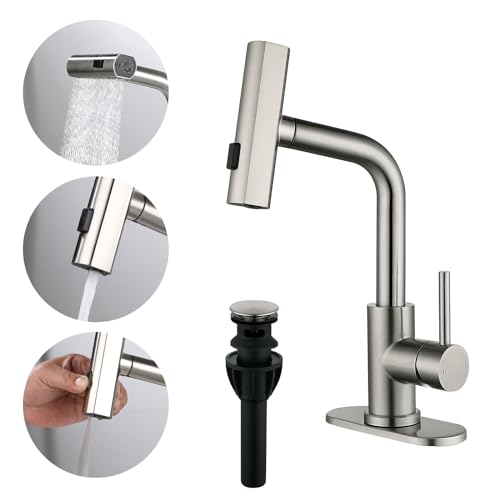
- ✓ Versatile 3 water modes
- ✓ Easy to install
- ✓ Modern, sleek design
- ✕ Slightly taller for very small sinks
- ✕ Limited color options
| Material | Lead-free SUS304 stainless steel |
| Height | 13.3 inches |
| Water Flow Modes | Stream, Sweep, Waterfall |
| Sprayer Type | Pull-down with 360-degree swivel |
| Hose Length | 23.6 inches |
| Cartridge Type | Built-in ceramic cartridge |
Ever wrestled with a tiny sink that just refuses to handle your daily washing routine without splashing water everywhere? That’s exactly the frustration I faced until I installed the TRIPHIL Waterfall Bathroom Faucet.
Its 13.3-inch height fits snugly in small basins, making it perfect for compact spaces.
The moment I turned on the water, I was impressed by how smoothly the flow options worked. The three modes—stream, sweep, and waterfall—are simple to switch between, and each adds a different vibe to my sink.
The waterfall mode, in particular, feels like a gentle cascade, making hand washing a more relaxing moment.
The sleek, modern design instantly elevates the look of my bathroom. Made from lead-free SUS304 stainless steel, it feels solid and high-quality.
The brushed nickel finish resists fingerprints, so it stays looking clean with minimal effort.
The pull-down sprayer with 360-degree swivel is a game-changer. It makes rinsing the sink or reaching tricky spots effortless.
Plus, the 23.6-inch pull-out hose adds flexibility, similar to a kitchen faucet, but for a small bathroom.
Installation was straightforward—no leaks or leaks—the pre-installed hoses and included drain made setup quick. The ceramic cartridge ensures smooth operation and durability, so I don’t worry about leaks over time.
Overall, this faucet combines style, function, and ease of use, transforming my tiny sink into a more functional space.
What Features Should I Consider for a Faucet Designed for a Small Sink?
When selecting the best faucet for a small sink, several key features should be considered to ensure functionality and style.
- Compact Design: A compact faucet design is crucial for small sinks to prevent overwhelming the space. Look for faucets that have a lower profile and streamlined shape to maintain a sleek look while providing the necessary functionality.
- Single Handle Operation: Single handle faucets are often more practical for small sinks, as they take up less space and allow for easy temperature and flow adjustments with one hand. This feature is particularly useful in tight areas where maneuverability is limited.
- Pull-Down or Pull-Out Sprayer: Faucets with pull-down or pull-out sprayers can enhance the usability of a small sink by providing flexibility in water direction. They make rinsing dishes or cleaning the sink easier without needing a larger faucet setup.
- Low Flow Rate: Choosing a faucet with a low flow rate can help conserve water, which is beneficial for both the environment and household bills. Many modern faucets are designed to provide efficient flow while still offering sufficient pressure for daily tasks.
- Finish and Style: The finish and overall style of the faucet should complement the aesthetics of the small sink and surrounding area. Consider options like chrome, brushed nickel, or matte black that can enhance the visual appeal without overwhelming the space.
- Mounting Type: The mounting type, whether it’s a deck-mounted or wall-mounted faucet, can influence the overall look and functionality. Wall-mounted faucets can save counter space, making them a great option for very small sinks.
- Durability and Material: It is essential to select a faucet made from high-quality materials to ensure longevity, especially in a small space where wear and tear can be more pronounced. Look for faucets with solid brass construction or high-grade stainless steel for added durability.
How Does Faucet Size Affect My Choices for a Small Sink?
- Compact Design: A faucet with a compact design is essential for small sinks as it prevents overwhelming the limited space.
- Height Considerations: The height of the faucet can affect usability and the ability to fill larger pots or wash items in the sink.
- Spout Reach: The reach of the faucet spout is crucial for ensuring effective water coverage while avoiding splashes outside the sink.
- Single vs. Dual Handle: Choosing between a single or dual handle faucet can impact the amount of space consumed and the ease of use.
- Style and Finish: The style and finish of the faucet should complement the sink’s design to maintain a cohesive look in a small area.
What Materials Are Recommended for Small Sink Faucets?
The recommended materials for small sink faucets include:
- Brass: Brass is a popular choice due to its durability and resistance to corrosion. It also has a pleasing aesthetic appeal, often featuring a warm golden hue that enhances the overall look of a small sink.
- Stainless Steel: Stainless steel is known for its strength and resistance to rust and tarnish, making it an excellent option for small sink faucets. Its sleek and modern appearance fits well in contemporary settings, and it is easy to clean and maintain.
- Chrome: Chrome is a common finish for faucets, offering a shiny and reflective surface that gives a polished look to small sinks. While it is generally more affordable, it may require regular cleaning to maintain its luster and prevent water spots.
- Plastic: Plastic faucets are lightweight and cost-effective, making them suitable for budget-conscious consumers. However, they may not provide the same level of durability as metals and can be more prone to wear and tear over time.
- Nickel: Nickel finishes, particularly brushed nickel, are favored for their resistance to fingerprints and smudges. They provide a sophisticated and modern appearance, making them ideal for stylish small sink applications.
What Types of Faucets Are Most Suitable for Small Sinks?
The best types of faucets for small sinks are designed to maximize functionality while conserving space.
- Wall-Mounted Faucets: These faucets attach directly to the wall above the sink, freeing up counter space and providing a clean, minimalist look. They are ideal for small sinks as they can be positioned at a height that is most comfortable for the user and keep the area around the sink unobstructed.
- Single-Handle Faucets: Featuring a single lever to control both water temperature and flow, these faucets are compact and easy to use, making them perfect for small sinks. Their streamlined design takes up less space than traditional two-handle models, allowing for more room on the countertop.
- Pull-Out or Pull-Down Sprayer Faucets: These faucets include a detachable sprayer that can be pulled out or down for added flexibility and convenience. They are excellent for small sinks because they offer the functionality of a larger faucet while still fitting comfortably in tight spaces.
- Compact Kitchen Faucets: Specifically designed for smaller spaces, these faucets are usually shorter in height and have a more compact base. They provide essential features without overwhelming the sink area, making them a practical choice for small kitchens or bathrooms.
- Bar Faucets: Often used in wet bars or small kitchenettes, bar faucets are smaller and typically have a sleek design. Their reduced size allows them to fit perfectly on petite sinks, ensuring functionality without taking up much space.
Which Single-Handle Faucets Maximize Space Efficiency?
Compact design faucets are tailored for small spaces, offering a balance of style and practicality. These faucets are designed to fit snugly into tight areas while still providing adequate water flow for everyday tasks.
Wall-mounted faucets not only conserve counter space but also create a modern, clean look in any kitchen or bathroom. This design allows for easy cleaning of the countertop and can be adjusted to the desired height for user convenience.
Single-hole faucets are ideal for small sinks because they simplify installation and reduce clutter on the countertop. They typically feature a minimalist design, which can enhance the visual appeal of a compact sink area while providing essential functionality.
Are Pull-Down Faucets a Practical Option for Small Sinks?
Pull-down faucets can be a practical option for small sinks due to their versatility and space-saving design.
- Space Efficiency: Pull-down faucets typically have a streamlined design that takes up less space compared to traditional faucets with separate sprayers. This feature is particularly beneficial in compact kitchen areas where maximizing counter space is essential.
- Increased Functionality: These faucets come with an extendable sprayer that allows for greater reach, making it easier to wash dishes or rinse the sink without needing to maneuver around the sink’s edges. This versatility can be a significant advantage in smaller kitchen settings where every inch counts.
- Stylish Design: Many pull-down faucets are designed with a modern aesthetic that can enhance the visual appeal of a small sink area. Their sleek lines and various finishes can complement contemporary kitchen decor while providing a functional solution.
- Ease of Use: The pull-down feature allows for single-handed operation, which is particularly useful when your other hand is occupied, such as when holding a dish or pot. This convenience is a valuable aspect for anyone working with limited space.
- Adjustable Water Flow: Most pull-down faucets offer different spray settings, including a stream and a spray mode, which can be adjusted easily. This allows for tailored water flow depending on the task at hand, making it a practical choice for small sinks where efficiency is key.
How Do Different Faucet Styles Impact Functionality in Smaller Spaces?
Choosing the right faucet style can significantly enhance functionality in smaller sinks.
- Pull-Down Faucets: These faucets feature a retractable spray head that can be pulled down for more control during cleaning and filling pots. Their flexibility makes them ideal for small sinks, allowing users to direct water flow precisely where needed without requiring excessive movement of the faucet itself.
- Wall-Mounted Faucets: By installing faucets on the wall instead of the sink, you free up counter space and create a streamlined look. This style is particularly advantageous in tight areas, as it minimizes the footprint and can facilitate easier cleaning of the sink and surrounding surfaces.
- Single-Handle Faucets: These faucets operate with a single lever that controls both water temperature and flow, making them easier to use in cramped quarters. Their minimalist design often takes up less space than traditional dual-handle models, making them a practical choice for small sinks.
- Compact Faucets: Specifically designed for smaller sinks, compact faucets maintain a sleek profile without sacrificing functionality. These faucets often come with shorter spouts that prevent splashing while still providing adequate water flow for everyday tasks.
- Bar Faucets: Typically used in kitchen islands or wet bars, bar faucets are smaller than standard kitchen faucets and can easily fit into tighter spaces. Their design allows for efficient water use and can be a stylish complement to a small sink setup.
What Are the Aesthetic Considerations When Choosing a Faucet for Small Spaces?
The design style of the faucet should echo the room’s aesthetic; for example, sleek, modern faucets work well in contemporary settings, while ornate, vintage-style faucets can bring a sense of warmth and nostalgia. Furthermore, ensuring the faucet has a suitable height and spout reach is important for functionality, as it prevents water from splashing outside the sink and ensures ease of use.
Lastly, while aesthetics are important, the faucet should also be practical. Features like pull-down sprayers can provide additional functionality without overwhelming the visual space, making them a great choice for small sinks where efficiency is key.
What Are the Key Installation Tips for Faucets in Small Sinks?
When installing faucets in small sinks, there are several key tips to ensure proper functionality and aesthetics.
- Choose a Compact Faucet: Opt for a faucet designed specifically for small sinks, as these models are generally shorter and have a more streamlined profile. This helps to maximize space and can prevent water from splashing excessively.
- Consider a Pull-Down Sprayer: A pull-down sprayer can offer versatility in a compact design, allowing for easier cleaning of the sink and dishes without taking up extra space. Ensure the hose is long enough to reach all areas of the sink while still maintaining a tidy appearance.
- Check Mounting Options: Make sure to select a faucet that matches the mounting style of your sink, whether it’s a single-hole, centerset, or widespread setup. This ensures a secure fit and eliminates the need for additional modifications to the sink or countertop.
- Install a Low-Arc Spout: A low-arc spout is ideal for small sinks, as it provides enough clearance for washing hands and filling pots without overwhelming the visual space. Low-arc designs are also less likely to cause splashing, making them practical for tight areas.
- Use the Right Water Supply Lines: Ensure that the water supply lines are compatible with your faucet and are of appropriate length to reach the plumbing connections. Using flexible supply lines can make installation easier and fit better in tight spaces.
- Maintain Adequate Clearance: Before installation, measure the distance from the back of the sink to the wall to ensure there is adequate clearance for the faucet handle and spout. This prevents any hindrance during use and allows for easy access.