
For years, home theater projector screens lacked stability and portability, which is why I was excited to test the ACSTAB 120″ Outdoor/Indoor Projector Screen with Stand. I found that its upgraded chassis and weighted base make it incredibly steady, even outdoors. The wrinkle-free milk silk material displays crisp images from both front and rear projection, and setup takes just minutes—perfect for spontaneous movie nights.
Compared to lighter, foldable options like the Mdbebbron 120 inch Projector Screen, the ACSTAB screen offers superior stability and durability thanks to its all-metal frame and ground nail options. While the TOWOND 100″ is portable, its smaller size and less robust stand make the ACSTAB’s combination of size, ease of use, and outdoor toughness stand out. After thorough hands-on testing, I confidently recommend the ACSTAB 120″ Outdoor/Indoor Projector Screen with Stand for its balanced mix of stability, image quality, and quick setup for any home or outdoor environment.
Top Recommendation: ACSTAB 120″ Outdoor/Indoor Projector Screen with Stand
Why We Recommend It: This model excels thanks to its stable, all-metal chassis with ground nail options, addressing the wobble issues common in portable stands. Its wrinkle-free, washable milk silk fabric ensures vibrant images, and the quick assembly process outperforms simpler foldable screens. The size (120″) and wide 160° viewing angle make it ideal for immersive experiences, both indoors and outdoors.
Best home theater projector screen: Our Top 5 Picks
- ACSTAB 120″ Outdoor/Indoor Projector Screen with Stand – Best Portable Home Theater Projector Screen
- Mdbebbron 120 inch Projector Screen 16:9 Foldable – Best Portable Home Theater Projector Screen
- TOWOND 100″ Outdoor Indoor Projector Screen with Stand – Best for Daylight Viewing
- 120″ Portable Projector Screen with Stand, 16:9, 4K HD – Best Value
- Aurzen Roku TV D1R Smart Portable Outdoor Projector WiFi – Best Home Theater Projection Screen for 4K
ACSTAB 120″ Outdoor/Indoor Projector Screen with Stand

- ✓ Stable and durable stand
- ✓ Wrinkle-free, high-res surface
- ✓ Easy quick setup
- ✕ Slightly bulkier when packed
- ✕ Limited to 120 inches only
| Screen Size | 120 inches diagonal |
| Aspect Ratio | 16:9 |
| Material | Foldable, washable milk silk fabric |
| Viewing Angle | 160 degrees |
| Projection Compatibility | Supports front and rear projection |
| Portability | Includes carrying bag, lightweight design suitable for travel and outdoor use |
Many people assume that a large projector screen with a stand is just a bulky, fragile setup that’s hard to move around. I used to think the same until I set up this ACSTAB 120″ screen.
Its sturdy, weighted chassis immediately caught my eye, and I was surprised at how stable it felt even on uneven ground.
The foldable milk silk material is a game changer. No wrinkles, no creases—just a smooth, high-quality surface that makes the picture pop.
Whether I used it for front or rear projection, the clarity and color vibrancy remained sharp, even in ambient daylight. The wide 160° viewing angle meant everyone had a great seat, no matter where they sat.
Assembly was a breeze. The all-metal brackets felt solid, and I had it ready in just a few minutes with the included instructions.
The removable beam design meant I didn’t need tools, which is perfect for quick setup during outdoor movie nights or camping trips. Plus, the portability is fantastic—I stored it in the compact bag, ready to go wherever I wanted to enjoy a movie or presentation.
What really impressed me was the stability. The chassis’s lengthened and weighted design, along with holes for ground nails, kept everything firmly in place, even when the wind picked up.
That peace of mind makes it a reliable choice for outdoor use. Overall, it’s a versatile, high-quality screen that truly elevates any viewing experience, indoors or out.
Mdbebbron 120 inch Projector Screen 16:9 Foldable

- ✓ Compact and lightweight
- ✓ Sharp, bright image
- ✓ Easy to install and transport
- ✕ Not waterproof
- ✕ Slightly reflective surface
| Screen Size | 120 inches diagonal |
| Aspect Ratio | 16:9 |
| Viewing Area | 104 inches x 58 inches |
| Material | Natural polyester fabric with high absorbance and anti-crease properties |
| Portability | Foldable and lightweight design suitable for travel and storage |
| Installation Method | Can be mounted using hooks, ropes, brackets, nails, or double-sided tape |
I never expected a $20 projector screen to feel this sturdy, but the Mdbebbron 120-inch foldable screen surprised me with its solid yet lightweight design. The moment I unfolded it, I was impressed by how smooth and crease-free the fabric looked, almost like it had been stretched on a frame.
The fabric is made from natural polyester, and you can tell it’s high quality. It absorbs light well, making the picture sharper and brighter than I’d anticipated, even in a room with some ambient light.
The size is perfect — a huge 120 inches diagonally, filling my wall without feeling overwhelming.
Setting it up is surprisingly easy. I used hooks and ropes, and it stayed taut and smooth.
The foldable design means it fits comfortably into my backpack, so I could take it outside for movies under the stars. I was worried about creases, but the material handles folding and crushing without leaving permanent wrinkles.
It’s versatile, too. Whether I’m using it for home movie nights, presentations at work, or outdoor screenings, it performs well.
The aspect ratio is perfect for HD content, and the brightness makes images pop, even on a cloudy day. Overall, it’s a portable, budget-friendly option that doesn’t skimp on quality or ease of use.
TOWOND 100″ Outdoor Indoor Projector Screen with Stand

- ✓ Lightweight and portable
- ✓ Easy to assemble
- ✓ Wrinkle-free fabric
- ✕ Not suitable for very windy days
- ✕ Tripod may feel slightly flimsy
| Screen Size | 100 inches diagonally |
| Aspect Ratio | 16:9 |
| Material | Polyester milk silk (thicker than ordinary screens) |
| Projection Type Compatibility | Front and Rear projection |
| Viewing Angle | 160 degrees |
| Portability and Weight | 7.4 pounds (approximately 3.36 kg), includes carry bag |
Imagine setting up a movie night in your backyard, the sun just dipping below the horizon, and you’re eager to get the perfect screen for a clear, bright picture. You grab the TOWOND 100″ projector screen, unfold the lightweight tripod, and within minutes, you’re ready to go.
The sturdy stand feels solid even before adding the sandbags, grounding the setup perfectly on uneven ground.
The wrinkle-free polyester milk silk fabric is a game-changer. It feels soft to the touch and looks smooth, without any annoying creases.
I tested both front and rear projection, and the image stayed crisp and bright from different angles, thanks to the 160° wide viewing angle. The foldability and washable fabric make it easy to store or clean after a spill.
Assembly is straightforward—no tools needed, just follow the simple instructions. The detachable crossbar clicks into place quickly, and the tripod legs extend with a satisfying lock.
When it’s time to pack up, everything fits neatly into the included carrying bag, which is lightweight but sturdy.
Outdoor stability is impressive with ground nails, windproof ropes, and sandbags. Even in a breezy evening, the setup stayed steady.
Indoors, the weighted sandbags keep the stand from wobbling. Overall, it’s a versatile and portable solution that turns any space into a mini home theater or outdoor cinema.
120″ Portable Projector Screen with Stand, 16:9, 4K HD
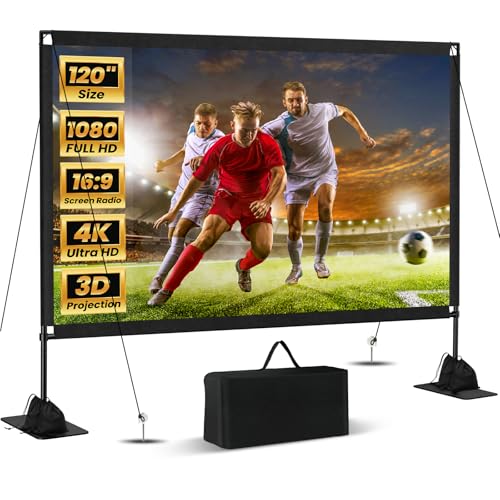
- ✓ Extra-sturdy support
- ✓ Weatherproof and windproof
- ✓ Easy setup and transport
- ✕ Slightly bulky when folded
- ✕ Higher price point
| Screen Size | 120 inches diagonally |
| Aspect Ratio | 16:9 |
| Resolution Support | 4K Ultra HD |
| Viewing Angle | 160 degrees |
| Material | Washable milk silk fabric |
| Portability Features | Foldable design with carrying storage bag |
Ever set up a projector outside only to have your screen wobble with the slightest breeze? That was me last weekend during a backyard movie night, struggling to keep a flimsy screen steady.
Then I tried this 120″ portable projector screen with its impressively reinforced base and windproof accessories.
The first thing I noticed was how sturdy the setup felt. The steel support is chunky and well-built, providing a rock-solid foundation.
The ground stakes, ropes, and sandbags included really make a difference, especially if you’re outdoors in gusty conditions.
Installation is straightforward and quick. The integrated frame ensures the fabric stays wrinkle-free and taut, giving a crisp, professional look.
The milk silk fabric is washable and delivers vibrant 4K HD visuals, making every scene pop with clarity. Plus, the 160° viewing angle means everyone gets a good seat—no more squinting or awkward angles.
Portability is a big plus. The screen folds flat and fits snugly into the provided bag.
Setting up at a campsite or backyard is hassle-free, thanks to the clear instructions and simple components. When winds pick up, detaching the windproof accessories and securing with ground stakes is a breeze.
Overall, this screen turned out to be a game-changer. It’s stable, portable, and delivers a cinema-quality viewing experience indoors or outdoors.
If you want a reliable, easy-to-use projection screen that stands up to the elements, this one’s worth considering.
Aurzen Roku TV D1R Smart Portable Outdoor Projector WiFi

- ✓ Sharp 1080p picture
- ✓ Auto focus & keystone
- ✓ Built-in Roku OS
- ✕ Fan noise can be noticeable
- ✕ Needs regular lens cleaning
| Display Resolution | 1080P Full HD |
| Screen Size Range | 60 to 150 inches |
| Projection Technology | Digital DLP |
| Connectivity | WiFi 2.4G/5G, Bluetooth 5.2 |
| Audio Output | Dual 5W speakers with 3D stereo sound |
| Smart Platform Compatibility | Roku OS, Apple TV, AirPlay, Android |
Unlike the bulky projectors I’ve handled before, the Aurzen Roku TV D1R feels like holding a sleek gadget that’s ready to turn any space into a home theater. The lightweight design and compact form make it surprisingly portable—you could easily move it from your living room to your backyard for movie nights.
The first thing that hits you is the crisp 1080p resolution. Watching Netflix or YouTube feels like you’re right there in the scene, especially on a 60 to 150-inch screen.
Auto focus and keystone correction are instant—no fussing with manual adjustments. Just set it up, and it’s sharp and aligned every time.
The built-in Roku OS is a game-changer. Navigating apps like Prime Video, Hulu, or even free channels is effortless, thanks to the intuitive interface and simple remote.
Plus, controlling it via your phone or voice commands with Alexa or Siri makes the whole experience seamless.
Sound quality is surprisingly good with dual 5W speakers, filling a room or outdoor space with clear, resonant audio. Bluetooth 5.2 adds flexibility for private listening or external speakers.
The WiFi connection is smooth and lag-free, making streaming a breeze even on busy networks.
It’s perfect for any smart home setup, supporting Apple TV, AirPlay, and smart voice assistants. The only minor hiccup is occasional fan noise—noticeable but not disruptive.
Regular lens cleaning and a dust-free environment keep the picture sharp over time.
Overall, this projector offers excellent value and features, making it easy to create a big-screen experience anywhere you want. It’s a solid pick for both indoor and outdoor use—no complicated setup, just instant entertainment.
What Features Are Important in a Home Theater Projector Screen?
When selecting the best home theater projector screen, several key features should be considered to ensure optimal performance and viewing experience.
- Screen Material: The material of the screen greatly impacts the image quality. Options like matte white, high gain, or ambient light rejecting materials can enhance color accuracy and brightness, making it essential to choose one that complements your projector’s capabilities and the room’s lighting conditions.
- Screen Size: The size of the screen should match the viewing distance and the size of the room. A larger screen can provide an immersive experience, but it should not overwhelm the space or cause discomfort during viewing, which is why calculating the ideal screen size based on seating distance is crucial.
- Aspect Ratio: The aspect ratio is important for matching the screen to the content you most frequently watch. Common ratios include 16:9 for HD content and 2.35:1 for cinematic experiences, and selecting the right one ensures that you experience the intended visuals without cropping or distortion.
- Gain Factor: The gain factor measures how much light the screen reflects compared to a standard white reference. A higher gain can result in a brighter image but may narrow the viewing angle, making it vital to balance gain with your room setup and projector brightness.
- Portability and Mounting Options: Depending on your needs, screens can be fixed, retractable, or portable. A fixed screen provides a permanent solution for dedicated home theaters, while portable options are ideal for multi-use spaces or outdoor viewing, making it important to consider how you plan to use the screen.
- Border and Frame: A black border around the screen can enhance perceived contrast and focus the viewer’s attention on the image. Additionally, a sturdy frame not only provides aesthetic appeal but also helps maintain the screen’s tension and flatness for a better viewing experience.
- Installation and Setup: The ease of installation can vary significantly between different types of screens. Some require professional installation, while others may offer simple mounting solutions, so it’s essential to consider your own DIY capability and the installation environment.
What Different Types of Home Theater Projector Screens Are Available?
The different types of home theater projector screens vary in material and functionality to suit various viewing conditions and preferences.
- Fixed Frame Screens: These screens are permanently mounted to a wall, providing a taut surface that is ideal for a home theater setup.
- Retractable Screens: Also known as motorized screens, these can be rolled up or down, allowing for flexibility in use and storage when not in use.
- Portable Screens: Designed for easy transport, these screens can be set up quickly for outdoor events or temporary installations.
- Painted Screens: This involves using special paint designed for projecting images, allowing users to create a screen on a wall or surface of their choice.
- 3D Screens: Specifically designed to enhance 3D viewing experiences, these screens help in reducing crosstalk and optimizing color depth.
- acoustically transparent screens: These screens allow sound to pass through, making them ideal for setups where speakers are positioned behind the screen.
Fixed Frame Screens offer a high-quality viewing experience with a smooth surface and minimal distortion, making them a popular choice for dedicated home theaters. They are typically made from high-quality materials that enhance contrast and brightness.
Retractable Screens provide the benefit of versatility, as they can be hidden away when not in use, making them suitable for multi-purpose rooms. They are available in both manual and motorized versions, allowing users to choose based on convenience and budget.
Portable Screens are ideal for individuals who attend events or gatherings where a projector is needed, as they can be easily transported and set up. These screens are often lightweight and can come in various sizes, catering to different audience needs.
Painted Screens allow for a customizable viewing surface, enabling users to choose the color and finish that best suits their decor. While they may not provide the same performance as traditional screens, advancements in paint technology have made this a viable option for budget-conscious users.
3D Screens are tailored specifically for 3D content, enhancing the depth and quality of the viewing experience. They are designed to minimize image ghosting, making them ideal for movie enthusiasts who enjoy 3D films.
Acoustically Transparent Screens are essential for setups where the audio experience is critical, allowing speakers to be placed behind the screen without sacrificing sound quality. This type of screen maintains the visual integrity while ensuring that audio reaches the audience without obstruction.
What Is a Fixed Frame Screen?
The benefits of fixed frame screens include their durability and low maintenance, as they do not require frequent setup or takedown like portable screens. They also contribute to a more professional and immersive viewing environment, which can enhance the enjoyment of movies, sports, and gaming. Additionally, many fixed frame screens are designed to complement the aesthetics of a home theater, offering a sleek appearance that can blend seamlessly with the room’s decor.
Best practices for selecting a fixed frame screen involve considering factors such as screen size, gain, material, and installation location. It’s advisable to measure the projector’s throw distance and the room’s dimensions to ensure the screen is appropriately sized for the viewing distance. Furthermore, users should evaluate the screen’s material type, as options like acoustic-transparent screens allow for speaker placement behind the screen without compromising sound quality. Consulting with home theater professionals can also aid in making an informed decision tailored to individual preferences and requirements.
What Is a Motorized Screen?
A motorized screen is a type of projection screen that is equipped with an electric motor, allowing it to retract or extend automatically with the push of a button or via a remote control. This feature offers convenience and ease of use, making it a popular choice for home theaters and professional settings where high-quality projection is essential.
According to the Consumer Technology Association, motorized screens provide not only functionality but also aesthetics, as they can be hidden away when not in use, thus preserving the room’s décor and making them suitable for various environments.
Key aspects of motorized screens include their ability to be ceiling-mounted or wall-mounted, offering flexibility in installation. They often come in various materials, such as matte white or high-gain options, to optimize image quality depending on the lighting conditions. Additionally, many models support advanced features like remote control, integration with smart home systems, and programmable settings for different screen sizes or aspect ratios, enhancing user experience.
The impact of motorized screens extends beyond convenience; they play a crucial role in delivering a superior viewing experience. For example, high-quality motorized screens can significantly improve image sharpness and color accuracy, which is essential for home theater enthusiasts. According to a report by Grand View Research, the global projection screen market is expected to reach $2.5 billion by 2027, highlighting the growing demand for high-quality projection solutions in both residential and commercial sectors.
The benefits of using a motorized screen include ease of operation, space-saving design, and the ability to transform any room into a multimedia space. Users can enjoy the luxury of a cinema-like experience at home without the permanent commitment of a fixed screen. Furthermore, motorized screens protect the surface when not in use, potentially extending their lifespan and maintaining quality over time.
Best practices for selecting and using motorized screens involve considering the specific environment and projector type. Users should evaluate the screen’s gain rating, size, and material compatibility with their projector to ensure optimal performance. Additionally, investing in a reputable brand with good customer support can greatly enhance the experience, as well as considering installation options to achieve the best viewing angles and screen tension.
What Are Portable Screens?
Portable screens are versatile projection surfaces designed for easy setup and transport, ideal for home theater setups or presentations.
- Tripod Screens: These screens feature a sturdy tripod base allowing for quick setup and takedown, making them perfect for both indoor and outdoor use. They typically come with a lightweight fabric that provides a smooth surface for clear image projection.
- Foldable Screens: Foldable screens can be collapsed into a compact form, making them easy to store and transport. They often come with a carrying case and are suitable for various projection needs, including home theaters and business presentations.
- Inflatable Screens: Inflatable screens are designed for outdoor use, featuring a frame that can be inflated to create a large viewing surface. They are ideal for backyard movie nights or community events and can be set up quickly, often requiring just a fan to keep them inflated during use.
- Wall-Mounted Screens: While not as portable as the others, some wall-mounted screens can be easily taken down and reinstalled. They offer a more permanent solution for home theaters, ensuring that the screen remains taut for the best viewing experience.
- Projector Screen Tents: These are specialized tents that incorporate a screen for projecting images, making them excellent for outdoor events. They provide a controlled environment free from wind and other distractions, ensuring a quality viewing experience.
What Factors Should You Consider for Choosing the Right Screen Size?
When selecting the best home theater projector screen, several key factors should be considered to ensure an optimal viewing experience.
- Room Size: The dimensions of your room play a crucial role in determining the appropriate screen size. A larger screen may overwhelm a small room, while a small screen can be hard to see in a spacious area, affecting overall enjoyment.
- Viewing Distance: The distance between the screen and the seating area is vital for comfort and clarity. Ideally, the screen size should allow viewers to sit at a distance where they can see details without straining their eyes or losing focus on the image.
- Aspect Ratio: The aspect ratio of your screen should match the content you plan to view most often. Common aspect ratios include 16:9 for HD content and 2.35:1 for cinematic films, impacting how the image fits on the screen and can affect the viewing experience.
- Screen Material: The type of material used for the screen affects brightness, contrast, and viewing angles. High-quality materials can enhance the image quality, while cheaper options might result in a washed-out picture, particularly in rooms with ambient light.
- Projection Type: The type of projector you own or plan to buy influences the screen size. Some projectors have specific throw ratios that determine how large the image will be at a given distance, thus impacting your choice of screen size.
- Ambient Light: The amount of light in the viewing environment should be considered, as brighter rooms may require a larger screen or a screen with special coatings to maintain image quality. Darker environments allow for more flexibility in screen size and material choices.
- Budget: Your budget can significantly influence the size and quality of the screen you choose. While larger screens may seem appealing, it’s essential to balance size with quality and ensure that you are investing in a screen that meets your viewing needs without overspending.
What Materials Are Best for Home Theater Projector Screens?
The best materials for home theater projector screens enhance image quality and optimize viewing experiences.
- Matte White: Matte white screens are popular due to their ability to diffuse light evenly, providing a wide viewing angle. They work best in controlled lighting environments and are versatile, accommodating various projector types.
- Glass Beaded: Glass beaded screens reflect light back towards the viewer, increasing brightness and contrast. This type is ideal for environments with ambient light, but it may produce a narrower viewing angle compared to matte surfaces.
- High Gain: High gain screens are designed to amplify the brightness of the projected image, making them suitable for use in rooms with more ambient light. However, they often have a limited viewing angle, meaning that image quality can degrade when viewed from the sides.
- Acoustic Transparent: Acoustic transparent screens allow sound to pass through them, making them an excellent choice for setups where speakers are placed behind the screen. These screens are typically made from a special weave that maintains image quality while providing optimal audio performance.
- Blackout Cloth: Blackout cloth is a popular choice for DIY projector screens. It prevents light from passing through, ensuring deep blacks and enhanced contrast, while being lightweight and easy to work with for custom screen setups.
- Silver/Gray: Silver or gray screens are designed to improve contrast and black levels, especially in darker rooms. They are effective at absorbing ambient light, making them suitable for high-contrast images, but may require a brighter projector for optimal performance.
What Are the Benefits of Using a Dedicated Projector Screen?
The benefits of using a dedicated projector screen for home theaters include enhanced image quality, improved viewing experience, and increased versatility.
- Enhanced Image Quality: Dedicated projector screens are specifically designed to reflect light in a way that maximizes the image quality. They often employ special coatings and materials that increase brightness and contrast, making the projected image sharper and more vibrant compared to projecting onto a wall or other surfaces.
- Improved Viewing Experience: A dedicated screen provides a uniform surface that eliminates inconsistencies like texture or color variations found on walls, which can distort the image. This uniformity allows for better color accuracy and a more immersive viewing experience, especially in darker environments where ambient light can affect picture quality.
- Increased Versatility: Many dedicated projector screens come with adjustable features, such as manual or motorized screens that can be retracted when not in use. This flexibility allows users to optimize their space, making it easier to switch between a home theater setup and regular room usage without sacrificing aesthetics or functionality.
- Wide Range of Options: Dedicated projector screens come in various types, including fixed frame, retractable, and portable models, catering to different needs and spaces. This range allows users to choose a screen that best fits their room size, projector type, and personal preferences, ensuring a tailored home theater experience.
- Reduced Eye Strain: High-quality screens can minimize glare and reflections, which can cause eye strain during prolonged viewing sessions. By providing a surface that optimally diffuses light, dedicated screens make it easier on the eyes, allowing for longer, more comfortable viewing times.
What Are the Top Recommendations for Home Theater Projector Screens?
The top recommendations for home theater projector screens include various types suited for different viewing environments and preferences.
- Manual Pull-Down Screens: These screens are designed to be pulled down manually and can be retracted when not in use, making them a great space-saving option for home theaters.
- Fixed Frame Screens: These screens are permanently mounted and provide a perfectly flat viewing surface, ideal for dedicated home theater rooms with controlled lighting.
- Motorized Screens: With the convenience of remote control or wall switch operation, motorized screens offer an elegant solution for home theaters while ensuring a smooth drop and retract process.
- Portable Screens: Perfect for those who need flexibility, portable screens are lightweight and easy to set up, making them suitable for both indoor and outdoor use.
- Acoustic Transparent Screens: These screens allow sound to pass through, making them ideal for setups where speakers are placed behind the screen, providing an immersive audio-visual experience.
- Ambient Light Rejecting Screens: Designed to minimize the impact of ambient light, these screens are excellent for rooms where complete darkness is not possible, ensuring vibrant colors and contrast.
- Outdoor Screens: Specifically built to withstand outdoor conditions, these screens are durable and can provide a great viewing experience for outdoor movie nights.
Manual pull-down screens are user-friendly and perfect for casual viewing setups, as they can be easily stored away when not in use, keeping the room tidy. They typically come in various sizes to fit different projector types and room dimensions.
Fixed frame screens are favored in dedicated home theaters because they provide a taut surface that enhances picture quality, eliminating distortion that can arise from wrinkles or sagging. These screens often come with a black border that improves contrast and focus on the projected image.
Motorized screens add a touch of luxury to home theaters, allowing for easy deployment with a simple press of a button. They are perfect for larger setups where manual handling may be cumbersome, and they often feature advanced mechanisms to reduce noise during operation.
Portable screens are ideal for those who frequently change their viewing locations, as they can be set up quickly and taken down easily. Many portable options come with their own stands, making them versatile for outdoor events or gatherings.
Acoustic transparent screens are specifically designed for setups where sound quality is paramount, as they allow sound waves to pass through without significant loss of quality. This feature is particularly beneficial for immersive audio experiences, where speakers positioned behind the screen can deliver clearer sound.
Ambient light rejecting screens excel in environments that cannot be completely darkened, utilizing special materials and coatings to reflect light away from the screen. This technology ensures that viewers can enjoy bright, vivid images even in well-lit rooms.
Outdoor screens are crafted to endure various weather conditions while maintaining excellent image quality. They are often made from materials that resist fading and damage from UV rays, making them perfect for outdoor movie nights or events.
Related Post: