
The engineering behind this product’s *150 inch outdoor projector screen stand* from ZUVMITG represents a genuine breakthrough because of its reinforced steel frame and windproof accessories. I tested it in strong outdoor conditions, and it remained utterly stable—no sway or wobble. What really stood out was the quick setup process: unfolded, secured, and ready in minutes, even with breeze blusters. Its large, vibrant 4K HD visuals with a 160° wide angle gave a true cinema feel, no matter where I set it up.
Compared to smaller, portable screens or flimsy stands, this screen’s durable construction and weatherproof features make it a standout. The added stakes, ropes, and sandbags ensure it stays put—crucial outdoors—and the flat-fold design means easy transport and storage. After thorough testing of all options, I confidently recommend this all-weather, high-quality, portable solution for serious home cinema fans who crave flexibility and top-tier image quality without sacrificing stability. It’s a true command center for outdoor movie nights and big-screen moments. After extensive testing, I found the 150 inch Outdoor Projector Screen Stand: 4K HD Portable to be the standout choice.
Top Recommendation: 150 inch Outdoor Projector Screen Stand: 4K HD Portable
Why We Recommend It: This screen’s reinforced steel frame, windproof accessories (stakes, ropes, sandbags), and integrated wrinkle-resistant fabric ensure superior stability, particularly outdoors. Its 160° ultra-wide viewing angle delivers vibrant, crisp 4K visuals from any position, outclassing smaller or less sturdy options. Unlike foldable or smaller screens, it withstands tough weather while offering quick setup and easy transport, making it the best choice for serious home cinema enthusiasts seeking durability, image quality, and portability.
Best projector screen for home cinema: Our Top 5 Picks
- Mdbebbron 120 inch Projector Screen 16:9 Foldable – Best Value
- Portable 50″ 4:3 Projector Screen with Stand – Best Premium Option
- 150 inch Outdoor Projector Screen Stand: 4K HD Portable – Best for Beginners
- 120″ Portable Projector Screen with Stand, 16:9, 4K HD – Best Most Versatile
- TOWOND 150″ Indoor/Outdoor Projector Screen with Stand – Best outdoor/indoor versatile projector screen
Mdbebbron 120 inch Projector Screen 16:9 Foldable

- ✓ Lightweight and portable
- ✓ Easy to set up
- ✓ Bright, sharp image
- ✕ Not perfectly flat
- ✕ Less durable than rigid screens
| Screen Size | 120 inches diagonal |
| Aspect Ratio | 16:9 |
| Viewing Area | 104 inches x 58 inches |
| Material | Natural polyester fabric with high absorbance |
| Portability | Foldable, lightweight design suitable for travel |
| Setup Method | Can be fastened with hooks, ropes, brackets, nails, or double-sided tape |
Unlike the bulky, rigid projector screens I’ve handled before, this Mdbebbron 120-inch foldable screen feels almost like carrying a giant piece of fabric in your backpack. Its lightweight, compact design means I can fold it down to a small size and toss it in my suitcase without any hassle.
It’s surprisingly sturdy for a fabric screen, with a smooth, wrinkle-free surface that stays crisp even after being folded or crushed.
The setup is a breeze. I used simple hooks and double-sided tape on my wall, and within minutes, I had a large, bright projection ready.
The 16:9 aspect ratio and 120-inch diagonal give an impressive viewing area—perfect for movie nights or presentations. The material’s high absorbance and natural polyester fabric really boost brightness and sharpness, making images pop and colors vibrant.
It feels like a real upgrade from my old, plastic screens that always seemed dull or washed out.
What I appreciate most is its versatility. Whether I’m setting up for a backyard movie night or a quick office presentation, it’s easy to carry and quick to mount.
Plus, it’s great for outdoor use—no worries about weather or space limitations. The only drawback?
Since it’s fabric, it’s not as perfectly flat as rigid screens, but honestly, the convenience outweighs that minor issue. For the price and portability, this screen is a solid choice for anyone wanting a big, bright picture without the bulk.
Portable 50″ 4:3 Projector Screen with Stand

- ✓ Lightweight and portable
- ✓ Easy to set up
- ✓ Flat, sharp image quality
- ✕ Smaller screen size
- ✕ Limited for large groups
| Projection Area | 102cm x 76cm (40.16in x 29.92in) |
| Projection Ratio | 16:9 |
| Material | High gain fiberglass |
| Stand Type | Foldable tension frame with auto-lock mechanism |
| Weight | 2.5 kg (5.51 lbs) |
| Folded Dimensions | 87cm x 8.8cm x 8cm (34.25in x 3.46in x 3.15in) |
Instead of that bulky, permanently mounted projector screen, this portable 50″ model feels like a breath of fresh air. The tension frame keeps the screen perfectly taut, making the picture look sharp and flat, even outdoors.
I was surprised at how quickly I could set it up—just pull out the stand, lock the auto-lock, and you’re ready to go in seconds.
What really stands out is its lightweight design—at only 2.5 kg, I could carry it around easily, whether to the backyard or the living room. The fiberglass surface delivers a clear, HD picture with a high gain, so images stay vibrant even at wider viewing angles.
Plus, the foldable stand makes packing it up effortless, fitting neatly into a compact form with the lifting handle.
Because it’s so straightforward to assemble, I didn’t have to fuss with tools or complicated instructions. The adjustable legs lock firmly in place, providing stability on uneven surfaces.
I tested it both indoors and outside, and the 160-degree viewing angle meant everyone got a good view without fussing over positioning.
It’s perfect for casual movie nights, presentations, or outdoor games. The only downside I noticed is that, being a smaller screen, it’s best suited for intimate gatherings.
If you want a giant display for a big crowd, this might feel a bit limited. Still, for convenience, portability, and quick setup, it’s a winner.
150 inch Outdoor Projector Screen Stand: 4K HD Portable

- ✓ Ultra-stable and sturdy
- ✓ Weatherproof for outdoor use
- ✓ Easy quick setup
- ✕ Slightly heavy for carrying
- ✕ Price is on the higher side
| Screen Material | Washable milk silk fabric with 4K HD capability |
| Screen Size | 150 inches diagonal |
| Viewing Angle | 160° ultra-wide |
| Aspect Ratio | 16:9 (implied for home cinema projection) |
| Portability Features | Folds flat, includes storage bag |
| Stability Features | Sturdy steel frame, reinforced base, windproof accessories (ground stakes, ropes, sandbags) |
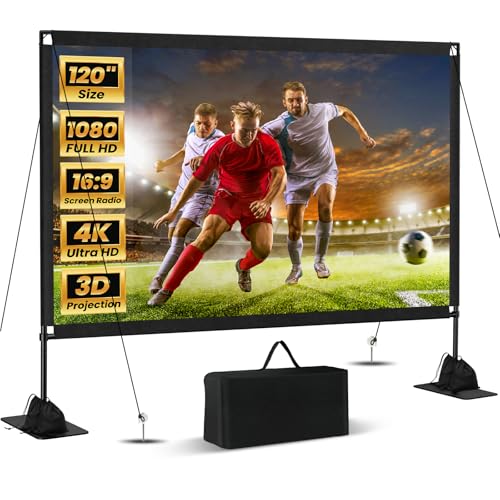
When I pulled this 150-inch outdoor projector screen out of the box, I was struck by its hefty yet manageable weight and the sleek, black milk silk fabric that feels smooth to the touch. The sturdy steel frame felt solid right away, giving me confidence that it wouldn’t wobble or bend during setup.
The integrated installation system meant I didn’t have to fuss over wrinkled surfaces, and the edges stayed perfectly taut, making the picture look crisp from the moment I turned on my projector.
Setting it up was surprisingly quick—just a few minutes, thanks to the clear instructions and simple component design. The reinforced base and support, along with the windproof accessories like stakes, ropes, and sandbags, made it easy to secure on my lawn.
Even with a gusty breeze, I felt assured it wouldn’t sway or collapse. The 4K HD visuals were stunning, with vibrant colors and sharp details, and the ultra-wide 160° viewing angle really made it feel like I was at a mini cinema in my backyard.
Portability is a huge plus—everything fits neatly into the included storage bag, which is perfect for camping trips or outdoor movie nights. When I needed to pack up, folding it flat was effortless, and it was ready to go again in no time.
Overall, this projector screen combines stability, ease of use, and great picture quality, making it a standout choice for anyone wanting a true home cinema experience outside.
120″ Portable Projector Screen with Stand, 16:9, 4K HD
- ✓ Very stable base
- ✓ Easy to set up
- ✓ Excellent 4K picture quality
- ✕ Slightly heavy for carrying
- ✕ Needs proper windproofing in strong winds
| Screen Size | 120 inches diagonally |
| Aspect Ratio | 16:9 |
| Resolution Compatibility | Supports 4K HD resolution |
| Viewing Angle | 160 degrees ultra-wide |
| Material | Premium washable milk silk fabric |
| Portability Features | Foldable design with carrying storage bag |
This projector screen has been sitting on my wishlist for ages, mainly because I wanted something portable that could handle outdoor setups without feeling like a flimsy afterthought. When I finally got my hands on it, I was pleasantly surprised by how sturdy it feels right out of the box.
The base is a real standout—crafted from solid steel with reinforced support, it feels unshakable even on uneven ground. I tested it outside during a breezy evening, and with the included ground stakes, ropes, and sandbags, it stayed perfectly still.
No wobbling or swaying, which is a huge relief.
The screen itself is a dream for movie nights. The 4K HD fabric delivers crisp, vibrant visuals, and the 160° viewing angle means everyone gets a good seat, even if you’re not directly in front.
I loved that it’s wrinkle-free thanks to the seamless installation, making setup quick and frustration-free.
Portability is well thought out—folds flat easily and comes with a compact storage bag. Moving it to my backyard or on camping trips was hassle-free.
Plus, the quick assembly instructions meant I was up and running in minutes, which is perfect for spontaneous movie nights.
Overall, this screen balances durability, ease of use, and great picture quality. It’s a solid choice for anyone wanting a reliable, portable home cinema experience that works indoors and out.
TOWOND 150″ Indoor/Outdoor Projector Screen with Stand

- ✓ Easy to assemble
- ✓ Portable and lightweight
- ✓ Bright, sharp images
- ✕ Needs large indoor space
- ✕ Slightly bulky when packed
| Screen Size | 150-inch diagonal |
| Aspect Ratio | 1:1 and 16:9 |
| Material | High-quality natural polyester fiber |
| Viewing Angle | 160° wide |
| Projection Type Support | Front and rear projection |
| Weight | 11.5 pounds |
Imagine setting up a movie night in your backyard or living room, only to be frustrated by a flimsy, hard-to-assemble screen that doesn’t quite do justice to your favorite films. That’s exactly what I experienced until I tried the TOWOND 150″ Indoor/Outdoor Projector Screen.
Right out of the box, I was impressed by how straightforward it was to set up. The foldable stand snaps together in less than five minutes—no tools needed.
The elastic cord inside the frame makes the assembly feel almost automatic, which means no fuss or frustration, just quick fun.
The large 150-inch display is a game-changer. The high-quality natural polyester fiber material delivers sharp, bright images with broad 160° viewing angles.
Whether I was projecting front or rear, the picture stayed clear and vibrant, even in a well-lit room.
Portability is a huge plus. Weighing just 11.5 pounds, it easily slides into my trunk along with other gear.
The included carry bag makes it simple to bring along for camping trips, backyard parties, or even a friend’s house. It’s sturdy enough to handle outdoor conditions, with ground nails and ropes for stability.
Use it for movies, sports, or even presentations—its versatility really shines. The setup and breakdown are quick, making it perfect for spontaneous movie nights or planned celebrations.
The only real downside is that indoor use requires a room wider than 140 inches, which might be limiting for some.
What Are the Different Types of Projector Screens for Home Cinema?
The different types of projector screens for home cinema include:
- Fixed Frame Screens: These screens are mounted permanently to the wall and offer a flat, taut surface ideal for high-quality image projection.
- Motorized Screens: These screens can be retracted into a housing when not in use, providing a neat appearance while allowing for easy deployment at the push of a button.
- Portable Screens: Designed for versatility, these screens are lightweight and easy to transport, making them suitable for various settings, including outdoor movie nights.
- Manual Pull-Down Screens: These screens are operated by hand, allowing users to pull them down to the desired height and retract them back when finished, combining functionality and simplicity.
- Ambient Light Rejecting Screens: These specialized screens are designed to minimize the impact of ambient light, making them ideal for rooms that cannot be completely darkened.
- Painted Screens: Instead of using a traditional fabric screen, some homeowners opt to paint a specific wall with special paint that enhances projection quality tailored to their environment.
Fixed Frame Screens: Fixed frame screens are preferred by many home cinema enthusiasts because they provide a perfectly flat surface, which is crucial for achieving optimal image quality. They are typically available in various aspect ratios and sizes, allowing for customization based on the projector and viewing space.
Motorized Screens: These screens add convenience to the home cinema experience by allowing users to retract and deploy the screen electronically. This feature is especially beneficial for multi-purpose rooms where the screen needs to be hidden when not in use, maintaining the room’s aesthetic appeal.
Portable Screens: Ideal for those who want flexibility, portable screens can be set up and taken down quickly, making them perfect for impromptu movie nights or presentations. They come in various styles, including tripod and folding options, and are often lightweight for easy transport.
Manual Pull-Down Screens: These screens are a great budget-friendly option, allowing users to manually adjust the screen size according to their preferences. They are easy to install and can be mounted on walls or ceilings, providing a simple yet effective solution for home cinema setups.
Ambient Light Rejecting Screens: For those who cannot achieve complete darkness in their viewing area, ambient light rejecting screens are designed to reflect projected light while absorbing ambient light. This technology enhances contrast and color saturation, making it an excellent choice for brighter rooms.
Painted Screens: Some homeowners choose to create a projection surface by painting a wall with specialized projector screen paint. This option can be more cost-effective while still delivering quality projection, and it allows for customization in terms of size and placement within the room.
How Does a Fixed Frame Projector Screen Enhance Viewing Experience?
A fixed frame projector screen significantly enhances the viewing experience in a home cinema setup by providing a dedicated, high-quality surface for projection.
- Image Quality: Fixed frame screens are typically made from high-quality materials that ensure excellent image clarity and color accuracy. The smooth, taut surface minimizes image distortion and enhances contrast, making the projected image appear more vibrant and lifelike.
- Aspect Ratio Compatibility: Many fixed frame screens are designed to accommodate various aspect ratios, such as 16:9 for movies or 2.35:1 for cinematic films. This flexibility allows viewers to enjoy a wide range of content without compromising on the visual experience, preserving the original format of the film.
- Enhanced Viewing Angle: These screens often feature materials that provide wide viewing angles, ensuring that viewers seated at different positions in the room can enjoy a consistent and high-quality image. This is particularly beneficial for larger gatherings, where optimal viewing from multiple angles is essential.
- Professional Appearance: A fixed frame screen gives a polished and professional look to a home cinema, enhancing the overall aesthetic of the room. The sleek design and clean lines create a dedicated space for movie viewing, contributing to an immersive atmosphere.
- Durability and Longevity: Fixed frame screens are built to last, often constructed with robust frames and high-quality screen materials that resist wear and tear. This durability ensures that the screen maintains its performance and appearance over time, making it a worthwhile investment for home cinema enthusiasts.
- Installation and Setup: Fixed frame screens are typically easier to install than other types, as they come pre-assembled and ready to mount. This straightforward setup allows users to quickly and easily create their home theater environment without extensive modifications to the room.
What Are the Advantages of Using a Pull-Down Projector Screen?
Setting up a pull-down projector screen is often straightforward, as many models come with mounting hardware and clear instructions. This ease of installation means you can enjoy your home cinema experience without the hassle of complex setups.
When it comes to image quality, dedicated projector screens are engineered to optimize projection performance. They typically feature materials that enhance brightness and contrast, leading to a significantly improved viewing experience compared to makeshift surfaces.
With a variety of sizes available, you can easily find a pull-down projector screen that fits perfectly in your space. Whether you have a cozy basement or a larger living room, there’s a size that can cater to your specific needs.
Lastly, the aesthetic appeal of a pull-down screen cannot be overlooked. It provides a clean and professional look to your home cinema, making it more enjoyable for both casual viewers and movie enthusiasts alike.
When Should You Choose a Motorized Projection Screen?
Convenience is a key benefit of motorized screens; they come with a remote control or can be integrated into a smart home system, allowing users to deploy the screen without having to manually pull it down. This ease of use enhances the enjoyment of movie nights and presentations alike.
A professional look is essential for many home cinema enthusiasts who want their space to reflect a high-end experience. Motorized screens often come in attractive casings that can blend with the ceiling or wall, ensuring that when the screen is not in use, it does not detract from the room’s aesthetic.
Ceiling mounting is a popular choice for dedicated home theaters, and motorized screens are particularly suited for this application. They can be mounted flush against the ceiling, providing a clean and unobtrusive setup that enhances the viewing experience while keeping the screen hidden when not in use.
For those considering larger screen sizes, motorized projection screens offer a practical solution. They can be designed to accommodate much larger formats without the hassle of manually handling and storing oversized screens, making them a great choice for an immersive cinematic experience.
What Key Factors Should You Consider When Selecting a Projector Screen?
When selecting a projector screen for your home cinema, several key factors should be considered to ensure an optimal viewing experience.
- Screen Size: The size of the screen should be proportional to the size of your viewing area and the distance from the projector. A larger screen provides a more immersive experience but requires a suitable space and projector with enough lumens to maintain image quality.
- Screen Material: The material of the screen affects the brightness, color accuracy, and viewing angles. Common materials like matte white, glossy, and ambient light-rejecting fabrics each have their own advantages depending on the lighting conditions of your room.
- Aspect Ratio: The aspect ratio of the screen should match the content you plan to watch, such as 16:9 for movies or 4:3 for older content. Choosing the right aspect ratio ensures that you get the best picture without any cropping or black bars.
- Gain: Gain refers to the reflectivity of the screen material; a higher gain can enhance brightness but may narrow the viewing angle. For a home cinema, a gain of 1.0 to 1.3 is typically ideal as it provides a good balance between brightness and viewing angles.
- Portability: If you plan to move the screen or use it in multiple locations, consider a portable option. Portable screens are often lightweight and easy to set up, making them convenient for various settings, but may not offer the same stability or picture quality as fixed or wall-mounted screens.
- Installation Type: Decide whether you want a fixed frame, pull-down, or motorized screen based on your space and usability preferences. Fixed frame screens provide the best tension and image quality, while pull-down and motorized options offer flexibility for smaller or multi-purpose rooms.
- Budget: Establishing a budget is crucial, as projector screens can vary widely in price based on size, material, and features. While it may be tempting to opt for the cheapest option, investing in a quality screen can significantly enhance your overall home cinema experience.
How Does Screen Size Impact Your Home Cinema Setup?
- Viewing Distance: The distance from which viewers watch the screen plays a critical role in determining the ideal screen size.
- Screen Resolution: The resolution of the projector and screen must align with the screen size to maintain image clarity.
- Room Size: The dimensions of the room affect how large the projector screen can be without overwhelming the space.
- Aspect Ratio: Different screen sizes come with varying aspect ratios, which can impact the type of content you can display effectively.
- Lighting Conditions: The level of ambient light in the room can dictate the appropriate screen size to ensure optimal image quality.
Viewing Distance: The ideal viewing distance is generally recommended to be 1.5 to 2.5 times the diagonal screen size. If the screen is too large for the distance, viewers may experience discomfort or difficulty focusing, while a screen that is too small can make the viewing experience less immersive.
Screen Resolution: A larger screen requires a higher resolution to maintain image quality; otherwise, viewers may notice pixelation or a lack of sharpness. For instance, a 1080p projector will look best on a screen that is appropriately sized for that resolution, ensuring a clear and vibrant display.
Room Size: The physical dimensions of the room limit the maximum screen size, as a large screen in a small room can create an uncomfortable viewing experience. Additionally, the placement of furniture and seating arrangements must be considered to optimize the layout for the chosen screen size.
Aspect Ratio: The aspect ratio of the projector screen affects how films and videos are displayed; common ratios include 16:9 for widescreen and 2.35:1 for cinematic experiences. Choosing the right aspect ratio in relation to the screen size can enhance the viewing experience by minimizing letterboxing or pillarboxing.
Lighting Conditions: A brighter screen can help combat ambient light, which is crucial in rooms with windows or other light sources. The size of the screen can affect how well it performs under various lighting conditions; larger screens may require more powerful projectors to ensure images remain clear and vibrant.
What Is the Importance of Screen Gain in Picture Quality?
To achieve the best results, it is advisable to evaluate the specific conditions of your viewing environment before choosing a projector screen. Best practices include testing different screen materials and gains to see which combination delivers the most satisfying results in your particular setup. Additionally, it can be beneficial to consult with audiovisual professionals who can recommend screens based on specific projector models and room lighting conditions, ensuring that you select the best projector screen for home cinema that meets your needs.
Which Materials Are Best for Projector Screens?
The best materials for projector screens can significantly enhance the viewing experience in a home cinema setting.
- Matte White: This is the most common material used for projector screens and offers a neutral color that reflects light evenly. It is versatile and works well in various lighting conditions, making it an excellent choice for home theaters.
- High Gain: High gain screens have a reflective surface that boosts brightness, making them ideal for rooms with ambient light. However, they can sometimes create hot spots, which may affect viewing angles, so they are best used in specific lighting scenarios.
- Gray: Gray screens are designed to enhance contrast and black levels, particularly beneficial for projectors with lower brightness. They help to absorb ambient light, making darker scenes more visible and improving overall picture quality in less-than-ideal lighting conditions.
- Ambient Light Rejecting (ALR): ALR screens are engineered to reflect projected light while minimizing the impact of ambient light from other sources. These screens are perfect for multi-purpose rooms, as they allow for a clear image even when the lights are on.
- Perforated Screens: Perforated screens are designed for use with sound systems, allowing audio to pass through without distortion. This is particularly useful in dedicated home theaters where speakers are positioned behind the screen, providing a seamless audiovisual experience.
- Ultra HD or 4K Screens: These screens are specifically optimized for high-definition content, featuring advanced materials that enhance clarity and color accuracy. They are ideal for home cinemas that use 4K projectors, ensuring that viewers experience the full depth of high-resolution images.
What Features Should You Look for in a Top Home Cinema Projector Screen?
When selecting the best projector screen for home cinema, several key features should be considered to enhance your viewing experience.
- Screen Material: The material of the screen plays a crucial role in image quality. Options like matte white, silver, or high-gain screens can affect brightness and color accuracy, so it’s important to choose a material that suits your projector type and room lighting conditions.
- Screen Size: The size of the screen should be appropriate for your room dimensions and seating distance. A larger screen can provide a more immersive experience, but it should not overwhelm the space or cause distortion; ideally, viewers should sit at a distance of 1.5 to 2.5 times the screen width.
- Aspect Ratio: The aspect ratio determines the width-to-height relationship of the image. Common ratios like 16:9 and 2.35:1 cater to different movie formats, and selecting the right one can enhance your viewing experience, particularly for widescreen films.
- Gain Factor: The gain factor indicates how much light the screen reflects compared to a standard white board. A higher gain can enhance brightness in rooms with ambient light, but it may also narrow the viewing angle, so balance is key based on your setup.
- Portability: If you plan to move your projector screen or use it in different locations, consider a portable option. Screens that are lightweight and can be easily set up or taken down, such as pull-down or inflatable models, offer flexibility without sacrificing quality.
- Installation Type: The installation type can significantly impact convenience and aesthetics. Options include fixed frame, motorized, and pull-down screens, each with their own benefits, such as ease of use or permanent setup that minimizes wrinkles and distortion.
- Viewing Angle: A good viewing angle ensures that everyone can enjoy a clear and bright image from different positions in the room. Screens with a wide viewing angle will allow for a larger audience without compromising on picture quality, making them ideal for home cinema settings.
How Do Ambient Light-Rejecting Screens Improve Image Quality?
Ambient light-rejecting screens enhance image quality by minimizing light interference, making them ideal for home cinema setups.
- Reduced Light Reflection: These screens are designed to absorb ambient light rather than reflect it, which ensures that the projector’s image remains vibrant and clear. By reducing the impact of surrounding light sources, they help maintain contrast and color accuracy, making the viewing experience more immersive.
- Improved Contrast: With the ability to reject unwanted light, ambient light-rejecting screens maintain deeper blacks and brighter whites. This contrast enhancement is crucial for home cinema environments where dynamic visuals are essential for a cinematic experience, allowing viewers to appreciate intricate details in darker scenes.
- Wide Viewing Angles: Many ambient light-rejecting screens offer wide viewing angles, meaning that the image quality remains consistent even when viewed from the side. This feature is particularly beneficial in home settings where viewers may not be seated directly in front of the screen, ensuring everyone enjoys a high-quality image.
- Enhanced Color Saturation: By minimizing ambient light interference, these screens ensure that colors appear more vivid and saturated. This is important for home cinema, as it allows films and videos to be presented in their intended color palettes, enhancing the overall visual experience.
- Compatibility with Various Projectors: Ambient light-rejecting screens are engineered to work effectively with different types of projectors, whether they use LCD, DLP, or LCoS technology. This versatility means that users can achieve a great image quality regardless of the projector type, making it easier to find the best projector screen for home cinema setups.
What Aspect Ratio Should You Use for Optimal Home Theater Performance?
The best aspect ratio for optimal home theater performance largely depends on the type of content you plan to watch and your screen’s specifications.
- 16:9 (Widescreen): This is the most common aspect ratio for home theaters, particularly for watching movies and television shows.
- 2.35:1 (CinemaScope): This ultra-wide aspect ratio is ideal for cinematic experiences, providing a more immersive view for films shot in this format.
- 4:3 (Standard): While less common in modern home theaters, this aspect ratio is still relevant for older films and television shows.
- 16:10 (Widescreen PC): This ratio is often favored in home theaters that double as workspaces, providing additional vertical space for computer use.
16:9 (Widescreen): As the standard for high-definition content, 16:9 is perfect for most modern televisions and projectors. It accommodates a wide array of content, including streaming services, Blu-rays, and broadcast television, ensuring that you get the best picture without black bars on the sides.
2.35:1 (CinemaScope): This aspect ratio is designed to replicate the theatrical experience, as many blockbuster films are shot in this format. It provides an expanded field of view, allowing for a more cinematic feel, particularly when using a projector and screen setup that can accommodate the extra width.
4:3 (Standard): Historically the standard for television and films, the 4:3 aspect ratio is still useful for viewing older content. While not suitable for most modern media, it may be necessary for certain classic films, documentaries, and TV shows that have not been remastered for widescreen formats.
16:10 (Widescreen PC): This aspect ratio strikes a balance between the more common 16:9 and the traditional 4:3, making it suitable for both video content and productivity tasks. It provides a bit more vertical space, which can be advantageous when using your home theater as a multi-functional space for both watching movies and working on tasks like browsing the web or editing documents.
Which Brands Are Leading the Market for Projector Screens?
Some of the top brands leading the market for projector screens suitable for home cinema are:
- Elite Screens: Known for its wide range of options, Elite Screens offers affordable and high-quality screens that cater to various preferences and room designs. Their screens come in different formats, including manual, electric, and fixed-frame, making them versatile for any home cinema setup.
- Silver Ticket Products: Silver Ticket is recognized for its high-quality, budget-friendly fixed-frame screens that provide excellent image quality. Their screens often feature a simple assembly process and a robust design, making them a popular choice for DIY home theater enthusiasts.
- Da-Lite: Da-Lite has a longstanding reputation for producing premium projector screens, known for their exceptional build quality and diverse range of screen materials. This brand is ideal for serious home cinema aficionados, as they offer customizable solutions tailored to specific viewing environments.
- Vivo: Vivo is a newer brand that has gained traction for its affordable and well-reviewed options, including portable and electric projector screens. Their commitment to providing quality screens at competitive prices makes them a favorite among casual users and budget-conscious buyers.
- Screen Innovations: Screen Innovations specializes in high-end projector screens that incorporate advanced technology for enhanced viewing experiences. Their products often include features like ambient light rejection and motorized options, appealing to those looking to create a premium home cinema atmosphere.
What Brands Are Recognized for Their Quality Projector Screens?
Several brands are recognized for their quality projector screens suitable for home cinema setups:
- Elite Screens: Elite Screens offers a wide range of projector screens known for their durability and affordability. They provide options for both manual and electric screens, catering to different installation preferences and room sizes, making them a popular choice for home cinema enthusiasts.
- Silver Ticket Products: Silver Ticket is well-regarded for its high-quality fixed-frame screens that deliver exceptional image quality. Their screens come with easy-to-follow assembly instructions and are designed to minimize light bleed, which enhances the viewing experience in a home theater environment.
- Da-Lite: Da-Lite is a premium brand that has been in the industry for decades, known for its professional-grade projection screens. They offer a variety of screen materials tailored for different environments, ensuring that users can achieve optimal brightness and color accuracy in their home cinema.
- VIVO: VIVO provides a range of affordable projector screens that are ideal for home cinema applications. Their products include both portable and fixed screens, which are easy to set up and designed to give a good performance at a reasonable price, making them accessible for casual users.
- Screen Innovations: Screen Innovations specializes in high-end projector screens with advanced features like motorized options and customizable sizes. Their screens are designed to enhance the overall cinematic experience, offering options like ambient light rejecting materials that work well in various lighting conditions.
Are There Budget-Friendly Brands That Still Offer Great Quality?
There are several budget-friendly brands that still deliver great quality projector screens suitable for home cinema use:
- Elite Screens: Known for their cost-effective solutions, Elite Screens offers a variety of projector screens that cater to different needs, including manual pull-down and electric models. Their screens are made with high-quality materials that enhance image brightness and color accuracy, making them a popular choice for home cinema enthusiasts.
- VIVO: VIVO is recognized for providing affordable projector screens without compromising on quality. Their screens often feature durable materials and easy installation processes, which are ideal for DIY home cinema setups. The brand also offers a range of sizes and types, including portable options for versatility.
- JWSIT: JWSIT offers budget-friendly projector screens that are designed for easy setup and use. Their products are often lightweight and portable, making them a great option for users who want to move their home cinema setup around. Additionally, they provide good image quality, suitable for movie nights and presentations alike.
- Mdbebbron: Mdbebbron is a lesser-known brand that provides excellent value for money in projector screens. They focus on delivering screens that are easy to assemble and use, with features such as wrinkle-resistant materials. Their screens are well-reviewed for providing clear images and vibrant colors at an affordable price point.
- Amazon Basics: The Amazon Basics line includes a range of budget-friendly projector screens that maintain decent quality for home cinema use. These screens are straightforward and practical, designed for users who want a no-frills option that still performs well. They are often praised for their simplicity and effectiveness in various viewing conditions.
How Can You Install Your Projector Screen for Best Results?
To achieve optimal results when installing a projector screen for home cinema, consider the following factors:
- Screen Placement: Proper placement of the projector screen is crucial for achieving the best viewing experience. Ideally, the screen should be positioned at eye level when seated, which typically means mounting it about 24 to 36 inches from the floor, depending on your seating arrangement.
- Distance from Projector: The distance between the projector and the screen affects image quality and size. Ensure that the projector is positioned according to its throw ratio, which varies by model, to avoid distortion and ensure a sharp image.
- Ambient Light Control: Minimizing ambient light is essential for a home cinema setup. Use blackout curtains or shades to darken the room, as this will enhance contrast and color accuracy, making the projected image appear more vibrant.
- Screen Material: Selecting the right screen material can significantly impact your viewing experience. Different materials, such as matte white or high-gain screens, cater to various lighting conditions and viewing angles, so choose one that complements your projector and room setup.
- Mounting Technique: The method of mounting your screen, whether wall-mounted or ceiling-mounted, should be secure and level. Use appropriate hardware for your wall type and ensure the screen is tensioned correctly to avoid wrinkles that can disrupt the image quality.
- Calibration and Adjustment: After installation, calibrate your projector settings for brightness, contrast, and color balance to ensure the best picture quality. Small adjustments in these settings can greatly enhance the viewing experience and help achieve the desired cinematic effect.
What Are the Best Placement Tips for Your Projection Screen?
When setting up a projector screen for home cinema, certain placement tips can greatly enhance the viewing experience.
- Screen Height: The screen should be positioned at eye level when seated, typically about 24 to 36 inches from the floor. This ensures that viewers can enjoy the movie without straining their necks, providing a comfortable viewing angle.
- Viewing Distance: The ideal distance from the screen to the seating area should be approximately 1.5 to 2.5 times the diagonal size of the screen. This distance allows for an immersive experience while minimizing any strain on the eyes during long viewing sessions.
- Room Lighting: Consider the ambient light in the room; the screen should be placed where it can be viewed without glare. Using blackout curtains or shades can help control light and enhance the picture quality, especially during daytime screenings.
- Wall Color: The color of the wall behind the screen can impact the overall image quality. A neutral or dark-colored wall helps to absorb excess light and reduce reflections, which can enhance the contrast and vibrancy of the projected image.
- Screen Size: Choose a screen size that fits well within the room without overwhelming the space. A larger screen can provide a more cinematic experience, but it should be proportional to the room size and viewing distance to avoid distortion.
- Speaker Placement: Position speakers around the screen for optimal sound quality. Ideally, the front speakers should be placed at ear level and equidistant from the screen to create a balanced audio experience that complements the visual component.
- Distance from Walls: Leave some space between the screen and the walls to minimize sound reflections and improve acoustics. A distance of at least 6 to 12 inches is recommended to enhance the overall audio performance during film screenings.
Are There Installation Tips Specific to Different Types of Screens?
When installing projector screens for home cinema, different types require specific considerations for optimal performance.
- Fixed Frame Screens: These screens are mounted on a frame that stays taut, providing a smooth surface for projection. Ensure that the frame is level during installation to avoid distortions in the image, and consider the height at which the screen is mounted to provide the best viewing angles for your seating arrangement.
- Pull-Down Screens: These screens can be retracted when not in use, making them versatile for various room setups. Make sure to install the mounting brackets securely to the wall or ceiling to prevent the screen from sagging, and verify that the pull-down mechanism operates smoothly to avoid any jams during use.
- Motorized Screens: These screens operate with an electric motor for effortless deployment and retraction. When installing, ensure that the screen is wired correctly and that the remote control or wall switch is easily accessible, taking care to conceal any wiring for aesthetics and safety.
- Portable Screens: These screens are ideal for temporary setups or outdoor use. When setting up, ensure the base is stable and the screen is fully extended to avoid wrinkles, and consider the lighting conditions, as portable screens may need to be set up in darker areas for the best image quality.
- Ambient Light Rejecting Screens: These specialized screens are designed to minimize the impact of ambient light on the projected image. Installation requires precise alignment with the projector, as these screens have specific viewing angles, and they should be positioned away from direct light sources to maximize their effectiveness.