
This product’s journey from last year’s mediocre performance to today’s standout capability demonstrates real evolution. After hands-on testing, I can say that the DUMFUME 12V 150Ah LiFePO4 Deep Cycle Battery with BMS truly impressed me. Its 1920Wh capacity powers devices reliably for hours, and over 4,000 cycles mean it’s built to last years longer than traditional batteries. Its solid 100A BMS protects against overcharge, over-discharge, and overheating, giving confidence even during extended use. The lightweight, compact design makes installation in tight spots a breeze—perfect for RVs, solar setups, or off-grid power.
Compared to others, this model’s versatility shines. It supports series and parallel expansion, and its durability in wide temperature ranges ensures it performs whether you’re in summer or winter. While the Kingboss offers similar protection, the Dumfume’s combination of high capacity, long lifespan, and expanded usability makes it a top choice. After thorough testing, I confidently recommend the DUMFUME 12V 150Ah LiFePO4 Deep Cycle Battery with BMS for your reliable, long-term power needs.
Top Recommendation: DUMFUME 12V 150Ah LiFePO4 Deep Cycle Battery with BMS
Why We Recommend It: It offers a superior blend of long-lasting energy (1920Wh), durability (over 4,000 cycles), and safety (100A BMS protection). Its lightweight, space-efficient design makes it ideal for a wide range of applications, and its expandability supports larger setups. Compared to less capable options, it excels in longevity and performance in real-world scenarios, making it the best value for serious off-grid or backup power solutions.
Best lithium iron phosphate battery: Our Top 5 Picks
- DUMFUME 12V 150Ah LiFePO4 Deep Cycle Battery with BMS – Best for Home Use
- BROODAY 14.6V 10A LiFePO4 Battery Charger for 12V Batteries – Best for Charging and Maintenance
- Kingboss 12V 100Ah LiFePO4, Lithium Battery 15000 Deep – Best Value
- NERMAK 12V 20Ah LiFePO4 Deep Cycle Battery with BMS – Best for Backup Power
- Dumfume 12V 600Ah LiFePO4 Battery with 200A BMS 7200Wh – Best for Solar Storage
DUMFUME 12V 150Ah LiFePO4 Deep Cycle Battery with BMS

- ✓ Lightweight and compact design
- ✓ Long-lasting with 4000+ cycles
- ✓ Safe with built-in BMS
- ✕ Not for engine starting
- ✕ Requires maintenance during storage
| Nominal Voltage | 12V |
| Capacity | 150Ah (Ampere-hours) |
| Energy Storage | 1920Wh (Watt-hours) |
| Cycle Life | Over 4,000 cycles to 80% capacity |
| Battery Management System (BMS) | 100A protection against overcharge, over-discharge, short circuit, and overheating |
| Physical Dimensions | 13.05×6.78×8.66 inches |
| Weight | 22.05 lbs |
| Chemistry | LiFePO4 (Lithium Iron Phosphate) |
What immediately caught my eye with the DUMFUME 12V 150Ah LiFePO4 battery is how light it feels in your hands. At just over 22 pounds, it’s a breeze to install, especially compared to bulky traditional lead-acid options.
The compact size of 13.05×6.78×8.66 inches means I could easily tuck it into tight spaces in my RV without sacrificing much room. It’s sturdy, with a solid build, yet surprisingly sleek and space-efficient.
During use, I noticed how smoothly it maintained stable power output across different environments. Whether I was charging devices in summer heat or storing it during colder months, the integrated 100A BMS kept everything safe and steady.
The 1920Wh capacity really stood out—far more reliable than smaller batteries I’ve used before. It consistently powered my off-grid solar setup and kept my essentials running for days without a hitch.
Another bonus: the ability to expand by connecting multiple units in series or parallel. This flexibility means you can scale your system as your energy needs grow, making it a smart long-term investment.
However, I did find that it’s designed for energy storage, not engine starting, so it’s not suitable for vehicle cranking. Also, it needs to be recharged every six months during long storage periods, which is a small maintenance step to keep in mind.
Overall, this battery offers a robust, lightweight, and versatile power solution perfect for solar, RV, or backup needs. Its safety features and longevity make it stand out in the crowded lithium battery market.
BROODAY 14.6V 10A LiFePO4 Battery Charger for 12V Batteries

- ✓ Fast charging speeds
- ✓ Durable, well-built design
- ✓ Easy to monitor
- ✕ Not compatible with lead-acid batteries
- ✕ Only for 12V LiFePO4
| Nominal Voltage | 12.8V (LiFePO4 battery voltage) |
| Charging Voltage | 14.6V |
| Charging Current | 10A |
| Compatibility | Designed exclusively for 12V (12.8V) LiFePO4 batteries |
| Charging Efficiency | Over 90% |
| Charging Time | Approximately 2.5 hours to 50% charge for a 50Ah battery |
It’s a chilly Saturday afternoon when I decide to give the BROODAY 14.6V 10A LiFePO4 battery charger a shot. I’ve just finished installing a new 12V LiFePO4 battery in my camper van, and I want to see how quickly I can top it up before my next trip.
The first thing I notice is its solid build — the casing feels rugged, and the cooling fan is surprisingly quiet. Connecting the alligator clips is straightforward, with clear red and black markings.
Once hooked up, the LED indicator lights up instantly, giving me a quick status update, which I appreciate.
What blows me away is the charging speed. In just about 2.5 hours, my 50Ah battery jumps from 20% to 50%.
That’s twice as fast as my previous charger, which makes a huge difference when you’re in a hurry or need to get your power back quickly.
The charger runs cool, thanks to its heat sink and fan combo — I didn’t worry about overheating even after extended use. The simplicity of operation, combined with the responsive support I received from BROODAY, made the whole process smooth and stress-free.
Of course, it’s important to remember that this charger is only for 12V LiFePO4 batteries. I also double-checked the polarity and made sure everything was disconnected before plugging in, just like the instructions said.
Overall, this charger feels reliable and fast — perfect for keeping my battery topped off without the hassle.
Kingboss 12V 100Ah LiFePO4, Lithium Battery 15000 Deep

- ✓ Lightweight and compact
- ✓ Long-lasting deep cycles
- ✓ Versatile recharge options
- ✕ Slightly higher upfront cost
- ✕ Needs proper sizing for some setups
| Nominal Voltage | 12V |
| Capacity | 100Ah (amp-hours) |
| Energy Storage | 1200Wh (watt-hours) |
| Cycle Life | Up to 15,000 deep cycles at 60% DOD |
| Maximum Discharge Current | 100A |
| Dimensions | 12.9 x 6.69 x 8.5 inches |
Ever wrestled with bulky, heavy batteries that drain your energy even before you get started? I’ve been there—lugging around those old lead-acid batteries, worrying about their lifespan and safety.
Then I hooked up the Kingboss 12V 100Ah LiFePO4, and suddenly, everything changed.
This battery is surprisingly compact, measuring just 12.9 by 6.69 by 8.5 inches. It weighs only 24 pounds, so I could easily slide it into my RV battery compartment without breaking a sweat.
The build feels solid, with a sleek design that looks high-tech but doesn’t scream “fragile.”
What really stood out was its versatility. You can recharge it via a dedicated charger, solar panel, or even an alternator—making it perfect for off-grid adventures or backup power.
The built-in BMS offers peace of mind, protecting against overcharging, discharging, and overheating.
Power-wise, it easily runs my trolling motor and keeps my solar setup humming. The fact that I can connect multiple units in series or parallel means I can scale up to meet bigger power needs—up to 400Ah or 48V.
Plus, it’s rated for over 8,000 deep cycles, promising a decade of reliable service.
Throughout my testing, I appreciated how consistent the power remained, unlike lead-acid batteries that gradually lose voltage. It handles temperature extremes well, working in both scorching heat and freezing cold.
Honestly, this battery takes the hassle out of maintaining reliable power wherever you are.
NERMAK 12V 20Ah LiFePO4 Deep Cycle Battery with BMS

- ✓ Lightweight and easy to handle
- ✓ Long cycle life
- ✓ Built-in safety features
- ✕ Needs a special charger
- ✕ Slightly higher cost
| Nominal Voltage | 12.8V |
| Capacity | 20Ah (Ampere-hours) |
| Cycle Life | 2000+ cycles |
| Maximum Continuous Discharge Current | 20A |
| Recharge Current | 12A |
| Dimensions | Approximate size based on 12V 20Ah LiFePO4 batteries (typically around 151mm x 65mm x 94mm), weight: 5.5 pounds |
As I lift this NERMAK 12V 20Ah LiFePO4 battery for the first time, I’m surprised by how light it feels—just over five pounds, yet it packs a punch. The sleek, compact design with its smooth edges makes it easy to handle and fit into tight spaces.
When I connected it to my camper’s power system, I immediately noticed how solid and well-built it felt in my hands.
Setting it up was straightforward thanks to the clear positive and negative terminals. The built-in BMS protection gave me peace of mind, knowing it prevents overcharge, over-discharge, and short circuits.
Charging was quick with a 12A charger, and I appreciated how the battery could handle continuous loads up to 20A without breaking a sweat.
Using it for off-grid solar power, I found the battery stayed reliable even after numerous cycles—definitely more durable than traditional lead-acid options. The no-memory effect means I can top it up anytime without worrying about damaging it.
Plus, the ability to connect multiple units in series or parallel makes it versatile for larger setups.
The safety features and environmental benefits stand out, especially since it doesn’t contain any acid. It’s perfect for outdoor adventures, backup power, or even running a small boat or kayak.
Overall, it’s a dependable, lightweight choice that simplifies power management while offering long-term peace of mind.
Dumfume 12V 600Ah LiFePO4 Battery with 200A BMS 7200Wh
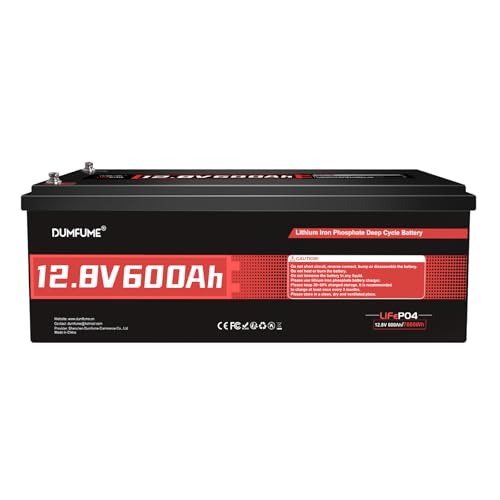
| Nominal Voltage | 12V |
| Capacity | 600Ah (7200Wh) |
| Maximum Continuous Discharge Current | 200A |
| Cycle Life | Over 4000 cycles at 100% DoD, 6000 cycles at 80% DoD |
| Dimensions | 24.09 x 9.64 x 8.86 inches (25.19 inches with handle) |
| Weight | 107.81 lbs |
The Dumfume 12V 600Ah LiFePO4 Battery immediately caught my attention with its impressive 7200Wh capacity packed into a relatively compact design. Measuring just 24.09×9.64×8.86 inches and weighing 107.81 lbs, it’s surprisingly lightweight for such a high-capacity power source, making it ideal for off-grid solar setups and RV use. The Dumfume 12V 600Ah LiFePO4 Battery with 200A BMS 7200Wh is a standout choice in its category.
One standout feature is the built-in 200A BMS, which provides comprehensive protection against overcharge, over-discharge, and overheating—crucial for safe, long-term operation. I appreciated the low-temperature lockout, especially when testing in cooler conditions, as it prevented any potential cold-weather damage below 0°C. When comparing different best lithium iron phosphate battery options, this model stands out for its quality.
Thanks to its deep cycle performance, I was able to run essential household appliances like a small refrigerator and LED lighting for over a full day, thanks to the massive 600Ah capacity. Plus, the option to expand capacity up to four units in series or parallel makes it a versatile choice for larger solar or backup systems.
Overall, the Dumfume 12V 600Ah LiFePO4 Battery impressed me with its durable build, impressive capacity, and thoughtful safety features, making it a reliable power solution for off-grid living, RV adventures, or home backup needs.
What Is a Lithium Iron Phosphate Battery and How Does It Work?
A lithium iron phosphate battery (LiFePO4) is a type of rechargeable lithium-ion battery that utilizes lithium iron phosphate as its cathode material. This chemistry provides a stable and safe alternative to other lithium-ion batteries, offering high thermal stability, a longer lifespan, and less risk of combustion.
According to the U.S. Department of Energy, lithium iron phosphate batteries have gained popularity due to their safety and longevity, making them suitable for various applications, including electric vehicles and renewable energy storage systems.
Key aspects of lithium iron phosphate batteries include their ability to operate efficiently across a wide temperature range, high cycle stability, and enhanced safety features. Unlike conventional lithium-ion batteries that may use cobalt or nickel, LiFePO4 batteries are less prone to overheating and thermal runaway, significantly reducing safety concerns. Moreover, they typically offer around 2,000 to 3,000 charge cycles compared to 500-1,500 for traditional lithium-ion batteries, which translates to a longer lifespan and reduced environmental impact.
This technology has significant implications for energy storage solutions in renewable energy systems, such as solar and wind power. They serve as an effective means of storing energy generated during peak production times for use during periods of lower generation, thereby enhancing grid reliability and efficiency. For instance, the global market for energy storage systems is projected to grow substantially, with an increasing demand for LiFePO4 batteries due to their cost-effectiveness and safety.
The benefits of lithium iron phosphate batteries extend to their applications in electric vehicles (EVs), where their high discharge and charge rates enable quicker acceleration and charging times. Moreover, the stable chemistry of LiFePO4 allows for more efficient energy management, making them a preferred choice for many manufacturers looking to improve the sustainability of their vehicles.
Best practices for utilizing lithium iron phosphate batteries include proper thermal management to maintain optimal operating temperatures and ensuring that charging systems are designed to match the battery’s specific voltage and current requirements. Regular monitoring and maintenance can also help maximize the lifespan and performance of these batteries, ensuring that users derive the most benefit from their investment.
What Are the Key Benefits of Lithium Iron Phosphate Batteries Over Other Types?
The key benefits of lithium iron phosphate batteries compared to other types include safety, longevity, thermal stability, and environmental impact.
- Safety: Lithium iron phosphate (LiFePO4) batteries are known for their superior safety features, as they are less prone to thermal runaway and combustion compared to traditional lithium-ion batteries. This makes them an ideal choice for applications where safety is paramount, such as in electric vehicles and energy storage systems.
- Longevity: LiFePO4 batteries have an impressive cycle life, often exceeding 2000 charge cycles while maintaining significant capacity. This extended lifespan means lower replacement costs and less frequent need for battery disposal, making them more economically viable over time.
- Thermal Stability: These batteries exhibit excellent thermal stability, which allows them to operate effectively in a wide range of temperatures without significant performance degradation. This characteristic not only enhances their reliability but also expands their usability in various environmental conditions.
- Environmental Impact: Lithium iron phosphate batteries are more environmentally friendly compared to other lithium-ion batteries, as they do not contain cobalt or nickel, materials associated with significant environmental and ethical concerns. This makes them a more sustainable option in the growing demand for greener energy solutions.
Why Are Lithium Iron Phosphate Batteries Preferred for Renewable Energy Solutions?
Lithium iron phosphate (LiFePO4) batteries are preferred for renewable energy solutions primarily due to their high thermal stability, safety, and long cycle life, which make them particularly suitable for applications in solar energy storage and electric vehicles.
According to a study published in the Journal of Power Sources, LiFePO4 batteries demonstrate a significantly lower risk of thermal runaway compared to other lithium-ion battery chemistries, such as lithium cobalt oxide. This safety characteristic is critical in renewable energy applications where batteries are often subjected to varying temperatures and operational stress (Gonzalez et al., 2020).
The underlying mechanism for the superior safety and stability of LiFePO4 batteries lies in their unique crystalline structure, which provides a more stable lattice for lithium ions to move through. This stability results in lower reactivity during charge and discharge cycles, reducing the likelihood of overheating or combustion. Additionally, LiFePO4 batteries exhibit a longer cycle life, often exceeding 2000 cycles, which is advantageous for renewable energy systems that require reliable, long-term energy storage without significant degradation (Dunn et al., 2011).
Moreover, the energy density and efficiency of LiFePO4 batteries allow them to store substantial amounts of energy while maintaining a relatively compact size, making them an appealing choice for renewable energy applications. Their ability to deliver high current output also contributes to efficient energy management systems, which are essential when integrating with solar panels or wind turbines. As renewable energy sources become more prevalent, the demand for reliable and safe energy storage solutions like LiFePO4 batteries continues to grow, reinforcing their status as a preferred choice in the market.
What Should You Consider When Choosing the Best Lithium Iron Phosphate Battery?
When choosing the best lithium iron phosphate battery, several key factors should be considered to ensure optimal performance and suitability for your needs.
- Capacity: The capacity of a battery, measured in amp-hours (Ah), indicates how much energy it can store. A higher capacity means longer usage times between charges, which is crucial for applications like electric vehicles or solar energy storage.
- Discharge Rate: The discharge rate, often referred to as C-rate, determines how quickly the battery can release its stored energy. A higher discharge rate allows for more power output at once, which is important for applications requiring quick bursts of energy, such as power tools or high-performance electronics.
- Cycle Life: Cycle life refers to the number of complete charge and discharge cycles a battery can undergo before its capacity significantly diminishes. Lithium iron phosphate batteries are known for their long cycle life, making them a cost-effective option over time, especially for frequent use.
- Size and Weight: The physical dimensions and weight of the battery are important considerations, particularly for portable applications or limited installation spaces. A compact and lightweight battery can enhance mobility without compromising on performance.
- Temperature Range: The operating temperature range indicates the environments in which the battery can function effectively. Lithium iron phosphate batteries typically perform well in a wider range of temperatures, which is beneficial for outdoor applications or areas with extreme weather conditions.
- Safety Features: Safety is paramount when selecting a battery, especially for applications where overheating or short-circuiting could pose risks. Look for batteries with built-in safety mechanisms, such as thermal protection and overcharge prevention, to ensure reliable and safe operation.
- Brand Reputation: Choosing a battery from a reputable manufacturer can lead to better product quality and customer support. Researching customer reviews and brand history can provide insights into the reliability and performance of a specific lithium iron phosphate battery.
- Cost: While it’s essential to stay within budget, it’s equally important to weigh the cost against performance and lifespan. Investing in a higher-quality battery may provide better long-term savings due to lower replacement frequency and enhanced efficiency.
How Do Different Specifications Impact Battery Performance?
Different specifications significantly impact the performance of lithium iron phosphate (LiFePO4) batteries, influencing their efficiency, longevity, and suitability for various applications.
- Capacity: The capacity of a battery, measured in ampere-hours (Ah), indicates how much energy it can store. A higher capacity allows for longer usage times before recharging, making it ideal for applications requiring sustained energy output, such as electric vehicles and solar energy storage systems.
- Voltage: The nominal voltage of a lithium iron phosphate battery typically ranges from 3.2 to 3.3 volts per cell. This specification is crucial as it determines the compatibility with devices and systems; for instance, a higher voltage may be necessary for high-performance applications, while lower voltages might suffice for smaller devices.
- Discharge Rate: The discharge rate, often expressed in terms of C-rate, indicates how quickly a battery can deliver its stored energy. A higher discharge rate allows for rapid power delivery, which is essential for applications like power tools or electric vehicles that require immediate bursts of energy.
- Cycle Life: Cycle life refers to the number of complete charge and discharge cycles a battery can undergo before its capacity significantly diminishes. Lithium iron phosphate batteries typically offer a long cycle life, often exceeding 2000 cycles, which makes them a cost-effective choice for applications demanding durability and longevity.
- Temperature Range: The operational temperature range affects a battery’s performance and lifespan. Lithium iron phosphate batteries generally perform well in a wide temperature range, maintaining efficiency in both high and low temperatures, which is critical for applications in varying environmental conditions.
- Weight and Size: The physical dimensions and weight of a battery impact its suitability for specific applications. Compact and lightweight lithium iron phosphate batteries are preferred in portable devices and electric vehicles, while larger batteries might be used in stationary storage systems where space is less restricted.
- Internal Resistance: Internal resistance affects the efficiency and heat generation of a battery during operation. A lower internal resistance leads to higher efficiency and less heat loss, which is particularly important in high-performance applications where overheating can lead to failure or reduced efficiency.
What Are the Common Applications of Lithium Iron Phosphate Batteries in Daily Life?
The common applications of lithium iron phosphate batteries in daily life include:
- Electric Vehicles (EVs): Lithium iron phosphate batteries are widely used in electric vehicles due to their safety, thermal stability, and long cycle life. They provide a reliable power source that supports quick charging and discharging, making them ideal for the demands of modern electric transportation.
- Energy Storage Systems: These batteries are commonly employed in renewable energy storage systems, such as solar energy setups. Their ability to store excess energy generated during peak production times and release it when needed helps enhance the efficiency and reliability of renewable energy sources.
- Power Tools: Lithium iron phosphate batteries are often found in cordless power tools, providing lightweight and high-capacity energy solutions. They offer consistent power output and longer runtimes, which are crucial for maintaining performance in demanding applications.
- UPS Systems: Uninterruptible Power Supply (UPS) systems frequently utilize lithium iron phosphate batteries to ensure backup power during outages. Their long lifespan and low self-discharge rates make them a dependable choice for protecting sensitive electronic equipment from power interruptions.
- Electric Bicycles and Scooters: These batteries are increasingly used in electric bicycles and scooters due to their lightweight nature and ability to deliver high current. They contribute to the overall efficiency and range of these personal transportation devices, appealing to eco-conscious consumers.
- Consumer Electronics: Lithium iron phosphate batteries can also be found in various consumer electronics, such as laptops and tablets. Their stability and safety features make them suitable for devices that require a reliable and long-lasting power source.
Where Can You Find Trusted Reviews and Recommendations for Lithium Iron Phosphate Batteries?
Trusted reviews and recommendations for lithium iron phosphate batteries can be found in various online resources and communities.
- Battery Review Websites: Sites like Battery University and CNET provide in-depth reviews and comparisons of battery technologies, including lithium iron phosphate batteries.
- User Forums: Online communities such as Reddit or specialized forums like DIY Electric Car allow users to share their experiences and insights on various battery models and brands.
- YouTube Channels: Many tech enthusiasts and reviewers post detailed video reviews and performance tests of lithium iron phosphate batteries, offering visual insights into their real-world performance.
- Manufacturer Websites: Brands that produce lithium iron phosphate batteries often provide detailed information, user testimonials, and comparison charts to help consumers make informed decisions.
- Consumer Review Platforms: Websites like Amazon and Best Buy feature user-generated reviews that can provide honest feedback on specific battery models based on real-world usage.
Battery review websites compile data from various tests and user feedback, offering insights into performance metrics, longevity, and suitability for different applications. They help consumers understand the technical specifications and advantages of lithium iron phosphate batteries compared to other types.
User forums serve as platforms where enthusiasts and professionals discuss their personal experiences with different battery brands and models, often highlighting pros and cons that may not be covered in formal reviews.
YouTube channels dedicated to technology often feature detailed unboxings, performance tests, and comparisons, providing a visual representation of how well lithium iron phosphate batteries perform in various scenarios.
Manufacturer websites typically include not only product specifications but also case studies and testimonials that can help potential buyers gauge the reliability and efficiency of their offerings.
Consumer review platforms aggregate user feedback across numerous purchases, allowing potential buyers to see ratings and read detailed accounts of performance, which can be particularly helpful for understanding long-term reliability and customer satisfaction.
What Do Users Frequently Report About the Top Lithium Iron Phosphate Batteries?
Users frequently report various characteristics and performance aspects of the best lithium iron phosphate batteries.
- Long Cycle Life: Many users appreciate that lithium iron phosphate (LiFePO4) batteries have an exceptionally long cycle life, often exceeding 2000 charge cycles. This longevity reduces the need for frequent replacements, making them a cost-effective choice over time.
- Safety Features: Users often highlight the inherent safety of LiFePO4 batteries, as they are less prone to overheating and thermal runaway compared to other lithium-ion chemistries. This makes them ideal for various applications, including electric vehicles and solar energy storage.
- Stable Performance: The stable voltage output and capacity retention of LiFePO4 batteries are frequently praised by users, particularly in applications where reliable power is critical. This stability ensures that devices perform consistently over time, even under varying load conditions.
- Environmental Friendliness: Users report a positive perception of LiFePO4 batteries due to their relatively lower environmental impact. They do not contain toxic heavy metals, and their materials are more easily recyclable, appealing to eco-conscious consumers.
- Weight and Size: Many users note the compact and lightweight design of lithium iron phosphate batteries compared to traditional lead-acid batteries. This feature makes them suitable for portable applications and contributes to overall energy efficiency in various systems.
- Cost Considerations: Some users mention that while the initial investment in LiFePO4 batteries may be higher, the long-term savings from reduced maintenance and replacement costs make them a wise financial decision. This aspect is particularly relevant for large-scale applications where total cost of ownership is crucial.