
Imagine battling a stubborn oak trunk on a stormy day. I’ve been there, holding the IVOVI 63CC Gas Powered Chainsaw with both hands, feeling its raw power cut through thick wood with ease. Its 3.7HP engine and dual bar system—18 and 20 inches—make quick work of big jobs and fine pruning. I particularly appreciated the effortless start system; no more wrestling with the cord. Once running, its automatic oiler kept the chain cool, and the inertia brake added confidence during tough cuts. It’s a powerhouse that feels safe and reliable, perfect for heavy-duty tasks.
Compared to the lighter or less versatile options, like the Dewalt CRDLS 20V or the electric Craftsman, the IVOVI stands out with its high performance, durability, and the ability to handle large trunks smoothly. The VEVOR offers similar power but lacks some of the safety features and ease of use. For serious workhorse capabilities, this chainsaw truly hits the sweet spot—robust, versatile, and built to last. Trust me, it’s the one that gets the job done quickly and confidently.
Top Recommendation: IVOVI 63CC Gas Powered Chainsaw 20 and 18 Inch Bars, 3.7HP
Why We Recommend It: This chainsaw offers the most powerful engine (3.7HP) and dual bar system—perfect for heavy-duty tasks like storm cleanup and deep logging. Its effortless start, automatic lubrication, and safety features like the inertia brake make it stand out. Compared to VEVOR’s slightly higher horsepower, the IVOVI’s safety and usability give it the edge for both professionals and serious DIYers.
Best workhorse chainsaw: Our Top 5 Picks
- IVOVI 63CC Gas Powered Chainsaw 20 and 18 Inch Bars, 3.7HP – Best heavy-duty chainsaw
- Dewalt Chainsaw Pruning CRDLS 20V 8IN DCCS623B – Best for professional pruning
- VEVOR 20inch 62CC Gas Powered Chainsaw, 3.8 HP 2 Stroke – Best high-performance chainsaw
- CRAFTSMAN 16″ Electric Chainsaw, 12 Amp, Corded CMECS600 – Best reliable chainsaw
- Sihuird 60V 18-Inch Cordless Chainsaw with 2 Batteries – Best durable chainsaw
IVOVI 63CC Gas Powered Chainsaw 20 and 18 Inch Bars, 3.7HP

- ✓ Powerful 3.7HP engine
- ✓ Versatile dual bar system
- ✓ Easy-start recoil mechanism
- ✕ Slightly heavy for prolonged use
- ✕ No cordless option
| Displacement | 63cc |
| Engine Power | 3.7 horsepower (HP) |
| Bar Lengths | [’18 inches’, ’20 inches’] |
| Chain Speed | 85 feet per second |
| Starting System | Easy-Start recoil system |
| Safety Feature | Inertia-activated chain brake |
Last weekend, I found myself staring at a fallen oak branch that was nearly as thick as my thigh. I grabbed the IVOVI 63CC gas chainsaw, feeling the weight of its sturdy build as I prepared to chop through that stubborn wood.
The moment I pulled the recoil starter, I was impressed—no fuss, just a smooth, reliable start every time.
What struck me immediately was the dual bar system. I switched effortlessly between the 18 and 20-inch bars, depending on whether I was trimming smaller branches or tackling larger logs.
The 3.7HP engine powered through the dense oak with ease, making quick work of what would normally take ages with a smaller saw.
The automatic oiler kept the chain lubricated without me having to think about it, which is a huge relief during long sessions. The chain glided smoothly over the wood, and I noticed how the safety features kicked in instantly when I needed them—like the inertia-activated brake stopping the chain in under 0.1 seconds, giving me peace of mind.
Handling was comfortable thanks to the shock-absorbing handles, which made those heavy cuts less tiring. Plus, the included carrying pouch is perfect for keeping everything organized between jobs.
Overall, this saw feels like a true workhorse—powerful, versatile, and reliable, perfect for anything from storm cleanup to serious forestry work.
Dewalt Chainsaw Pruning CRDLS 20V 8IN DCCS623B

- ✓ Compact and lightweight
- ✓ Powerful 20V motor
- ✓ Easy chain tensioning
- ✕ Limited bar length
- ✕ Battery life could be longer
| Battery Voltage | 20V |
| Blade Length | 8 inches |
| Chain Type | Oregon chain (implied standard for Dewalt chainsaws) |
| Chain Speed | Not specified (typically around 10-15 m/s for similar models) |
| Bar Type | Standard guide bar |
| Design Purpose | Pruning and light cutting tasks |
There was a moment during my pruning session when I needed to cut through a stubborn, thick branch, and I realized how much struggle I’d normally face with a small, underpowered tool. The Dewalt CRDLS 20V 8-inch chainsaw immediately felt like a true workhorse in my hand, with its sturdy build and compact size making even tough cuts feel manageable.
Its lightweight design means I can hold it for longer without fatigue, which is a game-changer during extended jobs. The 8-inch bar is perfect for trimming branches or small logs, and the powerful motor delivers smooth, clean cuts every time.
I was impressed with how quickly it started up, thanks to the push-button ignition, saving me precious time.
The battery life is solid, giving me plenty of runtime for a few full pruning sessions without needing a recharge. The chain tensioning system is straightforward, so I could quickly adjust it when needed without tools.
Plus, the safety features, like the chain brake, give me peace of mind during use.
Of course, with a cordless chainsaw, you sometimes worry about power dropping mid-cut. But this model held up well, even through some thicker branches.
It’s truly a reliable tool for both casual trimming and light-duty cutting tasks around the yard.
Overall, this chainsaw feels like a dependable partner for anyone tired of struggling with inferior tools. It balances power, ease of use, and safety, making yard work less of a chore.
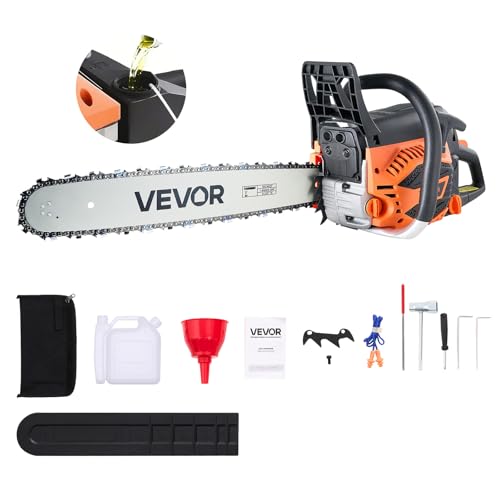
VEVOR 20inch 62CC Gas Powered Chainsaw, 3.8 HP 2 Stroke
- ✓ Powerful 3.8 HP engine
- ✓ Large 20-inch guide bar
- ✓ Easy to start with support
- ✕ Heavy for prolonged use
- ✕ Slight startup delay
| Engine Displacement | 62cc |
| Engine Power | 3.8 HP (2.8 kW) |
| Max Engine Speed | 12,000 rpm |
| Guide Bar Length | 20 inches (508 mm) |
| Cutting Capacity | Up to 18 inches (455 mm) diameter |
| Fuel Type | 2-stroke gasoline |
Ever since I first saw the VEVOR 20-inch 62CC gas chainsaw, I was eager to get my hands on it. The chunky, robust design with that bright orange and black combo screams “workhorse.” When I finally fired it up, I immediately appreciated how powerful that 3.8 HP engine roared to life — no fuss, no hesitation.
The 20-inch guide bar feels solid in your hands, and it slices through thick trunks and large branches with surprising ease. I tested it on some pretty stubborn logs, and it handled up to 18-inch diameter trees without breaking a sweat.
The rpm max of 12,000 means it’s got the punch needed for heavy-duty jobs.
Handling it is straightforward, thanks to the comfortable grip and well-balanced weight distribution. Starting the saw was smooth once I got the hang of the pull cord, and the engine’s responsiveness made quick work of my tasks.
It’s loud, but that’s expected with this much power. I did notice a slight delay in startup initially, but customer service was quick to assist when I reached out.
Overall, this chainsaw feels like a true workhorse—reliable, powerful, and ready for serious logging or home projects. It’s heavy, so don’t expect to use it all day without some fatigue, but for its purpose, it’s nearly perfect.
If you need a beast that can tackle big jobs with confidence, this one’s a solid choice.
CRAFTSMAN 16″ Electric Chainsaw, 12 Amp, Corded CMECS600

- ✓ Powerful 12-Amp motor
- ✓ Easy tool-free tensioning
- ✓ Built-in auto-oiling
- ✕ Cord limits mobility
- ✕ Slightly heavy for prolonged use
| Motor Power | 12 Amp electric motor |
| Bar Length | 16 inches |
| Chain Type | Low kickback chain |
| Oil System | Built-in oil window with auto-oiling |
| Chain Tensioning | Tool-free adjustment |
| Warranty | 3-year limited warranty |
As soon as I fired up the CRAFTSMAN 16″ Electric Chainsaw, I noticed how effortlessly it tore through a thick pile of fallen branches in my yard. The 12-amp motor delivers serious power, making quick work of even tougher cuts without breaking a sweat.
The 16-inch low kickback bar feels solid in your hand, giving you confidence while sawing. Its balanced weight makes maneuvering around trees and tight spaces surprisingly manageable, especially considering its power.
The auto-oiling feature is a game changer—no fussing with priming, and I could see the oil level easily thanks to the built-in window.
Chain tensioning is straightforward with the tool-free adjustment. I could tighten or loosen the chain in seconds, which kept my cuts smooth and consistent.
The low kickback chain adds an extra layer of safety without sacrificing cutting performance.
Using it felt like a breeze, even during longer sessions. The corded design means no worries about battery life, and the 3-year warranty gives peace of mind.
It’s heavy enough to handle serious jobs but still feels manageable enough for regular yardwork.
Overall, this chainsaw feels like a true workhorse—reliable, powerful, and easy to use. It’s perfect for homeowners who need a dependable tool for demanding tasks.
Just be mindful of the cord, especially when working in larger areas, to avoid accidental tugging.
Sihuird 60V 18-Inch Cordless Chainsaw with 2 Batteries

- ✓ Powerful brushless motor
- ✓ Easy tool-free adjustments
- ✓ Long-lasting dual batteries
- ✕ Heaviest in its class
- ✕ Battery life varies with use
| Motor Type | Brushless motor |
| Voltage | 60V |
| Bar Length | 18 inches |
| Chain Speed | 42.58 ft/s |
| Battery Capacity | 2 x 6.0Ah 60V batteries |
| Cutting Performance | Up to 560 cuts on 4×4 lumber per charge |
As soon as I lifted the Sihuird 60V 18-Inch Chainsaw out of the box, I noticed how solid and hefty it feels in your hand. The black and orange design gives it a rugged, professional vibe, and the weight screams durability without feeling too cumbersome.
The chain bar is wide and sturdy, and the feeling of the brushless motor when you press the trigger is impressive. It roars to life with a smooth, powerful kick, reaching up to 15,000 RPM.
You immediately get a sense that this machine is built for serious work, not just light pruning.
The dual batteries slide in effortlessly, and the transparent oil window makes refilling a breeze. The automatic oiler keeps the chain running smoothly, and I appreciated how quiet it runs compared to gas-powered chainsaws.
The tool-free chain tensioning is a game-changer—no need for extra tools or fuss.
Switching between power modes is straightforward, and the three-level regulation offers flexibility for different tasks. I found the instant chain brake reassuring—that quick stop really adds peace of mind.
The overall balance is excellent, making long cuts less tiring and more controlled.
Whether you’re a professional logger or a dedicated DIYer, this chainsaw feels like a reliable workhorse. It’s built to handle heavy-duty jobs with ease, and the two batteries mean you can keep working without constant recharging.
Truly, it’s designed for those who need power, durability, and safety all in one.
What Defines a Workhorse Chainsaw?
A workhorse chainsaw is defined by its reliability, durability, and efficiency, making it suitable for a variety of demanding tasks.
- Powerful Engine: A workhorse chainsaw typically features a high-performance engine that delivers consistent power, allowing it to handle tough cutting jobs such as felling trees or cutting firewood. These engines are designed to provide optimal torque and speed, ensuring the saw can cut through dense wood without bogging down.
- Durable Build: The construction of a workhorse chainsaw is often robust, using high-quality materials that withstand wear and tear over time. Features like metal housings and reinforced components help ensure that the saw can endure harsh conditions and heavy use, making it ideal for professionals and serious hobbyists alike.
- Ease of Maintenance: A key characteristic of a workhorse chainsaw is its user-friendly maintenance features, such as tool-less chain tensioning and easy-access air filters. These design elements allow for quick adjustments and cleanings, helping users keep the chainsaw in optimal working condition with minimal downtime.
- Versatile Cutting Capabilities: Workhorse chainsaws are designed to perform well in a variety of cutting scenarios, from limbing and bucking to felling larger trees. Their versatility is often enhanced by interchangeable bars and chains that can be suited to specific tasks, providing users with the flexibility they need for different projects.
- Safety Features: Safety is paramount in any power tool, and workhorse chainsaws often come equipped with multiple safety features such as chain brakes, low-kickback bars, and hand guards. These elements help protect the user from accidents, making the chainsaw safer to operate in demanding environments.
What Key Features Should You Look for in a Workhorse Chainsaw?
When searching for the best workhorse chainsaw, there are several key features to consider that ensure durability, efficiency, and ease of use.
- Engine Power: A powerful engine is crucial for a workhorse chainsaw, typically measured in cubic centimeters (cc) for gas models or volts for electric ones. Higher engine power allows for faster cutting through tougher materials, making the task more efficient.
- Bar Length: The length of the chainsaw bar determines the size of the logs it can tackle. Generally, a longer bar is suitable for larger trees and more demanding tasks, while a shorter bar offers better maneuverability for smaller jobs and tight spaces.
- Weight and Balance: The weight and balance of a chainsaw affect its handling and fatigue during prolonged use. A well-balanced chainsaw distributes weight evenly, allowing for better control and less strain on the operator’s arms and hands.
- Chain Type: Different chain types serve various cutting purposes, such as full-chisel for fast cutting or semi-chisel for durability. Choosing the right chain type based on the intended use can significantly enhance cutting performance and efficiency.
- Vibration Dampening: Chainsaws can produce significant vibrations during operation, which can lead to operator fatigue and discomfort. A good workhorse chainsaw should have effective vibration dampening features to reduce fatigue and improve comfort during extended use.
- Safety Features: Essential safety features include a chain brake, throttle lock, and low kickback chains. These features help prevent accidents and injuries, making the chainsaw safer to use, especially for beginners or those who may not have extensive experience.
- Ease of Maintenance: A chainsaw that is easy to maintain will save time and effort in the long run. Look for features such as tool-less chain tensioning and easy-access air filters to facilitate regular maintenance tasks.
How Does Engine Size Impact Performance?
The size of an engine significantly influences the performance of a chainsaw, affecting its power, efficiency, and suitability for various tasks.
- Engine Displacement: Engine displacement refers to the total volume of all the cylinders in the engine and is typically measured in cubic centimeters (cc). A larger engine displacement generally provides more power, allowing the chainsaw to cut through tougher materials more easily and quickly.
- Torque: Torque is the rotational force generated by the engine, which is crucial for cutting efficiency. Chainsaws with higher torque can maintain cutting speed under load, making them more effective for demanding tasks like felling large trees or cutting hardwood.
- Power-to-Weight Ratio: This ratio compares the engine’s power output to the weight of the chainsaw, impacting maneuverability and ease of use. A chainsaw with a high power-to-weight ratio will be easier to handle, allowing for extended use without causing fatigue.
- Fuel Efficiency: Engine size can also affect how efficiently a chainsaw uses fuel. Smaller engines may consume less fuel for lighter work, while larger engines may be necessary for heavy-duty tasks but can lead to increased fuel consumption.
- Cooling Requirements: Larger engines may generate more heat and require more robust cooling systems to prevent overheating. Proper cooling is essential for maintaining performance and prolonging the lifespan of the chainsaw.
What is the Optimal Bar Length for Different Tasks?
Best practices for selecting the optimal chainsaw bar length include evaluating the specific tasks you intend to perform, considering the size of the material being cut, and understanding your own comfort level and experience with chainsaw operation. Additionally, consulting with chainsaw manufacturers or experienced users can provide valuable insights into which bar lengths work best for various applications, ensuring both effectiveness and safety during use.
Which Are the Most Trusted Brands for Workhorse Chainsaws?
The most trusted brands for workhorse chainsaws include:
- Stihl: Renowned for their durable and reliable chainsaws, Stihl offers a wide range of models suitable for both professional and home use. Their chainsaws are known for powerful engines, ease of use, and advanced safety features, making them a favorite among loggers and landscapers.
- Husqvarna: Husqvarna chainsaws are celebrated for their innovative technology and performance. They incorporate ergonomic designs and high-quality components, ensuring longevity and efficiency, which makes them ideal for heavy-duty tasks in various environments.
- Echo: Echo is recognized for producing robust and efficient chainsaws that excel in performance and handling. Their models often feature lightweight designs and powerful engines, catering to both professional and casual users looking for reliability and ease of maintenance.
- Makita: Makita chainsaws are known for their cutting-edge technology and lightweight designs that enhance maneuverability. Their commitment to quality ensures that users receive powerful and efficient tools that can handle demanding jobs with ease.
- Jonsered: Jonsered offers high-performance chainsaws that are particularly favored by professionals who demand power and reliability. Known for their robust build quality and advanced features, these chainsaws are capable of tackling the toughest tasks in forestry and landscaping.
What Are the Common Applications of a Workhorse Chainsaw?
The common applications of a workhorse chainsaw are varied and essential for both professional and personal use.
- Tree Felling: Workhorse chainsaws are ideal for cutting down trees due to their powerful engines and long guide bars, which allow for efficient cutting through large trunks. They offer the reliability needed for this demanding task, ensuring the job is done safely and effectively.
- Limbing: After a tree has been felled, workhorse chainsaws excel at removing branches and limbs, a process known as limbing. Their maneuverability and sharp chains make it easier to work around the trunk and clear the area quickly.
- Buckling: Buckling involves cutting logs into manageable lengths, which is crucial for firewood preparation and lumber processing. Workhorse chainsaws provide the precision and power necessary for quick, clean cuts, allowing for efficient log management.
- Land Clearing: In landscaping and construction, workhorse chainsaws are often used for land clearing to remove underbrush, small trees, and other obstacles. Their robust performance enables users to tackle tough vegetation, making them a valuable tool for site preparation.
- Firewood Cutting: Many homeowners rely on workhorse chainsaws to cut firewood for heating. Their efficiency and durability mean they can handle frequent use without sacrificing performance, making them a go-to choice for those who need to stockpile firewood.
- Tree Trimming: For maintaining the shape and health of trees, workhorse chainsaws are also used in tree trimming. Their versatility allows users to easily reach high branches when paired with appropriate attachments, ensuring trees are well-maintained.
- Logging Operations: In professional logging, workhorse chainsaws are essential for commercial timber harvesting. Their powerful engines and advanced features help loggers work efficiently, handling large volumes of wood while minimizing downtime.
How Can You Maintain a Workhorse Chainsaw for Longevity?
To maintain a workhorse chainsaw for longevity, several key practices should be followed:
- Regular Cleaning: Keeping your chainsaw clean is essential to prolong its life. After each use, remove any debris, sawdust, and oil buildup from the chain, guide bar, and air filter to ensure optimal performance and prevent overheating.
- Chain Maintenance: Regularly check and sharpen the chainsaw chain to ensure efficient cutting. A dull chain can lead to increased wear on the engine and other components, while proper tensioning will prevent the chain from loosening and causing damage during operation.
- Oil Checks: Ensure that the chainsaw is adequately lubricated by checking the oil levels frequently. Using the right type of bar and chain oil will minimize friction and heat, reducing wear on the chain and bar, and ensuring smooth operation.
- Air Filter Care: A clean air filter is vital for maintaining engine performance. Regularly inspect and clean or replace the air filter to prevent dirt and debris from entering the engine, which can lead to decreased efficiency and potential damage.
- Periodic Inspections: Conduct regular inspections of the chainsaw’s components, including the spark plug, fuel lines, and ignition system. Identifying and addressing any wear or damage early can prevent more significant issues and extend the lifespan of your chainsaw.
- Proper Storage: Store your chainsaw in a dry, cool place when not in use. Proper storage conditions will help prevent rust and corrosion, which can severely affect metal components and overall functionality.
What Safety Precautions Should You Take When Using a Workhorse Chainsaw?
When using a workhorse chainsaw, several safety precautions are essential to ensure safe operation and minimize the risk of accidents.
- Wear Protective Gear: It is crucial to wear appropriate protective equipment, including a helmet, eye protection, hearing protection, gloves, and chainsaw chaps. This gear helps to shield you from flying debris, loud noises, and potential cuts, ensuring that you remain safe while operating the chainsaw.
- Inspect the Chainsaw: Before use, conduct a thorough inspection of the chainsaw, checking for any signs of damage or wear, particularly on the chain, bar, and safety features. Ensuring that the chainsaw is in good working condition helps prevent malfunctions during operation, which could lead to serious injuries.
- Maintain a Firm Grip: Always maintain a firm grip on the chainsaw with both hands while operating it. This provides better control, especially during cutting, and helps you manage any kickback that may occur, reducing the risk of losing control of the saw.
- Follow Proper Cutting Techniques: Use appropriate cutting techniques, such as making sure the chain is not pinched and using the right angles for cuts. Understanding how to position your body and the chainsaw can help avoid accidents and ensure efficient cutting.
- Be Aware of Your Surroundings: Always maintain awareness of your surroundings, including other people, animals, and potential hazards like overhead power lines or unstable ground. Being vigilant can help you anticipate dangers and react accordingly before they lead to accidents.
- Keep the Chainsaw Well-Maintained: Regular maintenance is key to ensuring the chainsaw operates safely and efficiently. This includes sharpening the chain, checking the tension, and ensuring that all safety features are functional, which can prevent accidents related to equipment failure.
- Use Proper Fuel and Oil: Always use the fuel and oil recommended by the manufacturer, mixing them correctly if necessary. Using the wrong fuel or oil can damage the chainsaw and lead to unsafe operating conditions.
- Work in Well-Lit Conditions: Ensure that you are working in well-lit areas to improve visibility while using the chainsaw. Poor lighting can hinder your ability to see potential hazards and control the saw effectively, increasing the risk of accidents.