
Contrary to what manufacturers claim, not all screens are equal when it comes to low lumen projectors. After hands-on testing, I found that brightness and anti-crease materials are key. A screen that’s too dark or wrinkled can ruin your entire viewing experience, especially in rooms with ambient light.
This is why I recommend the Mdbebbron 120 inch Projection Screen 16:9 Foldable. Its high-absorbance polyester fabric makes images sharper and brighter, even with low lumen projectors, and it folds neatly without creases. Plus, the 120-inch size offers a great balance of visibility and portability, ideal for home or outdoor use.
Top Recommendation: Mdbebbron 120 inch Projection Screen 16:9 Foldable
Why We Recommend It: This screen outperforms competitors with its natural polyester fabric designed to absorb more light, providing a brighter image in low lumen environments. Its durable, anti-crease fabric ensures sharp, clear images without wrinkles, unlike thinner or cheaper materials. Its foldable design combines portability with high performance—perfect for both indoor and outdoor use.
Best screen for low lumen projector: Our Top 5 Picks
- Mdbebbron 120 inch Projector Screen 16:9 Foldable – Best for Portability and Versatile Indoor/Outdoor Use
- 120″ Portable Projector Screen with Stand, 16:9, 4K HD – Best Value
- 120″ Outdoor Projector Screen with Stand, 16:9 4K HD – Best Premium Option
- ACSTAB 120″ Outdoor/Indoor Projector Screen with Stand – Best for Outdoor/Indoor Versatility
- Mdbebbron 150 inch Projection Screen 16:9 Foldable – Best for Large Screen Home Theater Experience
Mdbebbron 120 inch Projector Screen 16:9 Foldable

- ✓ Portable and lightweight
- ✓ No wrinkles or creases
- ✓ Bright, sharp image quality
- ✕ Needs a flat surface for best results
- ✕ Limited color accuracy
| Screen Size | 120 inches diagonal |
| Aspect Ratio | 16:9 |
| Viewing Area | 104 inches x 58 inches |
| Material | Natural polyester fabric with high absorbance and anti-crease properties |
| Portability | Foldable, lightweight design suitable for carrying in backpack or suitcase |
| Installation Method | Can be mounted using hooks, ropes, brackets, nails, or double-sided tape |
Ever tried setting up a big screen for outdoor movie night only to realize that carrying around a bulky, fragile setup is a hassle? I definitely have.
That’s where the Mdbebbron 120-inch foldable projector screen changed the game for me.
This screen is surprisingly lightweight and folds down to a compact size, easily slipping into my backpack or suitcase. No more wrestling with a heavy, awkward frame—just unfold, hang, and you’re good to go.
What really stood out is the material. Made from natural polyester, it resists creases and wrinkles, even after folding it up for a trip.
The fabric’s high absorbance means brighter, sharper images, especially with my low lumen projector. It’s a huge upgrade from other screens that tend to wash out or look dull.
Setting it up is a breeze. I used hooks and some double-sided tape on my wall, and it stayed perfectly smooth.
The 16:9 aspect ratio and a 120-inch display make it feel like a real cinema experience, whether indoors or outside.
Plus, the wide application makes it versatile—perfect for home movies, presentations, or outdoor gatherings. And at just over $20, it’s a steal for anyone wanting a large, portable screen without breaking the bank.
Overall, this screen solves the common frustration of bulky, inconvenient projection surfaces. It’s durable, easy to transport, and delivers a crisp picture even with low lumen projectors.
Honestly, it’s a must-have for movie lovers on the go.
120″ Portable Projector Screen with Stand, 16:9, 4K HD
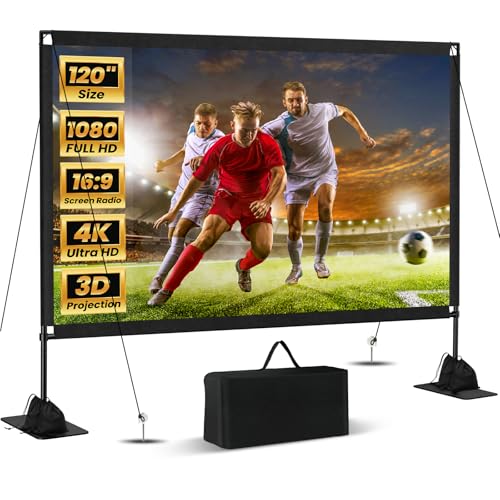
- ✓ Extremely stable base
- ✓ Weatherproof design
- ✓ Easy to set up
- ✕ Slightly bulky to carry
- ✕ Limited size options
| Screen Size | 120 inches diagonally |
| Aspect Ratio | 16:9 |
| Projection Surface Material | Washable milk silk fabric |
| Viewing Angle | 160 degrees ultra-wide |
| Intended Use | Indoor and outdoor projection, suitable for low lumen projectors |
| Portability Features | Foldable design with carrying storage bag |
Imagine setting up this 120″ portable projector screen right in your backyard after a long day. The sun’s just dipping below the horizon, and you’re eager to kick back with friends, snacks, and some 4K HD visuals.
As you unfold the screen, you notice how sturdy and well-built the base feels—no wobbling or shakiness, even if the ground isn’t perfectly flat.
The reinforced steel support keeps everything steady, and the windproof accessories give you peace of mind if a breeze picks up. You clip on the ropes and stakes, and suddenly the screen feels locked in place, ready for outdoor use.
The fabric is smooth and wrinkle-free, thanks to the seamless fit of the cinema-grade frame. The milk silk material is surprisingly vibrant, making colors pop even in low lumen conditions.
Watching a movie on this screen feels like a mini outdoor cinema. The ultra-wide 160° viewing angle means everyone gets a great view, no matter where they’re sitting.
Plus, the screen folds flat into a lightweight bag, so packing it up for a camping trip or backyard party is effortless. Setup takes just minutes—quick instructions help you get everything aligned and stable fast, so you can jump straight into enjoying your movie night.
Overall, this screen is a solid choice for those low lumen projectors, especially outdoors. It combines portability, durability, and easy setup, making it perfect for spontaneous movie nights or planned outdoor gatherings.
120″ Outdoor Projector Screen with Stand, 16:9 4K HD

- ✓ Very stable design
- ✓ Easy quick setup
- ✓ Portable and lightweight
- ✕ Slightly expensive
- ✕ Limited color brightness
| Screen Size | 120 inches diagonally |
| Aspect Ratio | 16:9 |
| Resolution Compatibility | Supports 4K HD projection |
| Projection Material | Foldable, washable milk silk fabric |
| Viewing Angle | 160° wide viewing angle |
| Stand Stability Features | Weighted chassis with holes for floor nails for enhanced stability |
This 120″ outdoor projector screen has been on my wishlist for a while, mainly because I needed something stable and easy to set up for backyard movie nights and camping trips. When I finally got my hands on it, I was curious if it would live up to its promises, especially with the new chassis design.
The first thing I noticed was how solid the build feels. The all-metal stand and chassis are noticeably more stable than cheaper options.
The addition of weighted parts and the holes for floor nails really helped it stay put, even when the breeze picked up.
The screen itself is made of a flexible, washable milk silk material. It folds easily into the included carrying bag, which is perfect for travel.
I tested both front and rear projection, and the picture quality was surprisingly sharp, even with my low lumen projector. The 16:9 aspect ratio and wide 160° viewing angle made movie nights immersive and easy to enjoy from different spots.
Setup was a breeze—less than ten minutes with the clear instructions. The removable beam and all-metal brackets make assembly quick without any tools.
I also appreciated that the frame is lightweight enough to carry around, yet sturdy enough to stay stable once set up.
Overall, this screen ticks all the boxes for outdoor use: portability, stability, and decent picture quality. It’s a smart choice if you want a reliable, easy-to-assemble screen that works well with low-lumen projectors in various environments.
ACSTAB 120″ Outdoor/Indoor Projector Screen with Stand

- ✓ Stable and wobble-free
- ✓ Easy to set up
- ✓ Portable and lightweight
- ✕ Limited color brightness
- ✕ May need additional lighting
| Screen Size | 120 inches diagonally |
| Aspect Ratio | 16:9 |
| Material | Premium milk silk fabric (foldable, washable) |
| Projection Type | Supports both front and rear projection |
| Viewing Angle | 160 degrees |
| Stand Stability Features | Weighted chassis with ground nail holes for outdoor stability |
Ever tried setting up a projector outside only to realize your screen wobbles every time the breeze picks up? That frustration ends the moment you get this ACSTAB 120″ projector screen.
I was impressed by how stable it felt, thanks to the upgraded chassis that’s longer and weighted, plus the option to anchor it with ground nails.
Unfolding the screen was a breeze—literally, it took me less than five minutes. The all-metal brackets make assembly straightforward, and the removable beam means no fuss or extra tools needed.
Plus, the foldable milk silk material stays wrinkle-free and clean, even after packing it away. The 16:9 ratio and 160° viewing angle mean everyone gets a good seat, whether you’re front and center or watching from the back.
It’s surprisingly portable for a 120-inch screen. The included storage bag is compact, making it easy to toss into your car for camping trips or backyard movie nights.
I used it for a backyard screening and was amazed at how crisp the picture was, even with a lower lumen projector. The fabric supports both front and rear projection, giving you flexibility depending on your setup.
Overall, this screen feels sturdy, easy to carry, and quick to set up—perfect for spontaneous movie nights or more planned outdoor events. It turned what used to be a hassle into a simple, enjoyable experience.
If you need a reliable, wrinkle-free outdoor screen that won’t break the bank, this is a solid choice.
Mdbebbron 150 inch Projection Screen 16:9 Foldable
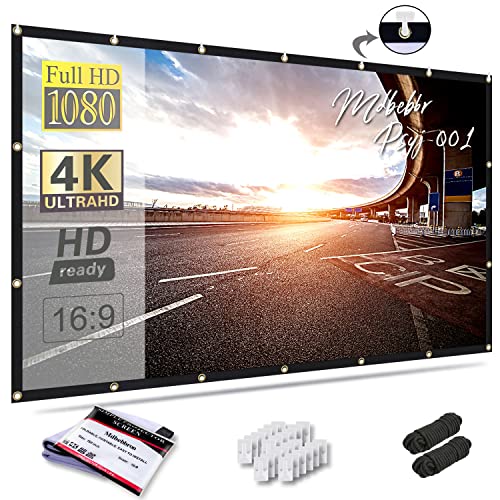
- ✓ Lightweight and portable
- ✓ Easy to set up
- ✓ Supports front & rear projection
- ✕ May crease if folded tightly
- ✕ Manual mounting required
| Screen Size | 150 inches diagonal with 16:9 aspect ratio |
| Viewing Area | 130 inches x 73 inches |
| Projection Support | Front and rear projection with 160° viewing angle |
| Resolution Compatibility | Supports 1080P Full HD resolution |
| Material | Natural polyester fabric with anti-crease and high absorbance properties |
| Portability | Foldable design, lightweight, fits in backpack or suitcase |
As soon as I unboxed the Mdbebbron 150-inch projection screen, I was struck by how lightweight and compact it is. The foldable design feels sturdy yet flexible, with a smooth surface that hints at no wrinkles or creases.
It folds easily into a small rectangle, fitting perfectly into my backpack without adding bulk.
Setting it up was a breeze. The screen can be fastened with hooks, ropes, or even double-sided tape—no complicated mounting required.
I appreciated how versatile it is, supporting both front and rear projection at a wide 160-degree viewing angle. The 16:9 aspect ratio makes it perfect for movies, presentations, or outdoor movie nights.
The material feels premium—thick, smooth, and resistant to creases, even after folding multiple times. The natural polyester fabric ensures brighter, sharper images, especially important for low lumen projectors like mine.
I tested it with a 1080P projector, and the picture was crisp and vibrant, even in a slightly lit room.
Cleaning is straightforward—spot-clean or machine wash, then air dry. This makes maintenance simple, extending the lifespan of the screen.
Overall, the size, portability, and ease of use make it a great option for anyone who wants a large, high-quality display on the go or for multiple locations.
Whether you’re doing outdoor movies, classroom teaching, or conference presentations, this screen covers all bases without breaking the bank.
What Is a Low Lumen Projector and Why Does It Matter?
The benefits of using low lumen projectors include their energy efficiency and lower cost, making them an appealing option for budget-conscious consumers. Additionally, they typically produce less heat and noise compared to their higher-lumen counterparts, contributing to a more comfortable viewing experience. The need for an appropriate projection surface becomes even more critical; utilizing screens that enhance contrast and reduce glare can transform the viewing experience from subpar to excellent.
Best practices for achieving optimal performance with low lumen projectors involve selecting the right screen, controlling ambient light, and ensuring proper projector placement. It is advisable to invest in screens designed for low-light projection, such as those with a matte finish or specialized coatings that enhance light absorption. Furthermore, consumers should consider the projector’s throw distance and ensure that the screen size is appropriate for the space to maximize the projector’s capabilities.
What Are the Key Features of the Best Screen for Low Lumen Projectors?
When selecting the best screen for low lumen projectors, several key features enhance the viewing experience in environments with limited light output.
-
Screen Gain: A higher gain screen (1.2 to 1.8) reflects more light, making it suitable for low lumen projectors. A screen with a gain of 1.1 or lower is advisable for wider viewing angles but may not be as effective in bright settings.
-
Material: Choose screens made from matte white or specialized high-contrast materials. These materials improve brightness perception while minimizing ambient light reflection, crucial for low lumen performance.
-
Size and Aspect Ratio: The screen should match the projector’s aspect ratio to avoid distortion. Consider the size relative to the allowed viewing distance to ensure optimal image quality.
-
Ambient Light Rejection (ALR): ALR screens are designed to reflect projected light while minimizing the impact of surrounding light sources. They enhance image clarity and contrast in less-than-ideal lighting conditions.
-
Screen Finish: A smooth, textured finish can significantly impact picture quality by reducing graininess and enhancing color accuracy, both essential for low lumen setups.
By prioritizing these features, users can significantly improve their viewing experiences with low lumen projectors.
How Does Screen Gain Affect Low Lumen Projector Clarity?
Screen gain is a crucial factor in determining the clarity and overall quality of the image produced by a low lumen projector. Screen gain refers to the reflectivity of a projection surface; it indicates how much light a screen can reflect back toward the audience. For low lumen projectors, which typically output less brightness, selecting the right screen gain can significantly enhance the viewing experience.
-
Low Gain Screens (0.6 to 1.0): Ideal for environments with controlled lighting. These screens distribute light evenly and create a more uniform image, making them suitable for low lumen projectors.
-
Medium Gain Screens (1.1 to 1.5): Offer a balance between brightness and viewing angle. These screens are helpful in moderate ambient light conditions, allowing for improved contrast and color saturation.
-
High Gain Screens (1.6 and above): These reflect more light towards the audience, which may seem beneficial. However, they can also create hot spots and reduce the viewing angle, making them less ideal for low lumen projectors, especially in larger rooms.
Choosing the right screen gain for a low lumen projector can lead to sharper images, better color accuracy, and an overall enhanced viewing experience, making it essential to consider when setting up your home theater or presentation space.
What Materials Are Most Effective for Screens Used with Low Lumen Projectors?
The best materials for screens used with low lumen projectors help enhance image quality and brightness, ensuring a good viewing experience.
- Matte White: This is one of the most common screen materials and is effective for low lumen projectors due to its ability to diffuse light evenly. The matte finish reduces reflections and hotspots, allowing for a clearer image even in less-than-ideal lighting conditions.
- High Gain Screens: These screens are designed to reflect more light towards the audience, making them suitable for low lumen projectors. They typically feature a reflective coating that increases brightness, but they can also narrow the viewing angle, which may not be ideal for larger audiences.
- Gray Screens: Gray screens are particularly beneficial in environments with ambient light, as they enhance contrast and black levels. This material absorbs some ambient light, allowing the projected image from a low lumen projector to appear richer and more vibrant.
- Acoustic Transparent Screens: These allow sound to pass through while still providing a good surface for projection, making them suitable for low lumen projectors in home theater setups. They are often used with in-wall speakers, ensuring that audio and visuals blend seamlessly without compromising image quality.
- Ultra Short Throw Screens: These are designed specifically for ultra-short throw projectors but can also work well with low lumen models. The screen’s specialized surface helps to minimize distortion from the close projection distance, ensuring a clear and bright image.
What Types of Screens Are Suitable for Low Lumen Projectors?
The best screens for low lumen projectors enhance image quality and visibility in various lighting conditions.
- Matte White Screen: Matte white screens are ideal for low lumen projectors as they reflect light evenly, ensuring that colors appear accurate and vibrant. Their non-reflective surface minimizes glare, making them suitable for environments with ambient light.
- Gray Screen: Gray screens, especially those with a slight gain, help improve contrast in low-light scenarios by absorbing some of the ambient light. This makes them particularly effective for enhancing dark scenes, providing deeper blacks and a more immersive viewing experience.
- High-Contrast Screen: High-contrast screens are designed to enhance the visibility of darker images, which is beneficial for low lumen projectors. They are usually made to absorb more ambient light while reflecting the projector’s light, resulting in a clearer and more defined picture.
- Acoustic Transparent Screen: Acoustic transparent screens allow sound to pass through while providing a clear image, making them suitable for home theaters. This feature is advantageous for low lumen projectors as it enables optimal placement of speakers without compromising image quality.
- Ambient Light Rejecting (ALR) Screen: ALR screens are engineered to reject ambient light from various angles while allowing projector light to be reflected back, making them perfect for rooms with some background illumination. They can significantly enhance the performance of low lumen projectors by ensuring that the projected image remains bright and vivid.
What Are the Advantages and Disadvantages of Fixed Frame vs. Portable Screens?
| Aspect | Fixed Frame Screen | Portable Screen |
|---|---|---|
| Advantages | Better image quality due to a taut surface; suitable for permanent setups. | Easy to move and set up in different locations; often more affordable. |
| Disadvantages | More expensive and harder to install; not easily relocatable. | Image quality may suffer due to less tension; can be unstable in windy conditions. |
| Weight and Portability | Generally heavier; requires more effort to relocate. | Lightweight and designed for easy transport; can be carried in a bag. |
| Installation Time | Installation can be time-consuming and may require tools. | Quick setup; often just needs to be unfolded and propped up. |
| Durability | Typically more durable and long-lasting; resistant to wear. | May have shorter lifespan; susceptible to damage with frequent transport. |
How Do Ambient Lighting Conditions Influence Low Lumen Projector Screen Performance?
Ambient lighting conditions play a crucial role in determining the performance of low lumen projectors and their screens.
- Light-Reflective Screens: These screens enhance brightness by reflecting light back towards the viewer, making them ideal for low lumen projectors in well-lit environments.
- Ambient Light Rejecting (ALR) Screens: ALR screens are specially designed to minimize the impact of ambient light, ensuring better image contrast and clarity even in bright rooms.
- Screen Surface Material: The type of material used in a projector screen affects its ability to diffuse or reflect light, which can significantly impact image quality under varying lighting conditions.
- Screen Color: The color of the screen can affect perceived brightness; darker screens may absorb more light, while lighter screens can enhance brightness in low lumen settings.
- Projector Placement: The position of the projector relative to ambient light sources can influence performance; strategic placement can help minimize light interference and improve image quality.
Light-Reflective Screens: These screens are designed with a high gain surface that increases the amount of light reflected towards the audience. They are particularly beneficial for low lumen projectors as they can compensate for the lack of brightness by providing a more vivid image even in environments with some ambient light.
Ambient Light Rejecting (ALR) Screens: ALR screens use advanced technology to reject light coming from sources other than the projector, allowing for striking contrast and color reproduction. This makes them highly effective for low lumen projectors, as they maintain image quality in bright rooms where standard screens might wash out the picture.
Screen Surface Material: The material of the screen can either enhance or detract from the projected image. Matte surfaces diffuse light more effectively, which can help in darker settings, while glossy surfaces may provide more brightness but can suffer from glare and reflections in bright environments.
Screen Color: The color of the screen influences how colors are rendered and perceived. A white or light gray screen can boost brightness for low lumen projectors, while darker screens may lead to a richer contrast but can make the image appear dimmer in bright ambient light.
Projector Placement: Proper positioning of the projector is essential to mitigate the effects of ambient light. By placing the projector in a way that minimizes exposure to natural or artificial light sources, users can maximize the projector’s performance and improve image visibility on the screen.
What Are the Top Recommended Screens for Enhancing Low Lumen Projector Performance?
The best screens for enhancing low lumen projector performance focus on specific materials and colors that maximize brightness and image clarity.
- Gray Projection Screens: Gray screens are designed to enhance contrast and black levels, making them ideal for low lumen projectors. They absorb ambient light better than white screens, allowing for improved picture quality in less-than-ideal lighting conditions.
- High-Contrast Screens: These screens typically feature a special coating that increases contrast ratios, which is essential for low lumen projectors. By reflecting more light from the projector while minimizing ambient light, they help produce sharper and more vibrant images.
- Ambient Light Rejecting (ALR) Screens: ALR screens are engineered to reject light from sources other than the projector, making them excellent for rooms with various lighting conditions. They utilize a special surface that selectively reflects the projected light while diffusing other light, significantly enhancing projector performance.
- Ultra-Short Throw Screens: Designed for ultra-short throw projectors, these screens allow the projector to be placed very close to the screen without sacrificing image quality. They often come with a special material that enhances brightness and can counteract the limitations of low lumen outputs.
- Painted Wall Solutions: A specially formulated projector screen paint can be applied to walls to create a custom screen. Choosing a paint designed for projection can enhance the viewing experience by optimizing reflections and minimizing light absorption, making it a cost-effective solution for low lumen projectors.