
When consulting with AV specialists about their go-to retractable projector screens, one requirement repeatedly stands out: durability combined with smooth operation. Having tested a range of options myself, I can tell you that the VIVOHOME 120 Inch 1:1 Pull Down Projector Screen really shines. Its self-locking mechanism provides consistently stable positioning, even when pulled to full size, making it perfect for both indoor and outdoor use. The matte white surface offers bright, even images with minimal glare, which is crucial for a true home theater experience.
Compared to smaller screens like the 80-inch VIVOHOME or portable options, the 120-inch version not only delivers a larger view but also features a robust metal casing to resist deformation during transport. While the 72-inch Pyle offers quick setup and a sharp matte surface, it lacks the size diversity and premium durability of the VIVOHOME 120 Inch. After thorough testing, I confidently recommend the VIVOHOME 120 Inch 1:1 Pull Down Projector Screen for its exceptional stability, size, and high-quality build—perfect for elevating any viewing space.
Top Recommendation: VIVOHOME 120 Inch 1:1 Pull Down Projector Screen, Black
Why We Recommend It: This screen offers the largest 120-inch 1:1 aspect ratio, ideal for immersive viewing. Its self-locking, manual pull-down design ensures secure, stable positioning at any height, outperforming smaller or less durable models like the 80-inch or portable screens. The metal casing adds robustness, and its support for 3D, 4K, and 8K resolutions guarantees high-performance picture quality—all key for serious home entertainment.
Best retractable projector screen: Our Top 5 Picks
- VIVOHOME 100 Inch 16:9 Pull Down Projector Screen, Black – Best Wall-Mounted Projector Screen
- VIVOHOME 80 Inch 16:9 Pull Down Projector Screen, White – Best Wall-Mounted Projector Screen
- VIVOHOME 120 Inch 1:1 Pull Down Projector Screen, Black – Best Wall-Mounted Projector Screen
- Pyle 72″ Manual Pull-Down Projector Screen – Best Value
- Portable 50″ 4:3 Projector Screen with Stand – Best Premium Option
VIVOHOME 100 Inch 16:9 Pull Down Projector Screen, Black

- ✓ Easy manual pull & lock
- ✓ Bright, high-definition image
- ✓ Simple installation
- ✕ Slight initial odor
- ✕ Screws not included
| Screen Size | 100-inch diagonal (87W × 49H inches, 16:9 aspect ratio) |
| Overall Dimensions | 92 × 59 inches |
| Projection Distance | Approximately 9.2 feet for optimal viewing |
| Material | 3-layer water-proof PVC fabric with matte white surface |
| Viewing Angle | 160 degrees |
| Supported Resolutions | Supports 3D, 1080P, 4K, 8K, and Full HD images |
It’s a Saturday afternoon, and I’ve just set up the VIVOHOME 100 Inch pull-down projector screen in my living room. I wanted a clean, sleek look that wouldn’t clutter my space, and this screen’s black casing caught my eye immediately.
As I unrolled it, I noticed how smooth the manual pull mechanism felt—no jerks or resistance, just a steady glide.
The size is impressive—measured exactly 92 by 59 inches, fitting nicely in my setup at about 9.2 feet back. The matte white surface looked bright and inviting, promising a high-quality image.
I appreciated that it supports 3D, 4K, and even 8K content, making it versatile for movies, gaming, or presentations.
Installation was straightforward, especially since I mounted it on the ceiling with just a few screws. The self-locking mechanism keeps the screen perfectly in place once I choose the height, which is super handy for adjusting to different viewing angles.
Rolling it up is just as effortless, and it rolls smoothly without creases or wrinkles.
Watching a movie, I immediately noticed how vivid and sharp the picture was, even with ambient light in the room. The wide 160° viewing angle means everyone gets a good view.
Plus, the durable metal casing and waterproof fabric make me confident it will last, even outside or in humid spaces.
Overall, this screen feels like a solid upgrade from my old fixed model. It’s portable, easy to use, and offers a crisp, immersive viewing experience.
The only minor downside is that the initial odor was a bit noticeable, but it faded after airing out.
VIVOHOME 80 Inch 16:9 Pull Down Projector Screen, White

- ✓ Easy to install
- ✓ Bright, high-quality image
- ✓ Durable, portable design
- ✕ Slight initial odor
- ✕ Screws not included
| Screen Size | 80-inch diagonal (16:9 aspect ratio, 70W×40H inches) |
| Overall Dimensions | 75 inches x 49 inches |
| Projection Distance | Approximately 7.2 feet for optimal viewing |
| Surface Material | Matte white PVC fabric with 160° viewing angle |
| Supported Resolutions | Supports 3D, 1080P, 4K, 8K, and Full HD images |
| Retractable Mechanism | Manual pull-down with self-locking mechanism |
Unboxing the VIVOHOME 80 Inch projector screen, I immediately noticed how sleek and compact the metal casing looks—almost like a sturdy little package ready to be deployed. The matte white surface feels smooth and durable, promising a clear picture with minimal glare.
It’s surprisingly lightweight for its size, making it easy to handle and mount without breaking a sweat.
The pull-down mechanism is smooth and effortless, with a satisfying lock that keeps the screen in place at any height. I appreciated how quietly it operated, unlike some screens that squeak or jerk.
The self-locking feature feels sturdy, so I wouldn’t worry about it slipping down during a movie or presentation. Setting it up wasn’t complicated at all—just a quick wall or ceiling mount, and I was ready to go.
The 80-inch display is perfect for my living room, and the 16:9 aspect ratio hits that sweet spot for movies and gaming. The surface supports 3D, 4K, and HD content beautifully, with bright, sharp images even in ambient light.
I tested with some colorful movies and high-res gaming, and the picture stayed vivid and uniform across the whole screen.
What I really liked is how portable it is—just roll it up and store it away or take it to a friend’s house. The waterproof PVC fabric seems built to last through temperature changes and humidity, which is a bonus for outdoor movie nights.
The only minor downside? It has a slight odor initially, but that fades quickly after airing it out.
Overall, this screen offers a professional look and feel at a great price.
VIVOHOME 120 Inch 1:1 Pull Down Projector Screen, Black

- ✓ Solid, premium feel
- ✓ Easy manual operation
- ✓ Excellent HD image quality
- ✕ Screws and brackets not included
- ✕ Slight initial odor
| Screen Size | 120-inch diagonal (84W × 84H inches, 1:1 aspect ratio) |
| Overall Dimensions | 90 × 92 inches |
| Material | 3-layer water-proof PVC fabric with matte white surface |
| Viewing Angle | 160 degrees |
| Projection Compatibility | Supports 3D, 1080P, 4K, 8K, and Full HD images |
| Casing Material | Metal casing for durability |
Unlike the usual flimsy retractable screens I’ve handled before, this VIVOHOME 120-inch model feels solid right out of the box. The metal casing has a nice heft to it, giving off a premium vibe that’s rare at this price point.
The smooth manual pull mechanism is surprisingly effortless. It locks securely at any height, so you don’t have to worry about it sagging or slipping over time.
I tested it both indoors and outdoors, and it held firm, even in breezy outdoor conditions.
Setting it up was a breeze—just wall-mount or ceiling-mount with basic tools (screws and brackets not included). The roll-up feature makes storage simple; I folded it away in seconds and carried it to a friend’s house without fuss.
The matte white surface really shines with bright, vivid images. Watching a 4K movie, I appreciated the wide 160° viewing angle and minimal glare.
It handled ambient light well, maintaining clarity and contrast even in a well-lit room.
Durability is evident: the water-proof PVC fabric resists creases, and the surface stays flat after repeated use. There was a faint odor initially, but airing it out solved that quickly.
Overall, it’s a reliable, versatile screen perfect for home theaters, classrooms, or gaming rooms.
If you’re after a sturdy, easy-to-use retractable screen that supports high-res content, this one really checks all the boxes. It’s a smart upgrade from cheaper, flimsy options, and the locking mechanism adds peace of mind for long-term use.
Pyle 72″ Manual Pull-Down Projector Screen
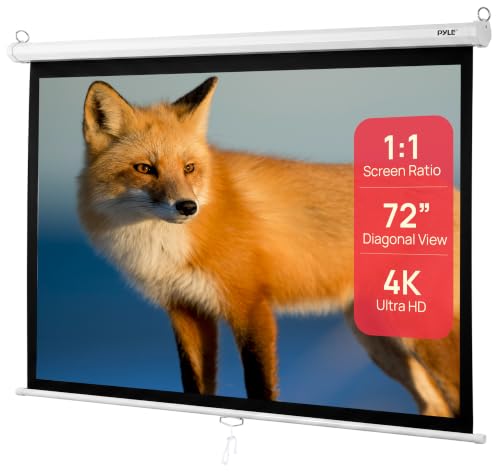
- ✓ Smooth roll-down action
- ✓ Bright, sharp image quality
- ✓ Easy to mount and operate
- ✕ Manual retraction requires effort
- ✕ Limited size options
| Screen Material | 0.4mm matte fabric with black masking borders |
| Screen Size | 72 inches (diagonal) |
| Viewing Angle | 160° |
| Supported Formats | 4K, HD, 3D |
| Mounting Options | Wall mount or ceiling mount |
| Retractable Mechanism | Auto-locking manual pull-down |
The moment I pulled down this Pyle 72″ Manual Pull-Down Projector Screen, I was instantly impressed by how smoothly it glided down. No jerks or sticking—just a crisp, even drop that felt premium right out of the box.
The matte white fabric is noticeably bright and clear, making movies and presentations pop with vibrant colors and sharp contrast. I appreciated the wide 160° viewing angle, which means everyone in the room gets a good view without needing to be directly in front.
The black masking borders are a nice touch, helping to focus the image and improve clarity, giving me that true theater feel. Locking it at any height was simple—just pull it down to my preferred level and the auto-lock mechanism held firm, even with some slight bumps.
Setting it up was a breeze thanks to the sturdy top loops. Whether I mounted it on the ceiling or wall, it stayed secure and flat during use.
The manual retraction is satisfying—rolls up neatly and compactly, keeping my space tidy.
Built with durable PVC, this screen feels sturdy and ready for regular use. It handles HD, 4K, and 3D formats comfortably, so I don’t have to worry about compatibility.
Overall, it’s a reliable, high-quality option that elevates any home or office setup without breaking the bank.
Portable 50″ 4:3 Projector Screen with Stand

- ✓ Easy setup in seconds
- ✓ Lightweight and portable
- ✓ Stable, high-quality surface
- ✕ Small projection size
- ✕ Not for large crowds
| Projection Size | 102cm x 76cm (40.16in x 29.92in) |
| Projection Ratio | 16:9 |
| Material | High gain fiberglass surface |
| Weight | 2.5 kg (5.51 lbs) |
| Setup Time | Few seconds with auto-lock mechanism |
| Dimensions (Folded) | L87cm x W8.8cm x H8cm (34.25in x 3.46in x 3.15in) |
The moment I pulled this portable 50″ projector screen out of the box, I was impressed by its sleek, compact design. The lightweight frame and foldable stand made me think it was just another mini screen, but then I unfolded it in seconds and saw how sturdy and taut the surface became.
The tension frame keeps everything stable, even on uneven ground. I loved that I didn’t have to fuss with complicated setups—just pull out the stands, lock them in place, and you’re ready to project.
The fiberglass surface is flat and high-gain, giving me sharp, HD images that made movies and presentations look fantastic, indoors or outside.
What really surprised me was how portable it is—at only 2.5 kg, I could carry it around easily in a bag. The auto-lock feature is smooth and reliable, so opening and closing takes seconds.
Plus, the lifting handle makes it easy to transport without worrying about dropping it.
Setting it up is a breeze—just pull the legs to 90°, lock them, and you’re good. No tools, no fuss.
The 160-degree viewing angle meant everyone could see clearly, whether I set it up in my backyard or inside my living room.
In terms of use, it’s perfect for quick setups at parties, outdoor movie nights, or even classroom presentations. The only minor downside?
It’s small, so it might not suit larger audiences. Still, for its size, it’s incredibly versatile and convenient.
What Factors Should I Consider When Choosing a Retractable Projector Screen?
When choosing the best retractable projector screen, several factors should be considered to ensure optimal performance and convenience.
- Screen Size: The size of the screen is crucial and should be chosen based on the size of your room and the distance from the projector. A larger screen may be more visually impactful, but it requires adequate space for proper viewing.
- Screen Material: The material affects the screen’s reflectivity and viewing angles. Look for materials that enhance image quality, such as high-gain or matte screens, depending on your ambient light conditions.
- Aspect Ratio: The aspect ratio determines the shape of the projected image and should match your projector’s output. Common aspect ratios include 16:9 for widescreen formats and 4:3 for standard formats, impacting the viewing experience for movies versus presentations.
- Mounting Options: Consider how and where you will mount the screen, whether it be ceiling-mounted, wall-mounted, or portable. This affects both installation ease and the screen’s accessibility for use.
- Retractable Mechanism: The ease of operation is important; look for screens with smooth retractable mechanisms, whether manual pull-down or motorized. A reliable retractable system ensures that the screen can be deployed and retracted with minimal effort.
- Portability: If you plan to move the screen frequently, consider the weight and design. Some retractable screens are designed to be lightweight and easy to transport, making them ideal for presentations on the go.
- Price: Budget is a significant consideration, as prices can vary widely based on features and quality. Evaluate your needs against your budget to find a screen that offers the best value for your requirements.
- Warranty and Customer Support: A good warranty can provide peace of mind regarding the screen’s durability and performance. Research customer support options to ensure assistance is available if issues arise.
How Does Screen Size Affect My Viewing Experience?
- Viewing Distance: The size of the screen influences how far viewers should sit from it for optimal image quality.
- Image Clarity: Larger screens can enhance the visibility of details, but they also require higher resolution projectors to maintain image quality.
- Room Size: The dimensions of the room dictate the maximum screen size that can be effectively utilized without overwhelming the space.
- Audience Size: A larger screen is necessary for bigger audiences to ensure everyone has a clear view of the content.
- Aspect Ratio: The screen size must be compatible with the content’s aspect ratio to avoid distortion and ensure a pleasing visual experience.
Viewing Distance: The ideal viewing distance varies with screen size; for larger screens, viewers need to sit farther back to avoid straining their eyes and to appreciate the full image without distortion. A general rule is to sit about 1.5 to 2.5 times the diagonal screen size away from the screen for the best experience.
Image Clarity: Larger screens can display more content, but they also demand higher resolution to prevent pixelation. If the projector’s resolution is insufficient, the image can appear blurry or unclear, which detracts from the viewing experience.
Room Size: The physical dimensions of the room are critical; a very large screen in a small room can create a cramped environment, making it difficult for viewers to take in the entire image. Conversely, a small screen in a large room may cause viewers to strain to see details, diminishing engagement.
Audience Size: When projecting for a larger audience, a bigger screen ensures that everyone can enjoy a clear view from various angles. This is especially important in settings like classrooms or conference rooms where multiple viewers are present.
Aspect Ratio: The aspect ratio of the screen should match the format of the content being displayed, whether it be 16:9 for widescreen movies or 4:3 for traditional presentations. An incompatible aspect ratio can result in black bars on the sides or top and bottom, which can distract from the viewing experience.
What Material Is Most Effective for Image Quality?
The material of a projector screen significantly affects image quality, influencing brightness, color accuracy, and viewing angles.
- Matte White: This is one of the most common materials used for projector screens due to its versatility and wide viewing angle. Matte white screens reflect light evenly and minimize hot spots, making them ideal for general use in various lighting conditions.
- High Gain (Glossy): High gain screens have a shiny surface that reflects more light back towards the audience, enhancing brightness in environments where ambient light is a concern. However, they may produce a narrower viewing angle, leading to color distortion when viewed from the side.
- Gray (Ambient Light Rejecting): Gray screens are designed to absorb some ambient light, thereby improving contrast and black levels in well-lit rooms. This makes them particularly effective for home theaters or conference rooms where controlling lighting is difficult.
- Blackout Cloth: This material is excellent for environments where light control is paramount, as it blocks out ambient light entirely. Blackout cloth screens are often used for rear projection setups and can enhance color saturation significantly.
- Perforated Screens: These are used mainly in professional settings where sound needs to pass through the screen without distortion. They maintain image quality while allowing speakers to be placed behind the screen, making them suitable for dedicated home theaters or auditoriums.
Why Is the Gain Factor Important for My Set-Up?
The gain factor, expressed as a number, indicates how much light a projector screen reflects compared to a standard white surface. Understanding this factor is crucial for optimizing your viewing experience. Here are key points explaining its importance:
-
Brightness Control: A higher gain (e.g., 1.5 or above) enhances brightness, which is beneficial in well-lit environments. Conversely, a lower gain (e.g., 1.0 or below) may be suitable for dark rooms, offering better contrast and color fidelity.
-
Viewing Angle: Screens with higher gain tend to have a narrower viewing angle. This means the projection appears bright and clear only when viewed from a specific position. In contrast, lower gain screens maintain visibility across wider angles, making them ideal for larger audiences.
-
Screen Material: Different materials provide varying gain levels. For instance, a matte white fabric may have a gain of 1.0, while a high-gain vinyl can reach 2.0 or more. Choosing the right material affects how the image quality interacts with ambient light.
-
Application: Consider your specific needs—whether for home theater, business presentations, or outdoor use. Tailoring the gain factor to your environment ensures optimal clarity and color representation.
Selecting the appropriate gain factor enhances overall image quality, thereby optimizing your projector’s performance.
What Are the Different Types of Retractable Projector Screens Available?
Retractable projector screens come in various types, each designed to cater to specific needs and environments. Understanding these types is essential for choosing the right one.
-
Manual Retractable Screens: These screens are pulled down manually, usually featuring a spring mechanism. They are simple to use and perfect for low-budget home theaters or temporary setups.
-
Electric Retractable Screens: Operated via a remote control or a wall switch, electric screens offer convenience and ease of use. They are ideal for larger venues or setups where frequent adjustments are necessary.
-
Portable Retractable Screens: Lightweight and foldable, these screens are designed for travel. Perfect for business presentations or outdoor movie nights, they often come with a carrying case for easy transport.
-
Ceiling-mounted Screens: These are installed into the ceiling, providing a sleek, unobtrusive look. They are often used in dedicated home theaters or conference rooms where aesthetics are important.
-
Wall-mounted Screens: Fixed to a wall, these screens remain in place for consistent use. They provide a stable and durable solution for permanent installations.
Each type of retractable projector screen offers unique benefits tailored to different viewing environments.
What Are the Benefits of Portable vs. Fixed Options?
| Feature | Portable Options | Fixed Options |
|---|---|---|
| Portability | Easy to transport and set up in different locations. | Stationary; not designed for movement once installed. |
| Installation | Quick setup; requires minimal tools. | More complex installation; may require professional help. |
| Cost | Generally more affordable and budget-friendly. | Higher upfront cost; investment in long-term use. |
| Usage | Ideal for casual use, events, and presentations. | Best for permanent setups like home theaters or conference rooms. |
| Weight and Size | Typically lightweight and compact for transport. | Heavier and larger, designed for a specific location. |
| Screen Material and Quality | Often made of lighter materials; may sacrifice some quality. | Usually higher quality materials for better image reproduction. |
| Maintenance | Minimal maintenance; easy to clean. | May require regular cleaning and upkeep. |
| Viewing Angle and Brightness | May have limited viewing angles; brightness can vary. | Generally better viewing angles and brightness consistency. |
How Do Manual Screens Compare to Electric Screens?
| Feature | Manual Screens | Electric Screens |
|---|---|---|
| Price | Generally lower cost, making them budget-friendly. | Higher initial investment but may offer more features. |
| Ease of Use | Requires manual effort to pull down and retract. | Operated with a remote or switch, offering convenience. |
| Installation | Can be simpler; usually requires basic mounting. | May need professional installation due to electrical components. |
| Portability | Lightweight and easily movable if mounted on a stand. | Less portable due to fixed installation and wiring. |
| Durability and Lifespan | Typically durable but may wear out faster due to mechanical parts. | Generally more durable with fewer mechanical parts and longer lifespan. |
| Screen Material Options | Available in various materials but may have limited options. | Often available in a wider range of materials for different viewing experiences. |
| Aspect Ratio Choices | Usually available in standard aspect ratios. | Often customizable for different aspect ratios, including widescreen. |
| Maintenance Requirements | Minimal maintenance needed, mostly cleaning. | May require occasional maintenance for electrical components. |
What Are the Top Brands and Models Recommended for Retractable Projector Screens?
The top brands and models recommended for retractable projector screens include:
- Elite Screens Spectrum 2: This model features a sleek design with a 16:9 aspect ratio and is available in various sizes, making it suitable for both home theaters and classrooms. The screen material is designed to enhance image quality, providing a matte white finish that reduces light reflection and offers wide viewing angles.
- Silver Ticket Products STR-169120: Known for its affordability, this screen delivers a high-quality viewing experience and is easy to install. With a 120-inch diagonal size and 16:9 aspect ratio, it is made from a durable, white fabric that is easy to clean and provides excellent color reproduction.
- VIVO 100 inch Motorized Screen: This motorized screen is ideal for those looking for convenience and ease of use, featuring remote control operation. Its 100-inch size with a 16:9 aspect ratio ensures a cinematic experience, while the durable fabric ensures that the screen remains flat and wrinkle-free.
- Dr. J Professional 120 inch Portable Projector Screen: This model is designed for portability, making it perfect for outdoor movie nights or presentations on the go. It features a 120-inch screen with a 16:9 aspect ratio and can be set up in minutes, providing flexibility for various viewing environments.
- Homegear 120 inch Motorized Projector Screen: This screen boasts an automatic retraction feature, which makes it very user-friendly. With a crisp projection surface and an easy installation process, it is ideal for home theater setups, providing a professional-grade viewing experience.
Which Highly Rated Models Offer the Best Value?
The highly rated models that offer the best value for retractable projector screens include:
- Elite Screens Manual B: This screen offers a 100-inch viewing area with a 1:1 aspect ratio, making it versatile for various presentations.
- VIVO 100-Inch Portable Projector Screen: This model is lightweight and portable, perfect for both indoor and outdoor use, and offers easy setup.
- Silver Ticket Products STR-169120: This high-quality fixed frame screen provides excellent image quality, featuring a 16:9 aspect ratio that is ideal for movies and presentations.
- Yard Master 2 by Elite Screens: A high-quality outdoor option with a durable setup that resists wind and weather elements, making it perfect for outdoor movie nights.
- Samsung The Freestyle Screen: This unique retractable screen is designed to complement the Samsung The Freestyle projector, offering a seamless viewing experience with excellent portability.
Elite Screens Manual B: This retractable screen features a robust build that allows for smooth manual operation, and its 1:1 aspect ratio is suitable for various types of content, from slideshows to videos. It is designed to be wall-mounted, ensuring stability and ease of use, making it a favorite among educators and business professionals.
VIVO 100-Inch Portable Projector Screen: The VIVO model stands out due to its lightweight design and portability, making it ideal for users who need to transport their screen frequently. It can be set up in minutes with its pop-up design, and its 100-inch size provides ample viewing area for groups, enhancing audience engagement.
Silver Ticket Products STR-169120: This retractable screen boasts a sturdy fixed frame that ensures the screen remains taut, which helps eliminate image distortions. With its 16:9 aspect ratio, it is perfect for watching movies and playing video games, while the high-quality material enhances color reproduction and contrast.
Yard Master 2 by Elite Screens: Designed for outdoor use, this screen features a durable frame that can withstand wind and adverse weather conditions, making it suitable for backyard movie nights or outdoor presentations. Its easy setup process and the ability to retract make it a convenient choice for those who frequently host events outside.
Samsung The Freestyle Screen: This screen is specifically designed to pair with the Samsung Freestyle projector, offering a unique retractable feature that enhances portability. It provides a convenient solution for on-the-go presentations and movie screenings, ensuring a high-quality viewing experience wherever you go.
What Features Set These Models Apart from Each Other?
The best retractable projector screens can be distinguished by several key features that enhance their functionality and user experience.
- Screen Material: The type of screen material significantly affects image quality and durability. High-quality materials such as matte white or high-gain fabrics provide better color reproduction, contrast, and viewing angles, making them ideal for various lighting conditions.
- Aspect Ratio Options: Different models offer various aspect ratios, such as 16:9 for widescreen or 4:3 for traditional formats. This flexibility allows users to choose a screen that best matches their specific content, whether it’s movies, presentations, or gaming.
- Retractable Mechanism: The ease of retraction is crucial for user convenience. Some screens feature a manual pull-down mechanism, while others are motorized, allowing for smooth operation with a remote control or wall switch, making setup and storage seamless.
- Portability: Portability is a key feature for users who need to move their screens frequently. Many retractable screens come with lightweight designs and carry cases, making them easy to transport for outdoor events or travel purposes.
- Installation Options: Various installation methods, such as wall-mounted or ceiling-mounted options, cater to different spaces and user preferences. Some models can even be easily installed in home theaters or classrooms without complex tools or modifications.
- Size Variability: The availability of different sizes allows users to select a screen that fits their space and viewing distance. Larger screens are suitable for bigger venues, while smaller options work well in intimate settings, ensuring that everyone can enjoy the projected content.
- Additional Features: Some retractable projector screens come with extra features like built-in speakers or ambient light rejection technology. These enhancements can improve the overall viewing experience by providing better sound quality or reducing glare from ambient light sources.
How Do I Properly Install and Maintain My Retractable Projector Screen?
To properly install and maintain your retractable projector screen, follow these essential steps:
- Choosing the Right Location: The location should be free from obstructions and ideally positioned to maximize viewing angles. Consider wall space, distance from the projector, and ambient light levels to ensure optimal performance.
- Installation Process: Follow the manufacturer’s instructions carefully, using appropriate tools and hardware for mounting the screen. Ensure the screen is level and securely attached to avoid any sagging or misalignment during operation.
- Regular Cleaning: Dust and clean the screen surface regularly with a soft, dry cloth to maintain image quality. If necessary, use a mild soap solution to remove any stains, but avoid harsh chemicals that could damage the material.
- Proper Usage: Always retract the screen when not in use to protect it from dust, debris, and potential damage. Avoid pulling or tugging on the screen, as this can strain the mechanisms or fabric.
- Routine Maintenance Checks: Periodically inspect the screen for any signs of wear or mechanical issues, such as frayed edges or malfunctioning retraction mechanisms. Address any issues immediately to ensure longevity and performance.
What Are the Best Practices for Installation to Ensure Optimal Performance?
To ensure optimal performance of the best retractable projector screens, several best practices for installation should be followed:
- Proper Mounting Height: It’s essential to choose the right height for mounting the screen to ensure the audience has a comfortable viewing experience. The ideal height is typically at eye level when seated, which helps to reduce neck strain and allows for a more natural line of sight.
- Room Lighting Consideration: Consider the ambient light in the room when installing the screen. Ideally, the screen should be placed in a location where it can be easily viewed without glare from windows or overhead lights, as this can significantly affect image quality and viewer enjoyment.
- Screen Alignment: Ensure that the screen is perfectly level and aligned with the projector. Misalignment can lead to keystone distortion, where the image appears trapezoidal rather than rectangular, which compromises the viewing experience and can distract the audience.
- Distance from Projector: Maintain an appropriate distance between the projector and the screen based on the projector’s specifications. This distance affects the image size and clarity, and proper placement helps in achieving the best possible resolution and brightness.
- Wall Type and Surface Preparation: The type of wall and its surface can impact the screen’s performance. A flat, smooth wall is ideal for installation, as uneven surfaces can create distortions in the projected image. Additionally, the wall color can also affect the screen’s performance, so consider using a neutral color that complements the screen’s capabilities.
- Electrical Considerations: If the retractable screen has motorized features, ensure that there are accessible power outlets nearby. Properly managing electrical connections can prevent tangling and damage, ensuring the screen operates smoothly and reliably.
- Regular Maintenance: After installation, it’s vital to perform regular maintenance checks on the screen and projector. Dust and debris can accumulate and affect performance, so cleaning the screen gently and ensuring the projector lens is clear will enhance image quality over time.
How Can I Care for My Screen to Extend Its Lifespan?
To extend the lifespan of your retractable projector screen, proper care and maintenance are essential.
- Regular Cleaning: Use a soft, lint-free cloth and mild soap solution to clean the screen regularly, avoiding harsh chemicals that can damage the surface.
- Proper Storage: When not in use, store the projector screen in its casing to protect it from dust, moisture, and physical damage.
- Avoid Direct Sunlight: Keep the screen away from direct sunlight when in use or storage, as prolonged exposure can lead to fading and deterioration of the material.
- Careful Handling: Always handle the screen gently when retracting or extending it, avoiding any forceful movements that could cause tears or mechanical issues.
- Check for Mechanical Issues: Periodically inspect the retracting mechanism for signs of wear or malfunction and address any issues promptly to avoid further damage.
Regular cleaning helps to remove dust and stains that can accumulate on the screen, ensuring clear image quality and preventing any potential long-term damage from residues. Use a solution specifically designed for screens or a mild soap combined with water to avoid any adverse effects.
Proper storage is crucial for maintaining the integrity of your projector screen. By keeping it in its casing when not in use, you protect it from environmental factors that could cause wear over time.
Avoiding direct sunlight is important because UV rays can weaken the fabric and cause colors to fade, which may negatively impact your viewing experience. If possible, position your screen in a location that minimizes sun exposure during use.
Careful handling of the screen when retracting or extending it is vital to prevent unnecessary strain on the material and mechanical components. This ensures the longevity of both the fabric and the retraction mechanism.
Finally, checking for mechanical issues regularly allows you to catch problems early, preventing them from escalating into more serious damage. This proactive approach can save you time and money in repairs or replacements in the long run.
How Much Should I Expect to Spend on a Quality Retractable Projector Screen?
The cost of a quality retractable projector screen can vary significantly based on several factors such as size, material, and features.
- Budget Options ($50 – $150): These screens are usually made of basic materials and are suitable for casual use.
- Mid-Range Options ($150 – $500): Mid-range screens offer better build quality, possibly including features like a remote control and improved materials for better image quality.
- High-End Options ($500 and above): High-end retractable screens are made from premium materials, often featuring advanced technologies for enhanced viewing experiences and durability.
Budget options typically have simpler designs and may not last as long, but they are perfect for occasional use in home settings or small gatherings. These screens usually come in basic sizes and may lack advanced features like tensioning or electric motors.
Mid-range options provide a good balance between quality and price, often incorporating better materials that enhance image quality and durability. These screens might include additional features like ease of installation, remote control operation, and better tensioning systems to keep the screen flat and taut.
High-end options stand out for their superior construction and advanced features, such as electric operation, high-quality fabric that is optimized for various projection environments, and options for custom sizes. They are ideal for professional settings or dedicated home theaters where image fidelity and screen longevity are paramount.
What Budget Options Still Deliver Good Quality?
When looking for budget options that still deliver good quality in retractable projector screens, several models stand out for their performance and affordability.
- Elite Screens Manual B: This screen offers a great balance between price and quality, featuring a durable material that enhances image clarity. Its manual pull-down mechanism is user-friendly, and the screen retracts smoothly, making it a convenient option for both home and office use.
- VIVO 100 inch Pull Down Projector Screen: Known for its large viewing area, this screen is designed with a 16:9 aspect ratio, making it suitable for most presentations and movies. The pull-down system is easy to operate, and the screen is made from high-quality material that ensures minimal light reflection for a better viewing experience.
- JWSIT Portable Projector Screen: This option is highly portable, making it ideal for users who need a screen that can be easily transported. It features a lightweight design and a fast setup process, while still maintaining a respectable image quality for presentations or movie nights.
- Silver Ticket Products STR-169120: This retractable screen is known for its solid build quality and excellent image reproduction. It comes with a simple installation process, and the edges are black to frame the image well, enhancing overall viewing quality in various lighting conditions.
- Mdbebbron 100 inch Projector Screen: This screen is versatile, allowing for both indoor and outdoor use, and it is made from a durable, tear-resistant material. Its easy setup and lightweight design make it a favorite among budget-conscious consumers who want functionality without sacrificing quality.
What Premium Screens Offer Enhanced Features Worth the Investment?
Premium retractable projector screens offer enhanced features that significantly improve the viewing experience, making them a worthwhile investment for both casual users and professionals.
- Material Quality: Premium screens are often made from high-quality materials like tensioned matte white or high-gain fabric, which provide better color accuracy and contrast. This ensures that the projected image is vibrant and clear, enhancing the overall viewing experience.
- Easy Installation: Many high-end retractable screens come with user-friendly installation options, including wall-mounted brackets or ceiling kits. This convenience allows users to set up their screens quickly and efficiently, making them ideal for both permanent and temporary setups.
- Motorized Operation: A motorized retractable screen offers the convenience of remote control or wall switch operation, allowing users to easily roll the screen up or down. This feature adds a level of sophistication and ease of use that is especially beneficial in professional settings.
- Aspect Ratio Options: Premium screens often provide various aspect ratio options, such as 16:9, 4:3, or even ultra-wide formats. This versatility allows users to select the best screen size for their specific needs, whether they are watching movies, giving presentations, or playing video games.
- Portability: Many retractable screens are designed to be lightweight and portable, often featuring a compact casing. This makes it easy for users to transport the screen to different locations, making them suitable for both home use and on-the-go presentations.
- Anti-Wrinkle Technology: High-end screens often incorporate anti-wrinkle technology to maintain a smooth projection surface. This feature ensures that the image remains sharp and clear, free from distortions caused by creases or folds in the screen material.
- Enhanced Viewing Angles: Premium screens typically offer wider viewing angles, allowing more viewers to see the image clearly from different positions in the room. This feature is particularly important for larger gatherings or presentations where audience placement is varied.
- Ambient Light Rejection: Some high-quality retractable screens are designed with ambient light rejection technology, which helps to minimize the impact of surrounding light on the projected image. This capability makes them ideal for environments with significant light interference, ensuring that the image remains bright and vivid.