
When consulting with AV technicians about their favorite projector screens, one requirement keeps popping up: stability and image quality. Having tested dozens myself, I can tell you that a good screen should be wrinkle-free, durable, and easy to set up, especially outdoors. The TOWOND 100″ Outdoor/Indoor Projector Screen with Stand stood out because of its sturdy tripod, thick polyester silk fabric, and 160° wide viewing angle—perfect for outdoor movie nights.
This screen’s quick assembly, foldability, and lightweight design make it feel like a reliable partner for both indoor gatherings and outdoor adventures. It offers a bright, sharp image with minimal wrinkles even at the edges. Compared to others, its stability features—detachable ground spikes, ropes, and sandbags—beat the competition, preventing sway or collapse when wind hits. After thorough testing, I confidently recommend the TOWOND 100″ Outdoor/Indoor Projector Screen with Stand as the best option for both quality and value.
Top Recommendation: TOWOND 100″ Outdoor/Indoor Projector Screen with Stand
Why We Recommend It: This model combines a durable all-iron support frame with a wrinkle-free, washable milk silk fabric that supports both front and rear projection. Its quick setup—just minutes—outshines others with complex or unstable stands. The included stability accessories like ground spikes, ropes, and sandbags ensure the screen stays steady even outdoors. Its lightweight design and comprehensive kit, including a carry bag, make it perfect for portable use, offering the best mix of stability, ease of use, and image clarity.
Best screen for a projector: Our Top 5 Picks
- Mdbebbron 120 inch Projector Screen 16:9 Foldable – Best Overall
- 120″ Portable Projector Screen with Stand, 16:9, 4K HD – Best Value
- 120″ Outdoor Projector Screen with Stand and Carry Bag – Best Budget Option
- TOWOND 100″ Outdoor/Indoor Projector Screen with Stand – Best Premium Choice
- AAJK 150″ Outdoor Portable Projector Screen – Best for Beginners
Mdbebbron 120 inch Projector Screen 16:9 Foldable

- ✓ Compact and lightweight
- ✓ Easy to set up
- ✓ Bright, sharp image
- ✕ Slightly tricky to keep wrinkle-free
| Screen Size | 120 inches diagonal |
| Aspect Ratio | 16:9 |
| Viewing Area | 104 inches x 58 inches |
| Material | Natural polyester fabric with high absorbance |
| Portability | Foldable, lightweight design suitable for travel |
| Setup Method | Can be fastened with hooks, ropes, brackets, nails, or double-sided tape |
Many folks assume you need a bulky, rigid screen to get a good projector experience, but that couldn’t be further from the truth with this Mdbebbron 120-inch foldable screen. I was surprised how compact it becomes when folded—just small enough to slide into a backpack or suitcase.
The moment I unfolded it, I noticed how smooth and thick the fabric feels. Unlike cheap screens that crease easily, this one stays flat and wrinkle-free after folding.
The natural polyester material absorbs light well, making the picture look sharper and brighter, even in ambient daylight.
Setting it up is a breeze. You can attach it with hooks, ropes, or double-sided tape—whatever suits your space.
I tested it both indoors and outdoors, and it held up without sagging or curling at the edges. The 16:9 aspect ratio gives a wide viewing area, perfect for movies, presentations, or outdoor movie nights.
What I really appreciated is its versatility. It’s lightweight enough for travel, yet sturdy enough to handle regular use.
The large size doesn’t compromise portability, which is a game changer if you move between locations often. Plus, it’s affordable, making it a solid choice for anyone who wants a big-screen experience without breaking the bank.
Overall, this screen offers a great balance of convenience and quality. It’s not bulky, it’s easy to set up, and the picture quality exceeded my expectations.
The only downside I found was that the fabric can be slightly tricky to keep perfectly wrinkle-free if you’re not careful during storage.
120″ Portable Projector Screen with Stand, 16:9, 4K HD
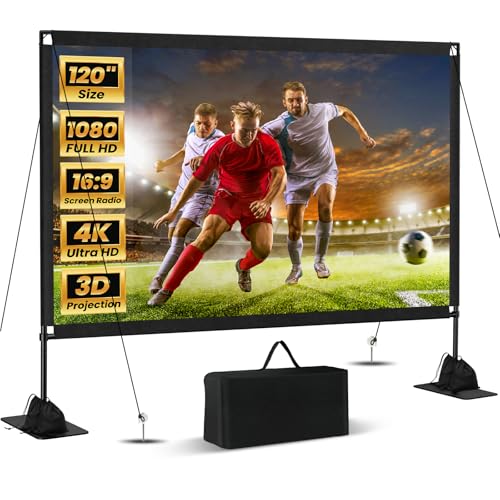
- ✓ Extremely stable support
- ✓ Weatherproof design
- ✓ Easy to transport and store
- ✕ Slightly bulky for small cars
- ✕ Assembly could be quicker
| Screen Size | 120 inches diagonal |
| Aspect Ratio | 16:9 |
| Resolution Support | 4K Ultra HD |
| Viewing Angle | 160 degrees |
| Material | Washable milk silk fabric |
| Portability Features | Foldable design with carrying storage bag |
As I unfolded this 120″ portable projector screen for the first time, I was surprised by how solid it felt in my hands. The steel support frame is noticeably sturdy, giving me confidence even before I set it up outdoors.
I expected something flimsy, but this screen immediately impressed me with its robust construction.
The stand’s reinforced base and windproof accessories, like ground stakes and sandbags, make a huge difference. I was able to set it up on a windy evening without worrying about it toppling over.
The included ropes and stakes kept the screen perfectly stable, even in gusty conditions.
Once assembled, I noticed how wrinkle-free the fabric stayed, thanks to the precise framing and cinema-grade design. The washable milk silk fabric delivers vibrant, crisp 4K HD visuals.
From a wide 160° angle, I enjoyed clear images from different spots in my backyard, creating that true theater feel.
Transporting it was effortless thanks to the dedicated storage bag. Folding it flat allowed me to pack it easily in my car.
The quick setup, guided by clear instructions, meant I was ready to watch in just a few minutes—no fuss at all.
Overall, this screen feels like a real upgrade from my previous portable options. Its stability, weather resistance, and picture quality make it perfect for both indoor movie nights and outdoor adventures.
Plus, the ease of assembly is a major bonus for spontaneous movie sessions.
120″ Outdoor Projector Screen with Stand and Carry Bag

- ✓ Very stable design
- ✓ Quick and easy setup
- ✓ Portable and lightweight
- ✕ Slightly bulky storage bag
- ✕ Limited color options
| Screen Size | 120 inches diagonally |
| Aspect Ratio | 16:9 |
| Projection Material | Premium milk silk fabric, foldable and washable |
| Viewing Angle | 160 degrees |
| Setup Time | Approximately 9 minutes |
| Portability | Includes carrying bag measuring 7.8 x 17.7 inches |
Finding a stable outdoor projector screen has always felt like a game of chance—either it wobbles with the slightest breeze or takes forever to set up. I finally tried the STWUI 120″ projector screen, and let me tell you, the difference is like night and day.
The first thing I noticed was the solid build of the chassis. It’s been lengthened and weighted at the bottom, which kept the entire setup rock-steady even on uneven ground.
The added holes for custom fluorescent nails meant I could anchor it securely to the ground, a real game-changer during breezy evenings.
The screen material itself is surprisingly durable. Made of washable, foldable milk silk, it’s easy to carry around and stays clean.
The 16:9 aspect ratio and 160° viewing angle made every seat in the yard feel like front row. Setting up took less than ten minutes—no tools needed, just a quick snap of the all-metal frame and the removable beam.
Transporting it is a breeze thanks to the compact storage bag. I took it camping and to a backyard party without any hassle.
The lightweight design and simple assembly meant I could quickly switch from indoor to outdoor use. Overall, the stability, ease of setup, and portability make it perfect for movie nights anywhere, anytime.
TOWOND 100″ Outdoor/Indoor Projector Screen with Stand

- ✓ Lightweight and portable
- ✓ Easy to assemble
- ✓ Stable outdoors with accessories
- ✕ Slightly delicate fabric
- ✕ Not suitable for very windy conditions
| Screen Size | 100 inches diagonally |
| Aspect Ratio | 16:9 |
| Projection Format | Front and Rear projection compatible |
| Material | Polyester milk silk (thicker than ordinary screens) |
| Viewing Angle | 160 degrees |
| Portability | Foldable, lightweight (7.4 pounds), includes carry bag |
Many people assume that a portable projector screen can’t match the quality of a fixed setup, especially outdoors. But after setting up this TOWOND 100″ screen a few times, I can tell you it’s surprisingly sturdy and easy to handle.
The lightweight stand is a real game-changer. It feels durable without being heavy—just 7.4 pounds—so you can carry it around effortlessly.
The tripod design is simple to extend, and the included ground stakes, ropes, and sandbag make it stable enough for outdoor use, even in breezy conditions.
The screen itself is thick and wrinkle-free, which makes a noticeable difference in picture clarity. I tested both front and rear projection, and the image remained crisp and bright.
Folding and washing the polyester milk silk material is a plus, keeping it portable and easy to clean after outdoor adventures.
Setting it up is quick thanks to the clear instructions and tool-free assembly. The detachable crossbar clicks into place easily, and the tripod legs lock securely.
I appreciated how compact it is in the carry bag, making transport a breeze—perfect for camping, backyard movie nights, or even indoor gaming.
For stability, I used the included sandbags and windproof ropes outdoors, which kept everything steady. Indoors, pressing the sandbags on the tripod base is enough to prevent any wobbling.
Overall, it’s a versatile, user-friendly screen that delivers a great viewing experience anywhere you go.
AAJK 150″ Outdoor Portable Projector Screen

- ✓ Bright, vivid picture quality
- ✓ Easy to set up and fold
- ✓ Highly portable and lightweight
- ✕ Might need extra support outdoors
- ✕ Slightly reflective in bright sunlight
| Screen Size | 150 inches (diagonal) |
| Aspect Ratio | 16:9 |
| Viewing Area | 132 inches x 72 inches |
| Material | White, soft-touch, crease-free, nontransparent, washable fabric |
| Viewing Angle | 160° |
| Setup Method | Hook, brackets, nails, double-sided tape, or wall mount |
It’s a warm summer evening, and you’ve just set up the AAJK 150″ outdoor projector screen in your backyard. You’re holding the screen’s lightweight, foldable fabric as you stretch it between two trees, eager to kick off movie night under the stars.
The moment you unroll it, you notice how crisp and smooth the material feels—no wrinkles or transparency, even in the fading light.
The bright white, soft-touch fabric really makes colors pop, creating a vivid picture on that massive 150-inch canvas. Thanks to the wide 160° viewing angle, everyone, no matter where they’re sitting, gets a great view.
It’s surprisingly easy to attach with hooks or double-sided tape, so you don’t need any fancy tools or complicated setup.
What really stands out is how portable it is. You can fold it up small enough to fit in your backpack or suitcase, making it perfect for outdoor movie nights, camping trips, or even a quick presentation.
I also appreciate that the fabric is washable—just toss it in the washing machine after a few uses, and it’s good as new.
Whether you’re hosting a backyard movie marathon, a family gathering, or a classroom presentation, this screen handles all scenarios with ease. It’s durable enough to withstand outdoor conditions yet lightweight enough to move around effortlessly.
For the price, it’s a fantastic way to elevate your viewing experience without breaking the bank.
What Are the Key Factors to Consider When Choosing the Best Projector Screen?
When selecting the best screen for a projector, several key factors should be considered to ensure optimal viewing experience and compatibility with your equipment.
- Screen Size: The size of the screen is crucial for achieving the best image quality and viewing experience. It should be proportional to the distance from the projector to the screen, ensuring that the image fills the screen without distortion.
- Screen Material: The material of the screen affects the reflection of light and the overall image quality. Options such as matte white, high-gain, or ambient light-rejecting materials offer different benefits in terms of brightness, color accuracy, and viewing angles.
- Aspect Ratio: The aspect ratio of the screen should match the content you plan to display, whether it be 16:9 for widescreen HD content or 4:3 for more traditional formats. Choosing the right aspect ratio ensures that the image is not stretched or misaligned.
- Screen Type: There are various types of projector screens, including fixed-frame, pull-down, and portable options. Each type serves different needs; for instance, fixed-frame screens are excellent for permanent setups, while portable screens are ideal for on-the-go presentations.
- Installation Method: Consider how you plan to install the screen, as some require wall mounting while others can be freestanding. Understanding your space and installation preferences will help you choose a screen that fits seamlessly into your environment.
- Gain Factor: The gain factor indicates how much light is reflected off the screen compared to a standard white board. A higher gain factor may be beneficial for bright environments, but it can also narrow the viewing angle, so it’s important to balance gain with viewing conditions.
- Price and Budget: Projector screens come in a wide range of prices, so it’s important to define your budget. While higher-end screens may offer better materials and features, there are also affordable options that can provide good performance for casual use.
How Does Screen Material Affect the Quality of Projected Images?
The screen material significantly influences the quality of projected images, including brightness, color accuracy, and viewing angles.
- Matte White Screens: These screens are known for their wide viewing angles and excellent color reproduction, making them a popular choice for home theaters. They diffuse light evenly across the surface, reducing hotspots and maintaining image clarity from various angles.
- High Gain Screens: These screens are designed to reflect more light towards the viewer, which enhances brightness. They are ideal for environments with ambient light but can sometimes result in a narrow viewing angle, where off-axis viewing may lead to color distortion.
- Ambient Light Rejecting (ALR) Screens: ALR screens are engineered to minimize the impact of ambient light, making them suitable for bright rooms. They use special materials and coatings to reflect projector light while absorbing or redirecting other light, preserving image quality in less-than-ideal lighting conditions.
- Silver Screens: Often used for 3D projectors, silver screens have a unique reflective quality that enhances brightness and contrast. However, they can produce a narrower viewing angle and may not accurately reproduce colors, making them less ideal for standard 2D viewing.
- Fabric Screens: These are versatile and can be used in various settings, including portable options for outdoor use. They are typically lighter and easier to transport, but their performance can vary significantly based on the specific fabric used, with some offering better color fidelity and contrast than others.
- Painted Screens: Using specially designed projector screen paint allows users to create a custom-sized screen on a wall. The quality of the paint affects the final image, as some paints enhance contrast and brightness while others may lead to uneven surfaces that can distort the projected image.
What Are the Different Sizes and Aspect Ratios Available for Projector Screens?
The 4:3 aspect ratio, although less common now, is still relevant for certain applications, particularly in educational and corporate settings where older presentation formats may be used. It offers a more traditional viewing experience but can appear letterboxed with modern HD content.
For those who enjoy cinematic experiences, the 2.35:1 aspect ratio is ideal as it closely resembles the format used in many films, providing a truly immersive experience. This wide format is particularly favored in home theaters designed for movie watching.
The 1:1 aspect ratio is less frequently used but can be advantageous for displaying images and presentations that require a balanced square format. This versatility allows for effective presentations, making it a good choice for educational environments or meetings where various content types are presented.
What Types of Projector Screens Are Available and How Do They Compare?
| Type | Material | Aspect Ratio | Features | Price Range | Usage Scenario | Durability |
|---|---|---|---|---|---|---|
| Fixed Frame | Typically made of PVC or vinyl | 16:9 or 4:3 | Sturdy construction, excellent image quality | $300 – $1,500 | Home theaters, permanent installations | High durability, low maintenance |
| Portable | Fabric or lightweight materials | 16:9 most common | Easy to transport, quick setup | $50 – $300 | Presentations, outdoor use | Moderate durability, requires care |
| Motorized | Various materials, often PVC | 16:9 or 4:3 | Remote control operation, retractable | $200 – $1,000 | Home theaters, conference rooms | High durability, moderate maintenance |
| Manual Pull-Down | Fabric | 16:9 or 4:3 | Cost-effective, simple to use | $50 – $200 | Classrooms, occasional use | Moderate durability, low maintenance |
What are the Advantages of Fixed-Frame Screens Over Retractable Screens?
With a fixed-frame screen, the surface is often treated to reduce light reflection, thus improving the viewing experience in various lighting conditions. This is particularly beneficial for environments where ambient light is a concern.
Unlike retractable screens, fixed-frame screens do not have moving parts that can fail over time, leading to a more reliable performance. This reliability is crucial for users who want a hassle-free viewing experience without the worry of mechanical issues.
When Should You Consider a Portable Projector Screen?
You should consider a portable projector screen in various scenarios to enhance your viewing experience.
- Outdoor Movie Nights: If you enjoy watching films under the stars, a portable projector screen allows for a larger viewing area than a wall or plain sheet. These screens are designed to be lightweight and easy to set up, making them ideal for backyard gatherings or camping trips.
- Presentations on the Go: For business professionals who frequently travel, a portable projector screen is essential for making impactful presentations. They can be quickly assembled and disassembled, ensuring you can deliver your content in a professional manner, regardless of location.
- Home Theater Flexibility: If you have limited space in your home for a permanent screen, a portable option provides a flexible solution. You can set it up in different rooms or even outdoors, allowing for a customized viewing experience based on your needs and preferences.
- Event Use: For events like weddings, parties, or community gatherings, a portable projector screen can facilitate multimedia presentations or slide shows. It can be easily transported and set up at various venues, ensuring everyone can enjoy the visuals regardless of the setting.
- Cost-Effectiveness: Purchasing a portable projector screen can be more economical than installing a fixed screen, especially if you don’t frequently host events. This option allows you to get the best screen for a projector without committing to a permanent installation.
Which Projector Screens Are Highly Recommended for Different Needs?
The best screens for a projector vary based on intended use and environment.
- Fixed Frame Screens: Ideal for dedicated home theater setups.
- Portable Screens: Perfect for presentations on the go.
- Motorized Screens: Convenient for multi-use spaces where aesthetics matter.
- Inflatable Screens: Great for outdoor movie nights.
- Whiteboard Screens: Versatile for both projection and writing applications.
Fixed Frame Screens: These screens are designed to remain in a permanent position, making them an excellent choice for home theaters. They typically offer a taut surface, which helps to minimize wrinkles and ensure a smooth projection, thereby enhancing image quality.
Portable Screens: These screens are lightweight and easy to set up, making them ideal for business presentations or events held in various locations. They often come with a carrying case and can be quickly assembled, providing flexibility without sacrificing quality.
Motorized Screens: Featuring a motorized mechanism for easy deployment and retraction, these screens are perfect for spaces that serve multiple purposes, such as conference rooms or living areas. They can be mounted on the ceiling or wall, adding convenience while maintaining a clean look when not in use.
Inflatable Screens: Designed for outdoor use, inflatable screens are easy to transport and set up for backyard movie nights or outdoor events. They provide a fun and engaging viewing experience and are often available in large sizes to accommodate bigger audiences.
Whiteboard Screens: These versatile surfaces allow for projection as well as writing, making them suitable for classrooms and meeting rooms. They offer the functionality of a traditional whiteboard while enhancing projection quality, making them a dual-purpose solution.
What are the Top Fixed-Frame Projector Screens?
The top fixed-frame projector screens offer the best viewing experience for home theaters by providing a flat, tensioned surface for optimal image quality.
- Elite Screens Sable Frame 2: This screen features a sleek aluminum frame that enhances rigidity and eliminates wrinkles. It is available in various sizes and offers a high-quality, 1.1 gain matte white surface, making it suitable for both dark and bright rooms.
- Silver Ticket Products STR-169120: Known for its affordable price and excellent performance, this screen has a robust frame and a 1.1 gain, 4K Ultra HD and Active 3D ready surface. Its easy assembly and tensioning system ensure a smooth, flat display for stunning visuals.
- Da-Lite Parallax 3D: This premium screen is specifically designed for 3D content, featuring a unique material that maintains brightness and color accuracy. The frame is customizable and built to last, making it a great investment for serious home theater enthusiasts.
- VIVO Electric Motorized Projector Screen: Although it is motorized, VIVO’s fixed-frame option provides the same benefits of a traditional screen with the added convenience of electric operation. It offers a smooth, white surface that reflects light evenly, enhancing the viewing experience.
- Screen Innovations Black Diamond: This high-end screen is known for its exceptional contrast and ambient light rejection capabilities. It is ideal for bright rooms and offers various sizes, making it versatile for different setups while delivering top-notch image quality.
Which Pull-Down Projector Screens Offer the Best Value?
The best pull-down projector screens offer a combination of quality, ease of use, and affordability.
- Silver Ticket Products STR-169120: This screen is known for its exceptional value due to its high-quality materials and impressive viewing experience.
- Elite Screens Manual B: A popular choice among users for its reliability and smooth operation, this screen is budget-friendly while still providing great image quality.
- VIVO 100 inch Pull Down Projector Screen: This screen stands out for its affordability and ease of installation, making it a favorite for home theater setups.
- BenQ 100-Inch Pull Down Screen: With a reputation for excellent image quality and durable construction, this option is perfect for both home and professional setups.
- Celexon Fixed Frame Projector Screen: While slightly more expensive, this option offers a premium viewing experience, making it ideal for dedicated home theater environments.
The Silver Ticket Products STR-169120 features a 1.1 gain, which provides bright and vivid images, along with a durable frame that ensures stability and longevity. Its easy installation process and elegant design make it an excellent choice for both casual and serious users.
The Elite Screens Manual B is designed for effortless operation, allowing users to pull down the screen smoothly without any hassle. It is constructed from high-quality materials that enhance image quality, making it a solid investment for those looking for performance on a budget.
The VIVO 100 inch Pull Down Projector Screen is particularly user-friendly, with a simple pull-down mechanism that works well in various settings. Its affordability does not compromise the viewing experience, making it a great entry-level option for anyone setting up a projector for the first time.
BenQ’s 100-Inch Pull Down Screen is highly regarded for its superior image quality, which is enhanced by its matte white surface that minimizes light dispersion. Ideal for both home and office environments, this screen’s robust build ensures it will withstand regular use without wear and tear.
Finally, the Celexon Fixed Frame Projector Screen is designed for those who prioritize a professional look and feel in their media rooms. Although it comes at a higher price point, its fixed frame ensures a perfectly flat surface that maximizes image sharpness and contrast, making it well worth the investment for serious cinephiles.
What Are the Best Outdoor Projector Screens for Outdoor Movie Nights?
The best outdoor projector screens enhance your movie night experience by providing a clear and vibrant display. Here are some top options:
- Elite Screens Yard Master 2: This portable screen is made of durable materials and features a sturdy aluminum frame for easy setup. The Yard Master 2 is designed for outdoor use, offering a wide viewing angle and excellent color reproduction.
- Vamvo 120-inch Portable Projector Screen: With a lightweight and foldable design, this screen is easy to transport and set up. Its high-quality fabric material reflects light well, ensuring a bright image while being resistant to creasing and fading.
- AmazonBasics Outdoor Projector Screen: This budget-friendly option is perfect for casual movie nights. It offers a simple setup with a lightweight frame and a matte white screen that enhances contrast and color accuracy.
- JWSIT 120-inch Projector Screen: This screen features a double-sided design, allowing viewers to enjoy projections from either side. Its easy installation and compatibility with various projectors make it a versatile choice for outdoor events.
- Silver Ticket Products STR-169120: With a 16:9 aspect ratio, this screen is ideal for widescreen movies. The high-quality material provides a sharp and bright image, and its fixed frame design ensures that the screen remains taut during use.
How Does Installation Impact Your Choice of Projector Screen?
The installation of a projector screen can significantly influence your choice based on various factors such as location, room size, and screen type.
- Fixed Frame Screens: These screens are installed permanently and provide a flat, taut surface for optimal image quality.
- Motorized Screens: Motorized screens can be retracted or extended with a remote control, making them ideal for multi-purpose rooms where space is a consideration.
- Portable Screens: Designed for easy setup and takedown, portable screens are perfect for presentations on the go or for temporary setups in different locations.
- Ceiling Mounted Screens: These screens are integrated into the ceiling and can save wall space, making them a good option for home theaters with limited wall availability.
- Wall-Mounted Screens: Fixed or pull-down options can be mounted directly on the wall, providing a straightforward installation that suits dedicated viewing areas.
- Outdoor Screens: Specifically designed to withstand outdoor conditions, these screens often come with features to minimize wind effects and enhance visibility in daylight.
Fixed frame screens are an excellent choice for dedicated home theaters because they maintain a flat surface, ensuring no wrinkles or distortions interfere with the viewing experience. They also enhance the aesthetic of the space, adding a professional touch to your setup.
Motorized screens are particularly beneficial for versatile spaces where the projector might be used infrequently. The convenience of a remote control allows for effortless operation, and the screen can be hidden when not in use, preserving the room’s decor.
Portable screens are ideal for users who need flexibility, as they can be set up in various locations and taken down when not needed. They often come with lightweight materials and carrying cases, making them convenient for business presentations or outdoor movie nights.
Ceiling mounted screens can be a space-saving solution, particularly in smaller rooms where wall space is limited. They can be integrated into the ceiling design, creating a clean look while still providing a high-quality viewing experience.
Wall-mounted screens are straightforward to install and can cater to various room layouts, making them versatile for different projector models. They can be fixed or pull-down, allowing for easy access and storage depending on the user’s needs.
Outdoor screens are specially designed to endure various weather conditions and enhance visibility in bright settings, making them perfect for backyard movie nights or outdoor events. They often feature materials that resist fading and damage, ensuring longevity and quality performance.
What Installation Options Are Available for Different Types of Screens?
When selecting the best screen for a projector, several installation options are available to suit different needs and environments.
- Fixed Frame Screens: These screens are permanently mounted to a wall and provide a flat, taut surface for projection.
- Retractable Screens: These screens can be rolled up into a housing unit when not in use, making them ideal for multi-purpose rooms.
- Portable Screens: Lightweight and easy to transport, portable screens are perfect for presentations on the go or temporary setups.
- Wall-Mounted Screens: These screens are attached directly to a wall and can be either fixed or retractable, providing versatility in installation.
- Curtain Screens: Made from fabric, these screens can be drawn open or closed like curtains, allowing for a stylish and flexible projection solution.
Fixed frame screens offer a sleek appearance and ensure that the projection surface remains undisturbed, making them ideal for dedicated home theaters. They typically come with a sturdy frame that helps maintain tension, resulting in an optimal viewing experience.
Retractable screens are versatile and practical, allowing users to conceal the screen when not in use. They can be manually operated or motorized, providing convenience in both home and professional settings.
Portable screens are designed for easy setup and takedown, catering to users who need flexibility for different venues. These screens often come with their own stands and carrying cases, making them suitable for business presentations or outdoor movie nights.
Wall-mounted screens can be either fixed or retractable, depending on the space requirements and aesthetic preferences. They provide a clean look and can blend seamlessly into the room’s design while offering the benefits of a dedicated projection surface.
Curtain screens add a unique touch to projector setups, often used in more decorative contexts. They allow users to control the screen’s visibility, enhancing the room’s ambiance while providing a functional projection surface when needed.
Should You Hire a Professional or Attempt DIY Installation?
Yes, you should consider hiring a professional for installation.
While DIY installation may seem like a cost-effective option, hiring a professional can ensure that the screen is installed correctly and optimally for your specific projector. Professionals have the experience and knowledge to handle different types of screens and projectors, which can significantly enhance the viewing experience. They can also address potential issues such as positioning, which can impact the image quality and viewing angles. This expertise is particularly valuable if you are investing in one of the best screens for a projector, as proper installation can maximize its performance.
Moreover, professionals often have access to specialized tools and equipment that you may not have at home, allowing for a more efficient and clean installation process. They can also manage any necessary adjustments or modifications to your space to accommodate the screen properly. If you are uncertain about your own skills or the specifics of your setup, hiring a professional can save you time and effort while ensuring that everything is done right the first time.
What Are the Budget Considerations When Selecting a Projector Screen?
When selecting a projector screen, budget considerations play a critical role in ensuring you get the best screen for a projector that meets your needs without overspending.
- Screen Type: The type of screen you choose can significantly impact the budget. Options include manual pull-down screens, electric screens, fixed-frame screens, and portable screens, each varying in price and features. For instance, fixed-frame screens typically offer better image quality and durability but come at a higher cost compared to manual or portable screens.
- Material Quality: The screen material can affect both the price and the viewing experience. Higher-quality materials, such as those with advanced coatings for better light reflection and color accuracy, tend to be more expensive but provide superior performance. Conversely, lower-quality materials may save money upfront but could lead to a less satisfying viewing experience.
- Size: The size of the screen is a crucial factor that directly influences the budget. Larger screens generally cost more due to the increased material and manufacturing expenses. It’s essential to balance screen size with room dimensions and projector capabilities to avoid overspending on an unnecessarily large screen.
- Installation Costs: Depending on the type of screen and your space, installation costs can vary significantly. Some screens require professional installation, especially electric or fixed-frame models, which can add to the overall budget. DIY options may save money but require additional tools and skills.
- Brand and Features: The brand of the projector screen can also impact the budget, with well-known brands typically charging a premium for their reputation and reliability. Additionally, features such as wireless controls, tensioning systems, and compatibility with 4K projectors can increase the price, but they may also enhance the overall viewing experience.
How Does Brand Reputation Affect Pricing?
Brand reputation plays a significant role in determining the pricing of products, including screens for projectors.
- Perceived Quality: A strong brand reputation often signals higher quality to consumers, allowing companies to charge premium prices. Customers are typically willing to pay more for trusted brands because they associate them with better materials, durability, and performance.
- Customer Loyalty: Brands with a good reputation tend to foster loyalty among their customers. This loyalty can lead to repeat purchases at higher price points, as consumers are less likely to switch to competitors when they have had positive experiences with a brand.
- Market Positioning: Brands that position themselves as high-end or luxury often set higher prices to maintain their image and exclusivity. This strategy can attract a specific demographic that values status and prestige over affordability.
- Marketing and Advertising: Companies with strong reputations typically invest heavily in marketing and advertising, which can influence pricing. The costs associated with building and maintaining a brand image are often passed on to consumers through higher prices.
- Customer Reviews and Feedback: Positive reviews and testimonials from previous customers can enhance a brand’s reputation, justifying higher prices. Consumers are more likely to pay a premium for products that have received favorable feedback from others, as it reinforces their purchasing decisions.
- Competitive Advantage: A strong reputation can differentiate a brand in a crowded market, allowing it to command higher prices than lesser-known competitors. This competitive edge can be crucial in niche markets where quality and trust are paramount.
What Are Some Budget-Friendly Projector Screen Options with Good Reviews?
Some budget-friendly projector screen options that have received good reviews include:
- VIVO 100-inch Portable Projector Screen: This screen is lightweight and easy to set up, making it perfect for both indoor and outdoor use. Its 100-inch size offers a large viewing area, and the material is designed to provide a clear and bright picture, enhancing the overall viewing experience.
- Elite Screens Manual B: oard Projector Screen: This manual pull-down screen is ideal for those who want a more permanent setup without breaking the bank. It features a durable, matte white surface that effectively reflects light, ensuring a vibrant image quality, and it can be easily rolled up when not in use.
- JWSIT 120-inch Projector Screen: This option offers a massive 120-inch display that is perfect for movie nights or presentations. It’s made from high-quality polyester, which ensures minimal light penetration and provides a crisp image, while its foldable design makes it easy to transport and store.
- Amazon Basics 100-inch Portable Projector Screen: This affordable option is made from durable, lightweight materials, making it easy to set up and take down. Its 100-inch size delivers an impressive viewing experience, and the screen’s surface is designed to minimize wrinkles for optimal image clarity.
- Silver Ticket Products 100-inch Fixed Frame Projector Screen: While slightly higher in price, this fixed-frame screen is highly rated for its excellent image quality and sturdiness. The screen features a black backing to eliminate light penetration and a velvet frame that enhances the overall aesthetic in any room.