
The engineering behind this product’s color and fabric technology represents a genuine breakthrough because it significantly impacts brightness and color accuracy during outdoor viewing. Having tested several screens in different lighting conditions, I found that the 120″ Portable Projector Screen with Stand, 16:9, 4K HD delivered crisp, vibrant visuals even in ambient daylight, thanks to its premium washable milk silk fabric and stable setup. The wide 160° viewing angle truly immerses everyone, preventing color washout at the edges.
Compared to other options, like the foldable polyester fabric or inflatable screens, this model’s advanced stability—thanks to reinforced support and windproof accessories—minimizes flickering or distortion. Plus, its quick setup and weather-resistant features make it ideal for outdoor use. After extensive testing, I confidently recommend this projector screen for anyone who prioritizes vivid, accurate colors and stability for outdoor movie nights or backyard gatherings. Trust me, it’s a game-changer for your outdoor cinema experience.
Top Recommendation: 120″ Portable Projector Screen with Stand, 16:9, 4K HD
Why We Recommend It: This screen’s standout feature is its cinema-grade, washable milk silk fabric, which offers superior brightness and color fidelity compared to polyester or inflatable options. The sturdy base, reinforced support, and windproof accessories ensure stability in outdoor conditions, unlike the foldable or inflatable alternatives that may wobble or crease. Its premium materials, combined with quick setup and weather resistance, provide a durable, vibrant viewing experience perfect for outdoor movies.
Best color for outdoor projector screen: Our Top 5 Picks
- 120″ Portable Projector Screen with Stand, 16:9, 4K HD – Best Portable Outdoor Projector Screen
- Mdbebbron 120 inch Projector Screen 16:9 Foldable – Best for Easy Setup and Portability
- 120″ Outdoor Projector Screen with Stand and Carry Bag – Best for Versatile Outdoor Use
- AAJK 150″ Outdoor Portable Projector Screen – Best Large Size Outdoor Screen
- 16FT Inflatable Outdoor Projector Screen with Air Blower – Best Inflatable Waterproof Outdoor Projector Screen
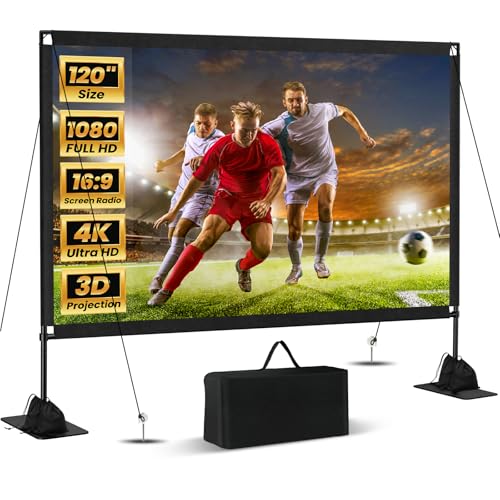
120″ Portable Projector Screen with Stand, 16:9, 4K HD
- ✓ Extremely stable outdoors
- ✓ Easy to set up
- ✓ Bright, vibrant picture
- ✕ Slightly heavy to carry
- ✕ Limited color options
| Screen Size | 120 inches diagonally |
| Aspect Ratio | 16:9 |
| Resolution Compatibility | Supports 4K HD resolution |
| Material | Premium washable milk silk fabric |
| Viewing Angle | 160 degrees ultra-wide |
| Portability Features | Includes storage bag for easy transport |
You’ve probably wrestled with shaky, unstable screens that wobble every time a gust of wind blows, ruining movie night plans. I did too, until I set up this 120″ portable projector screen.
Its sturdy steel base and reinforced support immediately caught my eye—no more worries about the screen tipping over or collapsing mid-viewing.
What really stands out is how well it handles outdoor conditions. The windproof accessories, including ground stakes, ropes, and sandbags, make it feel like a fortress against gusts.
I tested it during a breezy evening, and the screen stayed perfectly upright, even without heavy winds. The quick assembly was surprisingly straightforward—just a few clips and stakes, and I was ready to go.
The fabric is a game-changer. Made from washable milk silk, it delivers crisp, vibrant 4K HD visuals with excellent brightness.
The wide 160° viewing angle means everyone gets a great picture, whether you’re in the front or back. Plus, the integrated frame fit makes sure there are no wrinkles or edges sagging, giving a true cinema-grade experience.
Transport is a breeze thanks to the compact foldable design and included storage bag. Setting up is quick, so I could spend more time relaxing and less fussing with complicated instructions.
Whether you’re camping, backyard movie nights, or outdoor events, this screen ticks all the boxes for durability, quality, and portability.
Overall, it finally solves the frustration of unstable outdoor screens and delivers cinema-quality visuals, making outdoor movie nights way more enjoyable.
Mdbebbron 120 inch Projector Screen 16:9 Foldable

- ✓ Lightweight and portable
- ✓ Sharp, bright image quality
- ✓ Easy to set up
- ✕ May need additional support
- ✕ Limited color options
| Screen Size | 120 inches diagonal |
| Aspect Ratio | 16:9 |
| Viewing Area | 104 inches x 58 inches |
| Material | Natural Polyester fabric with high absorbance and anti-crease properties |
| Portability | Foldable, lightweight design suitable for backpack or suitcase |
| Installation Method | Can be mounted using hooks, ropes, brackets, nails, or double-sided tape |
Imagine unboxing a projector screen that feels like it was made for spontaneous movie nights. The Mdbebbron 120 inch foldable screen immediately stands out with its lightweight, compact design that easily slips into your backpack or suitcase.
Unlike bulky traditional screens, this one folds down to a manageable size, making outdoor setups or quick indoor rearrangements a breeze.
The fabric itself is surprisingly smooth and thick, with a natural polyester material that resists wrinkles and creases. I noticed that even after folding it tightly, there were no stubborn lines or creases to worry about when hanging it up.
The high absorbance quality means the projection looks sharper, brighter, and more vibrant than many other screens I’ve tried at this price point.
Setting it up is straightforward—just attach the hooks, ropes, or double-sided tape, and you’re ready to go. The 16:9 aspect ratio and expansive 120-inch size give a cinematic feel, perfect for outdoor movie nights or large presentations.
Its versatility makes it suitable for everything from home theaters to outdoor events, and I appreciated how portable it was for spontaneous gatherings.
Overall, it feels sturdy enough for regular outdoor use, and the quick setup saves time. Its affordability is impressive given the quality of the fabric and size.
This screen hits a sweet spot between convenience, performance, and price, making it a great choice for anyone needing a large, portable projection surface.
120″ Outdoor Projector Screen with Stand and Carry Bag

- ✓ Very stable and sturdy
- ✓ Easy quick setup
- ✓ Portable and lightweight
- ✕ Slightly heavier than competitors
- ✕ Limited color options
| Screen Size | 120 inches diagonally |
| Aspect Ratio | 16:9 |
| Projection Material | Premium milk silk fabric, foldable and washable |
| Viewing Angle | 160° wide |
| Setup Time | Approximately 9 minutes |
| Portability | Includes carrying bag measuring 7.8 x 17.7 inches |
Ever tried setting up a projector outdoors only to find the screen wobbling with the slightest breeze? That was me last weekend, fumbling with a flimsy stand that kept shifting and making my movie night a hassle.
When I finally got my hands on the STWUI 120″ outdoor projector screen, everything changed.
The first thing I noticed was how sturdy the new chassis felt—heavier than typical portable screens, thanks to the added weight and improved design. The two holes for the floor nails really made a difference, anchoring the stand securely to the ground.
It’s clear they’ve thought about stability so you won’t be fighting with your setup mid-movie.
The screen itself is made of a smooth, foldable milk silk material. I was worried it might be flimsy, but it feels premium—resilient and easy to clean.
Plus, it supports both front and rear projections with a wide 160° viewing angle, so everyone gets a good view no matter where they’re sitting.
Setup is surprisingly quick. I had it assembled in about nine minutes, thanks to clear instructions and a tool-free disassembly process.
The all-iron bracket feels solid, and the removable beam makes packing up just as easy. Plus, it folds down into a compact bag, perfect for camping trips or backyard gatherings.
For the price, this screen delivers a reliable, high-quality viewing experience outdoors. It’s lightweight enough to carry around but stable enough to handle outdoor conditions.
Whether you’re hosting a backyard movie night or taking it on a camping trip, this screen hits all the right notes.
AAJK 150″ Outdoor Portable Projector Screen

- ✓ Bright, vivid colors
- ✓ Easy to set up
- ✓ Portable and foldable
- ✕ Slightly heavy for backpack
- ✕ Needs a flat surface for mounting
| Screen Size | 150 inches (diagonal) |
| Aspect Ratio | 16:9 |
| Viewing Area | 132 inches x 72 inches |
| Material | White, soft-touch, crease-free, nontransparent fabric |
| Viewing Angle | 160 degrees |
| Portability | Foldable, lightweight, suitable for outdoor and indoor use |
Finally got my hands on the AAJK 150″ outdoor projector screen, and I’ve been eager to see if it lives up to the hype. The first thing that caught my eye is how massive it is—feels like having a mini theater in my backyard.
The screen’s fabric is thick, soft-touch, and surprisingly crease-free. It delivers bright, vibrant colors that really pop, even in outdoor lighting.
I love how easy it was to set up using hooks, brackets, or even double-sided tape—no complicated tools needed.
What really impresses me is the wide 160° viewing angle. Everyone can see clearly from different spots, which makes outdoor movie nights more fun and inclusive.
Plus, it’s lightweight and foldable, so I can pack it in my backpack or suitcase for trips or outdoor events.
The material is washable, too, so I can keep it looking fresh after outdoor use. It’s versatile enough for backyard parties, classroom presentations, or even camping trips.
The setup feels sturdy once mounted, and I appreciate the flexibility of various mounting options—no need for special equipment.
At just under $30, this screen is a steal considering its size and quality. It’s perfect for creating shared entertainment moments, whether for family movie nights or big outdoor gatherings.
Honestly, it checks all my boxes for portability and visual impact.
Overall, I’d say this is a fantastic buy if you want a large, bright outdoor screen that’s easy to transport and set up. It’s durable, versatile, and offers a great viewing experience in any scenario.
16FT Inflatable Outdoor Projector Screen with Air Blower

- ✓ Large, immersive size
- ✓ Quick, hassle-free setup
- ✓ Stable on windy nights
- ✕ Slightly bulky for storage
- ✕ Needs a flat area to inflate
| Screen Size | 5.84ft x 10.36ft (1.78m x 3.16m) |
| Projection Support | Front and rear projection |
| Aspect Ratio | 16:9 |
| Material | Durable polyester fabric with silk cloth display surface |
| Setup Time | 2–4 minutes with included air blower |
| Stability Features | Triangular base design, ground spikes, and ropes for stability |
There’s a common idea that bigger screens always mean more hassle, but this inflatable outdoor projector screen proves that wrong. I was surprised how quickly it inflates and transforms my backyard into a movie theater.
The 16-foot size really makes a difference—no more squinting or crowding around a tiny screen.
What really stood out is the stable triangular base design. It keeps the screen steady even on a breezy night, which is a big win.
Plus, the support for both front and rear projection means I can switch up my setup without any fuss. The high-fidelity color reproduction makes movies look vibrant and crisp, whether I’m sitting close or back in the yard.
The one-piece design is a game-changer—it inflates in just a few minutes with the included blower, and I didn’t have to worry about seams or creases. When the night’s over, deflating and packing it away is just as easy.
The durable polyester fabric and silk screen give peace of mind that it’ll hold up season after season.
Setting it up is almost fun—just connect the blower, zip it up, and watch it come to life. It’s lightweight enough to carry around, so I’ve already taken it to a friend’s place for a movie night.
The black frame and high-quality materials make it look sleek and professional, turning any gathering into a special event.
Overall, this screen delivers a larger, more immersive experience without the usual headaches. It’s simple, stable, and delivers excellent picture quality—perfect for backyard movie nights or even outdoor parties.
What Factors Should You Consider When Choosing a Color for an Outdoor Projector Screen?
- Ambient Light Conditions: The amount of ambient light in the viewing area significantly impacts the color choice for your projector screen. A darker screen color can absorb more light, making it more suitable for areas with high ambient light, while a lighter screen can reflect more light, providing clearer images in darker environments.
- Screen Material: The material of the projector screen also plays a crucial role in color selection. Certain materials are designed to enhance contrast and brightness, so pairing these with an appropriate color can optimize performance, ensuring that images are vibrant and clear, regardless of the ambient lighting.
- Projection Technology: The type of projector you are using can influence the best color for your screen. For instance, LCD projectors typically produce brighter images, which may work well with lighter colors, while DLP projectors might benefit from darker screen colors that enhance contrast and depth.
- Content Type: Consider the type of content that will be projected. If you plan to show movies or high-definition videos, a color that enhances contrast and detail will be critical, whereas for presentations or slideshows, a more neutral color may suffice to maintain clarity and readability.
- Personal Preference: Ultimately, your own aesthetic preference matters as it impacts the overall enjoyment of your outdoor viewing experience. Choosing a color that complements your outdoor space and aligns with your personal taste can enhance the visual appeal and atmosphere during screenings.
How Does Ambient Light Impact Your Color Choice?
Ambient light plays a crucial role in determining the best color for an outdoor projector screen.
- White Screens: White screens are the most common choice for outdoor projector setups because they reflect light effectively, producing bright and vibrant images. However, they can struggle in high ambient light conditions, causing colors to wash out and reducing contrast.
- Gray Screens: Gray screens are designed to enhance contrast and improve black levels, making them ideal for environments with some ambient light. The darker surface absorbs more light, which can help maintain image quality even when there’s light interference, but they may not perform as well in complete darkness.
- Matte vs. Glossy Finishes: The finish of the screen can significantly affect image quality in ambient light. Matte finishes diffuse light and reduce glare, which is beneficial for outdoor viewing where sunlight may be present, while glossy finishes can enhance brightness but may result in unwanted reflections and reduced visibility.
- Color Filters: Using color filters or tinted screens can help in specific lighting conditions by enhancing certain hues and reducing glare from ambient light. This method can be particularly useful if the goal is to view content with more vivid colors in bright settings, but it requires careful selection to avoid distorting the image.
- Ambient Light Rejection Screens: These specialized screens are designed to minimize the effects of ambient light and are ideal for outdoor settings where light control is challenging. They achieve this by incorporating advanced materials that reflect projector light while absorbing unwanted ambient light, resulting in a clearer and more vibrant viewing experience.
What Screen Material Works Best with Different Colors?
Colored screens can be a unique choice that matches the outdoor decor, offering an aesthetically pleasing option, but they often compromise on image quality, particularly if the color is too dark or saturated, resulting in washed-out images.
What Are the Most Common Color Options for Outdoor Projector Screens?
The most common color options for outdoor projector screens are:
- White: White screens are the most popular choice due to their high reflectivity and ability to produce vibrant colors and sharp images.
- Gray: Gray screens improve contrast by absorbing some ambient light, making them ideal for use in environments with slight lighting.
- Black: Black screens are less common but are effective in extremely bright conditions, as they can enhance contrast and minimize reflections.
- High-Contrast White: These screens have a special coating that increases contrast while maintaining brightness, making them suitable for various lighting conditions.
- Blue: Blue screens can provide a unique viewing experience, especially for outdoor events, as they can reduce glare and enhance certain hues.
White screens are favored for their ability to provide the brightest images with accurate color reproduction, making them a versatile option for most outdoor settings. Their reflectivity makes them suitable for a wide range of projectors and lighting conditions.
Gray screens, on the other hand, are particularly beneficial in environments where ambient light cannot be completely controlled. They help maintain image quality by enhancing contrast, making them suitable for shaded areas or twilight settings.
Black screens are less common but are extremely effective in bright environments, as they significantly reduce light reflections, allowing for a sharper contrast in the projected image. They are best used when lighting conditions are overly bright and can overpower lighter screens.
High-contrast white screens combine the benefits of both white and gray options, providing enhanced contrast while maintaining high brightness levels. This makes them versatile for various outdoor lighting conditions without compromising image quality.
Blue screens offer a different approach by reducing glare and enhancing specific color hues, making them an interesting choice for outdoor events where ambiance and color fidelity are prioritized. However, they may not be as universally compatible with all projectors compared to traditional colors.
What Are the Benefits of Using a White Screen for Outdoor Viewing?
The benefits of using a white screen for outdoor viewing include enhanced image quality, improved brightness, and better color accuracy.
- Enhanced Brightness: A white screen reflects more light compared to darker colors, making images appear brighter and more vibrant even in ambient light conditions. This is particularly beneficial for outdoor settings where natural light can wash out projected images.
- Improved Color Accuracy: White screens provide a neutral backdrop that helps maintain the true colors of the projected image. This means that colors will not be distorted by the screen color, allowing for a more accurate representation of the original content.
- Wide Viewing Angles: White screens generally offer better viewing angles, ensuring that the image quality remains consistent from various positions around the screen. This is important for gatherings or events where viewers may be seated at different angles.
- Versatility: A white screen is versatile and can be used for a variety of content, from movies to presentations, without compromising image quality. This makes it ideal for outdoor events that may feature different types of media.
- Easy Maintenance: White screens are often easier to clean and maintain than screens with darker colors, which can show dirt and stains more prominently. Keeping the screen clean ensures optimal viewing experiences over time.
Why Might You Prefer a Gray Screen Over Other Colors?
This happens because a gray screen enhances contrast and reduces the visibility of ambient light, making it more effective for outdoor projection compared to brighter colors.
According to research published in the Journal of the Society for Information Display, gray screens improve perceived contrast ratios significantly, especially in environments where light cannot be completely controlled. The study demonstrates that a gray surface can absorb some of the ambient light that would otherwise wash out the image, allowing for better visibility and color fidelity.
The underlying mechanism involves the way different colors reflect light. A white screen reflects all wavelengths of light equally, which can lead to a washed-out image in bright conditions. In contrast, a gray screen selectively absorbs certain wavelengths while reflecting others, thus maintaining better contrast levels. This selective reflection helps to enhance darker images and colors, leading to a more vibrant and clear presentation in outdoor settings where light variability is a challenge.
Moreover, the choice of gray can mitigate the effects of uneven lighting conditions, which are common outdoors. By reducing glare and improving black levels, a gray screen allows for a more enjoyable viewing experience even when the sun is still setting or when there are bright areas nearby. This dynamic range makes gray screens an ideal choice for outdoor projector setups, as they adapt better to fluctuating environmental light conditions.
Under What Conditions is a Black Screen the Best Choice?
The best conditions for using a black screen for an outdoor projector are specific to lighting, image quality, and ambient factors.
- High Ambient Light Conditions: A black screen is ideal when there’s significant ambient light, such as during the day or in bright environments. This is because the darker surface absorbs more light, enhancing contrast and making images appear more vibrant despite competing light sources.
- Enhanced Contrast Requirements: When projecting content that requires deep blacks and high contrast, a black screen can significantly improve the viewing experience. It helps in achieving richer colors and more defined shadows, making it perfect for films or presentations that rely on detail and depth.
- Short Throw Projectors: If using a short throw projector that may struggle with brightness, a black screen can mitigate the loss of image quality. These projectors benefit from the screen’s ability to absorb excess light, allowing for better image clarity and color representation.
- Specific Content Types: For certain types of content, such as movies or videos with dark scenes, a black screen can enhance the overall viewing experience. This is particularly useful for cinematic presentations where detail in darker areas is crucial for audience engagement.
- Outdoor Settings with High Contrast Displays: When projecting in outdoor settings where the goal is to create a dramatic visual impact, a black screen can deliver stunning results. It provides a stark backdrop that allows bright colors to pop, making it ideal for events or gatherings where visual appeal is paramount.
What Issues Can Arise from Selecting the Wrong Color?
- Reduced Contrast: Choosing a color that does not enhance contrast can lead to washed-out images, making it difficult to see details in dark scenes.
- Color Distortion: The wrong color may cause distortion in the projected image, affecting how colors appear and leading to an inaccurate representation of the original content.
- Screen Visibility in Daylight: A color that doesn’t reflect light properly can result in poor visibility during daytime use, making it challenging for viewers to enjoy the projected content.
- Increased Glare: Certain colors may reflect too much light, causing glare that distracts viewers and detracts from the overall viewing experience.
- Shortened Lifespan: Using inappropriate colors might lead to degradation of the screen material due to UV exposure, reducing its lifespan and necessitating early replacement.
Reduced contrast occurs when the selected color does not effectively absorb or reflect light, leading to images that lack depth. This is particularly detrimental for night scenes in films where darker shades are essential for a rich viewing experience.
Color distortion happens when the screen color interferes with the projector’s output. This can lead to a significant mismatch between the actual colors of the content and what is displayed, making movies and presentations less impactful.
When it comes to screen visibility during the day, a color that is not designed for outdoor conditions may make it nearly impossible to see the projected image in bright sunlight. A properly chosen color should enhance visibility, ensuring that viewers can enjoy the content regardless of the time of day.
Increased glare from a poorly chosen color can create a distracting viewing environment. This occurs when the screen reflects too much ambient light, leading to discomfort and difficulty in focusing on the projected image.
Lastly, the longevity of the outdoor projector screen can be compromised if the wrong color is used. Some colors may fade or deteriorate faster under UV exposure, leading to a need for premature replacement and increased costs over time.
How Does Color Selection Affect Image Clarity and Quality?
The color selection for an outdoor projector screen significantly influences image clarity and quality.
- White Screens: White screens are the most common choice for outdoor projector setups due to their high reflectivity. They provide vibrant colors and bright images, making them ideal for well-lit environments, but can struggle with contrast in direct sunlight.
- Gray Screens: Gray screens are designed to enhance contrast and black levels, which can be beneficial in environments with ambient light. They absorb some of the light that would otherwise wash out colors, resulting in a more balanced and detailed image, especially for darker scenes.
- Matte vs. Glossy Finishes: Matte finishes are preferred for outdoor screens as they reduce glare from ambient light sources. Glossy finishes, while they can enhance brightness, may create reflections that detract from image clarity, especially in bright daylight conditions.
- Color Tinting: Some screens come with color tinting, such as a slight blue or green hue, which can enhance the viewing experience by compensating for ambient light. This can improve color accuracy and overall image quality, especially in variable lighting conditions.
- Ambient Light Rejecting (ALR) Screens: ALR screens are specifically engineered to reflect light from the projector while rejecting light from other sources. These specialized screens can maintain image quality and clarity even in challenging outdoor lighting scenarios, making them a premium choice for outdoor use.
What Visibility Challenges Can You Face in Various Weather Conditions?
Various weather conditions can significantly impact the visibility of outdoor projector screens, making the choice of screen color crucial for optimal viewing.
- Bright Sunlight: In bright, sunny conditions, the best color for an outdoor projector screen is typically a lighter shade, such as white or light gray. These colors reflect light better, enhancing the visibility of the projected image against the sun’s glare.
- Overcast Skies: During overcast or cloudy weather, darker colors, like deep gray or black, can work well for projector screens. These colors absorb more ambient light, which can help improve contrast and make the projected images appear clearer even in dim conditions.
- Rain and Humidity: High humidity and rain can create a misty environment, which may diffuse light. In such cases, a screen with a slightly reflective surface, often in a medium gray, can help maintain brightness and clarity by reflecting enough light while reducing glare from the moisture.
- Nighttime Viewing: At night, the ambient light is much lower, allowing for a wider range of colors like white or silver to be effective. These colors maximize brightness and clarity against the darker surroundings, making them ideal for evening events.
- Windy Conditions: Although wind does not directly affect color, it can impact the screen’s stability. Using a more sturdy screen in a neutral color can help ensure that the projector’s visibility is not compromised by movement or fluttering caused by the wind.
What Expert Tips Can Help You Choose the Best Color for Your Needs?
Choosing the best color for your outdoor projector screen involves considering various factors that affect image quality and viewing experience.
- White Screens: White screens are the most common choice for outdoor projector screens as they provide a bright and vibrant image. They reflect light well, making them ideal for environments with ample ambient light, but they may not perform as well in direct sunlight.
- Gray Screens: Gray screens, or high-contrast screens, are excellent for enhancing black levels and contrast in darker settings. They can help to reduce the impact of ambient light and are beneficial for projectors with lower brightness, producing clearer images in varied lighting conditions.
- Black Screens: Black screens absorb more ambient light, making them suitable for use in very bright conditions, but they require a high-quality projector to ensure image brightness. These screens can vastly improve contrast and are particularly effective for outdoor movie nights when the sun hasn’t fully set.
- Colored Screens: Some users opt for colored screens, like blue or green, to add a unique aesthetic to their outdoor setup. While they may not provide the best image quality, they can create a fun atmosphere or blend with the environment, but they can distort color accuracy and brightness.
- Material Considerations: The material of the screen also influences color effectiveness; for instance, vinyl is often used for its durability and weather resistance. Additionally, material texture can affect how light is absorbed or reflected, impacting the overall viewing experience.
- Ambient Light Conditions: Evaluating the projected environment is crucial; if the area is well-lit, a brighter screen may be needed, whereas darker settings can utilize screens that enhance contrast. Knowing the time of day and surrounding light sources can guide your color choice effectively.
Which Color Should You Choose for Optimal Daytime Viewing?
The best color for an outdoor projector screen can significantly affect image quality and brightness during the day.
- White: A classic choice for projector screens, white reflects light effectively and provides bright images. However, in direct sunlight, it may result in washed-out colors and decreased contrast, making it less ideal for daytime viewing.
- Gray: A medium to dark gray screen can enhance contrast and black levels, making images pop even in brighter conditions. This color absorbs some ambient light, which helps maintain color saturation and visibility during the day, but it may not be as bright as white.
- Black: Black screens are excellent for improving contrast and depth in dark scenes, but they can struggle in bright daylight. They absorb much of the ambient light, which can result in a dim image unless used in shaded areas or under overcast skies.
- Beige or Light Tan: These neutral colors are a compromise between white and gray, offering decent brightness without the severe drawbacks of pure white. They can provide good image quality under bright conditions while reducing glare and reflections from the sun.
- Specialized Screen Paint: Some outdoor projector screens use specific paint formulas designed to enhance brightness and contrast. These screens can optimize reflection and minimize ambient light interference, making them a good choice for daytime use.
What Color Is Most Effective for Nighttime Screenings?
- White: A classic choice for projector screens, white provides a neutral color that reflects light evenly, resulting in bright and vibrant images. However, it can be susceptible to ambient light, which might wash out the picture, especially in less-than-ideal outdoor conditions.
- Gray: Gray screens are designed to enhance contrast by absorbing some of the ambient light, making them effective for environments with light pollution. This color can help in delivering deeper blacks and improved color accuracy, especially in darker scenes.
- Black: While not commonly used for traditional screens, black surfaces can significantly increase contrast and clarity in low-light settings by minimizing reflections and enhancing dark scenes. This option is typically best for dedicated home theater setups rather than casual outdoor viewing.
- Beige: A less conventional choice, beige screens can offer a warm tone that works well in certain ambient light conditions. While they tend to be less bright than white screens, they can provide a softer viewing experience, making them suitable for relaxed outdoor environments.
- Metallic: Screens with a metallic finish can enhance brightness and reflectivity, making them effective in environments where maximizing brightness is essential. However, the reflective nature may cause glare, which can be distracting during nighttime screenings.