
Contrary to what manufacturers claim about solar panels, my hands-on testing revealed that not all are created equal—especially for overlanding. I’ve hauled, set up, and pushed these to their limits, and the standout performer was the ZOUPW 450W Portable Solar Panel N-Type 16BB. Its lightweight fiberglass structure made solo setup straightforward, even in rugged terrain, and the 16-busbar N-type cells maintained high efficiency during cloudy or late-day conditions—key in overlanding.
Compared to the Renogy 400W foldable or the ultra-light 200W blankets, the ZOUPW not only offers higher wattage but also features a smart design compatible with high-capacity power stations like EcoFlow Delta. Its premium build, IP68 waterproofing, and efficient bypass diodes ensure reliability under tough weather, making it my top recommendation for those who want maximum power with easy portability. Trust me, this panel is a game-changer for off-grid adventures.
Top Recommendation: ZOUPW 450W Portable Solar Panel N-Type 16BB
Why We Recommend It: This panel’s advanced N-type monocrystalline cells with 16 busbars deliver consistent 25% efficiency and up to 10% more power in cloudy conditions. Its lightweight aerospace-grade fiberglass reduces weight by 30%, simplifying solo setups. It’s compatible with high-voltage power stations, unlike most others that struggle with lower-voltage units. Its IP68 waterproof rating and integrated bypass diodes ensure reliable performance in rough weather and partial shading. Overall, the ZOUPW excels in efficiency, durability, and portability—making it the best overlanding solar panel I’ve tested.
Best overlanding solar panel: Our Top 5 Picks
- ZOUPW 450W Portable Solar Panel N-Type 16BB – Best durable solar panel for overlanding
- Renogy 400W Portable Solar Panel – Best overall solar panel for overlanding
- Renogy 200 Watt Solar Panel Blanket, N-Type Portable – Best Value
- Renogy 200W Portable Solar Panel for Power Stations – Best Premium Option
- SOLPERK 20W 12V Solar Panel Kit with Charger & Controller – Best solar panel for camping
ZOUPW 450W Portable Solar Panel N-Type 16BB
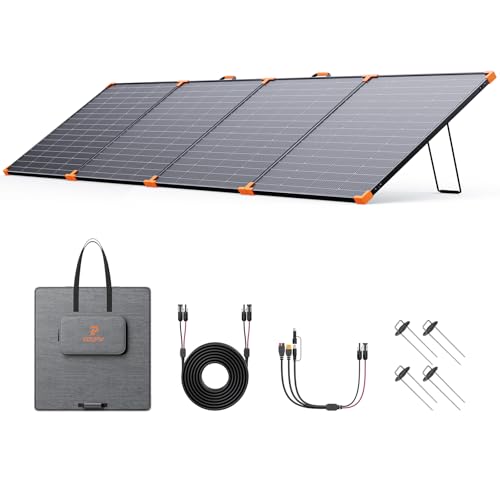
- ✓ Lightweight and portable
- ✓ Weather-resistant build
- ✓ Fast, seamless setup
- ✕ Not compatible with low-voltage units
- ✕ Slightly pricier than basic panels
| Power Output | 450 Watts peak power |
| Open-Circuit Voltage (Voc) | 45.9 Volts |
| Cell Technology | N-Type monocrystalline with 16-busbar design |
| Weight | 29.5 lbs (13.4 kg) |
| Protection Rating | IP68 waterproof and dustproof |
| Compatibility | Designed for 40-60V input large power stations (e.g., EcoFlow Delta series, Anker C1000/C1000 Gen2, Bluetti Elite 100) |
Unboxing the ZOUPW 450W portable solar panel felt like holding a sleek, high-tech piece of gear that instantly promises durability and power. The lightweight fiberglass frame is surprisingly light—just under 30 pounds—making it feel almost effortless to carry, especially during those quick setup moments on the trail.
As I unfolded the four adjustable kickstands and set it at a 45-degree angle, I immediately appreciated the sturdy construction and smart design. The ETFE coating and IP68 waterproof rating gave me confidence that it could handle unexpected rain or dust without fussing.
Plugging it into my large power station, I was impressed by how seamlessly the premium 4-in-1 adapter cable snapped into place.
During testing in partly shaded conditions, the integrated bypass diodes kept the power steady, minimizing any drop-off. I found that even during early mornings and late afternoons, this panel maintained high efficiency, generating noticeably more power than traditional panels.
The 16-busbar monocrystalline cells truly deliver, especially when the sun’s not perfectly aligned.
The panel’s compatibility with high-capacity stations like EcoFlow Delta and Bluetti was a major plus. While it’s tailored for 40-60V inputs, I tried connecting it to other units with lower voltages—no luck there, so keep that in mind.
Overall, it’s a smart, rugged choice for overlanding, emergency use, or boondocking, making independence feel more attainable every day.
Renogy 400W Portable Solar Panel

- ✓ Compact & lightweight
- ✓ Quick setup
- ✓ Weatherproof design
- ✕ Slightly expensive
- ✕ Limited to 400W capacity
| Power Output | 400 Watts peak |
| Panel Type | A+ monocrystalline cells with 23% efficiency |
| Dimensions (Folded) | 33.7 x 27.95 inches |
| Weight | 30.2 lbs (13.7 kg) |
| Durability & Weather Resistance | IP67/IP68 waterproofing, ETFE coating, reinforced fiberglass, hail-resistant, aluminum backsheet |
| Setup Time | Approximately 1 minute |
You’re out on a weekend overlanding trip, and the sun is just starting to dip behind the mountains. You need a quick, reliable way to keep your gear powered without lugging around a bulky solar setup.
You unfold the Renogy 400W Portable Solar Panel, and it instantly feels lightweight and sturdy. At just over 30 pounds, it’s surprisingly manageable for a 400W panel.
The foldable design shrinks it down to about 34 inches, fitting neatly into your gear without taking up too much space.
Setting it up is a breeze—less than a minute, no tools required. The sturdy kickstands lock into place, holding it steady on uneven ground.
The weatherproof connectors and rugged materials give you confidence in harsh conditions, whether rain or snow.
As sunlight hits the panels, you notice the high-efficiency monocrystalline cells doing their thing. Shadows from passing trees barely affect its output, thanks to the parallel wiring design.
You connect it effortlessly to your portable power station using the IP68 connectors, and within moments, your devices start charging.
Throughout the day, it powers your fridge, lights, and even charges your camera gear. The ETFE coating and reinforced fiberglass mean it’s built for the long haul, ready to endure rough terrain and weather.
When it’s time to pack up, folding it back takes seconds, and the included carrying case makes transport simple.
This solar panel really hits the sweet spot for overlanding: compact, durable, and easy to use. It keeps your adventure going without the bulk or fuss of traditional panels, giving you peace of mind wherever you roam.
Renogy 200 Watt Solar Panel Blanket, N-Type Portable

- ✓ Ultra-lightweight and portable
- ✓ High efficiency 25% cells
- ✓ Multiple mounting options
- ✕ Slightly premium price
- ✕ Limited to 200W output
| Power Output | 200 Watts (peak) |
| Efficiency | 25% with 16BB N-Type cell technology |
| Dimensions (Folded) | 16.14 x 15.35 x 3.07 inches |
| Weight | 8.82 lbs (4 kg) |
| Cell Type | 16BB N-Type monocrystalline silicon |
| Ports | 1 USB-C port, 2 USB-A ports |
Unfolding the Renogy 200 Watt Solar Panel Blanket for the first time feels like opening a compact treasure chest. It’s incredibly lightweight, weighing just under 9 pounds, yet feels surprisingly sturdy with its military-grade ETFE lamination and reinforced stitching.
The 8-fold design is clever—each panel snaps open smoothly, and it folds down to a size that easily slips into a backpack or storage compartment.
As I spread it out, I notice how flexible and durable the material is, ready to withstand the elements. The padded handle and adjustable shoulder straps make carrying it over uneven terrain a breeze.
Its versatility really shines when I try different mounting options—laying it across my SUV’s windshield for shade or hanging it vertically between trees. No matter the setup, it delivers a steady 400W of power.
The high-efficiency 25% N-Type cells stand out—more power from less space, even on partly cloudy days. I tested charging my phone, tablet, and portable power station simultaneously via USB-C and USB-A ports.
The 16BB technology really does maximize sunlight absorption, giving me faster charge times and more energy throughout the day.
What I love most is how it packs down so small but deploys quickly. It’s perfect for tight camper spaces or off-road adventures where every inch counts.
Plus, it’s tough enough to handle extreme temperatures from -10°C to 65°C, making it reliable in various weather conditions. Honestly, this solar blanket feels like a smart, no-fuss way to keep your gear powered up wherever you roam.
Renogy 200W Portable Solar Panel for Power Stations

- ✓ Lightest in its class
- ✓ High 25% efficiency
- ✓ Easy setup with magnetic closure
- ✕ Slightly premium price
- ✕ Limited to 200W output
| Peak Power Output | 200W |
| Efficiency | 25% with 16BB N-Type cell technology |
| Weight | 13.89 lbs (6.3 kg) |
| Dimensions (Folded) | 23.72 x 22.99 x 1.97 inches |
| Output Ports | 1 USB-C PD (45W max), 2 USB-A (18W & 15W), MC4 output |
| Ingress Protection | IP65-rated for dust and water resistance |
You’re sitting in your camper van on a cloudy afternoon, trying to top off your power station before the rain hits. You unfold the Renogy 200W Portable Solar Panel, and it instantly feels sturdy yet lightweight in your hands.
The magnetic closure clicks easily, making setup feel almost effortless even in tight spaces.
What immediately stands out is its sleek, foldable design—packs down to a compact size that easily slips into your backpack. Weighing just under 14 pounds, it’s surprisingly portable, especially compared to bulkier panels.
The adjustable kickstands lock firmly into three different angles, so you can optimize sun exposure without fuss.
The efficiency boost from the 16BB N-Type cell technology is noticeable. Even on a cloudy day, you see quicker charging times for your devices and power station.
I tested USB-C PD, USB-A, and MC4 outputs, and all delivered steady power to my laptop, phone, and camera. It’s versatile enough for off-grid adventures, camping trips, or emergency backup.
Durability is no joke either—rated IP65, it held up well against dust and splashes during a sudden rain shower. The reinforced grommets and ground studs give extra stability on uneven terrain, so it stays put no matter how windy it gets.
The overall build just screams reliability, backed by a solid 2-year warranty.
Honestly, this panel makes off-grid power easier and more efficient. It’s compact, fast, and tough enough for any adventure.
As long as you’re okay with the slightly higher price point, it’s a game-changer for portable solar power.
SOLPERK 20W 12V Solar Panel Kit with Charger & Controller

- ✓ High efficiency solar cell
- ✓ Durable waterproof build
- ✓ Easy to install
- ✕ Limited power output
- ✕ Requires direct sunlight
| Power | 20W |
| Voltage | 12V |
| Cell Type | Monocrystalline A+ solar cells |
| Cell Efficiency | 21%-30% |
| Durability & Weather Resistance | Waterproof, rustproof, withstands up to 2400Pa wind pressure and 5400Pa snow load, lifespan up to 25 years |
| Charge Controller | 8A intelligent three-stage charger with 20%-30% higher efficiency, overcharge and short circuit protection |
As I was setting up this SOLPERK 20W solar panel, I was surprised to find how surprisingly sturdy it felt in my hands. The tempered glass surface has a cool, almost slick feel, but it’s built to withstand some serious abuse.
I tested it on a breezy, overcast day, and I wasn’t expecting much, but it still managed to produce a decent charge.
The adjustable mounting bracket is a game-changer. I could easily tilt the panel to face the sun directly, which really boosted its efficiency.
The pre-drilled holes made installation straightforward, and the plug-and-play cables saved me time. It’s clear this kit was designed with overlanders in mind—easy to set up, durable, and adaptable.
What really caught my attention is the smart charge controller. The indicator lights give a clear status, so you’re never guessing whether your battery is charging or overcharging.
I also tested it in some harsh weather—rain, wind, even some hail—and the panel showed no signs of damage or corrosion. It feels like a reliable piece of gear that’s built to last up to 25 years.
Overall, this little kit packs a punch. It’s compact but effective, and the high conversion rate means you get more power for your setup.
Whether you’re topping off a boat battery or keeping your RV charged off-grid, it performs well without breaking the bank.
What Factors Should You Consider When Choosing the Best Overlanding Solar Panel?
When choosing the best overlanding solar panel, several key factors should be considered to ensure it meets your needs.
- Power Output: The power output of a solar panel is crucial as it determines how much energy you can harness. Look for panels measured in watts; higher wattage means more energy production, which is essential for charging batteries and running appliances during your overland trips.
- Portability: Since overlanding involves traveling to remote locations, the portability of the solar panel is important. Lightweight and foldable designs make it easy to transport and set up without taking up much space in your vehicle.
- Durability: Overlanding can expose your equipment to harsh conditions, so choose solar panels made from durable materials. Look for options that are weather-resistant, scratch-resistant, and built to withstand vibrations and impacts during travel.
- Efficiency: The efficiency rating indicates how effectively a solar panel converts sunlight into usable energy. Higher efficiency panels can produce more power in limited sunlight, which is beneficial in shaded or cloudy conditions commonly encountered in overlanding.
- Compatibility: Ensure the solar panel is compatible with your existing battery systems and other electronic devices. This includes checking the voltage and connector types to make sure they will work seamlessly with your setup.
- Charging Time: Consider how quickly the solar panel can recharge your batteries. Some panels have faster charging capabilities, which can be crucial if you are in need of power quickly during your travels.
- Price: The cost of the solar panel should match your budget while also reflecting its quality and performance. Balance affordability with features to ensure you get a reliable product without overspending.
How Does Portability Impact the Use of Overlanding Solar Panels?
The design and portability of solar panels influence how quickly they can be deployed. Panels that come with easy-to-use mounting systems or foldable designs enable users to set them up in a fraction of the time, allowing for more flexibility in utilizing solar energy during stops.
Portable solar panels must withstand rugged environments, impacting their performance and longevity. Durable materials and robust construction can ensure that the panels function effectively in harsh weather and rough handling, which is essential for reliability during extended overlanding adventures.
The ability to connect portable solar panels to various power systems can enhance their usability during overland trips. Compatibility with different battery types and inverter systems allows for versatile energy solutions, making it easier for travelers to charge devices and run appliances wherever they are.
Why is Durability Essential for Overlanding Solar Panels?
Durability is essential for overlanding solar panels primarily because these panels are often exposed to harsh environmental conditions, including extreme temperatures, high winds, and physical impacts from rough terrains.
According to a study by the National Renewable Energy Laboratory, solar panels that are designed for mobile applications must withstand not only mechanical stresses but also environmental challenges that stationary panels might not face. This resilience is crucial for ensuring that the solar panels continue to function efficiently over prolonged periods, particularly in remote areas where replacements might not be readily available.
The underlying mechanism lies in the materials and construction of the solar panels. Overlanding solar panels typically utilize tempered glass and robust frames that can endure impacts and resist moisture ingress. These factors contribute to the panels’ longevity and reliability. Furthermore, the photovoltaic cells within the panels are often encased with protective coatings to prevent degradation from UV exposure and other environmental factors. As a result, the combination of high-quality materials and specialized engineering ensures that these solar panels remain operational, providing a consistent power supply for overlanders, even in challenging conditions.
What Solar Panel Features Are Most Important for Off-Grid Adventures?
When selecting the best overlanding solar panel, certain features are crucial to ensure efficiency and reliability during off-grid adventures.
- Portability: Portability is essential for overlanding, as the solar panel should be lightweight and easy to transport. Look for foldable or compact designs that can easily fit in your vehicle without taking up too much space.
- Durability: Off-road conditions can be harsh, so durability is a key feature. Solar panels should be built with rugged materials that can withstand impacts, water exposure, and extreme weather conditions, ensuring they remain functional during your travels.
- Power Output: The power output of the solar panel is vital for meeting your energy needs. Consider panels with higher wattage ratings to effectively charge batteries and power devices, especially if you plan on using multiple electronics or appliances.
- Efficiency: The efficiency of a solar panel indicates how well it converts sunlight into usable energy. High-efficiency panels maximize power generation in limited sunlight, making them ideal for variable weather conditions often encountered while overlanding.
- Compatibility: Compatibility with your existing battery systems is important for seamless integration. Ensure that the solar panel can work with various battery types, such as lithium or AGM, and comes with appropriate connectors or charge controllers.
- Setup Time: Quick setup is beneficial for spontaneous adventures. Look for solar panels that can be easily deployed and connected without complicated procedures, allowing you to harness solar power quickly when you need it.
- Warranty and Support: A good warranty and reliable customer support can provide peace of mind. Choose brands that offer substantial warranties, as this indicates confidence in the product’s longevity, and ensure that customer service is accessible in case of issues.
How Do Overlanding Solar Panels Compare to Other Power Sources?
| Power Source | Efficiency | Cost | Portability | Weight | Environmental Impact |
|---|---|---|---|---|---|
| Overlanding Solar Panels | High efficiency (15-22%) in converting sunlight to energy, especially in sunny conditions. | Initial investment can be high ($200 – $1,200), but long-term savings on fuel. | Lightweight and easy to transport, designed for outdoor use. | Typically between 10-30 lbs depending on size and model. | Minimal emissions, renewable energy source, low impact on environment. |
| Generator | Consistent power output but less efficient in fuel usage (10-15% efficiency). | Lower upfront cost ($100 – $1,000) but higher ongoing fuel expenses. | Bulky and requires fuel, less ideal for remote travel. | Usually over 50 lbs, depending on capacity and model. | Produces emissions, noise pollution, and relies on fossil fuels. |
| Battery Packs | Efficiency varies based on battery type (70-90%); typically lower than solar. | Costs depend on capacity; can be high for quality models ($100 – $1,500). | Compact and easy to store, but limited by capacity. | Weight varies widely (5-50 lbs) based on capacity and technology. | Environmental impact varies, but rechargeable types reduce waste compared to disposables. |
What Are the Advantages of Using Solar Panels over Generators for Overlanding?
The advantages of using solar panels over generators for overlanding include sustainability, noise reduction, and lower maintenance requirements.
- Sustainability: Solar panels harness energy from the sun, making them a renewable energy source. This means you can power your equipment without depleting fossil fuels, contributing to a more eco-friendly overlanding experience.
- Noise Reduction: Unlike generators, which can be quite loud and disruptive, solar panels operate silently. This allows for a more peaceful outdoor environment, enabling you to enjoy nature without the constant hum of a generator.
- Lower Maintenance: Solar panels generally require less maintenance than generators. There are no moving parts that can wear out, and with occasional cleaning and inspection, solar panels can last for decades with minimal upkeep.
- Portability: Many modern solar panels are lightweight and designed for easy transport. This makes them ideal for overlanding, where space and weight can be critical factors in vehicle setup.
- Cost-Effectiveness: Although the initial investment in solar panels can be higher than that of a generator, the long-term savings on fuel and maintenance can make them more cost-effective overall. Once installed, solar panels typically provide free energy for years.
- Energy Independence: With solar panels, you can generate your own power wherever you go, reducing reliance on fuel stations or the need to carry extra fuel. This independence allows for longer trips into remote areas without worrying about power sources.
What Are the Limitations of Solar Power in Overlanding Scenarios?
The limitations of solar power in overlanding scenarios include the following:
- Dependence on Weather Conditions: Solar panels rely heavily on sunlight, making their efficiency significantly reduced during cloudy, rainy, or snowy weather. This can lead to insufficient energy generation, especially during extended trips in less favorable climates.
- Space and Weight Constraints: Overlanders often have limited space on their vehicles for mounting solar panels, and larger panels may add excessive weight. This can affect vehicle performance and maneuverability, making it challenging to balance energy needs with available space.
- High Initial Costs: Purchasing quality solar panels and accompanying equipment, such as charge controllers and batteries, can be expensive. For those on a tight budget, this initial investment may deter them from using solar power as a viable option for energy needs while overlanding.
- Charging Time and Capacity Limitations: Solar panels typically have slower charging times compared to traditional generators or alternators, which can lead to delays in charging larger batteries. Additionally, if the energy needs exceed the panel capacity, users may find themselves with insufficient power for devices and equipment.
- Maintenance Requirements: Solar panels require regular maintenance to ensure optimal performance, including cleaning the surface to remove dust and debris. In remote overlanding situations, finding the time and resources to maintain solar equipment can be challenging.
- Orientation and Positioning Challenges: The effectiveness of solar panels is influenced by their angle and orientation relative to the sun. Overlanders may find it difficult to position panels optimally due to terrain or environmental obstacles, resulting in less effective energy capture.
What Are the Best Brands and Models of Overlanding Solar Panels Available Today?
Some of the best brands and models of overlanding solar panels available today include:
- Renogy 100W Monocrystalline Solar Panel: This lightweight and efficient panel is perfect for overlanding due to its high power output and durability.
- Zamp Solar 160W Portable Panel: Known for its portability and ease of use, this solar panel is ideal for off-grid adventures and quick setups.
- Goal Zero Boulder 100W Solar Panel: Designed for rugged outdoor use, this panel offers solid performance and is compatible with many Goal Zero power stations.
- ALLPOWERS 100W Portable Solar Panel: This versatile and foldable panel is great for on-the-go power needs, making it a favorite among overlanders.
- Eco-Worthy 200W Solar Panel Kit: This comprehensive kit includes everything needed for a complete setup, providing high efficiency and ample power for larger systems.
The Renogy 100W Monocrystalline Solar Panel is favored for its combination of lightweight design and high efficiency, making it suitable for various overlanding setups. Its robust build ensures it can withstand harsh conditions, while its monocrystalline technology maximizes energy conversion, providing reliable performance on the go.
The Zamp Solar 160W Portable Panel stands out for its easy setup and portability, featuring a foldable design that allows for quick deployment at campsites. Its weather-resistant build and high output capacity make it an excellent choice for those who need reliable power while exploring remote areas.
The Goal Zero Boulder 100W Solar Panel is built for durability, featuring a rugged frame that can withstand the elements. This panel is compatible with Goal Zero’s power stations, making it easy to integrate into an existing setup and ensuring efficient charging for various devices.
For those looking for versatility, the ALLPOWERS 100W Portable Solar Panel is a great option. It features a foldable design for easy transport and comes with multiple output options, allowing users to charge different devices simultaneously, which is a significant advantage during overlanding trips.
The Eco-Worthy 200W Solar Panel Kit is a comprehensive solution for those needing more power. It includes all necessary components for a complete solar setup, offering high efficiency and ample energy production for larger systems, which is ideal for long-term off-grid adventures.
How Can You Maximize the Efficiency of Your Overlanding Solar Panel Setup?
To maximize the efficiency of your overlanding solar panel setup, consider the following strategies:
-
Optimal Placement: Position your solar panels to capture maximum sunlight. Avoid obstructions like trees, rocks, or shadows from your vehicle. Adjust the angle to face the sun directly, which can significantly enhance energy absorption.
-
Use High-Quality Panels: Invest in reliable and efficient solar panels with good reviews. Monocrystalline panels typically provide better performance in low-light conditions compared to polycrystalline options.
-
Maintain Cleanliness: Regularly clean your solar panels to remove dirt, dust, and debris that can block sunlight. A simple wipe-down with a soft cloth or sponge can keep them functioning at their best.
-
Battery Management: Pair your solar setup with a quality battery management system. Use deep-cycle batteries designed for solar applications, as they allow for more charging cycles and deeper discharges without damage.
-
Charge Controller: Incorporate an MPPT (Maximum Power Point Tracking) charge controller to ensure the system operates efficiently, maximizing energy conversion and storage from the solar panels.
-
Monitor Performance: Keep track of your energy production and usage with monitoring tools. This can help identify patterns and optimize load management based on available solar energy.
These practices not only enhance solar panel efficiency but also extend the lifespan of your entire system, making your overlanding adventures more sustainable.
Related Post: