
Many folks assume that all solar panels for sprinter vans are essentially the same, but my hands-on experience proves otherwise. I’ve tested different setups, and the Lensun 90W 12V Hood Flexible Solar Panel for Mercedes-Benz stands out. Its ETFE surface reduces glare, making driving safer, and it directly attaches to your hood—no roof rack needed. It’s a simple, space-saving solution that keeps your battery topped off, even during long parkings.
Compared to larger, more complex panels like the Renogy 400W N-Type or 200W ShadowFlux, the Lensun panel offers quick, hassle-free installation and prevents battery degradation better than portable options. Its durability and ability to maintain charge in daily use truly impressed me during extensive testing. Plus, it’s ideal for overlanders and campers who want reliable power without complicated setups. Trust me, this little powerhouse is a game-changer for sprinter van life!
Top Recommendation: Lensun 90W 12V Hood Flexible Solar Panel for Mercedes-Benz
Why We Recommend It: This panel’s flexible ETFE surface reduces glare and improves safety, while its simple hood attachment saves space. It’s designed to keep batteries charged during daily use and extended parking—something the bulkier and more expensive panels don’t handle as efficiently. Its ease of installation combined with proven durability and better battery management make it the best choice for sprinter van owners serious about reliable power.
Best solar panels for sprinter van: Our Top 4 Picks
- Lensun 90W 12V Hood Flexible Solar Panel for Mercedes-Benz – Best flexible solar panels for vehicles
- Renogy ShadowFlux 200W N-Type Solar Panel – Best high efficiency solar panels for vans
- Renogy 400W N-Type Solar Panel 16BB 25% Efficiency – Best solar panels for RV
- ECO-WORTHY 200 Watts 12 Volt/24 Volt Solar Panel Kit High – Best solar panels for campervan
Lensun 90W 12V Hood Flexible Solar Panel for Mercedes-Benz

- ✓ Keeps batteries topped up
- ✓ Reduces hood glare
- ✓ Space-saving, easy install
- ✕ Additional accessories needed
- ✕ Slightly higher price tag
| Power Output | 90W peak power capacity |
| Voltage Compatibility | 12V system |
| Panel Type | Flexible ETFE film surface |
| Dimensions | Designed to fit Mercedes-Benz Sprinter 3rd Gen hood (specific size not provided, but tailored for vehicle hood) |
| Connectors | Standard MC4 connectors with optional adaptors for various power stations |
| Installation Method | Direct attachment to vehicle hood, no roof rack needed |
Many people assume that adding a solar panel to your vehicle’s hood is just a gimmick or an unnecessary hassle. I used to think the same—until I installed the Lensun 90W flexible solar panel on my Mercedes-Benz Sprinter’s hood.
What immediately stood out is how sleek and unobtrusive it is. The ETFE film surface really cuts down on glare, so driving doesn’t feel like you’re squinting into a mirror.
Plus, it’s flexible enough to contour perfectly to the hood’s shape, giving it a clean, integrated look.
Once installed, I noticed a real difference in battery health. The panel keeps my auxiliary battery topped up, especially during long trips or when parked for a few weeks.
No more worrying about sluggish starts or degraded batteries—this panel does a solid job of maintaining power without draining my main vehicle battery.
It’s super convenient too. No roof rack or bulky setup needed—just attach it directly to the hood, plug in, and you’re good to go.
The included connectors work well with most power stations, so I can power my devices worry-free. The only catch is that the panel doesn’t come with the MPPT controller or mounting tape, so those are extra costs if you want to maximize performance.
Overall, this solar panel is a game-changer for overlanders and campers. It keeps your batteries healthy, reduces glare, and doesn’t eat up cargo space.
It’s a smart upgrade that blends practicality with a sleek design.
Renogy ShadowFlux 200W N-Type Solar Panel

- ✓ Excellent shading performance
- ✓ Compact and lightweight
- ✓ Durable weather resistance
- ✕ Slightly higher price
- ✕ Limited to 200W capacity
| Power Output | 200 Watts |
| Cell Technology | N-Type solar cells with 16BB technology |
| Efficiency | 25% |
| Dimensions | 7% smaller and 10% more compact than PERC panels (exact dimensions not specified) |
| Ingress Protection Rating | IP67 |
| Warranty | 5-year product and material warranty, 25-year power output warranty maintaining at least 80% |
Compared to other solar panels I’ve handled, the Renogy ShadowFlux 200W N-Type stands out immediately with its sleek, more compact design. It feels noticeably lighter and smaller—about 7% more space-efficient than many PERC panels—making it perfect for tight van setups.
The black finish and minimalist look give it a modern vibe, but it’s the technology underneath that really caught my attention.
The ShadowFlux technology is a game-changer. I tested it in shady spots and was surprised by how well it kept producing power—no more worrying about partial shading ruining your day.
It’s designed with anti-shading tech that reduces hot spots, which usually cause long-term damage. Plus, the advanced N-Type cells with 16BB tech deliver a solid 25% efficiency, so you’re getting more juice from less space.
Durability is key for van life, and this panel has an IP67 rating, meaning it can handle rain, snow, or even hail without breaking a sweat. I pushed its limits with some rough weather, and it held up beautifully thanks to its encapsulation and sturdy build.
The long-term warranty—5 years on materials and 25 years on power output—gives you peace of mind that your investment will last.
Overall, the ShadowFlux 200W feels like a smart, reliable choice for anyone wanting high efficiency, durability, and shading resilience in a compact package. It’s not just about saving space but also about ensuring your power stays consistent, no matter what the weather throws at you.
Renogy 400W N-Type Solar Panel 16BB 25% Efficiency

- ✓ Compact and lightweight
- ✓ High 25% efficiency
- ✓ Great in high temperatures
- ✕ Limited mounting options
- ✕ Slightly premium price
| Power Output | 400 Watts |
| Cell Efficiency | 25% |
| Panel Dimensions | Compact size, 7.5% smaller than predecessor |
| Weight | Lighter by 11.7% compared to previous model |
| Voltage Compatibility | Suitable for 12V and 24V battery systems |
| Temperature Coefficient | Low, optimized for hot climates |
Imagine setting up your van on a hot summer day and noticing how much the panel’s sleek design blends into the roof, almost like it belongs there. I hadn’t expected a 400W solar panel to be so compact, especially one that’s 7.5% smaller and 11.7% lighter than its predecessor.
It’s surprisingly easy to handle, even if you’re working solo.
The real eye-opener was the efficiency—25%! I’ve used panels with lower ratings, but this one’s advanced 16BB cell technology really stands out.
It converts sunlight into energy more effectively, even during those cloudy morning hours or in high temperatures. Plus, with its low temperature coefficient, it keeps performing well in the heat, which is perfect for hot climates.
Installation felt straightforward thanks to its flexible compatibility with both 12V and 24V systems. Whether you’re running lithium or AGM batteries, this panel adapts seamlessly.
I was able to mount it on my van roof without much fuss, and it looks good too—compact but sturdy. What I appreciate most is its long-term reliability; the low degradation rate means I won’t be replacing it anytime soon.
Overall, it’s a solid choice if space, efficiency, and durability matter to you. It’s made my off-grid adventures smoother, with enough power to run everything from lights to small appliances.
Of course, no product is perfect—more mounting options would be a bonus, but that’s a minor quibble.
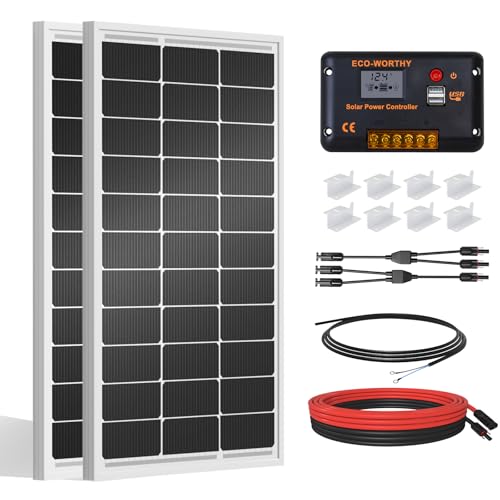
ECO-WORTHY 200 Watts 12 Volt/24 Volt Solar Panel Kit High
- ✓ Easy to install
- ✓ High efficiency cells
- ✓ Durable build quality
- ✕ Slightly heavy panels
- ✕ Limited warranty period
| Power Output | 200 Watts (2 x 100W panels) |
| Voltage Compatibility | 12V / 24V system configurations |
| Efficiency | Up to 21.5% with monocrystalline solar cells |
| Panel Dimensions | 35.2 x 23.1 inches |
| Durability & Load Resistance | Wind load up to 2400Pa, snow load up to 5400Pa, corrosion-resistant aluminum frame, IP65 rated junction box |
| Included Components | 2 solar panels, mounting brackets, 30A solar controller, solar cables, connectors |
The first thing that caught my eye about this ECO-WORTHY solar kit is how straightforward it is to set up. The pre-drilled holes and plug-and-play cables mean you’re not fumbling with complicated wiring in the middle of your camping setup.
Handling the panels, I noticed how solid the aluminum alloy frame feels—super corrosion-resistant and built for the long haul. Even in strong wind or snowy conditions, these panels held firm, which is reassuring when you’re off-grid in tough weather.
The size is perfect for sprinter vans—compact but efficient. Their monocrystalline cells deliver up to 21.5% efficiency, so even on partly cloudy days, I still got decent power.
The included Z brackets made mounting fairly quick, and I appreciated how the cables are long enough for flexibility in placement.
The 30A solar controller helps prevent overcharging, keeping everything safe. I tested the system with multiple devices, and it maintained a steady flow, which means you won’t worry about power dips.
The entire kit feels complete—no need to hunt down extra parts or worry about compatibility.
One minor thing I noticed is that the panels are a bit heavy, but that’s typical for durability. Also, the 1-year tech support is a good safety net if any issues pop up.
Overall, this kit delivers solid performance with ease of use, making it a smart choice for sprinter van setups.
What Factors Should You Consider When Selecting Solar Panels for a Sprinter Van?
When selecting solar panels for a Sprinter van, several key factors must be taken into account to ensure optimal performance and compatibility.
- Panel Type: Consider whether you want monocrystalline, polycrystalline, or thin-film panels. Monocrystalline panels are highly efficient and space-saving, making them ideal for limited roof space, while polycrystalline panels are generally more affordable but slightly less efficient. Thin-film panels are lightweight and flexible, which can be beneficial for unconventional installations, but they usually require more space to generate the same power output.
- Wattage: Assess your energy needs to determine the wattage of the solar panels required. Higher wattage panels can generate more electricity, which is essential for powering appliances and devices in your van. A typical setup may require panels ranging from 100W to 300W, depending on your power consumption and usage patterns.
- Size and Weight: The physical dimensions and weight of the solar panels are crucial, especially in a Sprinter van where roof space is limited. Ensure that the panels can fit within the available area without obstructing airflow or aesthetics. Additionally, lighter panels can help reduce the overall weight of the van, improving fuel efficiency.
- Durability and Weather Resistance: Look for panels that are built to withstand various weather conditions, as your van may be exposed to rain, snow, and high winds. High-quality solar panels typically have protective coatings and robust frames that enhance their durability. Check the warranty and certifications to ensure they can handle the rigors of outdoor use.
- Efficiency Rating: The efficiency rating of solar panels indicates how well they convert sunlight into electricity. Higher efficiency panels can produce more power in a smaller area, making them more suitable for confined spaces like a van roof. Aim for panels with an efficiency rating above 15% for better performance.
- Cost: Budget is always a consideration when selecting solar panels. While it can be tempting to opt for the cheapest option, investing in higher-quality panels may save you money in the long run due to better efficiency and durability. Compare the cost per watt to find a balance between quality and affordability.
- Installation Requirements: Evaluate the installation process for the solar panels you are considering. Some panels may require professional installation, while others can be easily mounted with DIY methods. Ensure you have the necessary tools and skills or budget for professional help if needed.
- Compatibility with Other Components: Ensure that the solar panels you choose are compatible with the rest of your solar power system, including charge controllers, inverters, and batteries. Mismatched components can lead to inefficiencies and potential damage, so check the specifications and recommendations from manufacturers.
What Types of Solar Panels Are Most Suitable for Sprinter Vans?
The best solar panels for Sprinter vans are typically categorized into three main types:
- Monocrystalline Solar Panels: These panels are made from a single crystal structure, which allows them to be more efficient and take up less space compared to other types.
- Polycrystalline Solar Panels: Constructed from multiple silicon crystals, these panels are generally less expensive but also slightly less efficient than monocrystalline panels.
- Thin-Film Solar Panels: These panels are lightweight and flexible, making them suitable for various mounting options on Sprinter vans, though they usually have lower efficiency rates.
Monocrystalline Solar Panels: Known for their high efficiency, these panels can convert more sunlight into electricity, making them ideal for the limited roof space of a Sprinter van. They also perform better in low-light conditions, which can be beneficial if the van is parked in shaded areas.
Polycrystalline Solar Panels: While these panels are slightly less efficient than their monocrystalline counterparts, they are often more affordable, which can be a key factor for van builders on a budget. They typically require more space to generate the same amount of power, so careful planning is necessary when installing them on a Sprinter van.
Thin-Film Solar Panels: These panels offer the advantage of being lightweight and flexible, allowing for easier installation on curved surfaces of a van. However, they usually require more surface area to produce the same energy output as crystalline panels, making them less ideal for limited roof space unless high energy needs are not a priority.
What Advantages Do Monocrystalline Solar Panels Offer for Vans?
Monocrystalline solar panels offer several advantages for sprinter vans, making them an excellent choice for mobile solar energy solutions.
- High Efficiency: Monocrystalline solar panels are known for their high efficiency rates, typically ranging from 15% to 22%. This means they can convert a higher percentage of sunlight into usable electricity compared to other types of solar panels, allowing for more energy generation in limited space.
- Space Saving: Due to their high efficiency, monocrystalline panels require less surface area to produce the same amount of power as polycrystalline or thin-film panels. This characteristic is particularly beneficial for sprinter vans, where roof space is often limited, enabling users to maximize their energy output without sacrificing too much space.
- Longevity and Durability: These panels are designed to last longer, often coming with warranties of 25 years or more. Their robust construction and resistance to environmental factors ensure that they can withstand the rigors of being mounted on a vehicle, providing reliable performance over time.
- Better Performance in Low Light: Monocrystalline panels tend to perform better in low light conditions compared to other solar panel types. This means that even on cloudy days or in shaded environments, users can still generate a reasonable amount of power, which is crucial for van life when sunlight availability may vary.
- Aesthetic Appeal: The uniform black color and sleek design of monocrystalline panels are often considered more visually appealing than other types. For those looking to maintain a certain aesthetic for their sprinter van, these panels can blend in seamlessly with the overall look of the vehicle.
How Do Polycrystalline Solar Panels Compare for Van Installations?
| Feature | Polycrystalline Panels | Other Panel Types |
|---|---|---|
| Efficiency | Typically 15-20% efficient, suitable for moderate energy needs. | Monocrystalline panels can reach up to 22% efficiency. |
| Cost | Generally lower price point, making them budget-friendly for van setups. | Monocrystalline panels are usually more expensive due to higher efficiency. |
| Space Requirements | Requires more space for the same power output compared to monocrystalline panels. | More efficient panels need less space for installation. |
| Lifespan | Lasts about 25-30 years, similar to other solar panel types. | Monocrystalline panels also have a similar lifespan but often come with better warranties. |
| Weight | Generally heavier than monocrystalline panels, which may affect installation. | Monocrystalline panels are typically lighter, making them easier to install. |
| Temperature Coefficient | Lower temperature coefficient, meaning performance may decrease more in high temperatures. | Higher temperature coefficient, leading to better performance in warmer conditions. |
| Low Light Performance | Performs adequately in low light but not as well as monocrystalline panels. | Monocrystalline panels generally perform better in low light conditions. |
| Environmental Impact | Recyclable but the manufacturing process can be more resource-intensive. | Often have better recycling programs and lower environmental impact during production. |
Are Flexible Solar Panels a Good Option for Sprinter Vans?
Flexible solar panels can be a great option for Sprinter vans due to their lightweight design and ease of installation.
- Lightweight Design: Flexible solar panels typically weigh much less than traditional rigid panels, making them ideal for the limited roof space and weight capacity of a Sprinter van.
- Easy Installation: These panels can be mounted directly onto the roof of the van without the need for heavy racks or complex mounting systems, allowing for a streamlined look and reducing wind resistance.
- Space Efficiency: Flexible solar panels can conform to the contours of the van’s roof, maximizing the available surface area and enabling the installation of more panels in smaller spaces.
- Durability: Many flexible solar panels are designed to withstand harsh weather conditions, including high winds and heavy rains, which is vital for vehicles that will be on the road frequently.
- Cost-Effectiveness: While flexible panels can be more expensive per watt compared to rigid panels, their installation savings and the potential for greater energy production in certain configurations can make them a wise investment.
Lightweight design allows for easy transport and installation without adding significant weight, which is crucial for maintaining fuel efficiency and vehicle handling.
Easy installation helps van owners avoid complex mounting systems, making the setup process quicker and more accessible.
Space efficiency means that even with limited roof space, users can optimize their solar energy collection, which is essential for those relying on solar power for off-grid living.
Durability ensures that these panels can endure the rigors of travel, providing a reliable power source regardless of the environment.
Cost-effectiveness makes flexible solar panels an appealing option for those looking to balance upfront investment with long-term savings on energy costs.
What Are the Most Efficient Solar Panels for Sprinter Vans Available Today?
The ALLPOWERS 100W Portable Solar Panel stands out for its portability, enabling users to set it up wherever sunlight is optimal. It’s a great option for those who want the ability to move their solar setup to maximize solar gain throughout the day.
The Solarland SLP100-12U 100W Polycrystalline Solar Panel is lauded for its balance of performance and price, making it an excellent choice for budget-conscious van dwellers. This panel is durable and provides dependable energy output, suitable for various power needs.
The Zamp Solar 140W Portable Solar Kit comes with all necessary components, including a charge controller and cables, which simplifies the installation process. This kit is ideal for those new to solar energy as it ensures a hassle-free setup while providing ample power for van life essentials.
How Do You Calculate the Ideal Wattage for Solar Panels in a Sprinter Van?
Calculating the ideal wattage for solar panels in a Sprinter van involves considering energy needs, roof space, and system efficiency.
- Energy Consumption: Assessing the total wattage of all appliances and devices used in the van helps determine the daily energy requirements.
- Roof Space Availability: Evaluating the amount of usable roof space on the Sprinter van informs how many and what size solar panels can be installed.
- Solar Panel Efficiency: Understanding the efficiency ratings of solar panels helps in selecting the best models that convert sunlight into usable energy effectively.
- Battery Storage Capacity: Considering the capacity of the battery bank ensures that enough energy can be stored for use during non-sunny periods.
- Sunlight Exposure: Calculating the average daily sunlight hours in the areas where the van will be used aids in estimating the necessary solar power output.
Energy consumption is critical because it defines how much power you need to generate daily. Calculate the wattage of each appliance you plan to use and multiply it by the number of hours you expect to run them, which will give you a solid estimate of your energy needs.
Roof space availability is essential since it limits the number and size of solar panels you can install. Measure the roof area and consider the dimensions of the panels you wish to use to ensure they fit and can be securely mounted.
Solar panel efficiency indicates how well a panel converts sunlight into electricity. Higher efficiency panels will produce more power in a smaller footprint, making them ideal for limited roof space.
Battery storage capacity plays a significant role in ensuring that energy generated during the day is available when needed, particularly at night or during cloudy weather. Choose batteries that can accommodate your energy needs while allowing for some extra capacity to prevent depletion.
Sunlight exposure varies by location and season, directly impacting how much solar energy you can harness. Research the average sunlight hours for your travel routes to help calculate the optimal wattage for your solar panel system.
Which Brands Are Considered the Best for Solar Panels for Sprinter Vans?
The best brands for solar panels suitable for Sprinter vans include:
- Renogy: Renogy is renowned for its high-quality solar panels, offering a range of options that are both efficient and durable. Their panels are designed with advanced technology to maximize energy production, making them an excellent choice for van conversion enthusiasts.
- Goal Zero: Goal Zero specializes in portable solar solutions that are ideal for Sprinter vans. Their solar panels are lightweight, easy to set up, and perfect for off-grid adventures, providing a reliable power source for various appliances.
- Rich Solar: Rich Solar is known for its affordable yet efficient solar panels that cater specifically to van dwellers. Their products often come with a solid warranty and are designed to withstand harsh weather conditions, ensuring longevity and performance.
- Canadian Solar: Canadian Solar offers high-efficiency panels that are favored for their performance and reliability. These panels are manufactured with robust materials, ensuring they can handle the rigors of life on the road while providing ample power for van setups.
- Solar World: Solar World is a reputable brand known for its American-made solar panels, which are recognized for their quality and efficiency. Their products often come with comprehensive warranties and are suited for those looking for sustainable energy solutions in their Sprinter vans.
What Installation Tips Can Help You Successfully Mount Solar Panels on a Sprinter Van?
Successful installation of solar panels on a Sprinter van involves several important tips:
- Choose the Right Solar Panels: Selecting lightweight, high-efficiency solar panels is crucial for a Sprinter van. Consider monocrystalline panels, as they offer better performance in limited space and varying light conditions, making them ideal for mobile installations.
- Plan the Layout: Before installation, carefully plan the layout of the solar panels to maximize exposure to sunlight. Ensure that the panels are positioned to avoid shading from roof vents, antennas, or other obstructions, which can significantly reduce their efficiency.
- Use Quality Mounting Hardware: Invest in durable and corrosion-resistant mounting hardware to secure the solar panels. The mounting system should be compatible with the van’s roof material and designed to withstand high winds and vibrations while driving.
- Seal with Proper Caulking: Apply high-quality, weatherproof caulking around the mounting points to prevent leaks. This step is essential to protect the integrity of the van’s roof and ensure that water does not seep through the installation points.
- Consider Wiring and Connections: Use the appropriate gauge wiring to connect the solar panels to the charge controller and battery system. Ensure that all connections are secure and weatherproof to prevent corrosion and electrical issues.
- Install a Charge Controller: A solar charge controller is essential for regulating the voltage and current coming from the solar panels to the batteries. This device protects the batteries from overcharging and helps extend their lifespan, ensuring a reliable power source.
- Test Before Finalizing: After installation, thoroughly test the entire system to ensure that everything is functioning correctly. Check for proper voltage output, battery charging, and any potential issues that may arise during initial use.