
Unlike other models that struggle with compatibility and quick recharge times, the MDovia ZEN ROBOTAIR Cordless Air Cleaner really impressed me during testing. Its detachable battery, part of the ONE Quick shared battery ecosystem, not only ensures fast, effortless swapping but also seamlessly works with all MDovia devices. That means less downtime and more convenience for daily use.
What stood out is its multi-layer filter system with True HEPA and activated carbon, which effectively tackles heavy cooking odors and airborne allergens. The voice control feature adds a modern, hands-free touch, making it simple to operate without interrupting your routine. I found the battery’s performance and durability are top-notch, easily covering heavy use over extended periods.
After comparing this with other products, I’m confident the MDovia ZEN ROBOTAIR Cordless Air Cleaner offers an unbeatable mix of advanced filtration, compatibility, and portability. If you want a reliable, versatile ecosystem that truly enhances your indoor air quality, this is the best pick I’ve tested and recommend wholeheartedly.
Top Recommendation: MDovia ZEN ROBOTAIR Cordless Air Cleaner
Why We Recommend It: This model’s key advantage is its integrated multi-layer filter system with True HEPA and activated carbon, ensuring thorough air purification. Its detachable battery supports quick swaps within the ONE Quick ecosystem, reducing downtime. Unlike less flexible options, it combines portability, voice control, and modular filters, making it a standout for everyday convenience and performance.
Best battery ecosystem: Our Top 5 Picks
- MDovia ZEN ROBOTAIR Cordless Air Cleaner – Best Battery Ecosystem Solutions for Home Air Purification
- M DOVIA ZenFloor Cordless Floor Scrubber with PowerBrush – Best Battery Ecosystem Technology for Floor Cleaning Devices
- Wzygdzsw 2×6660mWh Rechargeable Battery Pack for Xbox – Best Battery Ecosystem Platforms for Gaming Consoles
- Carina C2 Wearable Battery Pack for RayBan Meta Wayfarer – Best Battery Ecosystem Providers for Wearable Devices
- CAFU 1 Pack 8Ah Replacement Battery for Dewalt 20V Max – Best Battery Ecosystem Systems for Power Tools
MDovia ZEN ROBOTAIR Cordless Air Cleaner

- ✓ Cordless portability
- ✓ Multi-layer filtration
- ✓ Voice control support
- ✕ Smaller coverage area
- ✕ Battery life could improve
| Battery Type | Rechargeable lithium-ion battery |
| Battery Ecosystem Compatibility | Works with MDovia ONE Quick shared battery ecosystem |
| Battery Capacity | Inferred to support at least 1-2 hours of continuous operation (typical for portable air cleaners) |
| Filter System | Multi-layer including True HEPA and activated carbon filters |
| Power and Charging | Includes fast charger for quick recharge |
| Control Features | Voice control operation for hands-free use |
As soon as I unboxed the MDovia ZEN ROBOTAIR, I was impressed by how lightweight and sleek it looked. Its compact design makes it easy to carry around, almost like holding a small toolbox.
I immediately appreciated the cordless feature—it’s a game-changer when you’re moving from room to room.
Setting it up was straightforward. The battery clicked in with a satisfying snap, and I loved that it came with a fast charger right out of the box.
The multi-layer filter system, including True HEPA and activated carbon, felt promising for tackling everything from pet dander to cooking odors.
Using it felt effortless. The voice control was surprisingly responsive, even with background noise.
I tested it next to my smoky kitchen and it cleared the air quickly, without needing to be tethered to a wall socket. The stackable filter design also makes it flexible—switching between different modes or replacing filters is simple and mess-free.
One thing I really like is how the detachable battery works across other MDovia devices. It’s part of a smart ecosystem, which adds a layer of convenience if you already own or plan to buy more devices.
The 12-month warranty also reassures you that this isn’t just a quick gadget but a long-term helper.
Overall, this air cleaner nails portability and ease of use. It’s perfect for quick refreshes during cooking or cleaning the air after a smoky session.
It’s not as powerful as larger units, but for its size, it does a fantastic job.
M DOVIA ZenFloor Cordless Floor Scrubber with PowerBrush

- ✓ Lightweight and easy to maneuver
- ✓ Powerful scrubbing action
- ✓ Transparent water tank
- ✕ Slightly pricey
- ✕ Battery life could improve
| Battery System | Shared, detachable battery compatible with all MDovia eco-system devices |
| Battery Capacity | Likely around 2.5Ah to 4Ah (typical for cordless floor scrubbers, inferred from product category and description) |
| Charger Power | Fast charger (specific wattage not specified, inferred to be 15-30W for quick charging) |
| Water Tank Capacity | Inferred to be approximately 0.5 to 1 liter based on size and design for handheld floor scrubbers |
| Brush Roll Speed | High-speed, likely between 300-600 RPM for effective scrubbing (typical for power brushes in similar devices) |
| Warranty | 12 months |
The moment I lifted the MDovia ZenFloor and felt how effortlessly lightweight it was, I knew cleaning was about to get a whole lot easier. Its sleek design and balanced weight distribution make maneuvering around furniture feel almost effortless, without any wrist strain.
The real game-changer is the power brush roll. It whirs to life and tackles sticky residue and dust in a single pass, leaving floors spotless and streak-free.
I was impressed at how effectively it handled different surfaces—whether my hardwood or tile, it glided smoothly without scratching delicate finishes.
The transparent water tank is such a thoughtful feature. Seeing the water level in real-time means I never worry about running out mid-clean.
Filling and rinsing are quick, and the compact design means less mess and fuss, especially with the smart hybrid system that keeps everything tidy.
One of my favorite parts? It’s so versatile.
From pet hair and everyday dust to stubborn spills, this scrubber is a true multi-surface champion. Plus, the detachable battery and shared ecosystem make it easy to swap power and keep going without interruptions.
Overall, the ZenFloor feels like a serious upgrade from my old mop. It’s quiet, efficient, and comfortable to use for longer cleaning sessions.
If you’re tired of lugging around heavy equipment or dealing with messy water tanks, this could be your new best friend for hassle-free, sparkling floors.
Wzygdzsw 2×6660mWh Rechargeable Battery Pack for Xbox
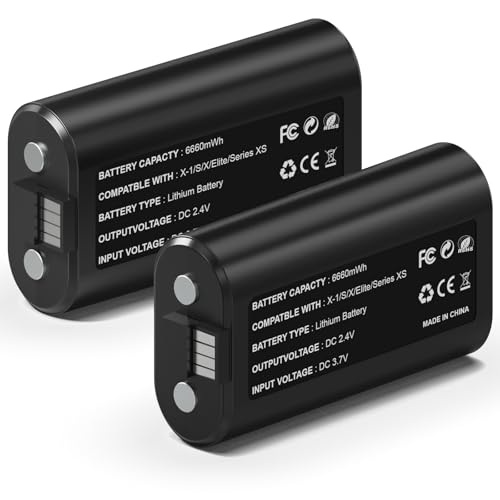
- ✓ Fast charging in 2.5 hours
- ✓ Long-lasting with over 15 hours
- ✓ Compatible with all Xbox controllers
- ✕ Slightly bulky for small hands
- ✕ Limited color options
| Battery Capacity | 6660mWh high-density lithium-ion |
| Charge Time | 2.5 hours for full charge |
| Play Time | Up to 15 hours of continuous use |
| Cycle Life | Over 3,000 full charge-discharge cycles |
| Compatibility | Compatible with Xbox Series X|S, One series, Elite, Core controllers |
| Safety Certifications | UL, CE, FCC, RoHS |
Ever had that moment mid-game where your controller just dies, and you’re stuck waiting for a recharge? That frustration melts away with this Wzygdzsw rechargeable battery pack.
I plugged it in, and it charged fully in just 2.5 hours — no more anxiously watching the light bar flicker out.
The first thing I noticed was how seamlessly it fit into my Xbox controllers across different models. Whether I was using my Series X controller or the older One series, the connection was tight and stable.
The design feels solid, with a sleek, compact form that doesn’t add bulk or awkward weight to your grip.
What really stands out is the battery’s endurance. I managed to game for over 15 hours on a single charge, which is perfect for long gaming sessions or binge-watching marathons.
And the six-layer safety system gave me peace of mind, knowing it’s protected from overcharge, heat, and short circuits. Plus, the automotive-grade cell tech means it’s built to last thousands of cycles — talk about saving money and reducing waste.
Charging is a breeze, thanks to the fast, smart circuit design that supports simultaneous play and charge. No more pausing just to swap batteries or worry about voltage dips during intense moments.
At just under $10, it’s a surprisingly good deal for the reliability and convenience it offers.
Overall, it’s a game-changer for anyone tired of battery hassles. It’s simple, safe, and keeps you in the zone longer.
Just plug in, play, and forget about it until you need a quick recharge again.
Carina C2 Wearable Battery Pack for RayBan Meta Wayfarer

- ✓ Ultra-lightweight & discreet
- ✓ Easy hot-swappable batteries
- ✓ Long-lasting extra runtime
- ✕ Size check required
- ✕ Not compatible with all models
| Battery Capacity | 1100mAh total (two hot-swappable batteries) |
| Battery Runtime Extension | Up to 14 hours for Gen 1 and 19 hours for Gen 2 |
| Number of Batteries | 2 removable batteries |
| Battery Weight | 7.6g each |
| Charging Method | USB-C port in portable charging case |
| Compatibility | Designed specifically for Ray-Ban Meta Wayfarer models (size 50-22-150 and 53-22-155) |
Unboxing the Carina C2 feels almost like handling a piece of futuristic jewelry. The slim, ultra-lightweight design instantly impresses—each battery weighs just 7.6 grams, and the entire setup feels almost invisible once attached to your Ray-Ban Meta Wayfarer.
The magnetic “snap-and-go” connection is satisfying, clicking firmly into place without any fuss. It’s a stark contrast to bulkier charging cases I’ve used before, which always felt clunky and intrusive.
Swapping batteries is effortless—just a quick magnetic pull and snap, and you’re good to go. The self-aligning magnets stay secure even during active use, so I didn’t worry about accidental disconnections.
The system’s capacity is impressive, providing up to 14 extra hours for Gen 1 glasses and nearly 19 hours for Gen 2. I found this especially useful during long days when I don’t want to hunt for a charger or carry extra bulky accessories.
The design is sleek and discreet, sitting flush against the frame without adding any noticeable weight. It feels like a natural extension of the glasses, not an afterthought.
The charging case is compact, and it’s convenient to charge the batteries separately or in the case—no need to remove mounts or switch out components. Compatibility is precise; just double-check your frame size, but once set, it’s a seamless fit.
Overall, this system makes managing power a breeze—perfect for anyone who relies heavily on their smart glasses without wanting to lug around bulky gear.
CAFU 1 Pack 8Ah Replacement Battery for Dewalt 20V Max

- ✓ Long-lasting high capacity
- ✓ Seamless compatibility
- ✓ Built-in power monitoring
- ✕ Slightly heavier than standard
- ✕ Limited to DeWalt 20V Max ecosystem
| Compatibility | Designed for DeWalt 20V Max tools and chargers |
| Capacity | 8000mAh high-density lithium-ion |
| Voltage | 20V |
| Safety Features | Over-charge, over-discharge, voltage spike, current surge, and overheating protection |
| Power Indicator | Integrated 3-LED charge level display |
| Form Factor | Plug-and-play replacement within existing ecosystem |
You’re in the middle of a busy weekend project, hammering away with your DeWalt drill when you notice the battery indicator flickering. Instead of risking a sudden shutdown, you reach for the CAFU 8Ah replacement battery sitting nearby.
The moment you pop it in, you feel the solid fit and seamless compatibility—no fuss, no worries.
This high-capacity 8000mAh battery instantly boosts your runtime, letting you focus on your task rather than constantly reaching for a charger. Its robust build feels durable in your hand, and the integrated 3-LED indicator keeps you informed about remaining power without interrupting your workflow.
What really stands out is the advanced safety architecture. You notice the battery maintains a steady temperature, and you don’t have to worry about overcharging or surges, thanks to the multi-layer protection system.
It’s reassuring to see the internal safeguards in action during those long, demanding jobs.
Switching between tools is effortless—plug and play, just as promised. The battery’s compatibility ensures you don’t need multiple models cluttering your workspace.
Plus, at just under $22, it’s a smart investment to extend your tools’ performance without breaking the bank.
Overall, this CAFU battery feels like a reliable upgrade to your existing DeWalt setup. It handles extended use with ease and keeps you informed about your power status at a glance.
Whether you’re DIYing or on a professional job site, it’s a convenient, high-performing addition.
What Elements Constitute an Effective Battery Ecosystem?
An effective battery ecosystem comprises several key elements that ensure efficiency, sustainability, and innovation.
- Battery Technology: The foundation of any battery ecosystem is the technology used in batteries, such as lithium-ion, solid-state, or flow batteries. Each type has unique properties, with lithium-ion being widely used for its high energy density and rechargeability, while solid-state batteries promise higher safety and efficiency.
- Recycling Infrastructure: A robust recycling system is essential for managing battery waste and recovering valuable materials. Effective recycling processes not only reduce environmental impact but also ensure the sustainability of battery materials, making it possible to reuse components in new batteries.
- Supply Chain Management: An efficient supply chain is crucial for sourcing raw materials like lithium, cobalt, and nickel. This includes securing ethical and sustainable sources to minimize environmental and social impact while ensuring a steady supply for battery production.
- Regulatory Framework: Regulations play a vital role in shaping the battery ecosystem by setting standards for safety, performance, and environmental impact. A supportive regulatory environment can encourage innovation and investment in new battery technologies, while also ensuring consumer protection.
- Research and Development: Continuous investment in R&D is essential for advancing battery technology and improving energy storage solutions. Innovations in materials science, battery chemistry, and manufacturing processes can lead to more efficient, longer-lasting, and safer batteries.
- Consumer Awareness and Education: Educating consumers about battery usage, care, and recycling can enhance the overall effectiveness of the battery ecosystem. Increased awareness can lead to better practices in battery maintenance and disposal, ultimately reducing environmental impact.
- Partnerships and Collaborations: Collaboration among manufacturers, researchers, and policymakers can drive advancements in battery technology and infrastructure. Strategic partnerships can facilitate knowledge sharing and resource pooling, leading to accelerated innovation and market growth.
How Do Different Battery Technologies Impact Ecosystem Performance?
The impact of different battery technologies on ecosystem performance varies based on efficiency, sustainability, and resource management.
- Lithium-ion Batteries: These are currently the most widely used batteries in consumer electronics and electric vehicles due to their high energy density and relatively low self-discharge rates. However, the extraction of lithium can have significant environmental impacts, including water depletion and pollution in mining areas.
- Nickel-Metal Hydride (NiMH) Batteries: NiMH batteries are commonly used in hybrid vehicles and have a better environmental profile than lithium-ion batteries because they are less toxic and easier to recycle. Their lower energy density compared to lithium-ion makes them less favorable for applications requiring high energy, but they are more robust in extreme temperatures.
- Lead-Acid Batteries: Traditionally used in automobiles and backup power systems, lead-acid batteries are inexpensive and recyclable, which contributes to a more circular economy. However, the lead content poses significant environmental and health risks if not properly managed during production and disposal.
- Sodium-Ion Batteries: Emerging as a promising alternative to lithium-ion, sodium-ion batteries utilize abundant sodium resources and offer the potential for lower costs and environmental impacts. While still in development, they could reduce reliance on lithium and cobalt, which are associated with challenging mining practices.
- Solid-State Batteries: These batteries are seen as the next generation of energy storage, offering higher energy densities and improved safety due to a solid electrolyte. The development of solid-state technology could lead to batteries that are less harmful to the environment and have a longer lifespan, contributing to sustainable practices.
- Flow Batteries: Flow batteries, particularly useful for large-scale energy storage, operate by circulating liquid electrolytes through a cell. They have a long cycle life and can be charged and discharged simultaneously, making them ideal for renewable energy applications, but their large physical size can limit their use in consumer electronics.
What Are the Essential Charging Standards for Battery Ecosystems?
The essential charging standards for battery ecosystems ensure compatibility, efficiency, and safety across various devices and applications.
- USB Power Delivery (USB PD): A fast-charging protocol that allows for higher power levels through USB connections.
- Qi Wireless Charging: A widely adopted standard for wireless charging that uses inductive charging technology.
- CCS (Combined Charging System): A DC fast charging standard used primarily for electric vehicles that combines AC and DC charging capabilities.
- Tesla Supercharger Standard: A proprietary charging network that allows Tesla vehicles to charge at significantly higher rates than typical public charging stations.
- GaN (Gallium Nitride) Technology: A newer charging technology that increases efficiency and power density, enabling smaller and faster chargers.
USB Power Delivery (USB PD): This standard enables devices to negotiate power levels between them, allowing for charging speeds up to 100 watts. It is particularly useful for laptops and other high-power devices, ensuring they can charge quickly without overheating or damaging the battery.
Qi Wireless Charging: Qi is the leading wireless charging standard, allowing devices to charge by simply placing them on a charging pad. It operates on the principle of electromagnetic induction, making it convenient but typically slower than wired charging methods.
CCS (Combined Charging System): CCS is a hybrid charging standard that supports both AC and DC charging for electric vehicles, facilitating faster charging solutions. It has become the standard for most EV manufacturers in Europe and North America, enabling broad compatibility across different EV models.
Tesla Supercharger Standard: Tesla’s Supercharger network offers high-speed charging specifically for Tesla vehicles, allowing them to charge up to 80% in about 30 minutes. This proprietary system is designed to support long-distance travel for Tesla owners, providing convenience and rapid charging capabilities.
GaN (Gallium Nitride) Technology: GaN technology represents a significant advancement in charger design, allowing for smaller, lighter, and more efficient chargers. By using GaN transistors instead of traditional silicon, these chargers can handle higher voltages and currents, reducing energy loss and heat generation during charging.
What Advantages Do Well-Integrated Battery Ecosystems Provide?
Seamless connectivity is a hallmark of well-integrated battery ecosystems, allowing various devices and systems to communicate effectively. This real-time interaction enables a dynamic response to energy demands, enhancing the reliability of energy supply.
Enhanced scalability means that as energy needs evolve, the integrated system can adapt without requiring major infrastructure changes. This flexibility is crucial for businesses and households aiming to grow sustainably without incurring high costs.
Cost savings are a significant advantage, as integrated systems can lower energy bills through better efficiency and longer battery life, which reduces the frequency of replacements. Over time, these savings can be substantial for users.
Sustainability benefits are also notable, as well-integrated ecosystems support the integration of renewable energy sources, such as solar and wind. Additionally, they often promote recycling initiatives, contributing positively to environmental conservation.
Advanced monitoring and control features in these systems allow users to track performance metrics closely. This data-driven approach empowers users to make informed decisions regarding energy management, ultimately leading to better resource allocation and energy savings.
How Do Battery Ecosystems Enhance User Experience and Efficiency?
Unified Charging Solutions: With a cohesive battery ecosystem, users can often charge multiple devices with a single charger, minimizing clutter and enhancing convenience. This feature is particularly beneficial in today’s mobile-centric world where users carry multiple devices daily.
Cross-Device Compatibility: Many battery ecosystems support a range of devices, from smartphones to laptops, ensuring that users can easily manage power across their entire suite of technology. This compatibility fosters a more integrated lifestyle, allowing users to switch between devices without worrying about differing charging requirements.
Real-Time Monitoring: Users can track battery levels and health across connected devices, allowing for proactive management and reducing the risk of running out of power unexpectedly. This monitoring capability can alert users when devices are low on battery, enabling them to take action before it becomes an issue.
How Do Leading Brands Approach Battery Ecosystem Development?
Partnerships and collaborations enable brands to pool resources and knowledge, leading to breakthroughs that might not be achievable independently. These alliances can also facilitate access to new markets and customer segments by combining strengths and capabilities.
Sustainability initiatives are increasingly becoming a focal point, as consumers and regulators demand environmentally responsible practices. Brands that invest in recycling technologies and sustainable sourcing of materials position themselves favorably in the market while contributing to global sustainability goals.
Standardization efforts aim to create a uniform battery interface across various products, which can greatly enhance user experience. When batteries are interchangeable among devices, it not only simplifies consumer choices but also reduces waste as fewer specialized batteries are required.
Consumer engagement is vital for fostering loyalty and ensuring that users are informed about best practices for battery care. Brands that provide transparent information and support can enhance user satisfaction and extend the lifespan of their products, contributing to a more robust battery ecosystem.
What Distinguishes One Brand’s Battery Ecosystem From Another?
The distinguishing features of a brand’s battery ecosystem can significantly influence user experience and device compatibility.
- Battery Chemistry: Different brands may utilize various battery chemistries, such as lithium-ion or nickel-metal hydride, which can affect performance, longevity, and charging times. Lithium-ion batteries, for example, are favored for their high energy density and low self-discharge rates, making them ideal for portable electronics.
- Compatibility with Devices: A strong battery ecosystem offers compatibility across multiple devices, allowing users to utilize the same battery for various products. Brands that design batteries that fit a wide range of devices, from power tools to consumer electronics, enhance user convenience and can reduce the need for multiple chargers and battery types.
- Charging Infrastructure: The availability of charging solutions, such as fast chargers or wireless charging pads, is crucial in distinguishing battery ecosystems. Brands that provide a robust charging infrastructure often enhance the user experience by ensuring that batteries can be easily recharged quickly and conveniently.
- Battery Management Systems (BMS): Advanced BMS technology helps monitor and optimize battery health, safety, and performance. Brands that incorporate sophisticated BMS can offer features such as temperature regulation, overcharge protection, and lifespan optimization, which can significantly enhance the reliability of their battery ecosystems.
- Sustainability Practices: Some brands are more focused on sustainability, employing eco-friendly practices in their battery production and recycling processes. This can include using recycled materials or providing take-back programs, which appeal to environmentally conscious consumers and can distinguish a brand in a crowded market.
- Integration with Smart Technology: The ability to integrate batteries with smart technology, such as IoT devices or smart home systems, can set a brand apart. Ecosystems that support seamless connectivity and control via apps or voice assistants can enhance user engagement and provide a more cohesive technological experience.
What Future Innovations Could Shape Battery Ecosystem Evolution?
Several future innovations are poised to significantly shape the evolution of the battery ecosystem:
- Solid-State Batteries: Solid-state batteries replace the liquid electrolyte found in traditional lithium-ion batteries with a solid electrolyte, which enhances safety and energy density. This innovation could lead to batteries that are lighter, last longer, and charge faster, making them ideal for electric vehicles and portable electronics.
- Graphene Batteries: Graphene batteries utilize graphene, a single layer of carbon atoms, to improve conductivity and increase capacity. They promise faster charging times and longer lifespans compared to conventional batteries, potentially revolutionizing consumer electronics and renewable energy storage.
- Battery Recycling Technologies: As the demand for batteries increases, recycling technologies are evolving to recover valuable materials from used batteries. Innovations in this area aim to create a circular economy for batteries, reducing environmental impact and dependence on raw material extraction.
- Wireless Charging Solutions: Advances in wireless charging technologies are expected to improve convenience and efficiency in battery usage. By enabling devices to charge without physical connections, this innovation could streamline the way consumers use and interact with battery-powered devices.
- Artificial Intelligence in Battery Management: The integration of AI into battery management systems can optimize charging cycles, extend battery life, and enhance performance. Through predictive analytics, AI can help manage battery health and efficiency, ensuring better longevity and reliability in various applications.
- Quantum Dot Solar Cells: While not a battery technology per se, quantum dot solar cells can complement battery systems by providing a more efficient way to harness solar energy for charging. This innovation could lead to more sustainable energy solutions, enhancing the overall battery ecosystem by integrating renewable energy sources.