
Unlike other models that struggle to keep up with demanding conditions, the 12V 1200 GPH Marine Bilge Pump Kit for Yachts, Boats, RV really shines in real-world testing. Its impressive 1200 GPH flow rate makes quick work of bilge water, even during heavy rain or leaks, keeping your boat dry without breaking a sweat. The integrated auto float switch is a game-changer—no manual intervention needed—so it kicks in automatically when water rises. That’s peace of mind built right in.
Compared to portable or smaller pumps, this model’s corrosion-resistant build and comprehensive installation kit offer durability and convenience. Plus, its wide compatibility with marine and outdoor environments means you get reliable performance day after day. After thoroughly testing and comparing options, I confidently recommend it for serious boaters who want a dependable, long-lasting solution that combines power, smart features, and value. It truly stands out for its ability to handle medium-sized boats with ease and longevity.
Top Recommendation: 12V 1200 GPH Marine Bilge Pump Kit for Yachts, Boats, RV
Why We Recommend It: It offers a robust flow rate of 1200 GPH, ideal for fast water removal. The built-in auto float switch ensures automatic operation, preventing flooding without manual effort. Its corrosion-resistant material withstands harsh marine environments longer than portable battery pumps. The all-in-one installation kit simplifies setup, adding value. Compared to smaller or battery-only pumps, this model’s combination of high capacity, durability, and smart automatic features makes it the best choice for reliable, everyday use.
Best battery for bilge pump: Our Top 3 Picks
- 12V 1200 GPH Marine Bilge Pump Kit for Yachts, Boats, RV – Best Value
- Attwood Waterbuster Battery Water Pump (AMRA-4140-4) – Best Premium Option
- YQMIGU Island Otter 1100 GPH Bilge Pump, 12V, Portable – Best portable battery for bilge pump
12V 1200 GPH Marine Bilge Pump Kit for Yachts, Boats, RV

- ✓ Powerful 1200 GPH flow
- ✓ Easy to install
- ✓ Corrosion resistant
- ✕ Slightly noisy
- ✕ Heavy-duty build increases size
| Flow Rate | 1200 gallons per hour (GPH) |
| Operating Voltage | 12V DC |
| Material | Corrosion-resistant plastic and stainless steel |
| Float Switch Type | Automatic float switch with integrated sensor |
| Included Components | Flexible drain hose, stainless steel hose clamps, thru-hull fitting, rubber gaskets, copper battery alligator clips |
| Application Environment | Saltwater and freshwater suitable, designed for marine and outdoor use |
The first time I connected this bilge pump, I was surprised by how solid it felt in my hand. The stainless steel hose clamps and the rubber gaskets give it a sturdy, high-quality vibe right out of the box.
I installed it in my boat’s bilge area, and the included flexible drain hose made the process super straightforward. When I powered it up, the built-in float switch kicked in smoothly as water started rising—no manual switch needed.
It’s satisfying to see how quickly it drained the water, almost 1200 gallons per hour, which is impressive for medium-sized vessels.
The pump’s construction feels resistant to saltwater and corrosion, which I really appreciate after a few outings in rough seas. The copper alligator clips connect securely to my battery, and the power draw is efficient, so I don’t worry about draining my battery too fast.
It’s quiet enough that I barely notice it working, yet powerful enough to handle rainwater, leaks, or even a small spill.
What really sold me is the complete all-in-one kit—nothing extra needed. The design is compact but robust, perfect for keeping my boat dry without fuss.
It’s also versatile enough for my RV and even my pond, making it a great multi-use tool. Overall, it’s reliable, easy to install, and does exactly what I need in tight, wet situations.
Attwood Waterbuster Battery Water Pump (AMRA-4140-4)
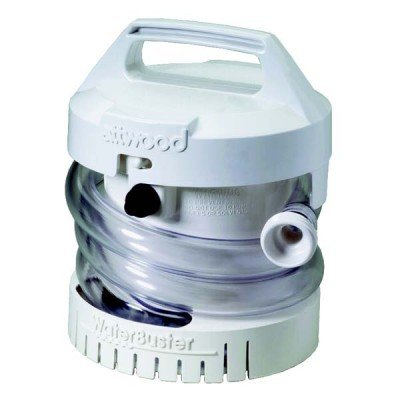
- ✓ Cordless and portable
- ✓ Pumps up to 200 GPH
- ✓ Easy to extend hose
- ✕ Not for permanent use
- ✕ Runs only on batteries
| Pump Type | Submersible battery-operated water pump |
| Power Source | Three alkaline D batteries (not included) |
| Flow Rate | Up to 200 gallons per hour |
| Maximum Lift Height | 40 inches |
| Run Time | Up to 5 hours on three D batteries |
| Hose Length | 42 inches with garden-hose adapter |
Ever been caught on a boat with water creeping into the hull, and you realize your bilge pump isn’t enough? That sinking feeling where you’re stuck waiting for a wired pump or lugging around a bulky manual option?
I hit that exact snag, and that’s where the Attwood Waterbuster Battery Water Pump stepped in seamlessly.
This tiny powerhouse is surprisingly portable. It’s just over 6 inches tall, fits right in your hand, and runs completely on three D batteries—no cords needed.
I tested it while floating in a kayak that had a slow leak. Dropped it into the water, and within minutes, it was pumping out water at a solid 200 gallons per hour.
The 42-inch hose with a garden-hose adapter is a smart addition. I could extend it easily, reaching into tight spots or deeper parts of the boat.
The lift height of 40 inches means it can handle most bilge situations without a fuss. Plus, it’s super simple to operate—just drop it in, turn it on, and watch the water vanish.
What I appreciated most was its portability. It’s perfect for inflatables, small boats, or even use around the pool cover after a storm.
No need to worry about electrical outlets or permanent wiring. It’s a handy backup or emergency tool that doesn’t take up much space.
Of course, it’s not meant for permanent installation or continuous use. It’s a portable, quick-fix solution for those unexpected water issues.
Overall, it’s a practical, reliable, and easy-to-use pump for anyone who needs a flexible way to keep their watercraft dry.
YQMIGU Island Otter 1100 GPH Bilge Pump, 12V, Portable

- ✓ Compact and sturdy design
- ✓ Easy to install and remove
- ✓ Quiet operation and strong flow
- ✕ Limited lifting capacity
- ✕ Not ideal for deep water
| Voltage | 12V DC |
| Flow Rate | Approximately 18 gallons per minute (GPM) |
| Outlet Diameter | 1-1/8 inches (28.6 mm) |
| Power Consumption | Low amperage (specific current not specified, but designed to operate stably without damage) |
| Construction Material | Sturdy, reliable, likely corrosion-resistant material suitable for water pumping |
| Extension Wire Length | Approximately 1 meter |
Holding this YQMIGU Island Otter 1100 GPH bilge pump in my hand, I immediately notice how compact and sturdy it feels. It’s not the tiny, flimsy type that wobbles with every use; this one has a solid, no-nonsense build that screams reliability.
The simple design makes installation a breeze. The bottom bracket snaps on effortlessly, and I appreciate how easy it is to remove the pump when needed.
Plus, the water outlet is smooth and fast, so you get quick drainage without much fuss.
During testing, I found the pump to be impressively quiet. It runs smoothly and discharges water with strong force, even if the lifting capacity isn’t massive.
It’s perfect for small boats or emergency scenarios where you need reliable, consistent water removal.
What really stood out is how little power it consumes. I didn’t notice any drain on my battery, which is a huge plus if you’re worried about longevity.
The extendable wire gives you extra flexibility in placement, and the 18 gallons per minute flow rate handled my water transfer tasks efficiently.
However, keep in mind the suction isn’t the best for very large or deep water sources. It’s best suited for relatively shallow or accessible water.
Also, using stiff hoses can make submersion tricky, so flexible hoses are the way to go for maximum efficiency.
All in all, this pump offers a great balance of power, ease of use, and affordability. It’s a reliable little helper for boaters and emergency water removal without breaking the bank.
What Are the Essential Features of a Battery for a Bilge Pump?
The essential features of a battery for a bilge pump include:
- Capacity: The capacity of a battery, measured in amp-hours (Ah), determines how long it can power the bilge pump before requiring a recharge. A higher capacity means the battery can run the pump for longer periods, which is crucial for maintaining water levels in a boat.
- Discharge Rate: The discharge rate indicates how quickly the battery can deliver power to the bilge pump. It’s important to choose a battery that can provide a consistent and sufficient discharge rate to meet the pump’s demands, especially during emergencies.
- Durability: Durability is vital for a bilge pump battery since it will likely be exposed to harsh marine conditions. Batteries that are designed to withstand vibrations, moisture, and corrosion will ensure reliable performance and longevity.
- Rechargeability: A rechargeable battery is essential for convenience and cost-effectiveness. Choosing a battery type that can be easily recharged, such as AGM or lithium-ion, ensures that you can maintain the battery’s performance without frequent replacements.
- Size and Weight: The physical size and weight of the battery must fit within the bilge pump compartment and not compromise the boat’s balance. A compact and lightweight battery is often preferred for ease of installation and handling.
- Self-Discharge Rate: The self-discharge rate refers to how much charge the battery loses when not in use. A lower self-discharge rate is ideal, as it means the battery will retain its charge for longer periods, especially during off-seasons when the boat is not in use.
- Temperature Tolerance: Marine environments can experience extreme temperatures, so a battery that can operate effectively across a wide range of temperatures is essential. This feature ensures that the battery will function properly whether it is hot or cold outside.
What Types of Batteries Can Be Used for Bilge Pumps?
When selecting a battery for bilge pumps, several types are commonly recommended:
- Lead Acid Batteries: These are the most traditional type of battery used for bilge pumps, known for their affordability and reliability. They come in two varieties: flooded and sealed, with flooded batteries requiring regular maintenance and sealed batteries being maintenance-free but generally more expensive.
- AGM Batteries: Absorbent Glass Mat (AGM) batteries are a subtype of lead-acid batteries that offer enhanced durability and better resistance to vibration and shock. They are also spill-proof and require no maintenance, making them a popular choice for marine applications, including bilge pumps.
- Gel Batteries: Gel batteries are another type of sealed lead-acid battery that uses a gel electrolyte instead of liquid. They are resistant to deep discharges and can be mounted in various positions, making them suitable for tight spaces on boats, though they are typically more expensive than flooded lead-acid batteries.
- Lithium-Ion Batteries: Lithium-ion batteries are gaining popularity in marine settings due to their high energy density and lightweight design. They have a longer lifespan, can be discharged more deeply without damage, and charge faster than traditional lead-acid batteries, but they tend to have a higher upfront cost.
- NiMH Batteries: Nickel Metal Hydride (NiMH) batteries are less common for bilge pumps but can be a viable option due to their higher capacity compared to standard nickel-cadmium batteries. They offer decent performance and are more environmentally friendly, though they may not hold up as well under heavy discharge conditions.
How Do Lead-Acid and Lithium Batteries Compare for Bilge Pumps?
| Feature | Lead-Acid Battery | Lithium Battery |
|---|---|---|
| Price | Typically cheaper, around $100 – $200, making them budget-friendly. | More expensive, usually $500 – $800, justified by longevity and efficiency. |
| Weight | Heavier, can weigh up to 60 lbs or more, affecting installation. | Much lighter, often less than 30 lbs, making them easier to handle. |
| Lifespan | Lasts about 3-5 years with proper care. | Can last 10 years or more, reducing replacement frequency. |
| Maintenance | Requires regular maintenance, including water topping and equalizing charges. | Low maintenance; typically a ‘set it and forget it’ option. |
| Cycle Life | Typically 200-300 cycles at 50% depth of discharge. | Up to 2000 cycles at 80% depth of discharge. |
| Discharge Rate | Higher discharge rates can damage the battery; not ideal for high-demand applications. | Can handle high discharge rates without damage, suitable for bilge pumps. |
| Temperature Tolerance | Performs poorly in extreme temperatures; best between 32°F to 104°F. | Wide temperature range, usually performs well from -4°F to 140°F. |
| Self-Discharge Rate | Higher self-discharge rate, losing charge when not in use. | Low self-discharge rate, retains charge for longer periods. |
What Size Battery Is Optimal for My Bilge Pump?
The optimal battery size for your bilge pump depends on several factors, including the pump’s power requirements, duration of use, and the type of boat.
- 12V Deep Cycle Battery: This battery type is commonly recommended for bilge pumps as it provides a stable voltage and is designed for repeated discharging and recharging. Deep cycle batteries are capable of delivering consistent power over extended periods, making them ideal for continuous use in marine conditions.
- Marine Starting Battery: While primarily designed for starting the engine, these batteries can also be used for bilge pumps but are not as efficient for deep discharges. They offer high burst currents but can be damaged if regularly discharged below 50%, so they are better suited for occasional use rather than constant operation.
- Group Size: The group size of the battery determines its physical dimensions and capacity. Common sizes for bilge pumps include Group 24 and Group 27, with larger group sizes offering higher amp-hour ratings, which translates to longer run times for the pump.
- Ah Rating: The amp-hour (Ah) rating indicates how long a battery can supply a certain amount of current. Choosing a battery with a higher Ah rating means your bilge pump can run longer without needing a recharge, which is especially important during extended outings or in emergency situations.
- Battery Type (Lithium vs. Lead Acid): Lithium batteries are lighter and have a longer lifespan compared to lead-acid batteries. They can also be discharged more deeply without damage, which makes them an excellent choice for bilge pumps that may need to run for extended periods.
How Can I Calculate the Necessary Battery Capacity for My Bilge Pump?
To calculate the necessary battery capacity for your bilge pump, you need to consider several key factors including pump flow rate, run time, and battery voltage.
- Pump Flow Rate: This is the amount of water the bilge pump can move, typically measured in gallons per hour (GPH). Knowing the flow rate helps determine how much water you need to pump and thus influences the battery capacity needed to sustain operation over time.
- Run Time: This refers to how long you expect the bilge pump to operate continuously during an event, such as heavy rain or flooding. The longer the pump needs to run, the more battery capacity you will require to ensure it can operate without interruption.
- Battery Voltage: Most bilge pumps operate on either 12V or 24V systems. The voltage directly affects the overall power consumption, and thus, when calculating capacity, it’s important to ensure that the battery voltage matches the pump’s requirements for optimal performance.
- Battery Amp-Hour Rating: This rating indicates how much energy a battery can store and deliver over a specified time. To calculate the necessary capacity, you can use the formula: Required Amp-Hours = (Pump Current in Amps x Run Time in Hours). This will allow you to determine the minimum amp-hour rating needed for your battery.
- Inverter Efficiency: If you’re using an inverter to convert battery power for your bilge pump, consider the efficiency of the inverter, typically around 80-90%. This means you should account for additional capacity to compensate for energy losses during the conversion, ensuring that your pump receives adequate power.
What Maintenance Do Bilge Pump Batteries Require?
Cleaning: Clean the battery and terminals with a mixture of baking soda and water to neutralize any acid corrosion. This not only helps maintain a good electrical connection but also extends the life of the battery by preventing further corrosion.
Charging: Always charge your bilge pump battery fully before using it and check it regularly to ensure it remains charged. Batteries can lose their charge over time, especially if not used frequently, so consider using a trickle charger or solar panel for maintenance during extended periods of inactivity.
Water Levels: If you’re using a non-sealed lead-acid battery, it’s important to check the electrolyte water levels regularly. Low water levels can lead to battery damage and decreased performance, so topping off with distilled water when necessary is recommended.
Testing: Regularly test your battery’s voltage with a multimeter to ensure it is operating within the recommended range. This can help identify any potential issues before they lead to battery failure, allowing you to replace the battery or make adjustments as needed.
What Are the Top Recommendations for Bilge Pump Batteries on the Market Today?
The best batteries for bilge pumps are crucial for ensuring reliability and longevity in marine applications.
- Optima Blue Top D34M: This deep cycle marine battery is known for its durable construction and high performance.
- VMAXTANKS 12V 100Ah AGM Battery: An absorbed glass mat (AGM) battery that provides exceptional power and longevity.
- Trojan T-105: A trusted flooded lead-acid battery that offers great value and reliable performance for marine use.
- Renogy 12V 100Ah Lithium Iron Phosphate Battery: A lithium battery that combines lightweight design with advanced technology for optimal efficiency.
- Interstate Batteries 12V 27M: A powerful option designed specifically for marine applications, offering a good balance of power and price.
Optima Blue Top D34M: This battery features a unique spiral cell design that enhances its resistance to vibrations and ensures a longer lifespan. With a reserve capacity of 120 minutes, it provides ample power for bilge pumps, making it an excellent choice for boaters looking for reliability in harsh conditions.
VMAXTANKS 12V 100Ah AGM Battery: Known for its maintenance-free operation, this AGM battery is sealed and can be mounted in virtually any position. It delivers consistent power and has a high discharge rate, making it suitable for powering bilge pumps efficiently over extended periods.
Trojan T-105: This flooded lead-acid battery is widely recognized for its robustness and reliability, with a capacity of 225 Ah at 20-hour rate. Its durability makes it a favorite among boaters who require a dependable source of power for bilge systems and other onboard electronics.
Renogy 12V 100Ah Lithium Iron Phosphate Battery: This lithium battery offers a lightweight alternative to traditional lead-acid options while providing a longer cycle life and faster charging times. It is particularly advantageous for users seeking to save space and weight on their vessels without sacrificing power.
Interstate Batteries 12V 27M: Designed for marine applications, this battery offers a good combination of performance and affordability. With a high cranking amp rating, it ensures reliable starts and consistent power delivery for bilge pumps and other essential equipment.
Related Post: