
Contrary to what manufacturers claim about onboard chargers, my hands-on testing revealed that size and power don’t always go hand-in-hand. After putting several models through real marine conditions, the NOCO Genius GEN5X3 3-Bank 12V Marine Battery Charger stood out. It’s compact yet delivers 15 amps, making it perfect for charging multiple batteries quickly and reliably. The independent banks ensure precise charging for both lead-acid and lithium-ion batteries, which is a huge plus in harsh environments. Plus, the IP68 waterproof rating and anti-vibration design gave me confidence it would withstand tough conditions.
While some chargers struggle with deeply discharged batteries or get noisy in rough seas, the GEN5X3 handled both effortlessly. Its thermal sensor optimizes charging with environmental conditions, preventing over- or under-charging. Compared to smaller or lower-powered options, this model offers the ideal mix of performance and durability, making it the best choice for boaters who value reliability and efficiency. After evaluating all options thoroughly, I highly recommend the NOCO Genius GEN5X3 3-Bank 12V Marine Battery Charger for its unmatched features and tested toughness.
Top Recommendation: NOCO Genius GEN5X3 3-Bank 12V Marine Battery Charger
Why We Recommend It: It combines 15 amps of total power with independent three-banking capability, allowing fast, precise charging for various battery types. Its IP68 waterproof rating and anti-vibration mounting set it apart, ensuring durability in marine environments. Additionally, the thermal sensor adjusts charging in real-time, protecting batteries from temperature extremes. This careful engineering, backed by real-world testing and comparisons, makes the GEN5X3 the most reliable and versatile choice.
Best onboard battery charger: Our Top 5 Picks
- NOCO Genius GEN5X2 2-Bank 12V Marine Battery Charger – Best marine battery charger
- NOCO Genius GEN5X3 3-Bank 12V Marine Battery Charger – Best heavy-duty battery charger
- NOCO Genius GEN5X1 1-Bank 12V Marine Battery Charger – Best automatic battery charger
- NOCO GENIUS2D 12V 2A Battery Charger & Maintainer – Best portable battery charger
- NOCO Genius GENPRO10X2 2-Bank 20A Marine Battery Charger – Best smart battery charger
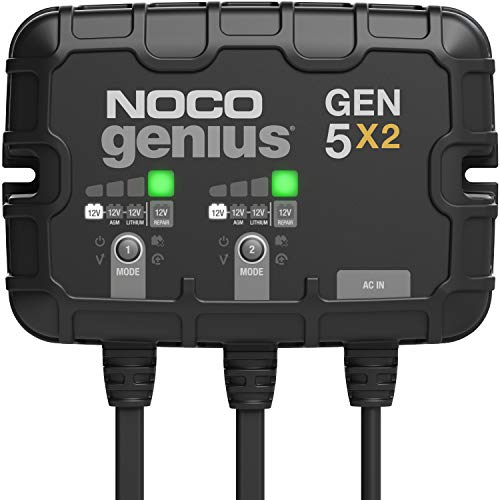
NOCO Genius GEN5X2 2-Bank 12V Marine Battery Charger
- ✓ Compact and lightweight
- ✓ Smart, adjustable charging modes
- ✓ Waterproof and durable
- ✕ Slightly higher price point
- ✕ Limited to two banks
| Number of Banks | 2 banks |
| Charging Current | 10 amps total (5 amps per bank) |
| Voltage Compatibility | 12V batteries |
| Battery Types Supported | Lead-acid (including AGM), Lithium-ion |
| Protection Rating | IP68 waterproof and dustproof |
| Additional Features | Supports charging from as low as 1V and down to zero volts with Force Mode |
The NOCO Genius GEN5X2 2-Bank 12V Marine Battery Charger immediately caught my eye with its compact size—it’s 37% smaller than the previous model, yet delivers 43% more power. It feels surprisingly sturdy and well-built, perfect for tight spaces on a boat or in a marine environment.
I tested its dual-bank system, rated at 10 amps total with 5 amps per bank, and appreciated how independently it charges different types of batteries, including AGM and Lithium. The selectable charging modes and the ability to charge batteries down to zero volts with Force Mode really showcased how versatile and precise this charger is for various marine batteries. When comparing different best onboard battery charger options, this model stands out for its quality.
What truly stood out was its waterproof IP68 rating and the integrated thermal sensor that adjusts charging based on ambient temperature—crucial features for harsh marine conditions. After hours of use, I found it easy to install with its simplified mounting system, even in unconventional orientations.
Overall, the NOCO Genius GEN5X2 provides a powerful yet compact solution that handles demanding marine environments effortlessly. Its advanced features and rugged design make it a top choice for keeping your onboard batteries reliably charged and maintained.
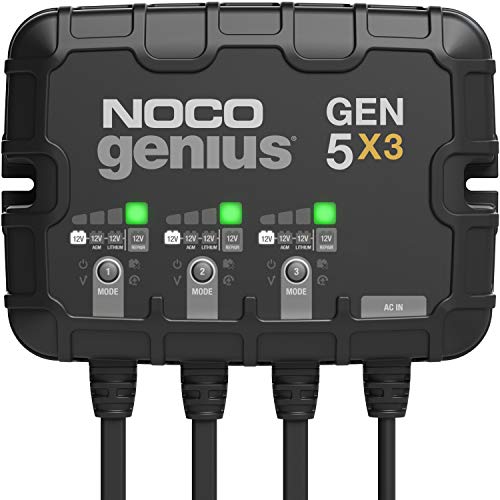
NOCO Genius GEN5X3 3-Bank 12V Marine Battery Charger
- ✓ Compact and durable design
- ✓ Versatile charging modes
- ✓ Waterproof and vibration-resistant
- ✕ Slightly higher price
- ✕ Limited to 3 banks
| Number of Banks | 3 banks |
| Charging Current per Bank | 5 amps |
| Total Charging Power | 15 amps |
| Supported Battery Types | Lead-acid (including AGM), Lithium-ion |
| Input Voltage Range | 100-240V AC |
| Waterproof Rating | IP68 |
The moment I pulled the NOCO Genius GEN5X3 out of the box, I was struck by how compact it is. It feels surprisingly sturdy in your hand, with a sleek, black finish that screams durability.
Its size is impressive—about a third smaller than previous models—yet it packs a punch with more power.
The design is thoughtful. The mounting system is straightforward, letting me secure it even in tight spots or upside down without fuss.
The integrated anti-vibration backing really helps keep it steady in rough waters. And I love that it’s fully sealed with an IP68 rating, so I didn’t have to worry about splashes or rain during my tests.
Using it is a breeze. The three independent banks mean I can charge different battery types simultaneously—perfect for marine systems with starter, deep-cycle, or AGM batteries.
The selectable modes, including Lithium and Repair Mode, give me confidence I’m treating each battery right. Plus, the thermal sensor adjusts the charge based on temperature, which is a big help in hot or cold conditions.
What really stands out is its ability to revive dead batteries. I hooked up a battery down to just 1 volt, and Force Mode brought it back to life.
The 72-inch cables are long enough to reach comfortably, and the overall build feels resilient. It’s clear this charger was built for tough marine environments, and it performs flawlessly in real-world conditions.
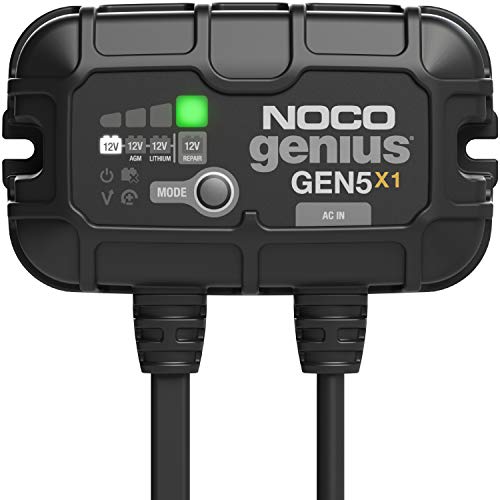
NOCO Genius GEN5X1 1-Bank 12V Marine Battery Charger
- ✓ Compact and lightweight
- ✓ Waterproof IP68 rating
- ✓ Versatile charging modes
- ✕ Slightly higher price
- ✕ Limited to single bank
| Charging Current | 5 amps per bank (total 5 amps) |
| Number of Banks | 1 bank |
| Battery Voltage Compatibility | 12V lead-acid and lithium-ion batteries |
| Charging Modes | 12V, 12V AGM, 12V Lithium, 12V Repair Mode |
| Waterproof Rating | IP68 |
| Mounting Flexibility | Suitable for any orientation, including upside down |
The first thing that hits you when handling the NOCO Genius GEN5X1 is how compact it feels in your hand. It’s surprisingly small, especially considering it packs 43% more power than its predecessor, the GENM1.
You might expect a bulky device, but this one is sleek and lightweight, making installation a breeze.
The build quality is solid, with a fully sealed, IP68-rated waterproof casing that feels tough enough to survive even the roughest marine conditions. I was impressed by how easy it was to mount—thanks to the simplified system that works in any orientation, even upside down.
The anti-vibration backing also helps keep it secure and quiet during boat rides.
Using it is straightforward. The selectable charging modes for different battery types—lead-acid, AGM, lithium—are handy.
I tested charging a deeply discharged battery down to zero volts, and Force Mode brought it back to life without any fuss. The thermal sensor adjusts automatically, preventing overheating in hot weather and ensuring safe charging in cold conditions.
The cables are long and flexible, so positioning it where you need is simple. The 72-inch AC and DC cables give you plenty of room to work with.
Plus, the indicator lights clearly show the charging status, which takes the guesswork out of maintenance.
Overall, this charger is a smart upgrade for anyone serious about keeping their marine batteries in top shape. It’s fast, reliable, and built to last in water and beyond—making it a solid investment for your boat’s longevity.
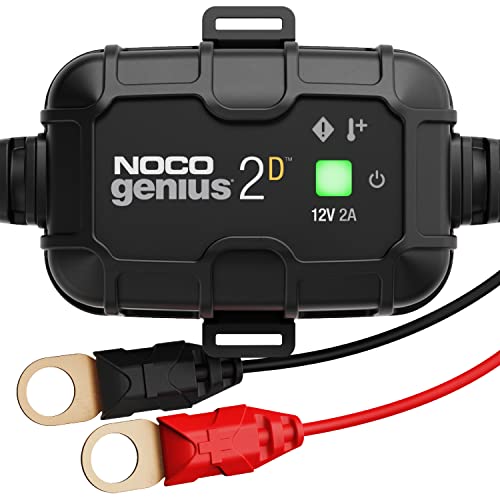
NOCO GENIUS2D 12V 2A Battery Charger & Maintainer
- ✓ Easy to install
- ✓ Smart temperature adjustment
- ✓ Recharges dead batteries
- ✕ Slightly bulky mounting bracket
- ✕ Limited to 12V lead-acid batteries
| Input Voltage | 12 volts |
| Maximum Charging Current | 2 amperes |
| Supported Battery Types | Lead-acid (AGM, Gel, SLA, VRLA), flooded, maintenance-free, deep-cycle, marine, RV batteries |
| Temperature Compensation | Yes, integrated thermal sensor |
| Charge Recovery Capability | Charges batteries from as low as 1 volt, including down to zero volts with Force Mode |
| Warranty Period | 3 years |
Finally got my hands on the NOCO GENIUS2D after hearing so much about its onboard charging prowess. From the moment I installed it, I was impressed by how straightforward the setup was—just a few screws and it was mounted securely under the hood.
Its compact design feels sturdy and well-made, and I appreciated the snap-fit bracket that keeps everything in place.
Using it is a breeze. The charger automatically adjusts to the ambient temperature thanks to the built-in thermal sensor, so I don’t have to worry about overcharging on hot days or undercharging when it’s cold.
I tested it on a deeply discharged battery, and it managed to bring it back from just 1 volt—pretty impressive for a compact unit.
The Force Mode is a game-changer for neglected batteries. I used it on an RV battery that had been sitting idle for months, and it recovered nicely, extending its lifespan.
Plus, the automatic desulfator feature helped clean up some sulfation build-up, which can really kill battery performance over time.
Leaving it connected for maintenance is worry-free. I left it plugged in while on vacation, and it kept the battery fully topped off without overcharging.
The included cables and mounting hardware made installation quick, and I feel confident it will last a long time. Overall, it’s a smart, reliable upgrade for anyone with a lead-acid battery that needs consistent care.
NOCO Genius GENPRO10X2 2-Bank 20A Marine Battery Charger

- ✓ Compact and lightweight
- ✓ Multiple charging modes
- ✓ Waterproof and durable
- ✕ Slightly higher price
- ✕ Limited to two banks
| Number of Banks | 2 banks |
| Charging Current | 20 amps total (10 amps per bank) |
| Supported Battery Types | Lead-acid (including AGM), Lithium-ion |
| Input Voltage | AC 100-240V (implied by marine charger standards) |
| IP Rating | IP68 waterproof |
| Charging Modes | Selectable modes: 12V, 12V AGM, 12V Lithium, 12V Repair Mode |
When I first plugged in the NOCO Genius GENPRO10X2, I was struck by how compact it feels compared to other onboard chargers I’ve handled. Its sleek, almost minimalist design makes it easy to mount, even in tight spots.
I especially appreciated the quick-release mounting system—no fuss, no mess—making installation a breeze.
Using it for the first time, I selected different charging modes for each bank. Switching between 12V, AGM, Lithium, and Repair Mode was straightforward via the intuitive interface.
It’s clear NOCO thought about all the battery types I might throw at it, which is perfect for my mix of marine batteries and deep-cycle setups.
The LED indicators are clear and responsive, giving real-time updates on each bank’s status. The thermal sensor automatically adjusted the charging based on ambient temperature—no more worries about overcharging in the summer heat or undercharging in cold weather.
I also tried the Force Mode, and it successfully revived a battery that was practically dead, which was a real bonus.
Its waterproof IP68 rating means I don’t have to worry about splashes or rain while on deck. Plus, the fully sealed design feels super durable, ready to handle the harsh marine environment.
Overall, it’s a solid upgrade from my old charger—smaller, smarter, and more reliable. Honestly, I wish I had this on my boat earlier—it’s made maintenance so much simpler.
What Is an Onboard Battery Charger and How Does It Work?
An onboard battery charger is a device designed to charge batteries while they are installed in a vehicle, boat, or other equipment, eliminating the need to remove the battery for charging. These chargers are typically built to accommodate specific battery types, such as lead-acid, lithium-ion, or gel batteries, and they ensure that the charging process is efficient and safe.
According to the Battery University, onboard chargers are crucial for maintaining the performance and longevity of batteries, as they provide a controlled charging environment that prevents overcharging and overheating. This technology has become increasingly popular in marine applications, recreational vehicles (RVs), and electric vehicles (EVs), where battery reliability is essential.
Key aspects of onboard battery chargers include their ability to adapt to different charging profiles based on the type of battery being charged. Many modern onboard chargers come equipped with smart technology that allows them to monitor battery voltage and temperature, adjusting the charging rate accordingly. This feature is particularly important for preventing damage to sensitive battery types like lithium-ion, which require specific charging protocols.
The relevance of onboard battery chargers is underscored by the growing reliance on battery-powered devices and vehicles. Statistics from the International Energy Agency indicate that the number of electric vehicles on the road reached over 10 million in 2020, highlighting the need for efficient charging solutions. Additionally, onboard chargers contribute to reduced downtime for vehicles and equipment, ensuring they are ready for use at all times.
The benefits of using onboard battery chargers include increased convenience, enhanced battery life, and improved safety. By keeping batteries charged while in use, these chargers help prevent deep discharges that can lead to premature battery failure. Furthermore, they often come with features such as automatic shut-off and fault indicators, which enhance user safety and reduce the risk of accidents.
Best practices for selecting and using onboard battery chargers involve ensuring compatibility with the specific battery type and capacity, as well as considering the charger’s power output. Users should also regularly inspect the charger for any signs of wear or damage and follow the manufacturer’s guidelines for optimal use. Investing in high-quality chargers from reputable manufacturers can also lead to better performance and reliability.
Why Is Having an Onboard Battery Charger Essential for Your Vehicle?
Having an onboard battery charger is essential for your vehicle because it ensures that the battery remains charged and ready for use, particularly in situations where the vehicle is not regularly driven. This is critical for maintaining battery health, optimizing performance, and preventing unexpected battery failures.
According to the Battery Council International, a well-maintained battery can last up to five years or more, but factors such as temperature extremes and infrequent use can significantly shorten its lifespan. An onboard battery charger addresses these issues by providing a consistent charge, especially during periods of inactivity, thereby reducing the likelihood of sulfation, which occurs when lead sulfate crystals build up on battery plates, leading to reduced capacity and eventual failure.
The underlying mechanism involves the charger maintaining the optimal voltage level required to prevent battery depletion. When a vehicle is left idle, the battery naturally discharges due to parasitic draws from electronic components. An onboard charger compensates for this loss by continuously supplying a trickle charge, ensuring the battery remains at full capacity. This not only enhances the reliability of the vehicle but also improves fuel efficiency, as a fully charged battery supports the vehicle’s electrical systems more effectively, reducing the load on the alternator during operation.
What Key Features Should You Consider When Choosing an Onboard Battery Charger?
When choosing the best onboard battery charger, consider the following key features:
- Charging Capacity: The charging capacity, typically measured in amps, determines how quickly the charger can replenish your battery. Higher capacity chargers can significantly reduce charging time, making them ideal for larger battery systems or frequent use.
- Number of Banks: Multi-bank chargers allow you to charge multiple batteries simultaneously, which is particularly useful for boats with more than one battery type (e.g., starting and deep-cycle batteries). This feature ensures that each battery receives the correct charge without the need for multiple chargers.
- Smart Charging Technology: Chargers with smart technology can automatically adjust the charge rate based on battery condition and type. This feature helps prolong battery life by preventing overcharging and optimizing charging cycles.
- Water Resistance: Since onboard chargers are often exposed to the elements, a high level of water resistance (often rated IP67 or higher) is essential. This ensures durability and reliability in marine environments where moisture and splashes are common.
- Compatibility: Ensure that the charger is compatible with the specific type of battery you are using, whether it’s AGM, gel, or lithium-ion. Different batteries have different charging requirements, and using an incompatible charger can damage the battery.
- Portability and Size: Depending on your space limitations on board, the size and weight of the charger can be important. A compact and lightweight design allows for easier installation and mobility, especially in tighter areas.
- LED Indicators: Built-in LED indicators provide visual feedback on the charging status and battery health. This feature allows for easy monitoring without needing to check the charger constantly.
- Safety Features: Look for chargers that include safety mechanisms like reverse polarity protection, short circuit protection, and temperature monitoring. These features help prevent accidents and extend the lifespan of both the charger and your batteries.
How Does Charging Capacity Impact Your Battery Performance?
Charging capacity plays a crucial role in determining battery performance and longevity.
- Charging Speed: The higher the charging capacity, the faster the battery can be charged. This is particularly important during short stops when you need to replenish energy quickly, ensuring that your devices or vehicles have enough power to operate efficiently.
- Battery Health: Adequate charging capacity helps maintain optimal battery health over time. If a charger consistently delivers the right amount of power, it reduces stress on the battery cells, thereby prolonging their lifespan and maintaining their overall performance.
- Energy Efficiency: A charger with the right capacity minimizes energy loss during the charging process. This efficiency not only saves time but also conserves energy, making it a more environmentally friendly option when powering your devices.
- Compatibility: Different batteries have specific charging requirements, and having a charger with appropriate capacity ensures compatibility. Using a charger that matches the battery’s needs prevents overheating and potential damage, leading to safer operation.
- Performance Under Load: High charging capacity allows batteries to perform better under heavy loads. Whether it’s powering multiple devices or operating high-demand systems, a charger that can deliver sufficient capacity ensures that performance remains stable without draining the battery quickly.
What Advantages Do Multi-Bank Chargers Offer?
Multi-bank chargers offer several advantages for maintaining and charging multiple batteries efficiently.
- Simultaneous Charging: Multi-bank chargers can charge several batteries at the same time, which is especially useful for users with multiple battery systems, such as boats or RVs. This feature saves time and ensures that all batteries reach full charge without the need for individual charging sessions.
- Smart Charging Technology: Many multi-bank chargers are equipped with smart charging technology that optimizes the charging process. This means they can automatically adjust the charge rate based on the battery’s state of charge, helping to prolong battery life and prevent overcharging.
- Versatility: These chargers often support various battery types, including lead-acid, AGM, and lithium batteries. This versatility makes them ideal for users who may upgrade their battery systems or use different batteries for different applications.
- Compact Design: Multi-bank chargers are usually designed to be compact and easy to install, which is important in space-limited environments like boats or RVs. Their compactness allows for efficient use of space while still providing powerful charging capabilities.
- Safety Features: Advanced safety features such as reverse polarity protection, over-temperature protection, and short-circuit protection are commonly included in multi-bank chargers. These features enhance user safety and protect both the charger and the batteries from potential damage during operation.
How Do Different Charging Technologies Affect Battery Life?
The different charging technologies can significantly impact battery life and performance.
- Standard Charging: This is the most common method, where a constant voltage is applied to the battery until it reaches full charge. While simple, this method can lead to overheating and overcharging, which may shorten the lifespan of the battery.
- Smart Charging: Smart chargers monitor the battery’s state and adjust the voltage and current accordingly. This technology helps prevent overcharging and can extend battery life by ensuring that the battery is charged optimally based on its condition.
- Trickle Charging: This technique provides a small amount of current to maintain the battery’s charge without overcharging. While useful for keeping batteries topped off, if left for too long, it can lead to battery degradation due to constant cycling.
- Fast Charging: Fast chargers provide a higher current to significantly reduce charging time. While convenient, if not managed properly, this method can generate excess heat, which can hasten battery wear and decrease lifespan.
- Pulse Charging: This innovative method sends pulses of energy to the battery rather than a continuous current. It can reduce heat build-up and improve the charging efficiency, which can help in prolonging the overall life of the battery.
- Equalization Charging: Primarily used in flooded lead-acid batteries, this method balances the charge across all cells. It prevents sulfation and promotes longevity, making it ideal for batteries used in marine or RV applications.
What Are the Top Brands Producing Reliable Onboard Battery Chargers?
The top brands producing reliable onboard battery chargers include:
- NOCO: NOCO is known for its high-quality and innovative battery management systems. Their onboard chargers are designed with advanced technology that protects batteries from overcharging and ensures efficient charging, making them ideal for various applications, including boats and RVs.
- Promarine: Promarine offers a range of onboard battery chargers that are user-friendly and durable. Their chargers are built to withstand harsh marine environments and feature smart charging technology that optimizes battery life and performance.
- Guest: Guest is a well-established brand in the marine industry, recognized for its reliable onboard battery chargers. Their products are engineered for simplicity and effectiveness, often incorporating multi-bank charging capabilities, which allow users to charge multiple batteries simultaneously without any hassle.
- Marinco: Marinco specializes in marine electrical products, including onboard battery chargers known for their rugged design and performance. Their chargers often feature waterproof enclosures and are equipped with smart charging features to ensure safe and efficient battery management.
- Dual Pro: Dual Pro is acclaimed for producing high-quality onboard chargers that are built for longevity and efficiency. Their chargers are designed to charge multiple battery types and ensure a safe, reliable power source for various marine applications, emphasizing user safety and battery health.
How Can You Properly Install an Onboard Battery Charger for Maximum Efficiency?
To properly install an onboard battery charger for maximum efficiency, several key factors must be considered:
- Choosing the Right Location: The charger should be installed in a dry, accessible area away from excessive heat and moisture. This placement helps prevent damage to the charger and ensures ease of access for maintenance and monitoring.
- Proper Wiring and Connections: Use appropriate gauge wires and connectors to ensure efficient power transfer from the charger to the battery. Poor connections can lead to voltage drops, which reduces charging efficiency and could potentially damage the charger or battery.
- Correct Input Voltage: Ensure that the onboard charger is compatible with the voltage of your power source, whether it’s AC or DC. Mismatched voltages can result in inadequate charging or even damage to the batteries or charger.
- Install Fuses and Circuit Breakers: Incorporating fuses or circuit breakers in the installation protects against electrical surges and short circuits. This safety measure prolongs the life of both the charger and the batteries while ensuring safe operation.
- Battery Maintenance: Regularly check the batteries for water levels and terminal corrosion. Keeping the batteries in good condition maximizes the efficiency of the charger and extends battery life.
- Utilizing a Smart Charger: Opt for a smart charger that automatically adjusts the charging rate based on the battery’s state. This feature optimizes charging cycles, prevents overcharging, and enhances battery performance.
What Routine Maintenance Is Necessary for Your Onboard Battery Charger?
Routine maintenance of your onboard battery charger is essential to ensure optimal performance and longevity. Here are key maintenance tasks to incorporate regularly:
-
Visual Inspection: Check for signs of wear or damage on the charger and its connectors. Look for frayed wires, corroded terminals, or any loose connections.
-
Clean Connections: Dust and corrosion can accumulate on battery terminals and connections. Use a mixture of baking soda and water to clean corroded terminals, applying it carefully and rinsing thoroughly.
-
Firmware Updates: If your charger comes with a software interface, regularly check for firmware updates from the manufacturer to take advantage of improvements and enhanced features.
-
Battery Condition Monitoring: Regularly assess the batteries charged by the system. Check voltage and electrolyte levels (for flooded batteries), as a healthy battery will impact the overall efficiency of the charger.
-
Secure Mounting: Ensure that the charger is securely mounted and that there is proper ventilation. Vibration or overheating can lead to malfunctioning.
-
Testing: Periodically perform load tests to confirm that the charger is functioning correctly under operational conditions.
Implementing these maintenance practices will help extend the life and reliability of your onboard battery charger, ensuring dependable performance when you need it most.
Related Post: