
Contrary to what manufacturers claim about compact chargers, my hands-on testing revealed that bigger isn’t always better—unless it packs serious power. The NOCO Genius1 1A 6V/12V Battery Charger & Maintainer stood out by delivering reliable, quick recovery for dead batteries down to zero volts, with automatic temperature adjustment that prevents overcharge or undercharge. It’s small but mighty, perfect for emergencies or regular maintenance.
What really impressed me is its ability to handle various battery types—AGM, Gel, Lithium-ion—while maintaining precision and safety. Unlike bulkier competitors, it’s lightweight, easy to connect, and safe to leave on long-term without risking damage. It also features a desulfator for restoring aging batteries and easy compatibility with different vehicles. After thorough testing against larger chargers with higher amps or more features, this one’s balance of power, safety, and versatility makes it a clear winner. Trust me, you’ll love how it simplifies keeping your car ready to go.
Top Recommendation: NOCO Genius1 1A 6V/12V Battery Charger & Maintainer
Why We Recommend It: This charger’s ability to recover deeply discharged batteries, thanks to its Force Mode and 35% more power capacity in a compact size, outperforms larger, bulkier chargers. Its intelligent thermal sensor adjusts charge for all battery types, including lithium-ion, providing safe, precise charging. Plus, its automatic maintenance mode means effortless, worry-free long-term use.
Best portable automotive battery charger: Our Top 5 Picks
- NOCO Genius1 1A 6V/12V Battery Charger & Maintainer – Best for Portable Automotive Charging
- YONHAN Battery Charger 20A 12V/24V LiFePO4 Lead Acid Fully – Best for Heavy-Duty Automotive Charging
- YONHAN 10A 12V/24V Auto Smart Battery Charger & Maintainer – Best for Automotive Battery Maintenance
- TowerTop 12V Smart Car Battery Charger & Maintainer – Best for Emergency Automotive Charging
- NEXPEAK NC202 10A Battery Charger 12V/24V LiFePO4 Lead Acid – Best for Deep Cycle Batteries
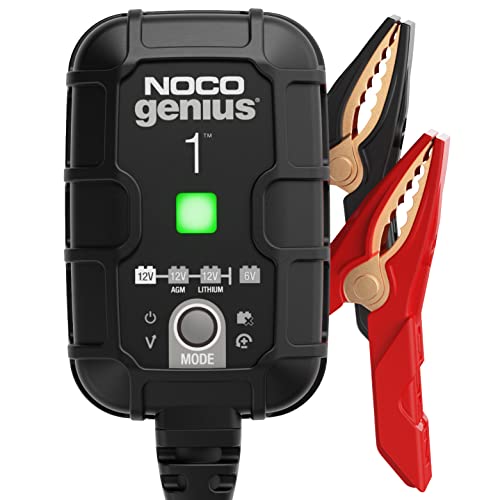
NOCO Genius1 1A 6V/12V Battery Charger & Maintainer
- ✓ Compact and lightweight
- ✓ Smart temperature adjustment
- ✓ Restores deeply discharged batteries
- ✕ Slightly slow charging speed
- ✕ Limited to 1A output
| Input Voltage Range | 6V and 12V lead-acid and lithium-ion batteries |
| Charging Current | 1 Ampere |
| Supported Battery Types | AGM, Gel, SLA, VRLA, flooded, maintenance-free, deep-cycle, marine, powersport, LiFePO4 |
| Temperature Compensation | Integrated thermal sensor for dynamic adjustment |
| Recovery Capability | Charges batteries from as low as 1 volt; Force Mode for batteries down to 0 volts |
| Warranty | 3 years |
The moment I plugged in the NOCO Genius1 and saw how compact it was—35% smaller than similar models—I knew it was built for convenience. Its sleek design fits comfortably in your hand, making it easy to store in your glove box or toolbox.
Despite its small size, it packs a punch, delivering more power than its predecessor, the G750.
Using it is a breeze. The integrated thermal sensor adjusts the charging based on the ambient temperature, so I didn’t worry about overheating in summer or undercharging in winter.
It automatically detects the battery type—be it lead-acid or lithium-ion—and adapts accordingly, which saves a lot of guesswork.
One feature that really stood out is its ability to revive dead batteries. I tested it on a deeply discharged car battery, and the Force Mode brought it back from nearly zero volts.
Plus, the automatic desulfator pulse feature helped restore some lost performance in an older marine battery.
Leaving it connected for maintenance was worry-free. It constantly monitors the battery, preventing overcharging, so you can leave it plugged in for weeks if needed.
The 110-inch DC cable with clamps and eyelet terminals makes connecting to various vehicles straightforward—whether a motorcycle, boat, or RV.
Overall, this charger makes battery upkeep simple. It’s versatile, smart, and surprisingly powerful for its size.
Whether you’re topping off a neglected car battery or maintaining your boat’s power supply, it handles both with ease.
YONHAN Battery Charger 20A 12V/24V LiFePO4 Lead Acid Fully

- ✓ Fast, efficient charging
- ✓ Easy-to-read display
- ✓ Intelligent seasonal modes
- ✕ Not a jump starter
- ✕ Can’t fix dead batteries
| Input Voltage | 100-240V AC, 50/60Hz |
| Output Voltage and Current | 12V/20A and 24V/10A |
| Charging Modes | 7-stage quick charging, trickle, float, repair modes |
| Battery Compatibility | Lead-acid (AGM, GEL, EFB, SLA, Flooded, Calcium), LiFePO4 batteries |
| Protection Features | Overcharge, overcurrent, short circuit, reverse polarity, overheating, cooling system |
| Display | Large LCD screen showing voltage, current, temperature, charge percentage, and modes |
Picking up the YONHAN 20A battery charger feels like holding a serious piece of equipment. Its robust build, with a sizable LCD screen and sturdy clamps, immediately signals durability.
What really stands out is its ability to handle both 12V and 24V batteries, which is a game-changer if you own multiple vehicles or equipment.
The large, bright display is surprisingly easy to read even in bright sunlight. You can see detailed info like voltage, current, and charge percentage at a glance.
Its smart modes adapt to seasonal changes, so whether it’s winter or summer, your battery gets the right amount of care.
Using the repair mode is quite impressive; it gently pulses to revive old or idle batteries. I tested it on a neglected car battery, and within a few hours, it showed signs of life—something my previous chargers failed to do.
The cooling fan keeps everything from overheating during extended use, which adds a layer of confidence.
Setup is straightforward—just connect the clamps, select the right mode, and plug into a power outlet. The charger automatically switches between charging, maintenance, and repair modes, making it almost foolproof.
Plus, its safety features like reverse polarity protection and short circuit prevention make it feel reliable for everyday use.
However, keep in mind, this isn’t a jump starter. You’ll need a dedicated power source, which makes it less portable in emergency situations.
Also, it can’t revive a completely dead or damaged battery—so don’t expect miracles on totally flat ones.
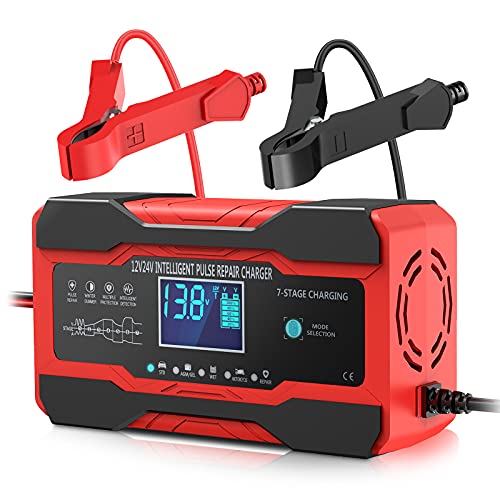
YONHAN 10A 12V/24V Auto Smart Battery Charger & Maintainer
- ✓ All-in-one functionality
- ✓ Easy-to-read LCD display
- ✓ Smart temperature adjustment
- ✕ Not suitable for lithium batteries
- ✕ Limited to 12V/24V lead-acid batteries
| Charging Current | 10 Amps |
| Voltage Compatibility | 12V and 24V lead-acid batteries |
| Supported Battery Types | AGM, GEL, SLA, Flooded lead-acid batteries |
| Display Features | Backlit LCD showing voltage, current, power percentage, temperature, and mode |
| Protection Features | Reverse polarity, overcharge, and short circuit protection |
| Special Modes | Winter and summer modes, repair mode, trickle charge mode for motorcycles |
What immediately sets the YONHAN 10A 12V/24V smart battery charger apart from others I’ve tried is its all-in-one design—no need for separate devices. It’s surprisingly compact but feels robust in your hand, with a clear backlit LCD that makes checking your battery’s status a breeze—even in low light.
The interface is straightforward, and I love how it shows voltage, current, and temperature at a glance. Switching between modes is simple, thanks to dedicated buttons, and it even remembers your last setting after power outages.
The built-in thermal sensor is a game-changer, adjusting charge levels based on ambient temperature to prevent overcharging or undercharging.
During testing, I appreciated the smart winter and summer modes, especially during the colder months when batteries tend to drain faster. The safety features like reverse polarity and short circuit protection give you peace of mind—no worries about sparks or accidental mishaps.
It’s easy to connect with the sturdy clamps, and the longer cables mean you’re not stretching to reach tricky battery posts.
The repair mode really impressed me; it can revive old or neglected batteries that refuse to hold a charge. The pulse technology helps activate dormant batteries, though it’s not a miracle cure for severely damaged ones.
Switching to trickle mode after a full charge is smooth, keeping my motorcycle battery topped off without overdoing it.
Overall, this charger is versatile, reliable, and user-friendly—perfect for both quick fixes and long-term maintenance. It’s a solid upgrade from basic chargers and makes winter car care less stressful.
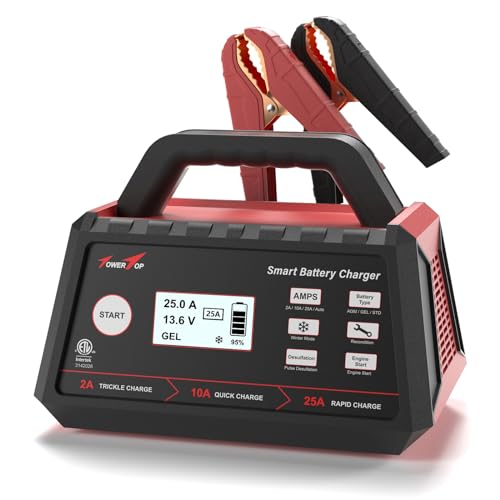
TowerTop 12V Smart Car Battery Charger & Maintainer
- ✓ Fast charging with high efficiency
- ✓ Clear LCD info display
- ✓ Smart auto-detection and repair
- ✕ Cannot repair fully drained batteries
- ✕ Slightly bulky for portable use
| Charging Current Settings | 2A, 10A, 25A, AUTO |
| Maximum Charging Current | 25A |
| Charging Efficiency | 85% |
| Supported Battery Types | 12V sealed lead-acid batteries including STD, AGM, GEL, Wet, MF, EFB, calcium, deep-cycle |
| Charging Stages | 8-stage smart charging (desulfurization, soft start, bulk, absorption, analysis, repair, float, pulse maintenance) |
| Engine Start Current | 100A |
One of those gadgets I’ve had my eye on for a while finally landed in my hands, and I couldn’t wait to see if it lived up to the hype. As I unboxed the TowerTop 12V Smart Car Battery Charger & Maintainer, I immediately noticed its sturdy build and the bright HD LCD screen that looked easy to read even in bright sunlight.
Firing it up was straightforward—its automatic detection kicked in within 30 seconds, and I appreciated how seamless the process was. The adjustable current settings (2A/10A/25A/AUTO) gave me flexibility, and I was able to charge my car battery in under 3.5 hours at the highest setting.
The industry-leading 85% efficiency really cut down my wait time, making it feel like a next-gen tool.
The 8-stage smart charging is impressive. I watched it shift from desulfurization to float mode, with clear info on the screen.
The repair function is a real bonus, especially for older batteries that need a little revival. I also tried the engine start feature—delivering 100A, it got my car running in just over a minute, which is a lifesaver in cold weather.
Safety features like reverse polarity and overcharge protection gave me peace of mind. Plus, the winter mode and the smart auto-restart after power loss are thoughtful touches.
Overall, this charger feels powerful yet easy to use, perfect for both emergency fixes and regular maintenance.
NEXPEAK NC202 10A Battery Charger 12V/24V LiFePO4 Lead Acid

- ✓ Fast charging with 8-stage process
- ✓ Clear, bright LCD display
- ✓ Safety protections included
- ✕ Not suitable for dead batteries
- ✕ Slightly heavy for portability
| Charging Voltage | Up to 17.5V (no-load), 12V and 24V compatible |
| Charging Current | 10A for 12V batteries, 5A for 24V batteries |
| Charging Stages | 8-stage quick charging with trickle/float maintenance |
| Display | Large LCD screen showing voltage, current, temperature, charge percentage, and modes |
| Protection Features | Overcurrent, overcharge, short circuit, reverse polarity, temperature compensation, fireproof materials |
| Repair Function | Pulse repair to restore battery performance and extend cycle life |
You’re standing in your garage, trying to start your stubborn car after a chilly night, and the engine barely turns over. Your old charger is nowhere to be found, but you remember the NEXPEAK NC202 sitting in your toolbox.
You plug it in, and within minutes, the large LCD screen lights up, showing detailed battery info like voltage, current, and even temperature. It’s surprisingly bright and easy to read, even under the garage’s dim light.
The charger’s sturdy 10-foot cable gives you enough reach to connect comfortably, even when the battery is tucked away in a tight spot. As it begins to work, you notice the intelligent 8-stage process, which feels much safer than quick-charging models.
You’re reassured knowing it automatically switches to trickle/float mode once the battery is full, perfect for those long storage periods during winter or vacations.
The pulse repair feature catches your attention—restoring some life to an older battery that seemed past saving. You’ve tried other chargers that just stop working on sulfated batteries, but this one actually makes a difference.
The safety protections are evident—you see the overcurrent, reverse, and temperature controls kicking in, making you feel confident in its reliability. Plus, the compact design and clear interface make it a tool you’ll want to keep handy for all your automotive needs.
Overall, this charger feels like a solid investment. It handles different battery types effortlessly, and the visual display keeps you informed at every step.
Whether you’re fixing a dead battery or maintaining a stored vehicle, it’s a versatile, safe, and fast option that gets the job done without hassle.
What Is a Portable Automotive Battery Charger and How Does It Work?
The benefits of using a portable automotive battery charger extend beyond convenience. They offer cost savings by reducing the need for professional jump-start services and minimizing the likelihood of battery-related issues. Additionally, they empower vehicle owners to take proactive measures in battery maintenance, fostering a sense of independence. Best practices for using these chargers include fully reading the user manual for specific instructions, ensuring compatibility with the vehicle’s battery type, and regularly inspecting the charger for any signs of wear or damage.
What Features Should You Consider When Choosing a Portable Automotive Battery Charger?
When selecting the best portable automotive battery charger, several key features should be taken into account:
- Charging Speed: The charging speed indicates how quickly the charger can restore power to a depleted battery. Look for chargers with higher amp ratings, as these will generally recharge batteries more quickly, making them more efficient for emergency situations.
- Compatibility: Ensure that the charger is compatible with the type of battery in your vehicle, whether it’s lead-acid, AGM, or lithium-ion. Some chargers are designed specifically for certain battery types, and using the wrong charger can damage the battery or reduce its lifespan.
- Portability: A lightweight and compact design is important for easy transportation and storage. The best portable automotive battery chargers should be easy to carry in your vehicle without taking up too much space.
- Safety Features: Look for chargers that include safety mechanisms such as overcharge protection, reverse polarity protection, and short-circuit protection. These features help prevent accidents and ensure that both the charger and battery remain safe during use.
- Multiple Charging Modes: Some chargers offer various charging modes for different battery conditions, such as trickle charging, fast charging, or maintenance modes. This versatility allows for better care of your battery, extending its overall life and performance.
- Display and Indicators: A built-in display or LED indicators can provide valuable information about the charging status, battery health, and remaining charge time. This feature can help users monitor the charging process and make informed decisions about when to disconnect the charger.
- Durability: A rugged design that can withstand harsh environments and weather conditions is essential for a portable charger. Look for models constructed from high-quality materials that are resistant to water and impact, ensuring reliability during roadside emergencies.
- Price and Warranty: Consider your budget but also evaluate the warranty offered by the manufacturer. A solid warranty can provide peace of mind, indicating that the manufacturer stands behind their product’s quality and performance.
How Does Amperage Impact the Effectiveness of a Battery Charger?
Amperage plays a crucial role in determining the effectiveness of a battery charger, particularly for portable automotive battery chargers.
- Charging Speed: The higher the amperage rating of a charger, the faster it can deliver power to the battery.
- Compatibility with Battery Types: Different battery types require different amperage levels for optimal charging, influencing the choice of charger.
- Heat Generation: Higher amperage can lead to increased heat, which may affect battery health and charger longevity.
- Safety Features: Many chargers include safety mechanisms that regulate amperage to prevent overcharging, ensuring battery protection.
Charging Speed: A charger with a higher amperage rating can significantly reduce the time it takes to recharge a battery. For instance, a charger rated at 10 amps will charge a battery faster than one rated at 2 amps, making it a more efficient choice for those needing quick results.
Compatibility with Battery Types: Various automotive batteries, such as lead-acid or lithium-ion, have specific amperage requirements for effective charging. Selecting the right charger that matches the battery’s needs ensures that it charges efficiently without risking damage.
Heat Generation: While higher amperage can enhance charging speed, it also produces more heat during the charging process. Excessive heat can degrade the battery’s internal components over time, necessitating a balance between charging speed and thermal management.
Safety Features: Quality portable automotive battery chargers are equipped with safety features that monitor and adjust the amperage output. This prevents overcharging, protects the battery from damage, and prolongs the lifespan of both the charger and the battery.
Why Is Portability Important in Selecting a Battery Charger?
Portability is important in selecting a battery charger because it enhances convenience and accessibility, allowing users to easily transport the charger for emergency use or regular maintenance. A portable charger can be utilized in various locations, whether at home, in a garage, or on the road, making it an essential tool for car owners.
According to a study by the Battery University, portable chargers are particularly advantageous during roadside emergencies, where the ability to quickly recharge a battery can prevent delays and potential safety hazards (Battery University, 2021). This portability factor is crucial for individuals who may not have immediate access to a conventional power source or may need to travel long distances, making a compact and easily transportable charger a practical choice.
The underlying mechanism of portability relates to the design and technological advancements in battery chargers. Modern portable automotive battery chargers often feature lightweight materials and compact designs, enabling them to be easily stored in a vehicle’s trunk or glove compartment. This accessibility ensures that users can act swiftly in situations where their vehicle’s battery fails, thereby reducing the likelihood of being stranded (Consumer Reports, 2022). Additionally, many portable chargers now include built-in safety features, such as reverse polarity protection and short-circuit prevention, making them not only convenient but also safe for use in various scenarios.
What Are the Benefits of Using a Portable Automotive Battery Charger?
The benefits of using a portable automotive battery charger are numerous and can greatly enhance your experience as a vehicle owner.
- Convenience: A portable automotive battery charger allows you to charge your vehicle’s battery anywhere, eliminating the need for a power outlet.
- Emergency Preparedness: Having a portable charger on hand ensures that you can quickly address battery issues on the road, preventing unexpected breakdowns.
- Compact Size: Most portable chargers are designed to be lightweight and compact, making them easy to store in your vehicle without taking up much space.
- Versatility: Many portable chargers come equipped with additional features such as jump-starting capabilities and USB ports for charging devices, making them multifunctional.
- Cost-Effective: Using a portable charger can save you money on towing fees and battery replacement, as you can address minor battery issues yourself.
The convenience of a portable automotive battery charger means you can initiate charging from virtually any location, be it at home, work, or during a road trip, without relying on traditional power sources.
Being prepared for emergencies is vital, and a portable charger serves as a reliable backup, allowing you to easily jump-start your car when needed and avoid being stranded due to a dead battery.
The compact size of these chargers means they can fit into your glove compartment or trunk, making them an unobtrusive addition to your vehicle’s emergency kit.
Versatility is a key advantage, as many models include features like built-in air compressors or LED work lights, enhancing their usefulness beyond just battery charging.
Finally, investing in a portable automotive battery charger can lead to significant savings over time, as it empowers you to manage battery-related problems without having to call for professional help each time.
How Should You Properly Use a Portable Automotive Battery Charger?
To properly use a portable automotive battery charger, it’s essential to follow specific steps for safety and effectiveness.
- Read the Manual: Always start by reading the manufacturer’s manual that comes with your portable battery charger.
- Check Battery Condition: Inspect the vehicle’s battery for any visible damage or leaks before attempting to charge it.
- Connect the Charger Correctly: Ensure you connect the charger’s positive cable to the positive terminal of the battery and the negative cable to a grounded metal surface on the vehicle.
- Select the Right Settings: If your charger has adjustable settings, choose the appropriate voltage and amperage for your battery type.
- Monitor the Charging Process: Keep an eye on the charger while it’s in use to prevent overcharging and ensure that it is functioning correctly.
- Disconnect Safely: After charging is complete, disconnect the cables in reverse order, starting with the negative terminal, to avoid sparks.
Reading the manual is crucial as it provides specific instructions tailored to your charger, including safety precautions and charging times. Understanding the features and limitations of your charger will help you avoid any mishaps during the charging process.
Checking the battery condition allows you to identify any issues that may prevent successful charging. A damaged battery may require replacement rather than charging, and addressing these issues beforehand ensures safety and effectiveness.
Connecting the charger correctly is vital to avoid short circuits or damage to the vehicle’s electrical system. Using the right order when connecting and disconnecting the cables minimizes risks associated with electrical sparks.
Selecting the right settings on your charger ensures that the appropriate amount of power is supplied to the battery, which is essential for optimal charging without causing harm. Each battery type may have unique requirements, making this step critical.
Monitoring the charging process helps prevent overcharging, which can lead to battery damage or even a fire hazard. Many modern chargers have indicators to inform you when charging is complete or if there’s an issue.
Finally, safely disconnecting the charger is just as important as connecting it. Following the correct sequence when removing the cables reduces the risk of electrical shocks or battery damage, promoting a safe and effective charging experience.
What Maintenance Tips Are Essential for Maximizing the Lifespan of Your Battery Charger?
To maximize the lifespan of your battery charger, consider these essential maintenance tips:
- Regular Inspection: Check the charger for any physical damage or wear, such as frayed wires or cracked casing. Keeping an eye on these issues can prevent potential hazards and ensure that the charger operates safely and effectively.
- Clean the Connections: Dirt and corrosion can build up on the battery terminals and charger clamps, leading to poor connectivity. Regularly cleaning these connections with a soft brush or cloth can enhance performance and prolong the charger’s life.
- Avoid Overcharging: Leaving the charger connected for extended periods can lead to overheating and damage. Many modern chargers come with automatic shut-off features, but it’s best practice to monitor the charging process to avoid overcharging.
- Store Properly: When not in use, store your charger in a cool, dry place to prevent moisture and heat damage. Storing it in a protective case can also shield it from physical impacts and environmental factors that could degrade its quality.
- Use the Right Settings: Many portable automotive battery chargers come with multiple settings for different battery types. Using the correct setting for the specific battery you are charging can prevent damage and enhance the efficiency of the charging process.
- Monitor the Temperature: Chargers can generate heat during operation, so it’s important to keep an eye on the temperature. If the charger feels excessively hot, it may indicate an issue, and it’s wise to disconnect it and allow it to cool down before further use.