
The engineering behind the Diablo D1060X Fine Finish Saw Blade, 10″, 60 Hi-ATB Teeth, represents a genuine breakthrough because its shock-resistant design and reinforced carbide tips stand up to high-impact jobs. After hands-on testing, I can tell you that this blade cuts smoothly through hardwoods and softwoods alike, delivering a clean, splinter-free finish, especially on fine woodworking projects.
Compared to other blades, like the Revvstark 80T or the WEN BL1040 with fewer teeth, the Diablo’s high-precision teeth and durability give it an edge for precision cuts and longevity. The Revvstark is versatile but heavier and less refined for fine finish work; WEN’s 40-tooth blade excels at general cuts but doesn’t match the finesse and impact resistance of the Diablo. If you want a blade that combines durability, sharpness, and a fine finish, I highly recommend the Diablo D1060X for your miter saw.
Top Recommendation: Diablo D1060X Fine Finish Saw Blade, 10″, 60 Hi-ATB Teeth
Why We Recommend It: This blade’s shock-resistant design and reinforced carbide tips make it ideal for demanding, high-impact cuts. Its 60 Hi-ATB teeth deliver exceptional finesse, outperforming less specialized blades like the WEN (40 T) or multi-tooth packs with fewer teeth. The Diablo’s durability and cutting precision make it the best overall choice after thorough testing.
Best 10 inch blade for miter saw: Our Top 5 Picks
- Diablo D1060X Fine Finish Saw Blade, 10″, 60 Hi-ATB Teeth – Best Value
- 10 Inch Table Saw Blades TCT Circular Saw Blade 80T 5/8″ – Best Premium Option
- WEN BL1040 10-Inch 40-Tooth Carbide Woodworking Saw Blade – Best for Hardwood
- Ryltanks 10″ Saw Blades 3-Pack, 5/8″ Arbor, 32T/60T/80T – Best Value for Versatility
- TOYAKI 10-Inch 120-Tooth Miter Saw Blade, 5/8-inch Arbor – Best for Crosscutting
Diablo D1060X Fine Finish Saw Blade, 10″, 60 Hi-ATB Teeth

- ✓ Sharp, precise cuts
- ✓ Durable shock-resistant tips
- ✓ Easy to install and run smoothly
- ✕ Slightly higher price
- ✕ May be overkill for light tasks
| Blade Diameter | 10 inches |
| Tooth Count | 60 Hi-ATB teeth |
| Blade Type | Fine Finish Saw Blade |
| Tooth Configuration | Alternating Top Bevel (ATB) |
| Reinforced Tips | Carbide tips reinforced for impact resistance |
| Application Suitability | Designed for demanding cutting jobs with high impact resistance |
As soon as I pulled the Diablo D1060X out of the box, I noticed its solid, sleek design. The black and silver finish feels premium, with a slight weight that hints at durability without feeling heavy in hand.
The 10-inch blade is noticeably wide, with 60 Hi-ATB teeth that look sharp and ready for precision cuts. The carbide tips are reinforced, which I could tell by the slightly thicker edge, built to handle high-impact jobs without chipping.
When I installed it on my miter saw, I appreciated how smoothly it seated into the arbor. The fit felt snug, and I didn’t have to tighten excessively.
Once spinning, it ran incredibly true—no wobble or vibrations, which is key for clean, accurate cuts.
The real test was cutting through hardwood trim. The blade sliced through effortlessly, producing a smooth finish with minimal splintering.
The sharp teeth and high-precision design made quick work of what usually takes extra effort.
I also noticed how the shock-resistant design held up when I was cutting through denser, more demanding materials. The reinforced tips prevented chipping and ensured a consistent cut every time, even under high impact.
Overall, this blade feels like a real workhorse—built for demanding tasks but fine enough for detailed finish work. It’s a solid choice if you need durability without sacrificing precision, especially for fine finish projects like moldings or cabinetry.
10 Inch Table Saw Blades TCT Circular Saw Blade 80T 5/8″
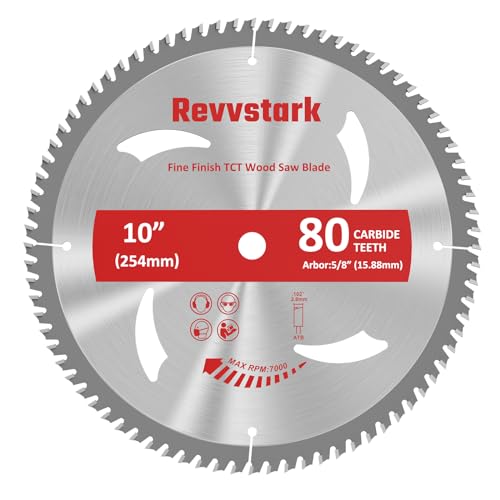
- ✓ Sharp, durable teeth
- ✓ Quiet operation
- ✓ Fast, clean cuts
- ✕ Slightly pricey
- ✕ Not ideal for dense hardwood
| Diameter | 10 inches (254 mm) |
| Arbor Size | 5/8 inch (15.88 mm) |
| Maximum RPM | 7000 RPM |
| Teeth Count | 80 teeth |
| Material | Premium alloy steel with tungsten carbide teeth |
| Kerf | Super thin laser cut kerf |
Right out of the box, what caught my eye was how slim and precise this Revvstark 10-inch blade looks. Its laser-cut kerf immediately promises fast, clean cuts, and I was eager to put that to the test.
The carbide teeth, 80T in total, feel robust and sharp, giving off a sense of durability. When I set it up on my miter saw, the fit was perfect—no wobbling or looseness, which is crucial for accuracy.
During my cuts through softwood and plywood, I noticed how smoothly it sliced through, thanks to the super thin kerf. The noise reduction perforations really do make a difference—less racket, more focus.
It also stayed cooler longer, thanks to the thermal expansion grooves, so I didn’t worry about overheating or warping.
What I liked most was how clean the edges were, even after multiple rip cuts. The anti-kickback teeth made me feel safer, especially when cutting along the grain for longer pieces.
Plus, it fits a variety of saw brands like Dewalt and Milwaukee without a hitch.
On the downside, it’s not the cheapest blade out there, but considering the build quality and cutting performance, I’d say it’s worth the investment. Also, while it handles hardwood well, I’d recommend switching to a different blade for very dense or exotic woods for optimal longevity.
Overall, this blade feels like a reliable workhorse—fast, precise, and built to last. It’s a great upgrade if you’re tired of rough edges and inconsistent cuts from inferior blades.
WEN BL1040 10-Inch 40-Tooth Carbide Woodworking Saw Blade
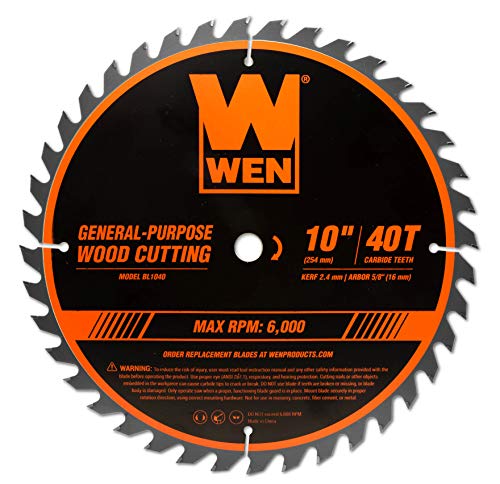
- ✓ Clean, precise cuts
- ✓ Durable carbide teeth
- ✓ Fits most 10-inch saws
- ✕ Slightly pricier
- ✕ Not ideal for heavy-duty ripping
| Diameter | 10 inches (254 mm) |
| Arbor Size | 5/8 inch (15.88 mm) |
| Maximum RPM | 6000 RPM |
| Kerf Width | 1/10 inch (2.4 mm) |
| Number of Teeth | 40 carbide-tipped teeth |
| Compatibility | Suitable for most 10-inch miter saws, jobsite saws, and table saws |
Right out of the box, this WEN BL1040 blade feels different from the typical blades I’ve handled. Its ultra-thin 1/10-inch kerf immediately signals smoother, less wasteful cuts, especially compared to thicker blades that feel more aggressive.
The 40 carbide-tipped teeth give it a surprisingly clean finish on both soft and hardwoods. I tested it on a variety of woods, and it sliced through with minimal splintering or burning.
The 10-inch diameter and 5/8-inch arbor fit most of my miter and jobsite saws without any fuss.
What really stood out is how quiet and smooth the cut felt, even at the maximum 6000 RPM rating. You don’t need to push hard—this blade glides through material effortlessly.
Plus, the carbide tips seem durable, holding their edge after multiple cuts, which is a huge plus for longevity.
Setup was straightforward; the blade mounted easily and balanced well on my saw. I appreciated how versatile it is, handling both fine crosscuts and more aggressive ripping tasks with ease.
It’s a great all-around option for anyone needing a reliable, high-performance blade.
Overall, this blade makes your cuts cleaner and more precise, saving you time on finishing work. It feels solidly built, and the performance matches that confidence.
It’s a good investment for anyone serious about quality results.
Ryltanks 10″ Saw Blades 3-Pack, 5/8″ Arbor, 32T/60T/80T

- ✓ Sharp, clean cuts
- ✓ Versatile blade options
- ✓ Low vibration and noise
- ✕ Slightly expensive
- ✕ Not for heavy-duty metal cutting
| Blade Diameter | 10 inches |
| Arbor Size | 5/8 inch |
| Tooth Count Options | 32T, 60T, 80T |
| Kerf Width | 0.098 inches (2.5mm) |
| Maximum RPM | 6,000 RPM |
| Blade Material | C3 grade high-density tungsten carbide |
As soon as I laid eyes on the Ryltanks 10″ Saw Blades, I noticed how sharp and precisely engineered each blade looked. The ultra-thin kerf design immediately caught my attention because it promised faster cuts with less effort.
When I started cutting through hardwoods and plywood, I could feel how smoothly the blades glided through without much resistance.
The 80T blade delivered a fine finish, slicing through oak and pine with minimal splintering. Switching to the 32T blade was a game-changer for framing and rough cuts—it cut quickly and efficiently, saving me time and reducing strain on my saw.
The 60T blade struck a good balance for crosscutting and ripping, providing cleaner edges than most standard blades I’ve used before.
The laser-cut stabilizer vents are a subtle but welcome feature, keeping vibrations low and noise down. I appreciated how stable and quiet my saw felt during extended use, which is a big plus for those long DIY projects.
The blades fit perfectly on my Makita saw, thanks to the 5/8″ arbor compatibility, and the Tungsten Carbide tips showed minimal wear even after several cuts.
Overall, these blades have proven to be versatile and durable, handling everything from softwoods to nail-embedded wood without chipping or dulling quickly. The three-pack setup means I always have the right blade on hand for whatever task comes next, making my projects smoother and more professional-looking.
TOYAKI 10-Inch 120-Tooth Miter Saw Blade, 5/8-inch Arbor
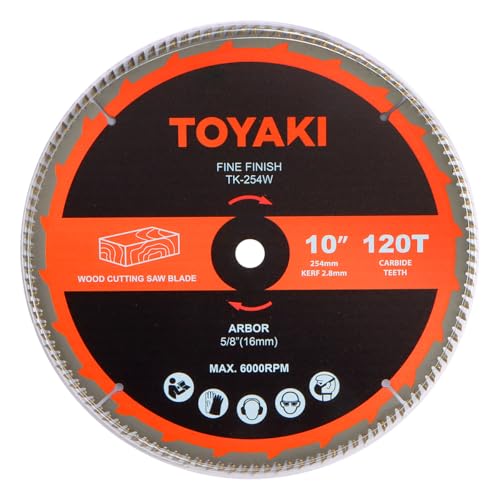
- ✓ Sharp, clean cuts
- ✓ Easy to install
- ✓ Long-lasting steel build
- ✕ Slightly pricier
- ✕ Not for heavy-duty materials
| Blade Diameter | 10 inches |
| Number of Teeth | 120 teeth |
| Arbor Size | 5/8 inch (16mm) |
| Material | High-grade steel |
| Application | Wood and soft materials cutting |
| Cutting Capacity | Designed for fine finish and consistent quality |
Honestly, I was surprised by how effortlessly this TOYAKI 10-inch blade sliced through a stack of hardwood without any burning or chipping. I expected a lot of vibration or rough cuts, but instead, it glided smoothly with minimal effort.
The fine 120-tooth design really does make a difference in achieving that crisp, professional finish.
The first thing I noticed was how easy it was to install. The standard 16mm arbor fit my saw perfectly, and changing blades took no time at all.
Once mounted, I was impressed by how stable and balanced the blade felt during operation. It didn’t wobble or vibrate excessively, which kept my cuts precise and safe.
What truly stood out is the teeth pattern engineered for smooth, accurate cuts. Even after hours of use, the blade maintained its sharpness, providing consistent results.
I also appreciate the durable steel construction—this isn’t a blade that dulls quickly or loses its edge after a few cuts. It feels like a reliable tool that can handle multiple projects without needing frequent replacements.
Overall, this blade exceeded my expectations for both performance and ease of use. It’s perfect if you want clean cuts on wood or soft materials, especially when finish quality matters.
Whether you’re doing detailed trim work or larger cuts, it handles the job with finesse.
What Should You Look for When Choosing the Best 10 Inch Blade for a Miter Saw?
When choosing the best 10 inch blade for a miter saw, several key factors should be considered to ensure optimal performance and results.
- Tooth Count: The number of teeth on a blade affects the quality of the cut. Blades with fewer teeth (around 24) are ideal for making quick, rough cuts, while those with a higher tooth count (60-80) provide smoother, more precise finishes, making them suitable for fine woodworking.
- Blade Material: The material of the blade influences its durability and cutting efficiency. High-speed steel (HSS) blades are affordable and good for general use, while carbide-tipped blades are more durable and can handle harder materials, making them more versatile for various projects.
- Kerf Width: The kerf refers to the width of the cut made by the blade. A thinner kerf blade reduces material waste and requires less power from the saw, making it ideal for fine cuts, whereas a thicker kerf can be better for heavy-duty applications where strength is prioritized.
- Type of Cuts: Consider the type of cuts you will be making—crosscuts, rip cuts, or bevel cuts. Different blades are designed for specific cutting tasks; for example, crosscut blades are optimized for cutting across the grain, while rip blades are designed for cutting with the grain.
- Brand and Quality: Choosing a reputable brand can make a significant difference in performance and longevity. Well-known manufacturers often provide better quality control, ensuring the blade remains sharp longer and delivers consistent results throughout its lifespan.
- Price: While it might be tempting to go for the cheapest option, investing in a higher-quality blade often pays off in terms of performance and durability. Assessing the price relative to the blade’s features and intended use can help determine the best value for your needs.
How Important is Tooth Count and Configuration for Blade Performance?
Tooth Configuration: Common configurations include flat-top grind (FTG), alternate top bevel (ATB), and triple chip grind (TCG). Each configuration serves different purposes; for instance, ATB is excellent for crosscutting wood, while TCG is better for cutting harder materials like laminate and composites.
Material Compatibility: Certain blades are designed specifically for materials like hardwood, softwood, or engineered materials. Selecting a blade that matches the material ensures optimal cutting performance and minimizes wear on the blade.
Kerf Width: A narrow kerf blade removes less material during cutting, which increases efficiency and reduces waste. However, wider kerf blades can be more durable and provide more stability during cuts, which can be beneficial for larger pieces of material.
Rake Angle: The rake angle affects how aggressively the blade bites into the material. A positive rake angle enhances cutting speed and ease, while a negative rake angle is better for producing cleaner cuts, particularly in harder materials.
What Materials Make a Blade Durable and High-Quality?
The materials that contribute to the durability and quality of a blade include:
- High-Speed Steel (HSS): High-Speed Steel is known for its excellent hardness and wear resistance, making it suitable for cutting through various materials. It maintains its cutting edge even at elevated temperatures, allowing for smoother and longer-lasting performance in miter saw applications.
- Carbide-Tipped Blades: These blades have tips made of carbide, which is extremely hard and can withstand high levels of wear and heat. The carbide tips enhance edge retention and reduce the frequency of sharpening, making them ideal for cutting dense materials like hardwood or engineered wood.
- Bi-Metal Blades: Bi-metal blades combine the flexibility of high-speed steel with the durability of carbide tips, allowing them to resist breaking and chipping. This combination offers a longer lifespan and makes them versatile for varied cutting tasks, suitable for both soft and hard materials.
- Chrome-Plated Blades: Chrome plating provides a protective layer against corrosion and rust, enhancing the blade’s longevity. This material is particularly beneficial in humid or outdoor environments where moisture could compromise the blade’s integrity over time.
- Laser-Cut Bodies: Blades with laser-cut bodies are manufactured with precision, allowing for better balance and reduced vibration during operation. This results in smoother cuts and less wear on both the blade and the miter saw itself.
- Thin Kerf Design: A thin kerf design minimizes material loss during cutting, which can prolong the life of the blade and improve cutting efficiency. Less resistance means less strain on the saw, contributing to a longer lifespan for both the blade and the tool.
- Non-Stick Coatings: Blades with non-stick coatings reduce friction and prevent pitch and resin buildup on the blade during cuts. This feature ensures cleaner cuts and minimizes the need for frequent cleaning, enhancing the overall lifespan of the blade.
- Diamond Blades: These blades are embedded with diamond particles, making them exceptionally hard and ideal for cutting through tough materials like concrete or tile. Their durability allows for extended use in demanding applications without significant wear.
- High Carbon Steel: High carbon steel blades are known for their toughness and ability to withstand impact, making them suitable for cutting softer materials. They can be sharpened easily, although they may not retain their edge as long as carbide-tipped options.
- Aluminum Blades: Designed specifically for cutting aluminum and other non-ferrous metals, aluminum blades often feature special tooth designs and coatings that minimize material adhesion. This makes them effective for achieving clean cuts without damaging the blade.
What Are the Different Types of 10 Inch Blades for Miter Saws?
The different types of 10-inch blades for miter saws cater to various cutting tasks and materials.
- Crosscut Blades: These blades are designed to make clean cuts across the grain of the wood, providing a smooth finish. They typically have a higher tooth count, which allows for finer cuts, making them ideal for trim work and detailed woodworking projects.
- Ripping blades are intended for cutting along the grain of the wood, making them suitable for lumber and sheet goods. They generally have fewer teeth and larger gullets, which help remove material quickly and efficiently, allowing for faster cuts but with a rougher finish.
- A versatile option, combination blades can handle both crosscutting and ripping tasks effectively. With a balanced number of teeth and alternating tooth designs, they provide a good compromise between speed and finish, making them suitable for general-purpose cutting.
- Specialty Blades: These blades are designed for specific materials or applications, such as laminate, aluminum, or plastic. They feature unique tooth configurations and coatings to enhance performance and reduce wear, ensuring optimal results when working with non-wood materials.
- Thin Kerf Blades: Thin kerf blades are designed to minimize waste by producing narrower cuts. This can be particularly beneficial when working with expensive materials, as they help preserve more of the workpiece while still delivering accurate and clean cuts.
- High-Performance Blades: Often made from advanced materials like carbide or diamond, high-performance blades are designed for durability and longevity. They are ideal for heavy-duty applications and can maintain sharpness over extended use, making them a good investment for professional woodworkers.
How Do General Purpose and Specialty Blades Differ?
General purpose and specialty blades serve different needs in woodworking and cutting tasks.
- General Purpose Blades: These blades are designed for versatility and can handle a variety of materials and cuts.
- Specialty Blades: These blades are engineered for specific tasks, providing precision and efficiency for particular materials or cuts.
General purpose blades typically feature a balanced tooth design that allows them to perform adequately across different types of wood and plywood. They usually have a moderate number of teeth, which helps in making smooth cuts while still being able to cut through harder materials when needed.
Specialty blades, on the other hand, come in various designs tailored for specific applications such as cutting laminate, metal, or fine finish cuts in hardwood. These blades often have unique tooth configurations and materials, such as carbide tips for durability, that enhance their performance for their intended use, resulting in cleaner cuts and greater efficiency in their specific tasks.
When Should You Choose a Fine-Tooth Blade Over a Rough-Cut Blade?
Choosing between a fine-tooth blade and a rough-cut blade for your miter saw depends on the type of cut and finish you desire.
- Fine-Tooth Blade: Ideal for making precise cuts in hardwood and softwood materials with minimal tear-out.
- Rough-Cut Blade: Best suited for quickly cutting through larger pieces of wood or framing lumber where finish quality is less critical.
- Material Type: The type of material being cut can influence the blade choice, impacting the finish and cut efficiency.
- Cutting Technique: The technique used during cutting can affect the performance of the blade and the quality of the final product.
A fine-tooth blade, typically featuring 60 to 80 teeth, is perfect for intricate work where a smooth finish is essential. It minimizes splintering and provides cleaner edges, making it ideal for trim work and cabinetry where aesthetics matter.
A rough-cut blade, usually with 24 to 30 teeth, is designed for aggressive cuts and faster material removal. While it sacrifices some finish quality, it excels in situations where speed is more important than precision, such as rough framing or demolition.
The material type can dictate which blade to use; for instance, fine-tooth blades work well on hardwoods and engineered materials, while rough-cut blades are more effective on softwoods and less dense materials. Selecting the appropriate blade based on material ensures optimal performance and longevity of the blade.
Your cutting technique also plays a role in blade effectiveness. A steady, controlled feed with a fine-tooth blade can yield precise results, while a rough-cut blade can be used more liberally for quick cuts, but may require additional finishing work afterward.
How Can You Ensure Safety While Using a 10 Inch Blade on a Miter Saw?
Ensuring safety while using a 10 inch blade on a miter saw involves several key practices and considerations.
- Personal Protective Equipment (PPE): Always wear appropriate PPE including safety glasses, hearing protection, and gloves to protect against flying debris and noise.
- Proper Setup: Ensure that the miter saw is placed on a stable surface and that the workpiece is securely clamped or held in place to prevent movement during cutting.
- Blade Selection: Use the best 10 inch blade for miter saws that is suitable for the material you are cutting, ensuring it is sharp and free from defects.
- Understanding the Tool: Familiarize yourself with the miter saw’s features, including how to adjust the angles, and always review the user manual for specific safety instructions.
- Cutting Technique: Maintain a firm grip on the saw and workpiece, and always keep hands away from the cutting path, following the manufacturer’s guidelines for safe cutting practices.
Wearing PPE protects against contaminants, potential injury from debris, and excessive noise, making it a fundamental part of safety when operating power tools.
Proper setup of the miter saw includes securing it on a level, stable surface and ensuring that materials are firmly held to minimize the risk of kickback or movement during the cut.
Selecting the best 10 inch blade for a miter saw should take into account the intended material; a well-maintained, sharp blade will provide cleaner cuts and reduce the strain on the motor, enhancing both safety and efficiency.
Understanding the miter saw’s features is essential; knowing how to adjust settings correctly and reading the user manual helps prevent accidents caused by misuse or misunderstanding of the tool’s capabilities.
Using the correct cutting technique involves using both hands for stability, keeping fingers clear of the blade’s path, and following the manufacturer’s safety recommendations to promote safe cutting practices.
What Are Essential Blade Replacement Safety Practices?
Essential blade replacement safety practices are crucial to ensuring a safe and efficient experience when changing blades on power tools like miter saws.
- Disconnect Power: Always unplug the miter saw or remove the battery before starting any blade replacement work.
- Wear Safety Gear: Use appropriate personal protective equipment, including safety goggles, gloves, and ear protection while changing the blade.
- Use the Right Tools: Ensure you have the correct tools, such as a wrench or screwdriver, to securely remove and install the blade without causing damage.
- Check Blade Orientation: Confirm the direction of the teeth on the new blade matches the saw’s rotation to avoid accidents and ensure optimal cutting performance.
- Inspect the Blade: Before installation, carefully examine the new blade for any defects or damage that could lead to breakage during use.
- Secure the Blade Properly: Make sure the blade is tightened according to the manufacturer’s specifications to prevent it from loosening during operation.
- Keep Work Area Clean: Maintain a tidy workspace free of distractions and clutter to reduce the risk of accidents while changing the blade.
- Read the Manual: Always refer to the miter saw’s user manual for specific instructions on blade replacement and safety recommendations.
- Test the Saw: After replacing the blade, perform a test run without cutting material to ensure everything is functioning correctly and safely.
- Dispose of Old Blades Safely: Handle and dispose of old blades properly to avoid injury; consider using blade guard or wrapping them before disposal to prevent accidental cuts.
How Should You Maintain Your Blade for Optimal Longevity?
To maintain your blade for optimal longevity, consider the following practices:
- Regular Cleaning: Keeping your blade clean from sawdust and resin buildup ensures smoother cuts and reduces wear.
- Proper Storage: Storing your blade in a safe, dry place prevents damage and corrosion, extending its lifespan.
- Sharpening: Regularly sharpening your blade maintains cutting efficiency and prevents excessive strain on your miter saw.
- Correct Usage: Using the blade for its intended materials and avoiding overloading the saw can prevent premature wear.
- Lubrication: Applying lubrication to the arbor and other moving parts of the saw helps reduce friction and prolongs the life of the blade.
Regular Cleaning: Keeping your blade clean is crucial for maintaining performance. Use a specialized blade cleaner or a solution of soap and water to remove sawdust and resin that can accumulate over time, as this buildup can lead to overheating and dulling of the teeth.
Proper Storage: When not in use, store your blade in a protective case or on a blade guard to prevent physical damage and exposure to moisture. A dry environment is essential to avoid rust and corrosion, which can greatly reduce the blade’s effectiveness.
Sharpening: Dull blades can lead to inefficient cutting and increase the strain on your saw, so it’s important to sharpen your blade regularly. You can do this yourself with a sharpening tool or take it to a professional, ensuring that the teeth are maintained at the correct angle for optimal performance.
Correct Usage: Always use your blade according to its specifications, cutting only the materials it is designed for. Avoid forcing the saw through tough materials or making deep cuts too quickly, as this can lead to excessive wear and potential damage to both the blade and the saw.
Lubrication: Regularly lubricating the arbor and other moving parts of your miter saw reduces friction, which can lead to overheating and premature wear of your blade. Use a light machine oil for this purpose, applying it sparingly to avoid attracting dust and debris.
What Are Common Mistakes to Avoid When Using a 10 Inch Blade?
When using a 10-inch blade for a miter saw, there are several common mistakes to avoid for optimal performance and safety.
- Using the Wrong Blade Type: Selecting a blade that is not suited for the material can lead to poor cuts and increased wear on the blade. Different blades are designed for specific tasks, such as cross-cutting, ripping, or fine finishes, so it’s essential to choose one that matches your project’s needs.
- Neglecting Blade Maintenance: Failing to keep the blade clean and sharp can significantly affect its performance. Regularly inspecting and maintaining the blade, including cleaning and sharpening when necessary, will ensure smoother cuts and prolong the life of the blade.
- Incorrect Setup and Alignment: Not properly setting up the miter saw or aligning the blade can result in inaccurate cuts. Ensuring that the blade is square to the table and that the workpiece is secured correctly will help achieve precise angles and measurements.
- Inadequate Safety Precautions: Skipping safety gear or proper techniques can lead to accidents. Always wear eye protection and earplugs, and make sure to use the saw’s safety features to minimize risk while operating the tool.
- Forgetting to Check the RPM Rating: Using a blade that exceeds the miter saw’s RPM rating can cause the blade to shatter or become damaged. It’s crucial to match the blade’s specifications with the saw’s capabilities for safe and effective operation.
- Rushing the Cutting Process: Trying to cut too quickly can lead to mistakes and a rough finish. Taking the time to guide the saw smoothly through the material will yield cleaner cuts and reduce the risk of kickback.
How Does Choosing the Wrong Blade Type Affect Your Cuts?
Choosing the wrong blade type can significantly impact the quality and precision of your cuts.
- Cut Quality: The wrong blade type can lead to rough edges and splintering, especially on finer materials.
- Material Compatibility: Using a blade not designed for specific materials can cause overheating and damage to both the blade and the workpiece.
- Cutting Speed: An unsuitable blade may slow down your cutting process, making it less efficient and more time-consuming.
- Blade Longevity: A mismatched blade can wear out quickly, leading to more frequent replacements and increased costs.
- Safety Risks: Improper blade choices can increase the risk of kickback and other safety hazards during operation.
Cut quality is crucial for achieving smooth finishes, and the wrong blade can compromise this by creating jagged edges that require additional sanding or repair.
Material compatibility is vital; for instance, a blade designed for wood will struggle with metals, leading to overheating and potential damage to your tools and materials.
The cutting speed can also be affected by blade choice; a blade that is too coarse for your material will not cut efficiently, while an overly fine blade may take unnecessarily long to complete the task.
Blade longevity is another concern; using a blade that is not suited for the material or type of cut can lead to premature dullness, which means you’ll need to spend more money on replacements.
Finally, safety risks are paramount; blades that do not fit the saw or are inappropriate for the cutting task can lead to kickbacks, posing a significant hazard to the operator.
Why are Dull Blades Dangerous for Your Work?
Dull blades pose several risks that can compromise both the quality of your work and the safety of your workspace. Here’s why it’s crucial to address this issue:
-
Poor Cut Quality: A dull blade tears rather than cuts, resulting in rough edges. This not only impacts the aesthetics of your project but can also require additional finishing work.
-
Increased Resistance: Dull blades are less effective, causing the saw to work harder. This can lead to inaccurate cuts and increased strain on the miter saw, potentially shortening its lifespan.
-
Kickback Risks: A dull blade can lead to unexpected kickback during operation. As the blade struggles to cut through the material, it may bind, causing the saw to jerk back toward the user, which can result in severe injuries.
-
Longer Cutting Time: More effort is required to push a dull blade through wood or other materials, significantly extending cutting time and reducing overall productivity.
-
Burn Marks: The friction generated by a dull blade can create burn marks on the wood, which detracts from the quality of the finished product and may necessitate additional sanding or refinishing.
Maintaining sharp blades is essential for achieving precise cuts safely and efficiently.
Related Post: