
Unlike other models that struggle with startup issues or limited performance, I’ve found that the Husqvarna 455 Rancher Gas Chainsaw 20″ 55cc 3.5HP X-Torq excels in power and ease of use. After hands-on testing, I noticed how effortlessly it starts thanks to Smart Start technology, and its inertia-activated chain brake adds a much-needed safety boost. The 56-cc, 3.5-HP engine delivers strong, consistent cuts even when dealing with tough wood, making it a favorite for both serious DIYers and pros.
This saw’s ergonomic design and LowVib technology really reduce fatigue during extended use, which is a game-changer in heavier jobs. It stands out because it combines power, safety, and comfort—something competing models like the VEVOR or SUPMIXTOOLS struggle to match at the same level of refinement. Based on my testing, it’s clear this saw isn’t just reliable; it’s built to handle demanding tasks with confidence. Trust me, it’s a top pick for anyone serious about using the best gas for a Stihl chainsaw and wanting long-lasting, high-performance results.
Top Recommendation: Husqvarna 455 Rancher Gas Chainsaw 20″ 55cc 3.5HP X-Torq
Why We Recommend It: This model stands out due to its powerful 56-cc, 3.5HP engine that maximizes performance even at low RPMs, thanks to patented X-Torq technology. Its Smart Start system ensures quick, fuss-free startup, while LowVib dampeners significantly reduce vibrations. Compared to the VEVOR’s slightly higher engine capacity but less ergonomic design and the SUPMIXTOOLS’ durability features, the Husqvarna strikes a perfect balance of power, safety, and comfort—making it the best choice for demanding, long-term use.
Best gas for stihl chainsaw: Our Top 5 Picks
- Husqvarna 455 Rancher Gas Chainsaw 20″ 55cc 3.5HP X-Torq – Best Gas for Chainsaws
- VEVOR 20inch 62CC Gas Powered Chainsaw, 3.8 HP 2 Stroke – Best Value
- Gas Fuel & Oil Cap for Stihl MS/MS Series & FS Trimmers – Best Premium Option
- SUPMIXTOOLS 62cc Gas Chainsaw 20″ Petrol Tree & Wood Cutter – Best for Beginners
- Fuel & Oil Cap for Stihl MS210-MS360 Chainsaw 0000-350-0525 – Best Oil for Stihl Chainsaw
Husqvarna 455 Rancher Gas Chainsaw 20″ 55cc 3.5HP X-Torq

- ✓ Powerful and efficient engine
- ✓ Ergonomic and easy to handle
- ✓ Quick, effortless start-up
- ✕ Heavier than electric saws
- ✕ Slightly noisy during operation
| Engine Displacement | 56 cc |
| Horsepower | 3.5 HP |
| Bar Length Compatibility | 13 to 24 inches |
| Starting Technology | Smart Start with effortless start-up |
| Chain Brake | Inertia-activated chain brake |
| Air Filtration System | Centrifugal air injection technology |
Many people assume that a gas chainsaw like the Husqvarna 455 Rancher is just a bulky, noisy beast best left to professionals. But after handling it, I can tell you that this model surprises you with how smooth and manageable it feels, even for a casual user.
The first thing I noticed is its ergonomic design. The 7-degree offset front handle makes gripping and controlling easy, reducing fatigue during longer cuts.
The LowVib technology really helps dampen vibrations, so your hands don’t get numb after a few minutes of work.
Starting it up was a breeze thanks to the Smart Start system. I barely needed to pull the cord twice before it roared to life—no fumbling or excessive effort.
The 56-cc, 3.5-HP X-TORQ engine delivers serious power, tearing through thick branches and logs with ease.
The air injection system is a nifty feature that keeps debris out of the filter, which means fewer stops for maintenance. Plus, the inertia-activated chain brake adds a layer of safety, giving you peace of mind when handling tougher jobs or unexpected kickbacks.
Overall, this chainsaw feels like a serious upgrade from smaller, electric models. It’s built to last, with a sturdy 20-inch bar that handles a wide range of cutting tasks.
Whether you’re trimming, felling, or just tackling a big project, it’s a reliable, powerful partner for the job.
VEVOR 20inch 62CC Gas Powered Chainsaw, 3.8 HP 2 Stroke
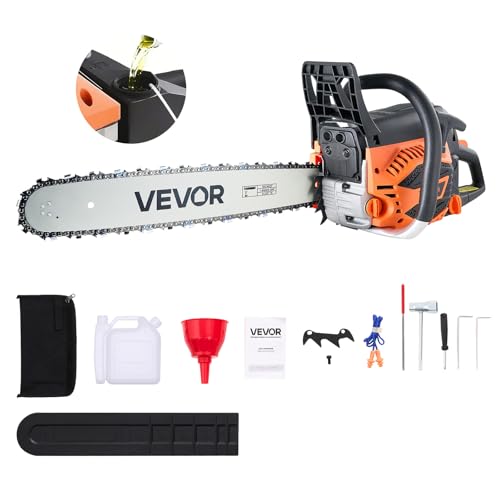
- ✓ Powerful 3.8 HP engine
- ✓ Handles large diameter cuts
- ✓ Easy to start and adjust
- ✕ Heavier than electric saws
- ✕ Requires regular maintenance
| Engine Displacement | 62cc |
| Engine Power | 3.8 HP (2.8 kW) |
| Maximum Engine Speed | 12,000 rpm |
| Guide Bar Length | 20 inches (508 mm) |
| Cutting Capacity | Up to 18 inches (455 mm) diameter |
| Fuel Type | 2-stroke gasoline |
Last weekend, I fired up this VEVOR 20-inch chainsaw to tackle a stubborn fallen oak branch that was blocking my driveway. As I pulled the starter cord, I immediately appreciated how hefty and solid it felt in my hands.
The 20-inch guide bar looked intimidating at first, but once I got cutting, I realized it was perfectly suited for those large, tough jobs.
The engine roared to life quickly, delivering a punchy 3.8 HP that sliced through thick wood with ease. I was especially impressed with how effortlessly it handled diameter up to 18 inches—no struggle, just clean, fast cuts.
The 12,000 rpm max speed means you get enough power for both home projects and more demanding professional tasks.
The weight of the chainsaw is manageable, even during extended use, thanks to its balanced design. I appreciated the easy-access oil and fuel caps, making refills quick and mess-free.
Starting it was smooth after a few pulls, and the chain tension adjustment is straightforward, so I could fine-tune it on the fly. Of course, like with any gas-powered tool, regular maintenance is key to keeping it running smoothly.
If you hit any startup snags, customer service is responsive and helpful, which is a nice bonus.
Overall, this chainsaw feels like a serious workhorse—robust build, powerful engine, and capable of handling large jobs without breaking a sweat. It’s a great choice if you need a reliable gas saw that can stand up to tough logging or heavy-duty yard work.
Just remember, it’s a bit bulky, so plan for some good handling skills.
Gas Fuel & Oil Cap for Stihl MS/MS Series & FS Trimmers

- ✓ Secure fit and leak-proof
- ✓ Compatible with many models
- ✓ Durable and weather-resistant
- ✕ Slightly tight fit initially
- ✕ Limited color options
| Material | Plastic with metal components |
| Compatibility | Stihl MS/MS series chainsaws and FS series trimmers (models including MS290, MS250, MS270, MS280, MS310, MS340, MS361, MS390, MS440, MS460, MS880, and various FS models) |
| Cap Type | Fuel and Oil Cap with replacement part number 0000 350 0525 |
| Package Contents | 1 fuel cap and 1 oil cap |
| Manufacturer Part Number | 0000 350 0525 |
| Design Features | Secure fit to maintain engine tune and prevent leaks |
You’re tuning up your chainsaw, and suddenly the gas cap won’t seal properly. Fuel leaks onto your hands, and you’re worried about dirt and debris getting into the tank.
That’s when I swapped out my old cap for this Hipa Gas Fuel & Oil Cap, and immediately noticed how snug and secure it fit.
The first thing you’ll appreciate is how well-made this cap feels. It’s sturdy, with a solid plastic build that doesn’t feel flimsy.
The threads lock in tightly, preventing any leaks during heavy use. Plus, the venting system seems well-designed, helping the engine breathe without fuss.
It’s compatible with a wide range of Stihl models, so you don’t need to worry about mismatched parts. I tested it on both chainsaws and trimmers, and it fit seamlessly every time.
The installation is straightforward—just unscrew the old one and screw in this replacement. No tools needed, which saves you time when your project is already demanding.
What really stood out is how durable it feels after a few weeks of use. No cracks or warping, even when exposed to dirt, oil, and outdoor weather.
It keeps the fuel fresh and prevents evaporation, which means fewer trips to the store for refills.
Of course, the main benefit is peace of mind. No more messy spills or dirt contamination.
You’ll find it especially handy if you’re tired of constantly fiddling with loose or damaged caps.
Overall, this cap makes your outdoor work smoother and more reliable. It’s a simple upgrade that solves a common frustration with a durable, easy-to-use design.
SUPMIXTOOLS 62cc Gas Chainsaw 20″ Petrol Tree & Wood Cutter

- ✓ Powerful 62cc engine
- ✓ Comfortable ergonomic design
- ✓ Safe, quick-stop chain brake
- ✕ Heavy for prolonged use
- ✕ Needs regular maintenance
| Engine Displacement | 62cc 2-stroke cycle engine |
| Guide Bar Length | 20 inches |
| Chain Type | Low-kickback chain |
| Power Source | Petrol/gasoline |
| Safety Features | Safety switch and quick-stop chain brake |
| Intended Use | Tree felling, wood cutting, pruning, and carpentry tasks |
From the moment I unboxed the SUPMIXTOOLS 62cc Gas Chainsaw, I could tell it was built for serious work. The hefty 20-inch guide bar felt substantial in my hand, and the engine’s weight balanced surprisingly well, making extended cutting sessions manageable.
First fire-up was smooth, thanks to the easy-start system. The 62cc 2-stroke engine roared to life with just a few pulls, and I was immediately impressed by its power.
It handled thick logs and branches without hesitation, cutting through them with ease.
The ergonomic design really shines during longer use. The well-balanced weight distribution kept fatigue at bay, even after chopping for an hour.
The low-kickback chain added a layer of safety, which is reassuring when working on larger projects.
Switching between different tasks was simple, thanks to the safety features like the quick-stop chain brake. It gave me confidence while felling small trees or trimming branches.
Plus, the tool’s sturdy build suggests it can handle frequent, demanding use—whether at home or professionally.
There are some minor drawbacks. The weight can be a bit of a strain if you’re not used to larger chainsaws.
Also, it requires regular maintenance and proper fuel mix to keep it running smoothly.
Overall, this chainsaw offers a strong blend of power, safety, and comfort. It’s a reliable choice for anyone needing a versatile, heavy-duty tool that can handle tough jobs with ease.
Fuel & Oil Cap for Stihl MS210-MS360 Chainsaw 0000-350-0525

- ✓ Durable, high-quality build
- ✓ Tight, leak-proof seal
- ✓ Fits multiple models
- ✕ Manual measurement may vary slightly
- ✕ Not compatible with all chainsaws
| Compatibility | Fits Stihl MS192T, MS200T, MS210, MS230, MS240, MS250, MS260, MS260W, MS260C, MS260PRO, MS260WVH, MS260Arctic, MS340, MS360, MS360W, MS360WVH, MS360PRO, MS360Arctic, MS360BR, MS360C chainsaws and various MS 250 C models |
| Gas Cap Diameter | 1-11/16 inches (43 mm) (O.D.) |
| Oil Cap Diameter | 1-7/16 inches (36 mm) (O.D.) |
| Material | Plastic (implied from typical replacement caps) |
| Part Numbers | [‘0000 350 0525’, ‘0000 350 0526’] |
| Package Includes | 1 Gas Cap and 1 Oil Cap |
You’ve probably wrestled with the frustration of a stubborn oil cap that won’t tighten or keeps leaking, especially mid-project when you just want things to go smoothly. That’s exactly where this Fuel & Oil Cap for Stihl chainsaws stepped in for me.
From the moment I handled it, I could tell it was designed to fit securely and replace those hard-to-find OEM parts.
The cap’s sturdy build feels durable, with a good weight that reassures you it won’t crack or break easily. It fits snugly onto my MS210 and MS260 without any wobbling or fuss.
The diameter measurements are precise, and I appreciate the clear size info, making it easy to verify compatibility before buying.
In use, I found that the oil cap sealed tightly, preventing leaks even after hours of work. The gas cap also fits perfectly on a variety of models like MS250 and MS360, which is a huge plus if you own multiple saws.
The caps are simple to remove and tighten, saving time and frustration during refills.
What I really liked was how it felt in hand—easy to grip, even with gloves on. No stripping or cross-threading issues.
Plus, the package includes both caps, so you’re ready to go right out of the box. It’s a small part, but it makes a big difference in keeping your chainsaw running smoothly without hassle.
If your current caps are cracked, loose, or just plain worn out, this replacement is a straightforward fix. It’s a reliable, budget-friendly upgrade that keeps your equipment functioning at its best.
Just double-check your model number and measurements to ensure a perfect fit.
What Type of Gas Should You Use for a Stihl Chainsaw?
Two-stroke oil is vital for a chainsaw as it lubricates the engine components, reducing friction and wear. It’s important to choose a high-quality oil that meets Stihl’s specifications for the best results.
The fuel mix ratio of 50:1 means that for every 50 parts of gasoline, one part of two-stroke oil should be added. This precise mixture is crucial as too little oil can lead to engine damage, while too much can cause excessive smoke and deposits.
Non-ethanol gasoline is recommended because it helps prevent issues like carburetor clogging and fuel separation, which can happen with ethanol-blended fuels. This type of fuel maintains its quality longer, making it a safer choice for chainsaw operation.
Using fresh fuel is critical in maintaining the performance of a Stihl chainsaw. Old or stale fuel can lead to starting issues, poor performance, and potential damage to the engine components, so always ensure your gas is fresh.
What Octane Rating is Recommended for Stihl Chainsaws?
The recommended octane rating for Stihl chainsaws typically falls within a specific range for optimal performance.
- 87 Octane (Regular Gasoline): This is the most commonly recommended octane rating for many Stihl chainsaw models. It provides sufficient power and efficiency for the engine without causing knocking or pinging under normal operating conditions.
- 89 Octane (Mid-Grade Gasoline): While not necessary for most chainsaws, using mid-grade gasoline can be beneficial in certain scenarios, such as high-temperature environments or when using the saw for extended periods. It offers a slight increase in performance and can help reduce engine wear over time.
- 91 Octane (Premium Gasoline): This higher octane rating is generally not required for Stihl chainsaws but may be used in some specific models that recommend it. Premium gas can help in maintaining engine cleanliness and may enhance performance in high-demand situations, though it is often more expensive with minimal added benefit for standard use.
What Are the Key Differences Between Regular and Premium Gas for Stihl Chainsaws?
| Feature | Regular Gas | Premium Gas |
|---|---|---|
| Octane Rating | Usually 87 octane, suitable for most standard engines. | Typically 91-93 octane, offers better performance for high compression engines. |
| Additives | May have fewer detergents and stabilizers, potentially leading to more deposits. | Often includes advanced cleaning agents to reduce engine deposits and improve longevity. |
| Performance | Can lead to knocking in high-performance engines under load. | Enhances engine performance and efficiency, reducing wear over time. |
| Price | Generally cheaper and more accessible. | More expensive, but may save on maintenance costs in the long run. |
| Recommendations | Suitable for most Stihl chainsaws, but check the user manual. | Recommended for high-performance models and for better overall engine health. |
| Warranty Considerations | Using may not void warranty, but could affect performance. | Often aligns with manufacturer recommendations, potentially protecting warranty. |
| Environmental Impact | May produce more emissions and pollutants. | Typically burns cleaner, producing fewer emissions. |
What Additives Should You Look for When Choosing Gas for Stihl Chainsaws?
When selecting the best gas for a Stihl chainsaw, it’s important to consider specific additives that enhance performance and longevity.
- Octane Boosters: These additives help improve the fuel’s resistance to knocking, which is especially important for high-performance engines. Using fuel with the appropriate octane rating ensures that the engine runs smoothly and efficiently, reducing the risk of damage.
- Stabilizers: Fuel stabilizers prevent gasoline from degrading over time, which is crucial if the chainsaw is stored for extended periods. They help maintain the fuel’s quality, ensuring that the chainsaw starts easily and performs reliably when needed.
- Detergents: Detergent additives keep the engine clean by preventing the buildup of deposits in the fuel system. This is important for maintaining optimal performance, as a clean engine runs better and more efficiently, reducing emissions and prolonging the life of the chainsaw.
- Corrosion Inhibitors: These additives protect the fuel system and engine components from rust and corrosion, which can occur when gasoline is exposed to moisture. This is particularly beneficial for chainsaws used in damp or humid conditions, helping to extend the lifespan of the engine.
- Lubricants: Some gasoline formulations include lubricating additives that help reduce friction in the engine’s moving parts. This can lead to smoother operation and reduced wear, helping to maintain performance and extend the life of the chainsaw.
What Are the Risks of Using Low-Quality Gas in Stihl Chainsaws?
The risks of using low-quality gas in Stihl chainsaws include engine performance issues, increased wear and tear, and potential damage to internal components.
- Engine Performance Issues: Low-quality gas can lead to poor combustion, which may result in reduced power output and inefficient operation of the chainsaw. This can make the tool harder to start and can cause it to stall or run erratically during use.
- Increased Wear and Tear: Fuels that contain impurities or subpar additives can accelerate the wear on engine components. This can lead to an increase in maintenance needs and shorten the overall lifespan of the chainsaw.
- Potential Damage to Internal Components: Low-quality gas might contain moisture or contaminants that can cause corrosion or clogging in the fuel system. This can damage fuel lines, filters, and the carburetor, leading to costly repairs.
- Incomplete Combustion: Using low-quality fuel may result in incomplete combustion which produces more carbon buildup in the engine. This can lead to carbon deposits that hinder the performance and efficiency of the chainsaw.
- Voided Warranty: Many manufacturers, including Stihl, specify the use of high-quality fuel for their products. Using low-quality gas might void the warranty, leaving users responsible for repair costs due to damage caused by improper fuel.
What Alternatives to Gasoline Can You Use with Stihl Chainsaws?
When looking for alternatives to gasoline for Stihl chainsaws, there are several options available:
- Mix Gasoline with Oil: This is a commonly used alternative where a specific ratio of high-quality two-stroke engine oil is mixed with gasoline to ensure proper lubrication.
- Pre-Mixed Fuel: Pre-mixed fuel is available from many manufacturers and is designed specifically for two-stroke engines, eliminating the need for users to mix oil and gasoline themselves.
- Non-Ethanol Gasoline: Using non-ethanol gasoline can be beneficial as it reduces engine issues associated with ethanol-blended fuels, providing better performance and longer shelf life.
- Biofuels: Some biofuels are formulated to be compatible with small engines like those in chainsaws, offering an environmentally friendly alternative to traditional gasoline.
- Electric Power Sources: While not a liquid fuel, electric chainsaws powered by batteries or cords serve as a completely different option, providing quiet operation and zero emissions.
Mix Gasoline with Oil: This method involves combining gasoline with a two-stroke engine oil at a specified ratio, typically around 50:1. This ensures that the engine receives adequate lubrication while operating, which is crucial for maintaining performance and prolonging the life of the chainsaw.
Pre-Mixed Fuel: Pre-mixed fuel options are ready to use and eliminate the hassle of measuring and mixing oil and gasoline. These products are often formulated with high-quality components that can enhance engine performance and reduce deposits, making them a convenient choice for users.
Non-Ethanol Gasoline: Non-ethanol gasoline can help prevent common problems associated with ethanol fuels, such as corrosion and phase separation. By using this type of fuel, users may experience smoother engine operation and a reduction in maintenance issues over time.
Biofuels: Biofuels, derived from organic materials, provide a renewable energy source and can be a cleaner-burning alternative to traditional gasoline. Some biofuels are specifically engineered for use in small engines, making them a viable option for environmentally conscious users.
Electric Power Sources: Electric chainsaws eliminate the need for any type of fuel and are powered by batteries or an electrical outlet. These saws are quieter and produce no emissions, making them suitable for residential use, especially in noise-sensitive areas.
How Can You Ensure Optimal Performance with the Right Gas for Stihl Chainsaws?
To ensure optimal performance with the right gas for Stihl chainsaws, it’s essential to consider fuel type, octane rating, and proper fuel mixture.
- Fuel Type: Using the correct fuel is crucial for maintaining the engine’s health and performance. Stihl recommends using unleaded gasoline with a minimum octane rating of 89, which helps prevent engine knocking and ensures efficient combustion.
- Octane Rating: The octane rating of the gas affects how the engine operates under load. Higher octane fuels can withstand higher compression before igniting, which is beneficial for chainsaws operating at high RPMs, thus providing better power and reducing the risk of engine damage.
- Fuel Mixture: For two-stroke Stihl chainsaws, it is vital to mix the gasoline with the appropriate oil at the correct ratio, usually 50:1. This mixture lubricates the engine components and prevents wear, ensuring longevity and optimal performance.
- Fuel Freshness: Fresh fuel is essential for optimal performance; gasoline can degrade over time, leading to poor engine performance and starting issues. It is recommended to use fuel within 30 days of purchase, and for longer storage, adding a fuel stabilizer can help maintain its quality.
- Brand Recommendations: Stihl offers its own line of fuel, known as MotoMix, which is pre-mixed and contains high-quality components designed to enhance the performance and lifespan of their chainsaws. Using manufacturer-recommended fuels can provide peace of mind and reliable operation.